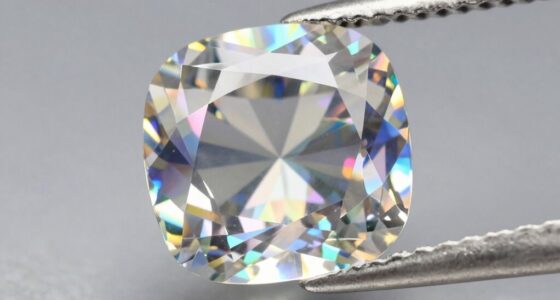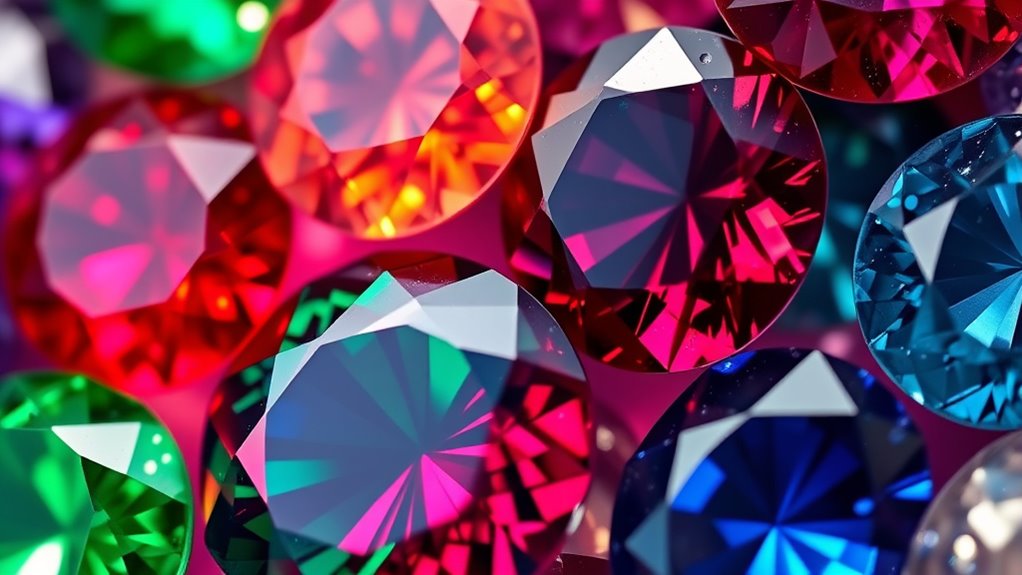

When exploring gemstone treatments, it’s important to know that heating, dyeing, and coating are traditional methods used for centuries to enhance color and clarity. Modern techniques include laser drilling and fracture filling to improve appearance, but some treatments, like coatings, may wear over time. Understanding which treatments are permanent or temporary helps you make smarter choices and better assess a stone’s value. Keep going to discover the details behind these common enhancements and how they impact your jewelry.
Key Takeaways
- Traditional treatments like heating and coating have been used for centuries to enhance gemstone color and clarity.
- Modern techniques include laser drilling and fracture filling, offering more uniform and dramatic improvements.
- Some treatments, such as heating, are permanent, while surface coatings can wear off over time.
- Recognizing different treatments helps in assessing gemstone value, durability, and authenticity.
- Understanding the evolution from traditional to modern treatments aids in making informed gemstone purchasing decisions.

Have you ever wondered how gemstone colors and clarity are enhanced to make them more appealing? The answer often lies in various gemstone treatments that have been used for centuries to improve a stone’s appearance. These treatments can range from simple processes to complex procedures, some of which are so well-established they’re considered part of the gemstone’s history. For example, historical treatments like heating and coating have been used for centuries to intensify color or improve clarity. Ancient gem cutters discovered that heating certain stones, such as sapphires, could bring out deeper, more vibrant hues. Coatings, applied to the surface, have also been used to give stones a more appealing look, and these methods are well-documented in the history of gem cutting.
Historical gemstone treatments like heating and coating have enhanced color and clarity for centuries.
However, as technology advanced, so did the techniques used to enhance gemstones. Today, synthetic enhancements are commonplace in the industry. These involve the use of laboratory processes to alter or improve a gemstone’s appearance in ways that might not be naturally achievable. For example, laser drilling to remove inclusions or fracture filling to improve transparency are synthetic enhancements that can dramatically change a stone’s look. These methods allow for the creation of more uniform, visually appealing gems, often at a lower price point. While synthetic enhancements may sound modern, they are built on a foundation of traditional treatments, blending old techniques with new technology.
Understanding the difference between these treatments is vital when purchasing gemstones. Many treatments are permanent, like heating or irradiation, and will remain intact over time, while others, such as surface coatings, can be damaged or wear off. The history of gemstone treatments shows a continuous evolution, starting from basic heating and dyeing to sophisticated laboratory procedures. Some treatments have been historically accepted and even valued, like heating for sapphires and rubies, while others, such as surface coatings, are less favored because they can be less durable.
Knowing about these treatments helps you make informed decisions. Whether you’re buying a natural gemstone or one that’s been enhanced through synthetic methods, recognizing how and why these treatments are applied can influence your appreciation and value assessment. With this knowledge, you can better understand the gemstone’s true nature and guarantee you’re making a purchase that aligns with your preferences and expectations.
gemstone treatment identification guide
As an affiliate, we earn on qualifying purchases.
As an affiliate, we earn on qualifying purchases.
Frequently Asked Questions
How Can I Identify if a Gemstone Has Been Treated?
You can identify if a gemstone has been treated by closely examining its color enhancement and surface coating. Look for uneven color, a glassy or artificial appearance, or visible coating on the surface. Use a jeweler’s loupe or microscope to spot differences in texture or color distribution. Consulting a certified gemologist can also help, as they can perform tests to determine if treatments like heat, laser, or surface coatings have been applied.
Are Treated Gemstones More Valuable Than Untreated Ones?
Treated gemstones are usually less valuable than untreated ones because treatment techniques often diminish their rarity and natural appeal. Gemstone enhancement can improve appearance but may decrease long-term worth. When buying, consider whether the gemstone has undergone treatments like heating or coating, as untreated stones typically hold higher value. Your best bet is to verify the origin and treatment history to ensure you’re getting the most genuine and valuable piece.
Do Gemstone Treatments Affect Jewelry Warranties?
Gemstone treatments can influence your jewelry warranties because many enhancements, like diamond enhancements, may not be covered or could void the warranty. These treatments sometimes impact gemstone durability, making the jewelry less resistant to damage. When buying treated gemstones, you should check if the warranty covers such enhancements. Being aware of this helps you protect your investment and ensures you understand the limitations of your jewelry’s coverage.
How Long Do Gemstone Treatments Typically Last?
While gemstone treatments can seem delicate, their treatment durability varies widely. You might enjoy the beauty of enhancements like coatings or heating for years, but some may fade or change faster. The longevity of enhancements depends on factors like type, care, and wear. Usually, well-applied treatments last several years, but improper care can shorten their lifespan. So, always follow recommended cleaning and handling instructions to preserve your gemstone’s beauty longer.
Can Gemstone Treatments Be Reversed or Removed?
Gemstone treatments can often be reversed or removed, but it depends on the treatment’s permanence. Some treatments, like surface coatings or dyeing, may be removed through specific removal methods such as cleaning or gentle abrasion. However, others, like diffusion or deep filling, are more permanent and difficult to reverse. Always consult a gemologist to determine the best removal methods for your gemstone, ensuring you preserve its value and appearance.
As an affiliate, we earn on qualifying purchases.
Conclusion
Now that you know about gemstone treatments, you can see how they’re both art and science—transforming rough stones into dazzling treasures. While some treatments enhance beauty, they also remind you to stay cautious and informed. Just like a gemstone’s surface can hide its true nature, your knowledge reveals the truth behind the sparkle. So, embrace the allure, but remember: understanding these treatments guarantees you cherish your gems wisely, beyond just their glittering exterior.
As an affiliate, we earn on qualifying purchases.
As an affiliate, we earn on qualifying purchases.