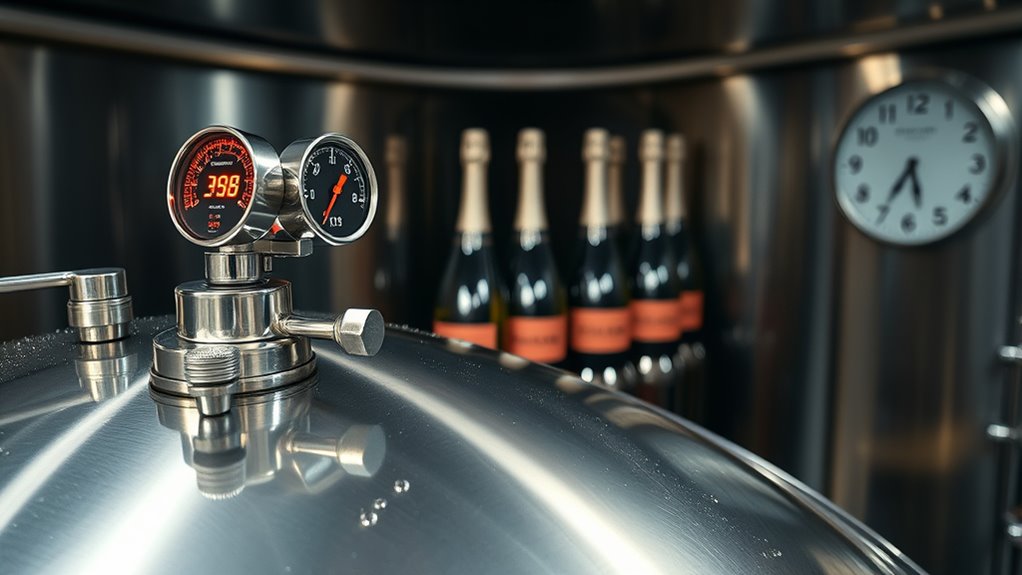

To properly store champagne, keep it in a cool, dark place with a consistent temperature of around 45-50°F (7-10°C) to preserve its pressure and flavors. Store bottles horizontally to maintain the cork’s moisture and prevent air leaks. Avoid temperature fluctuations, vibrations, and strong odors that can spoil the wine. Proper storage helps champagne age gracefully and stay sparkling longer. Stay with us to discover more tips on ideal champagne storage.
Key Takeaways
- Maintain a consistent temperature of 45-50°F (7-10°C) to prevent uneven aging and preserve carbonation.
- Store champagne horizontally to keep the cork moist, ensuring proper pressure and preventing air leaks.
- Keep storage environment dark, dry, and vibration-free to protect delicate flavors and sediment stability.
- Avoid temperature fluctuations and exposure to sunlight or strong odors that can compromise quality.
- Most champagnes are best enjoyed within a few years, but proper storage supports gradual development and freshness.
Have you ever wondered how to keep your champagne tasting its best? Proper storage plays a vital role in preserving its delicate flavors and effervescence. One key aspect is understanding bottle aging. When champagne ages in the bottle, it continues to develop subtle nuances, but only if stored correctly. Unlike wines meant for long-term aging, most champagnes are best enjoyed within a few years of release. However, if you do plan to age it, the goal is to keep the champagne in a stable environment that supports gradual maturation without deterioration. Improper storage can lead to premature aging, causing the wine to lose its freshness and sparkle.
Proper champagne storage preserves freshness, effervescence, and subtle nuances for optimal enjoyment.
Temperature fluctuations are one of the biggest threats to good champagne storage. You need to maintain a consistent temperature to prevent the champagne from aging unevenly or degrading prematurely. Sudden changes in temperature can cause the liquid to expand and contract within the bottle, putting stress on the cork and potentially letting in air. This exposure can spoil the champagne, diminishing its quality and carbonation. Ideally, keep your champagne in a cool, dark place with a stable temperature around 45-50°F (7-10°C). Avoid areas that are prone to temperature swings, such as near heating vents, windows with direct sunlight, or above appliances that generate heat.
You also want to think about the environment’s humidity. Too dry, and the cork might dry out, risking air leaks; too humid, and mold could develop. A humidity level of around 70% is ideal, providing enough moisture to keep the cork moist without encouraging mold growth. Remember, storing champagne horizontally helps keep the cork moist and creates a tighter seal, which is essential for maintaining pressure and preventing spoilage over time.
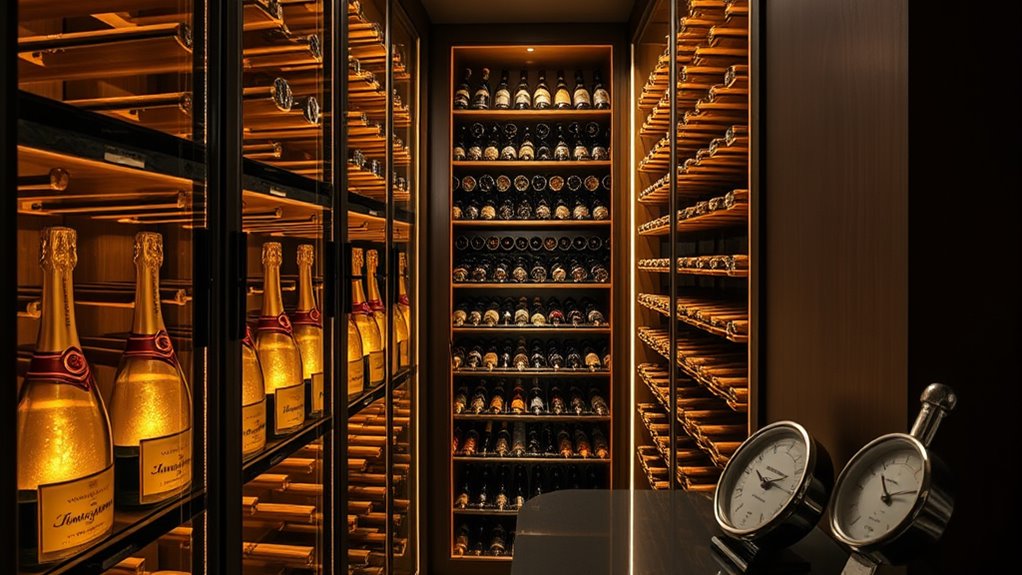
In addition to temperature stability, avoid exposing your champagne to vibrations, strong odors, or direct sunlight. Vibrations can disturb the sediments if you’re aging a vintage, and strong odors can seep through the cork, altering your champagne’s delicate aroma. Sunlight causes UV rays that can degrade the wine’s quality, so an opaque or dark storage space is best. Keeping your champagne in a dedicated, temperature-controlled wine fridge or a dark cellar ensures it remains in ideal condition.
As an affiliate, we earn on qualifying purchases.
Frequently Asked Questions
How Does Light Exposure Affect Champagne Storage?
Light exposure can considerably harm your champagne because it’s sensitive to light, which can cause it to spoil or develop off-flavors. To keep your champagne in ideal condition, store it in a dark place, avoiding direct sunlight or artificial light sources. You should prioritize storage darkness, especially for long-term storage, to prevent light sensitivity from degrading the quality. Always guarantee your champagne is kept in a cool, dark environment.
What Are the Signs of Improperly Stored Champagne?
You open a bottle, and instead of the expected sparkle, you notice dullness and a flat aroma. Signs of improperly stored champagne include dull color, off-putting smell, and visible cork deterioration. You might also detect signs of champagne oxidation—an overpowering vinegar scent or a loss of freshness. These clues suggest that exposure to light or improper temperature caused pressure imbalances, damaging the wine and compromising its quality.
Can Champagne Be Stored Vertically or Horizontally?
You can store champagne both vertically and horizontally, but bottle orientation affects storage stability. If you prefer horizontal storage, make certain the cork remains moist to prevent it from drying out and losing its seal. Vertical storage is simpler, especially if you plan to consume the bottle soon, as it minimizes contact between the wine and the cork. Whichever way you choose, keep the storage consistent to maintain ideal quality.
How Long Can Champagne Be Stored Before Quality Declines?
The clock’s ticking, so you shouldn’t wait too long before your champagne’s quality declines. With proper vintage aging in a cool, dark cellar environment, you can store champagne for several years—typically 3 to 5 for non-vintage and up to 10 or more for vintage bottles. Keep the environment stable, avoiding temperature fluctuations, and your bubbly remains vibrant and delicious for as long as possible.
Does the Type of Cork Influence Storage Conditions?
Yes, the type of cork influences storage conditions because cork permeability affects how well it seals the bottle. A high-quality cork prevents air from entering, preserving your champagne’s flavor and bubble integrity. Poor-quality or synthetic corks allow more oxygen in, which accelerates storage impact and quality decline. Choosing the right cork guarantees ideal pressure, temperature stability, and longer storage life, helping your champagne stay fresh and bubbly.
As an affiliate, we earn on qualifying purchases.
Conclusion
So, think of champagne like a treasured secret waiting to sparkle. Keep it cool and steady, like a lullaby, and it’ll reward you with bubbly brilliance when you uncork it. Proper storage is your magic wand, transforming a simple bottle into liquid gold, ready to dance on your palate. Treat it with care, and each sip will sing like a symphony, turning everyday moments into sparkling memories. Cheers to perfect storage and endless celebration!
As an affiliate, we earn on qualifying purchases.
As an affiliate, we earn on qualifying purchases.