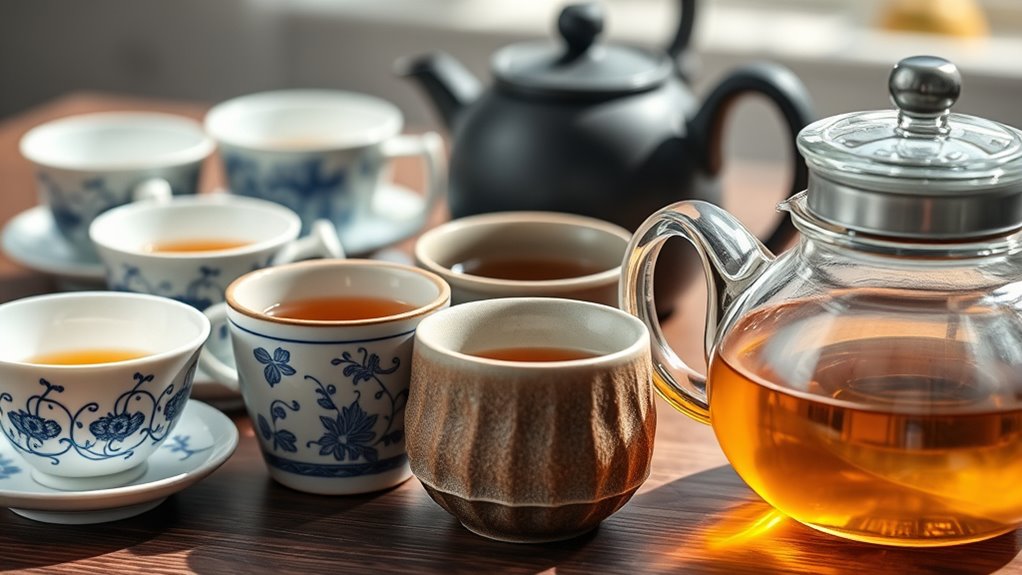
Choosing the right teaware—porcelain, stoneware, or glass—affects your tea’s flavor, brewing, and maintenance. Porcelain offers a delicate look, heats evenly, and is easy to clean, but can crack with sudden changes. Stoneware is durable, retains heat well, and ideal for daily use, though it may absorb flavors over time. Glass lets you see the tea unfold and is easy to clean, but needs gentle handling. Continue exploring to learn how each enhances your tea experience.

Get your wardrobe favorites delivered free with Prime
- Fast, free delivery on millions of items
- Prime Video, Amazon Music and more included
- Member-only deals all year
Key Takeaways
- Porcelain teaware is delicate, non-porous, and provides even heat, ideal for subtle flavor extraction but prone to cracking.
- Stoneware teapots are durable, thick-walled, and retain heat well, suitable for strong or long-steeping teas.
- Glass teapots are transparent, allowing visual appreciation of tea infusions, non-porous, and resistant to temperature changes.
- Proper cleaning and maintenance of all teaware prevent flavor contamination and extend their lifespan.
- Choosing the right material depends on brewing style, maintenance preferences, and desired tea tasting experience.
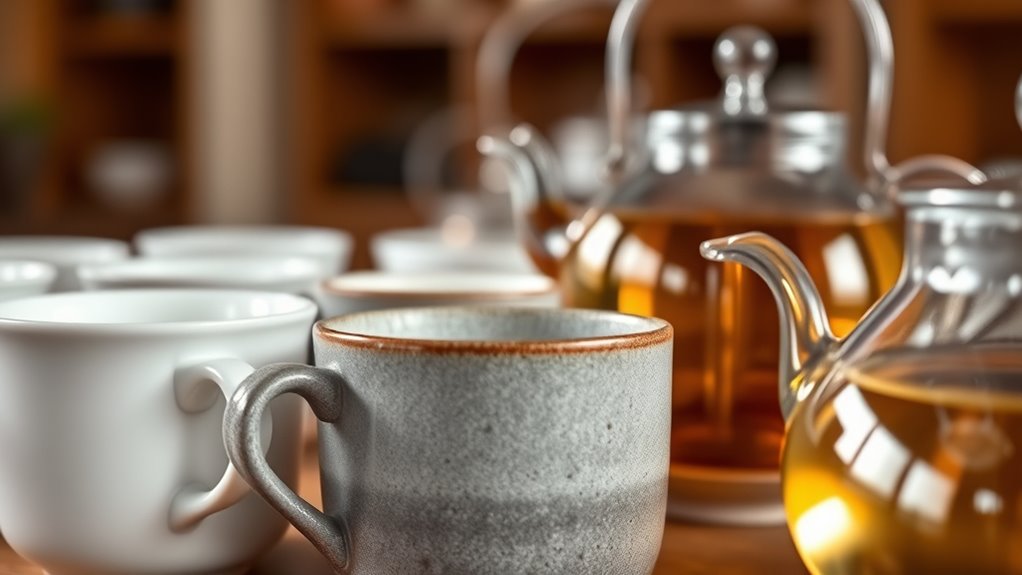
Ever wondered what makes a perfect cup of tea? It all starts with the teaware you choose and how you care for it. Your choice of porcelain, stoneware, or glass influences not only the flavor but also your overall tea experience. Understanding the differences can help you select the best vessel and master tea brewing techniques that bring out the best in your leaves. Proper teaware maintenance is essential to keep your tools in top shape and prevent flavor contamination, ensuring each cup remains fresh and enjoyable.
Choosing the right teaware and caring for it ensures a fresh, flavorful tea experience every time.
Porcelain teapots are a classic choice for many tea enthusiasts. Known for their delicate appearance and smooth surface, porcelain vessels heat evenly, which helps extract subtle flavors without imparting any additional taste. Because porcelain is non-porous, it doesn’t absorb tea oils or aromas, making it easier to clean and maintain. When practicing tea brewing techniques with porcelain, you can be confident that the flavors will remain true to the leaves. To keep your porcelain teaware in pristine condition, wash it gently with warm water and avoid abrasive scrubbing, which can chip or scratch the surface. Proper teaware maintenance for porcelain also means avoiding sudden temperature changes, which can cause cracks over time.
Stoneware offers a sturdier, more rustic alternative. Its thick walls retain heat longer, making it ideal for brewing teas that require higher temperatures or longer steeping times. The porous nature of stoneware can sometimes absorb flavors if not cleaned properly, so paying attention to teaware maintenance is vital. After each use, rinse thoroughly and avoid leaving tea residue inside, which can impact future brews. When it comes to tea brewing techniques, stoneware can be forgiving, providing a warm, consistent environment for your tea. Its durability makes it suitable for everyday use and for those who prefer a more hands-on, tactile experience when preparing their tea.
Glass teapots allow you to watch the tea leaves unfurl, adding a visual element that enhances your appreciation of the brewing process. They’re typically made from borosilicate glass, which withstands temperature changes well. Glass is non-porous, so it doesn’t absorb flavors, but it does require careful cleaning to prevent staining or cloudy build-up. Regular teaware maintenance involves gentle washing with warm water and avoiding harsh detergents. When practicing tea brewing techniques with glass, you can experiment with steeping times and leaf quantities, seeing firsthand how the flavors develop. This transparency also encourages mindfulness, helping you perfect your brewing precision for a flawless cup each time.
Frequently Asked Questions
Which Teaware Material Retains Heat the Longest?
You’ll find that stoneware retains heat the longest due to its superior insulation properties. Its thick, dense material helps insulate your tea, keeping it warm for extended periods. Unlike porcelain or glass, stoneware’s heat retention makes it ideal for savoring tea slowly. This material’s excellent insulation properties guarantee your tea stays hot longer, making your brewing experience more enjoyable and allowing you to appreciate every sip at the perfect temperature.
Can Porcelain Teaware Be Used on the Stove?
No, porcelain teaware isn’t suitable for stovetop use because it generally lacks stovetop compatibility and thermal shock resistance. Placing it directly on a heat source can cause cracking or breaking. If you want to heat water on the stove, opt for cookware made specifically for stovetop use, like certain ceramics or metal teapots, which are designed to handle the thermal stresses involved.
How Do I Properly Clean and Maintain Stoneware?
Ever wondered how to keep your stoneware in top shape? You should hand wash it with warm, soapy water after each use, avoiding harsh abrasives. For seasonal cleaning, deep clean by soaking in a vinegar solution to remove stains or mineral deposits. Store your stoneware in a dry, well-ventilated place, and place paper towels between stacked pieces to prevent scratches. Proper maintenance guarantees your teaware stays beautiful and functional!
Are Glass Teaware Microwave-Safe?
Yes, glass teaware is generally microwave-safe due to its durability and heat resistance. However, you should always check for a microwave-safe label or manufacturer’s instructions, as some glassware may crack or shatter if it has flaws or is exposed to sudden temperature changes. To guarantee microwave safety, avoid using glass with metal accents or cracks, and always handle it carefully when removing from the microwave.
What Are the Best Types of Tea for Each Material?
Imagine discovering your perfect tea pairing; porcelain works beautifully with delicate greens and whites, enhancing subtle flavors. Stoneware is ideal for robust blacks and oolongs, retaining heat well for rich infusions. Glass teaware shines with herbal and floral teas, allowing you to watch the infusion process unfold. For ideal tea storage and infusion techniques, choose your teaware wisely, ensuring each brew’s full potential is realized with the right material.
Conclusion
Now that you know the differences between porcelain, stoneware, and glass, you might wonder if certain teaware truly enhances your tea experience. Some believe that ceramic materials can influence flavor, but scientific studies show the impact is minimal—it’s really about what feels right for you. So, trust your instincts, experiment with different styles, and enjoy discovering which teaware elevates your personal tea ritual. After all, the best teaware is the one that makes your tea time special.
Halloween Picks
halloween
As an affiliate, we earn on qualifying purchases.