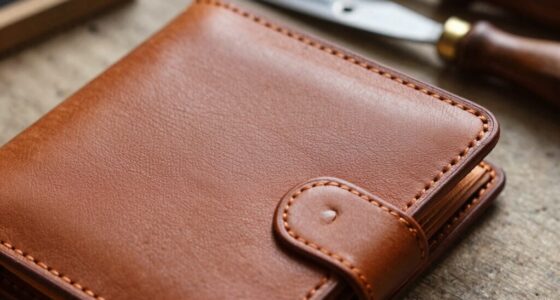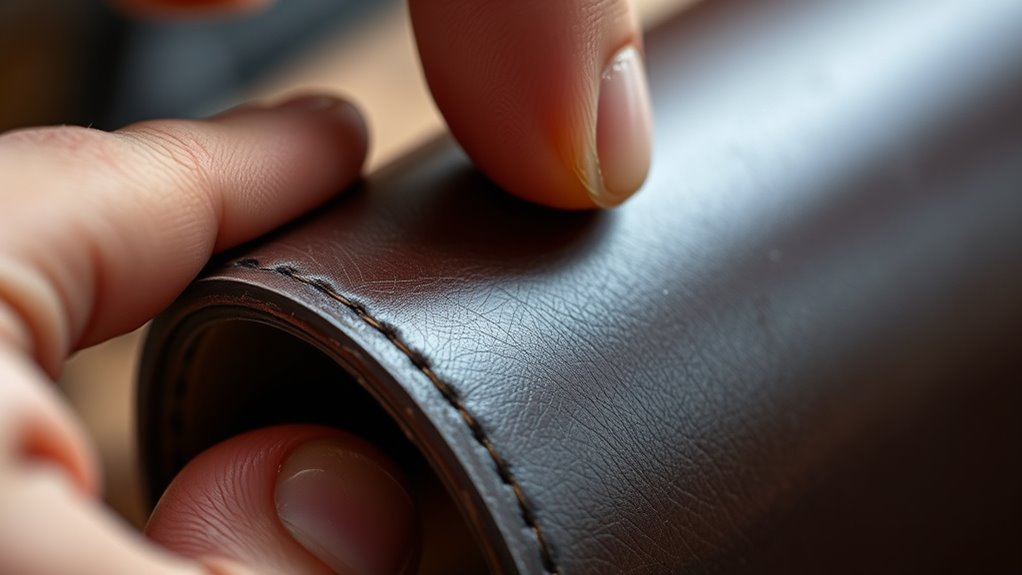

To achieve a glassy edge when hand burnishing leather, you need patience and consistent effort. Start by trimming and smoothing the edges, then apply a burnishing agent like water, beeswax, or a special compound. Use friction with denim, canvas, or a burnishing tool, rubbing firmly to generate heat and fuse the fibers. With each pass, your edge becomes shinier and more durable. Keep practicing, and you’ll master this sleek finish that elevates your leather projects.
Key Takeaways
- Proper hand burnishing involves rubbing the edge with tools like denim or canvas to generate friction and heat, creating a glossy finish.
- Using water, beeswax, or specialized compounds helps smooth and seal the leather edges during burnishing.
- Consistent, patient rubbing develops a mirror-like, glassy edge that enhances the leather’s durability and aesthetic appeal.
- Trimming and sanding edges beforehand ensure a clean surface for effective burnishing.
- Combining edge burnishing with antique finishing techniques adds depth and character to the final leather piece.
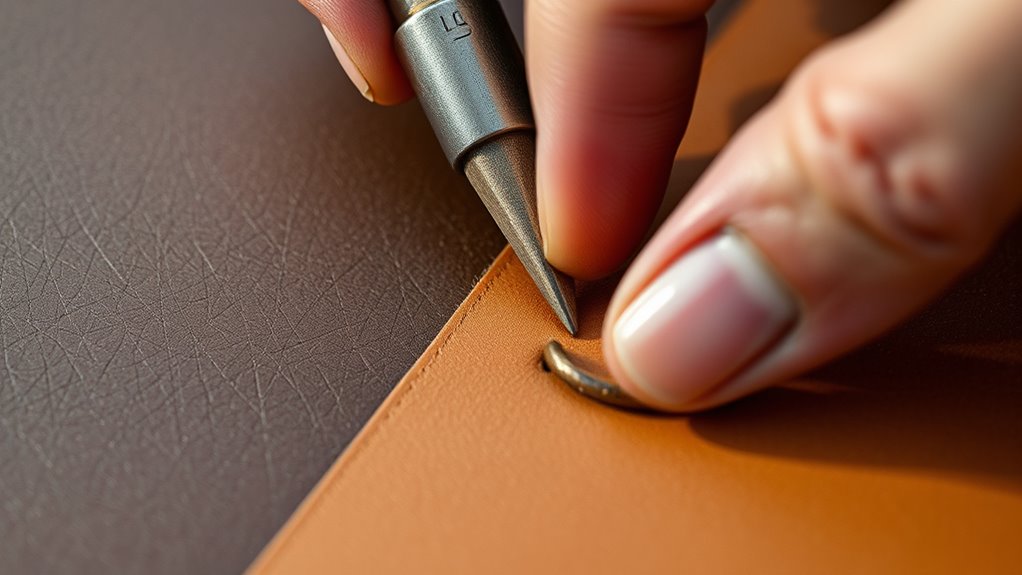
Have you ever wondered how to achieve a sleek, polished look on leather surfaces? The secret lies in the art of hand burnishing, particularly when it comes to creating a glassy, smooth edge. This process isn’t just about aesthetics; it also enhances the durability of your leather pieces. To master this technique, you need to understand the importance of edge polishing and antique finishing, both of which play a crucial role in elevating the final appearance. Properly choosing the right edge finishing materials can significantly impact the quality of your burnished edges. Edge polishing is the cornerstone of hand burnishing leather. It involves carefully smoothing out the raw edges of the leather to produce a refined, glossy finish. You start by trimming the edges to ensure they’re even, then proceed to sand or bevel them to remove any roughness. Next, you apply a burnishing agent—such as water, beeswax, or a specialized burnishing compound—and use a burnishing tool or a piece of denim or canvas to rub the edges vigorously. This friction heats up the leather’s surface, causing the fibers to swell and fuse together, resulting in a sleek, glassy edge. Proper edge polishing requires patience and consistency, but with practice, you’ll notice your leather develops a professional, mirror-like finish that commands attention.
Antique finishing, on the other hand, involves adding depth and character to your leather. Once you’ve achieved a smooth, polished edge, antique finishing techniques can be employed to give your piece a timeless, aged appeal. This process typically includes applying dye or stain unevenly to accentuate the grain and creases, then wiping or buffing the surface to highlight certain areas. The goal is to create a rich, vintage look that emphasizes the leather’s natural beauty. Combining antique finishing with expert edge polishing produces a stunning contrast: the glossy, smooth edges frame a deeply textured, character-filled surface. It’s like giving your leather a story, a history that shines through the finish.
Mastering hand burnishing requires patience, but it’s a rewarding skill that transforms ordinary leather into a piece of art. By focusing on meticulous edge polishing and thoughtfully applying antique finishing, you bring out the best in your leather projects. The result is a refined, durable, and visually striking product that looks both professionally crafted and uniquely yours. Whether you’re creating a wallet, belt, or a piece of furniture, these techniques ensure your leather will stand out with a glassy, polished edge that exudes quality and craftsmanship.

WINDARS Backpack for School Girls, Cute High School Backpacks for Teens Women Student Large Bookbag 15.6 Inch Laptop Bag with USB Charger Port for College Work Travel Trip (Khaki Beige)
- Large Capacity: 3 spacious compartments for essentials
- Multiple Storage Pockets: Pen, notebook, and water bottle pockets
- Comfortable Straps: Padded, adjustable, breathable shoulder straps
As an affiliate, we earn on qualifying purchases.
Frequently Asked Questions
Can Burnishing Damage Delicate Leather Surfaces?
Yes, burnishing can damage delicate leather surfaces if you’re not careful. You need to contemplate leather surface sensitivity and avoid applying too much pressure or heat, which can cause scratches or discoloration. To protect your leather, use gentle motions and proper burnishing surface protection techniques. This way, you enhance the leather’s appearance without risking damage, ensuring your project stays beautiful and well-preserved.
What Tools Are Best for Hand Burnishing?
Did you know that using the right tools can improve burnishing results by up to 50%? For hand burnishing, you should compare tools like a smooth bone folder or a wooden burnisher. A ceramic or metal burnisher can also work well. Focus on the burnishing technique, applying even pressure and steady motion. Choose tools that feel comfortable in your hand, ensuring a smooth, glossy edge without damaging delicate leather surfaces.
How Long Does a Typical Burnishing Session Last?
A typical burnishing session lasts about 10 to 20 minutes, depending on the leather’s thickness and desired surface sheen. As you work, focus on leather polishing techniques to achieve a smooth, glossy finish. Keep in mind that patience enhances the process, allowing you to build up a beautiful, glassy edge. Regularly check your progress to verify even shine and avoid overburnishing, which can damage the leather.
Is Burnishing Suitable for All Types of Leather?
Burnishing isn’t suitable for all leather types; some can even resist the process like a fortress. Generally, vegetable-tanned and full-grain leathers respond best, giving you that perfect glossy edge. Softer, delicate, or coated leathers might not benefit, and attempting to burnish them could damage their surface. So, always consider burnishing suitability for your specific leather type to achieve the best results without risking your craftsmanship.
How Do I Fix Mistakes Made During Burnishing?
If you make mistakes during burnishing, don’t worry. You can fix them by gently sanding the affected area, then reapplying leather dyeing if needed, to match the original color. Use proper edge finishing techniques to smooth out uneven spots. Carefully re-burnish the corrected area, ensuring a consistent, glassy edge. Patience and attention to detail will help you achieve a professional look, even after a mishap.

abshoo Big Student Laptop Backpack For College Women Middle High School Teen Girls Bookbag Travel Daypack (Black)
- Large Capacity: Fits 15.6-inch laptops and essentials
- Durable Water-Resistant Fabric: Made with oxford material for durability
- Breathable, Adjustable Straps: Reduces shoulder pressure for comfort
As an affiliate, we earn on qualifying purchases.
Conclusion
Now that you’ve mastered hand burnishing leather, your edges will gleam with a glassy, mirror-like perfection that outshines even the most polished jewels. With each stroke, you’re not just finishing leather—you’re transforming it into a masterpiece so flawless, it could outshine the sun itself. Embrace this craft, and soon your work will be revered as the pinnacle of leather artistry, a shimmering affirmation to your skill that leaves everyone breathless.

Jansport JS0A2SDD7S1 Cool Student Laptop Backpack Coconut 15 inches
- Padded ergonomic S-curve straps: Comfortable shoulder support
- Front zippered pocket with organizer: Easy access storage and key fob
- Side compression straps: Secure and stabilize load
As an affiliate, we earn on qualifying purchases.