
When choosing between bronze and resin sculptures, consider your budget, location, and desired durability. Bronze offers long-lasting quality, weather resistance, and fine craftsmanship, but comes at a higher cost. Resin is more affordable, lightweight, and offers a wide range of colors, making it ideal for indoor or temporary displays. Each material has its pros and cons, so exploring more will help you decide which suits your artistic and practical needs best.

Get your wardrobe favorites delivered free with Prime
- Fast, free delivery on millions of items
- Prime Video, Amazon Music and more included
- Member-only deals all year
Key Takeaways
- Bronze sculptures are more expensive upfront but offer greater durability and long-term value, especially outdoors.
- Resin sculptures are more affordable, easier to produce, and allow for quick customization and color variety.
- Bronze provides higher craftsmanship, detailed textures, and natural patina development, enhancing artistic appeal.
- Resin is susceptible to cracking and fading, making it less suitable for outdoor use but ideal for indoor or temporary displays.
- Overall, bronze is better for longevity and outdoor settings, while resin favors budget-friendly, versatile, and indoor applications.
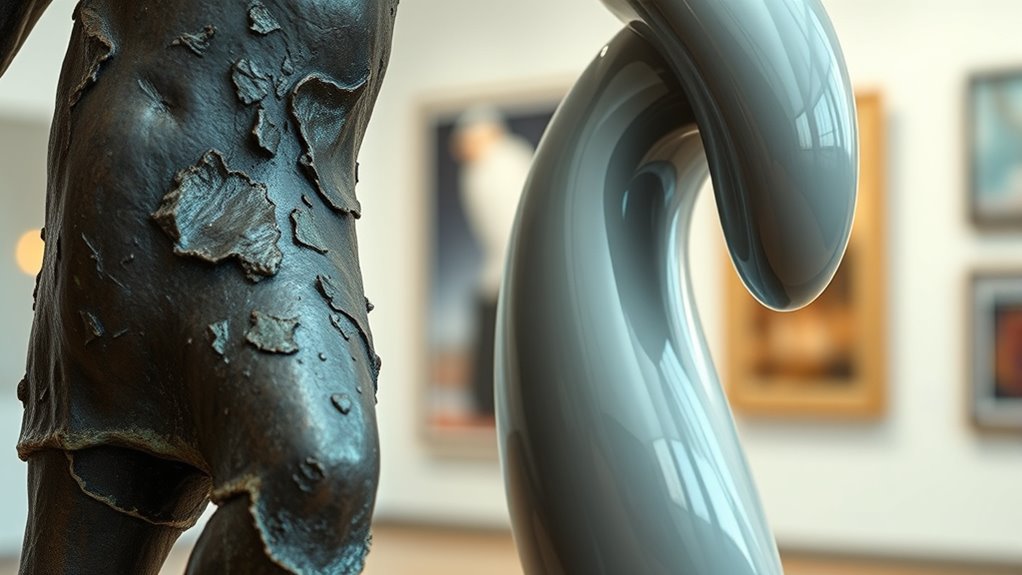
When choosing between bronze and resin sculptures, understanding their differences is vital to making an informed decision. One of the first factors you’ll want to consider is the cost comparison. Bronze sculptures tend to be more expensive upfront because of the materials and labor involved in casting. The process of creating a bronze piece, especially for larger or detailed sculptures, requires skilled craftsmanship and durable materials, which naturally drive up the price. Resin sculptures, on the other hand, are generally more affordable. They’re made from synthetic materials that are less costly and easier to produce, making resin a popular choice for those on a tighter budget or seeking a more economical option. However, keep in mind that while resin sculptures may save you money initially, their long-term value and durability could be compromised. Additionally, when considering material durability, bronze’s resistance to corrosion and weathering makes it a more sustainable choice for outdoor display. Another vital aspect is artistic versatility. When you compare bronze and resin, you’ll notice that bronze offers a level of craftsmanship and detail that often surpasses resin. Artists and collectors value bronze for its ability to capture fine details and subtle textures, lending a sense of timeless elegance and authenticity. Bronze sculptures also develop a natural patina over time, which can enhance their aesthetic appeal and add character. Resin, while flexible in terms of design, often lacks the same depth of detail but compensates with a broad range of finishes and colors. Resin allows for quick replication and customization, giving artists more creative freedom to produce intricate or brightly colored pieces that might be difficult or costly to achieve in bronze. This makes resin sculptures highly adaptable in terms of artistic expression, especially for contemporary or experimental works. Durability is another point to weigh. Bronze is renowned for its strength and resistance to outdoor elements, making it ideal for garden sculptures or outdoor installations. Resin, however, is more susceptible to cracking, fading, or damage from UV exposure and weather conditions. If you’re planning to display your sculpture outside or in a high-traffic area, bronze’s resilience could justify its higher cost. Conversely, resin sculptures are better suited for indoor use or temporary displays where environmental exposure is limited. Ultimately, your choice hinges on what you value most: if you’re seeking durability, timeless artistry, and long-term investment, bronze might be the way to go. If affordability, quick production, and a wider range of artistic options appeal to you, resin could be the better fit. Weighing these factors carefully ensures you select a sculpture that aligns with your aesthetic preferences and practical needs.
Frequently Asked Questions
Which Material Is More Environmentally Sustainable?
You should consider that resin sculptures are generally less eco-friendly than bronze ones. Resin often involves plastics, which aren’t biodegradable and have limited recycling options, making their eco friendliness comparison less favorable. Bronze, on the other hand, is more sustainable because it’s recyclable and durable. So, if environmental impact matters, bronze sculptures are a better choice, as they support recycling options and have a smaller ecological footprint over time.
How Do Weather Conditions Affect Each Sculpture Type?
Weather conditions impact each sculpture type differently. Bronze sculptures generally have better weather durability, resisting rain and wind, but can develop a patina over time. Resin sculptures are more temperature sensitive; extreme heat can cause warping or cracking, while cold may make them brittle. You should consider these factors to protect your sculptures. Proper sealing and placement can help mitigate weather-related damage and prolong their lifespan.
Are Resin Sculptures More Affordable Long-Term?
Imagine a vibrant garden filled with colorful resin sculptures that catch the sunlight, their affordability making them easy to replace or update. Resin sculptures are generally more affordable long-term due to lower initial costs and easier maintenance, offering great aesthetic appeal at a fraction of bronze prices. This cost comparison means you can refresh your space more often without stretching your budget, keeping your outdoor art lively and inviting.
Can Both Materials Be Repaired Easily?
Yes, both materials can be repaired, but their repair complexity varies. Resin sculptures are generally easier to fix because they’re lightweight and respond well to adhesives, making small repairs straightforward. Bronze sculptures, however, have greater material durability but require specialized techniques and professional skills to repair properly. So, while both can be fixed, resin offers a simpler, more accessible repair process, especially for minor damages.
Which Sculpture Type Is Better for Indoor Displays?
You’ll find resin sculptures are ideal for indoor displays, thanks to their lightweight nature and artistic versatility. Imagine a vibrant, detailed piece that easily complements your space without overwhelming it. Plus, resin requires minimal maintenance, making it perfect for indoor environments. Unlike bronze, which can tarnish over time, resin stays pristine with just a quick wipe. So, choose resin for a hassle-free, visually striking indoor sculpture.
Conclusion
So, whether you choose the timeless durability of bronze or the budget-friendly appeal of resin, remember that neither is perfect. Ironically, the more expensive bronze might outlast your lifespan, while resin’s fleeting charm could fade faster than you’d like. In the end, your choice depends on what matters most—lasting legacy or short-term flair. Either way, you’re set to make a statement, even if your sculpture doesn’t quite stand the test of time.
Halloween Picks
halloween
As an affiliate, we earn on qualifying purchases.