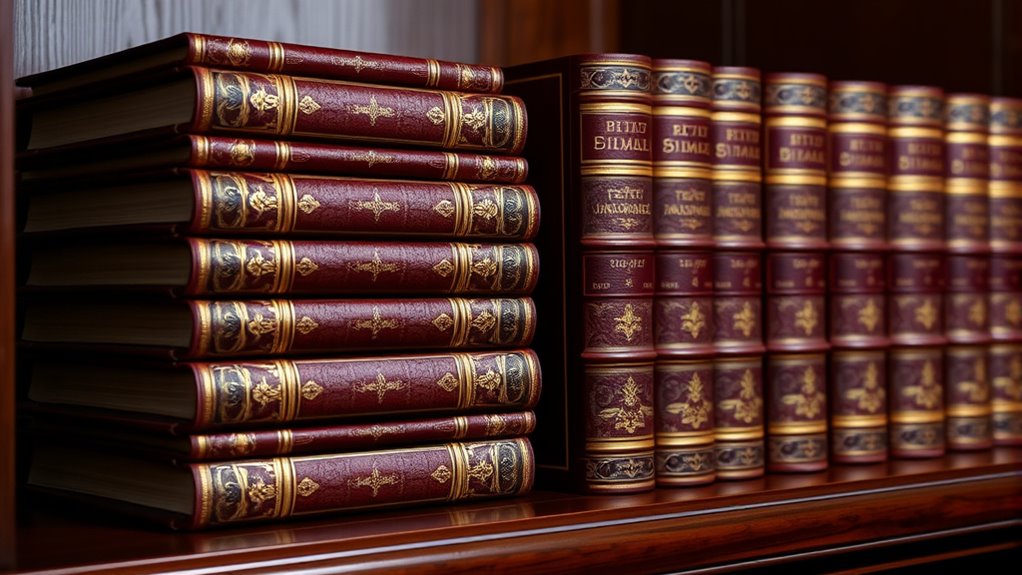

When exploring limited edition books, you’ll want to know key colophon terms like pressing methods, signature statuses, and special finishes such as foil stamping or embossing. These elements highlight the craftsmanship and rarity of each edition, making them truly special. Unique features like hand-printed pages or artist-signed copies add to their value. To fully appreciate the nuances that make these books collectible, keep going—you’ll uncover even more about what makes these editions exceptional.
Key Takeaways
- A colophon is a statement at the end of a book detailing production, edition, and design information.
- Limited edition books often include a colophon specifying print run, printing techniques, and special features.
- The colophon may list materials used, such as high-quality paper, embossing, or custom inks.
- It can also indicate signatures, numbering, or artist involvement that enhance the edition’s exclusivity.
- Colophons serve as a record of craftsmanship, authenticity, and the artistic intent behind limited edition publications.

Have you ever wondered what makes a book truly special? It’s often the details that set limited edition books apart from mass-market editions. When you come across a limited edition, you’re looking at a piece that’s crafted with care, often in small print runs, making each copy a unique treasure. One key aspect that adds to their allure is the rarity of printing. Rare printing processes, such as hand-pressed or specially inked editions, elevate these books beyond ordinary print runs. These rare printing techniques guarantee that no two copies are exactly alike, adding an extra layer of value and exclusivity to each book. When collectors seek out these editions, they’re not just after the story—they want the craftsmanship that makes each copy stand out. Along with rare printing, collectible covers play a vital role in defining the appeal of limited editions. These covers are often designed with exceptional artistry, using high-quality materials, embossing, or foil stamping to create a striking visual impact. Collectible covers aren’t merely protective shells; they’re integral to the book’s identity, turning the object into a work of art. Some covers feature intricate illustrations, limited-edition artwork, or signatures from the author or artist, heightening their desirability. Because these covers often come in unique designs or special materials, they become highly sought after by enthusiasts who want a tangible, aesthetic connection to the book’s story. When you hold a limited edition with a collectible cover, you’re holding more than just a book—you’re holding a piece of craftsmanship that embodies the publisher’s dedication to quality and artistry. These covers often come with additional features, such as embossed patterns, gold leaf accents, or textured finishes, all designed to enhance the tactile and visual experience. This attention to detail amplifies the sense of exclusivity, making each copy feel like a rare artifact. Understanding craftsmanship and attention to detail are what elevate these editions beyond mere books into collectible art objects. Whether it’s a beautifully crafted cover or a rare printing process, these elements come together to create a collectible object that’s as much about design as it is about storytelling. For a collector or a lover of fine books, these details transform a simple reading experience into an artful encounter. Limited edition books with rare printing and collectible covers stand as testaments to craftsmanship, turning reading into an appreciation of both literature and the art of bookmaking. When you acquire one, you’re not just getting a book—you’re claiming a piece of cultural and artistic history that’s meant to be treasured for generations.
Top picks for "limit edition book"
Open Amazon search results for this keyword.
As an affiliate, we earn on qualifying purchases.
Frequently Asked Questions
How Are Limited Edition Books Numbered and Signed?
You’ll find that limited edition books are typically hand numbered, such as “1/500,” indicating their unique position in the edition. The author or artist usually signs the book, often on the limitation page or near the signature placement area, adding to its exclusivity. This combination of hand numbering and signature placement makes each copy special, confirming its authenticity and value as part of a limited, collectible set.
What Makes a Colophon Different From Other Book Markings?
A colophon differs from other book markings because it provides detailed information about the book’s creation, including book design and printing techniques. You’ll find it at the end of a book, serving as a record of craftsmanship, the publisher, and production details. Unlike signatures or numbering, which highlight the limited edition status, the colophon offers insight into the artistic and technical aspects behind the book’s production.
Are Limited Editions More Valuable Than Standard Editions?
Yes, limited editions are often more valuable than standard editions because of their collector value and rarity significance. You’ll find that limited editions typically feature unique qualities like special bindings, signatures, or exclusive artwork, which make them highly sought after. These factors increase their desirability among collectors, often leading to higher prices and greater long-term investment potential. So, if you’re looking to build a valuable collection, limited editions are a smart choice.
How Do I Verify the Authenticity of a Limited Edition Book?
Ever wondered how to verify a limited edition book’s authenticity? You should examine the colophon for details like edition number, publisher, and printing info. Check for signatures or special marks from the publisher or author. Use collector tips like comparing with reputable sources and maintaining proper book preservation. Does the book feel solid and well-made? Authentic limited editions often have high-quality materials, making them easier to verify confidently.
What Specific Terms Should I Look for in a Colophon?
You should look for terms like “binding details,” which reveal if the book has a special or unique cover, and “typography choices,” indicating custom fonts or printing styles. These details confirm the book’s exclusivity. Check if the colophon mentions limited number of copies, signed editions, or specific craftsmanship. Authentic limited editions highlight these features, ensuring you recognize their rarity and value.
Conclusion
Now that you know these colophon terms, your journey into limited edition books feels like having a secret map to treasure. Every detail, from the binding to the paper, tells a story about craftsmanship and passion. With this knowledge, you’re not just a reader—you’re a curator of artistry, holding a piece of literary history in your hands. So go ahead, explore these treasures; they’re waiting to become the shining stars of your collection.