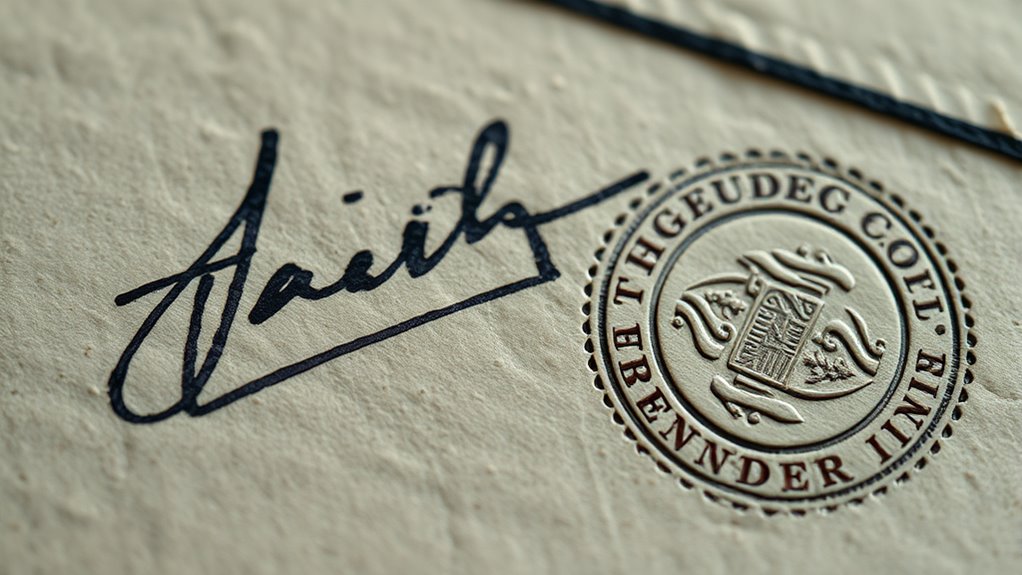

Signed and stamped marks help verify artwork authenticity, but each serves different purposes. A signature is handwritten by the artist, offering a personal connection and unique variation. A stamp or seal is applied mechanically, often used to identify editions or series, and tends to be more uniform. Understanding these differences can help you spot genuine pieces and avoid fakes. If you continue exploring, you’ll gain deeper insights into how these marks influence artwork value and verification.
Key Takeaways
- Signed artwork features handwritten signatures, indicating direct creator approval and uniqueness, aiding authenticity verification.
- Stamped marks are mechanical imprints used for edition identification or series authentication, often appearing uniform.
- Signatures are personal and variable; stamps are consistent and less personal, serving different validation purposes.
- Authenticity assessment combines signature/stamp analysis with provenance, style, and materials for reliable verification.
- Recognizing the differences helps evaluate artwork’s legitimacy, value, and provenance more effectively.
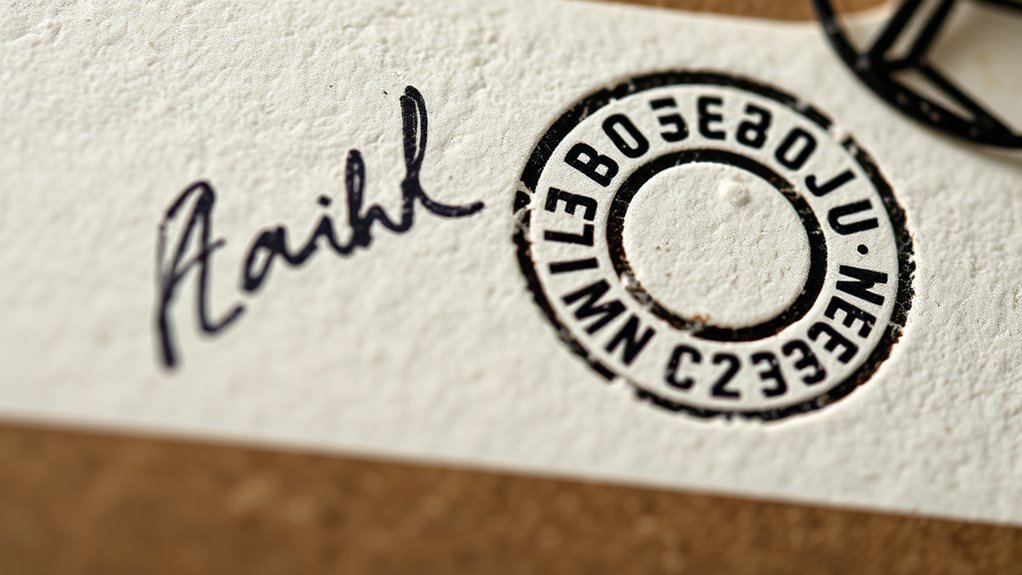
When you’re evaluating artwork, understanding the difference between a signed and a stamped piece is essential. This distinction can profoundly impact how you approach art authentication and provenance tracking. A signed piece bears the artist’s handwritten signature, which often signifies a direct connection between the creator and the artwork. Signatures can vary in style, placement, and clarity, but they generally indicate that the artist personally approved or created the work. Because signatures are unique to each artist, they serve as a valuable tool for verifying authenticity. When you’re trying to determine if a piece is genuine, a clear, consistent signature from the artist can be a strong indicator. However, signatures alone aren’t always enough, and you should consider other factors like the style, materials, and provenance history.
On the other hand, a stamped piece features a mark or seal applied mechanically, often through a stamp or embossing tool. These marks are typically used by artists, galleries, or auction houses to identify editions, authenticate limited series, or signify a certain quality standard. Stamped marks can be more uniform and less personal than signatures, but they still play a critical role in establishing authenticity, especially for mass-produced or limited edition works. When you’re assessing a stamped piece, it’s important to examine the consistency of the stamp, its placement, and whether it aligns with known practices of the artist or institution. Because stamped marks can sometimes be forged or duplicated, they require thorough investigation in conjunction with other authentication methods.
Both signed and stamped markings contribute to provenance tracking, which is essential for establishing the history and legitimacy of an artwork. Provenance tracking involves tracing the ownership history of a piece, and marks—whether signed or stamped—can provide key clues about its origin and authenticity. Properly documented provenance helps prevent forgeries and supports your confidence in the artwork’s value. When you’re conducting art authentication, consider how these marks fit within the broader context of the piece’s history, including gallery records, exhibition histories, and previous sales. In many cases, a combination of authentic signatures, consistent stamping, and well-documented provenance ensures you’re making a confident, informed decision. Ultimately, understanding the nuances between signed and stamped marks allows you to better evaluate an artwork’s legitimacy and appreciate its true artistic and monetary worth. Additionally, familiarity with Free Floating markings and their characteristics can further enhance your ability to identify genuine art pieces.
Frequently Asked Questions
Can a Signed Artwork Be Considered More Valuable Than a Stamped One?
Yes, a signed artwork can often be more valuable than a stamped one because provenance and authenticity matter greatly to collectors. When an artwork is signed, it verifies the artist’s direct involvement, boosting its desirability. Your preferences as a collector influence this value too; many seek signed pieces for their uniqueness and assurance of authenticity, making signed artworks generally more sought after and potentially more valuable than stamped counterparts.
How Can Collectors Verify the Authenticity of Signed Artist Works?
You can verify the authenticity of signed artist works by examining certificate authentication and provenance documentation. Picture these as your trusted map and passport, guiding you through the artwork’s history. Check for official certificates that confirm the signature’s legitimacy, and review provenance records to trace its ownership journey. Together, these tools help you distinguish genuine signed pieces from imitations, giving you confidence in your collection’s authenticity.
Are There Specific Genres More Likely to Be Stamped Than Signed?
You’ll find that prints in mass-produced genres like pop art, posters, and limited editions are more likely to be stamped rather than signed. Collector preferences often favor signed original works, but stamped marks are common in commercial genres aiming for affordability and authenticity verification. Genre trends influence this; artists and publishers use stamps to quickly authenticate large quantities, making stamped markings more prevalent in genres emphasizing reproducibility and accessibility.
Do Artist Signatures Change Over Their Career?
Yes, your signature can change over your career, reflecting your signature evolution. As an artist’s style and branding develop, so might their signature, making it more refined or unique. This evolution helps in establishing artist branding and personal identity. You might notice subtle shifts or bold changes, which mark different creative periods. Staying aware of these variations can add value and authenticity, revealing your growth and artistic journey over time.
Can Limited Edition Prints Be Both Signed and Stamped?
Yes, limited edition prints can be both signed and stamped. Artists often sign their limited edition works to authenticate and add value, while stamps or seals serve as official artist authentication or publisher marks. This dual marking helps verify the print’s authenticity and edition size. As a collector, look for both signatures and stamps to make certain you’re getting a genuine limited edition piece directly connected to the artist.
Conclusion
Think of signed and stamped art like leaving a handwritten note versus a printed label—one feels personal, the other official. When I saw a limited-edition print with a bold signature, it was like finding a hidden treasure, reminding me that a signature adds soul to a piece. Remember, your choice between signed or stamped art shapes its story—making it unique or universally recognized. So, next time you choose, imagine you’re giving your art a voice that truly speaks to you.