To safeguard your art from sun damage, use UV-protective glass or acrylic in display cases, and apply specialist UV-blocking coatings to surfaces. These solutions physically block or absorb harmful UV rays that cause fading, discoloration, and deterioration. Combining filters and coatings provides strong, multi-layered protection to preserve your artwork’s beauty over time. If you want to learn how advanced UV protection can extend the life of your collections, keep exploring these effective solutions.
Key Takeaways
- Installing UV-filtering glass or acrylic in display cases blocks harmful ultraviolet rays from reaching artworks.
- Applying transparent UV-protective coatings directly on paintings and sculptures creates a barrier against sun damage.
- Combining UV filters with protective coatings offers enhanced, long-lasting defense for valuable art pieces.
- Regularly assessing and maintaining UV protection measures helps preserve artworks’ colors and surfaces over time.
- Advances in UV protection technology provide more effective and durable solutions for safeguarding art from sun-induced deterioration.
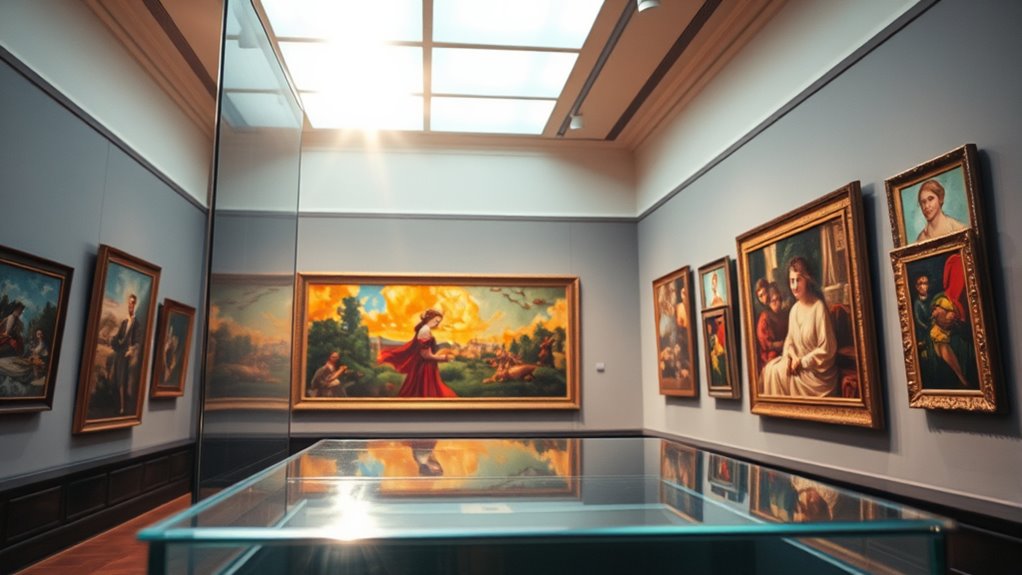
Have you ever wondered how to protect your skin from the sun’s harmful rays? It’s essential to understand that UV radiation can cause serious damage, not only to your skin but also to valuable artworks and historic artifacts. One effective way to shield these surfaces involves the use of UV filters and protective coatings. These technologies work by physically blocking or absorbing ultraviolet light, preventing it from penetrating the surface and causing deterioration. When you apply UV filters on glass or acrylic coverings, you’re creating a barrier that filters out the most damaging rays, helping to preserve your art, photographs, or delicate materials over time. Similarly, protective coatings act as transparent shields that are applied directly to surfaces, forming an invisible layer that absorbs or reflects UV rays before they reach the underlying material.
Using UV filters isn’t just about shielding your skin; it’s a critical step in safeguarding priceless artworks from fading or discoloration caused by sun exposure. When you install UV-filtering glass or acrylic in display cases or windows, you substantially reduce the amount of ultraviolet light that reaches your collection. This is especially important in museums or galleries, where even a small amount of UV exposure can lead to irreversible damage. Protective coatings, on the other hand, are versatile and can be applied to a variety of surfaces, including paintings, sculptures, and textiles. They’re designed to be durable yet transparent, so they won’t alter the appearance of your art while providing long-lasting protection.
When choosing protective coatings, you want to guarantee they contain UV inhibitors that effectively block or absorb UV rays. These coatings often have added properties, like scratch resistance or chemical stability, to prolong their effectiveness. Applying these coatings correctly is essential; improper application can result in gaps or uneven coverage, reducing their ability to protect. You might also consider using UV filters in combination with protective coatings for enhanced defense. For example, a UV-filtering glass combined with a UV-resistant coating on a painting’s surface offers a double layer of protection, maximizing longevity. Notably, UV protection technology has advanced significantly, enabling more effective preservation methods for both art and skin.
Frequently Asked Questions
How Does UV Damage Vary Across Different Types of Artwork?
UV damage varies across artworks because of different material sensitivities and paint degradation levels. You’ll notice that paintings with organic pigments or delicate materials are more vulnerable to sun damage, causing colors to fade or crack faster. Protecting each piece with UV-filtering glass or coatings is essential, especially for sensitive or older artworks. Regular monitoring and proper storage help preserve your art’s integrity and prevent irreversible damage caused by UV exposure.
Can Natural Sunlight Be Completely Blocked Without Affecting Display Visibility?
Yes, you can block natural sunlight completely without affecting display visibility by using solar shading or blackout curtains. Solar shading filters harmful UV rays while still allowing visibility, protecting your artwork from sun damage. Blackout curtains provide total darkness, ideal for sensitive pieces needing complete sun exclusion. Both options let you control light levels effectively, ensuring your art stays safe without sacrificing visibility or display quality.
Are There Eco-Friendly UV Protection Options for Art Preservation?
Yes, eco-friendly UV protection options for art preservation exist. You can use biodegradable films and plant-based coatings that effectively block harmful UV rays while being environmentally conscious. These solutions help safeguard your artwork from sun damage without relying on plastics or chemicals harmful to the planet. Applying such coatings is a sustainable way to preserve art, ensuring it remains vibrant and protected for years to come.
How Often Should UV Protective Coatings Be Reapplied on Artworks?
You should reapply UV protective coatings on artworks every 2 to 5 years, depending on the coating’s lifespan and exposure conditions. Regular reapplication guarantees continued protection from sun damage. Keep an eye on the appearance of the coating; if it starts to degrade or become dull, it’s time for a fresh layer. Proper reapplication intervals maintain peak UV defense and preserve your art’s vibrant colors and integrity.
Do UV Filters Impact the Color Accuracy of Digital Reproductions?
UV filters can impact the color fidelity of digital reproductions, but high-quality filters are designed to minimize this effect. When you use UV filters, they may slightly alter the colors, so it is crucial to choose those that are optically clear and specifically made for art preservation. By doing so, you preserve the true colors of your artwork while protecting it from harmful UV rays, ensuring accurate digital reproductions.
Conclusion
Remember, protecting your art from UV rays isn’t just about preventing damage—it’s about preserving memories and moments that matter. You might find that a simple UV filter or shade coincidentally fits perfectly into your daily routine, saving your masterpiece from sun damage without extra effort. By taking these small steps, you’ll ensure your art stays vibrant and beautiful for years to come. Sometimes, the best protection is just a clever coincidence waiting to happen.