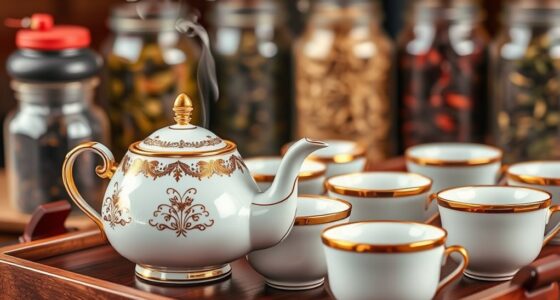
Luxury restaurants turn food into art by carefully choosing tableware that complements their dishes and using garnishes to add color and balance. They employ advanced techniques like spherification and foam, using tools for precise placement. Colors and composition create harmony and highlight key ingredients, often in minimalist or avant-garde styles. This attention to detail enhances the dining experience, making each plate memorable. To learn more about these beautiful presentations, continue exploring the art of plating.
Key Takeaways
- Luxury restaurants choose tableware that complements the dish’s style, color, and size to elevate visual appeal.
- They employ modernist techniques and precise tools for artistic plating, creating unique textures and layered presentations.
- Thoughtful use of color, composition, and garnishes guides focus and enhances the dish’s vibrancy and harmony.
- Iconic styles like minimalist and avant-garde emphasize simplicity or boldness, transforming food into statement art.
- Elegant plating combined with ambiance and presentation elevates the dining experience into a memorable artistic event.
The Principles Behind Elegant Food Presentation
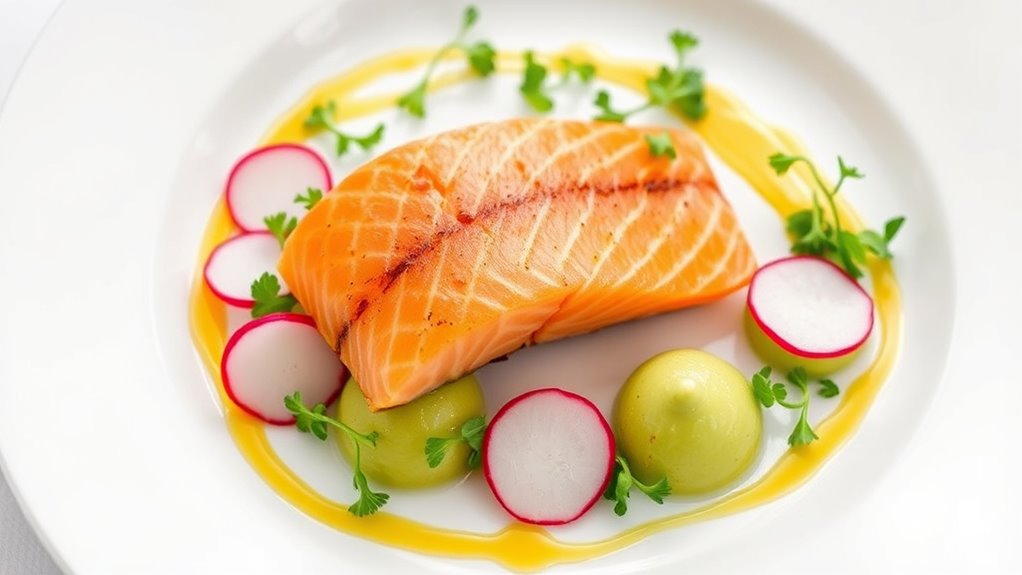
When it comes to elegant food presentation, understanding the core principles can make a significant difference. Your choice of tableware selection plays a crucial role in setting the tone and highlighting your dish’s beauty. Opt for plates that complement the food without overpowering it, ensuring harmony in size, color, and style. Garnishing techniques are equally important; they add visual interest and balance to your presentation. Use fresh herbs, microgreens, or carefully placed sauces to enhance the dish’s appearance without cluttering it. Keep in mind that simplicity often speaks louder than excess. Focus on creating a focal point and maintaining a clean, organized look. Additionally, color accuracy in plating can elevate the visual appeal by ensuring the colors of the food appear vibrant and true to life. When these elements are thoughtfully combined, your plate transforms into a work of art that invites admiration before the first bite.
Techniques and Tools Used by Top Chefs

Top chefs elevate their plating with a range of specialized techniques and precision tools that transform a simple dish into a visual masterpiece. Modernist techniques, such as spherification and foam creation, allow you to experiment with textures and presentation styles that captivate the eye. Plating tools like tweezers, squeeze bottles, and palette knives give you meticulous control, enabling you to position ingredients precisely. Using these tools, you can create clean lines, delicate accents, and layered arrangements that elevate the dish’s aesthetic appeal. Mastering modernist techniques and leveraging the right tools helps you push the boundaries of traditional plating, turning each plate into an artistic expression. Additionally, incorporating innovative European cloud solutions can streamline your kitchen operations and enhance the efficiency of your culinary presentations. This approach not only enhances visual impact but also sets the tone for an unforgettable dining experience.
The Role of Color and Composition in Plating
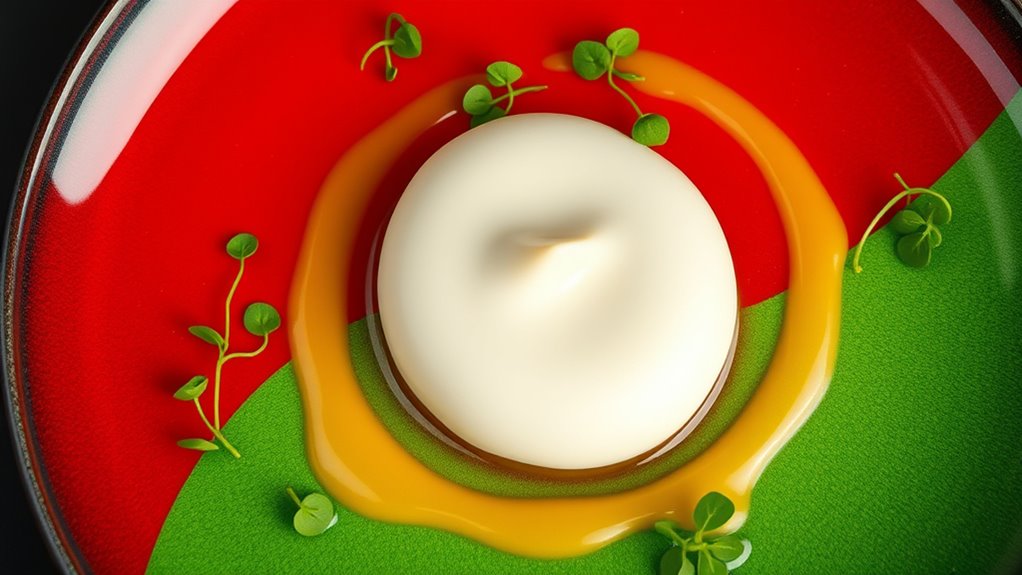
Color and composition are the foundational elements that draw the eye and evoke emotion in plating. By understanding color psychology, you can select hues that influence mood—warm colors energize, cool colors soothe. Balance and harmony in your arrangement ensure the dish feels complete and appealing. Consider the placement of each element; a symmetrical layout often feels stable, while asymmetry creates dynamic interest. Use contrasting colors to highlight key components, guiding the diner’s focus. The goal is to craft a visual story that complements flavors and textures. Here’s a simple guide:
| Color Strategy | Composition Technique |
|---|---|
| Evoke emotion | Create focal points |
| Use contrast | Maintain balance |
| Highlight key colors | Foster harmony |
| Play with temperature | Add rhythm |
| Balance vibrancy | Ensure cohesiveness |
Additionally, paying attention to visual flow can help create a more engaging presentation.
Examples of Iconic Plating Styles in Luxury Dining
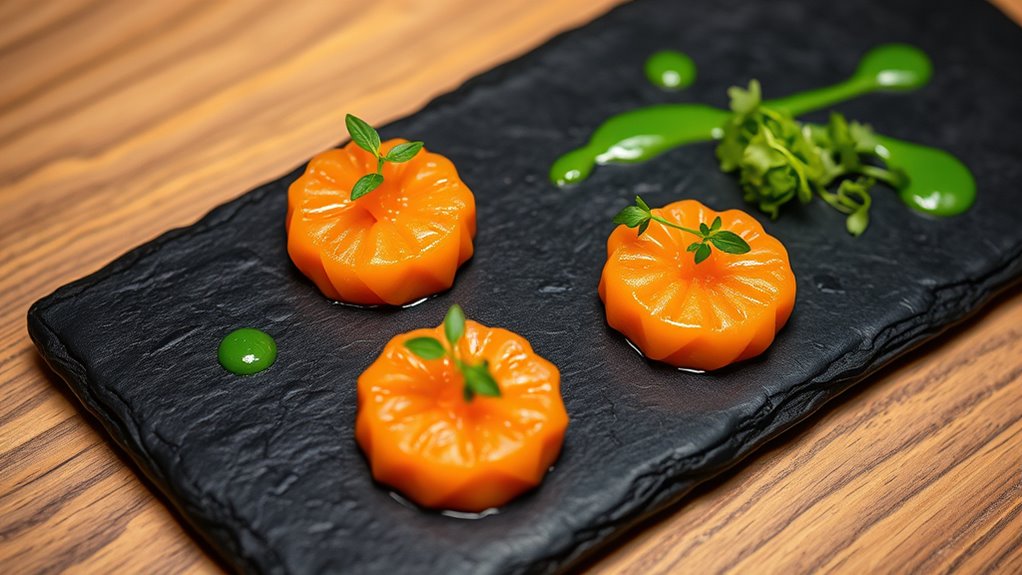
Luxury dining often showcases iconic plating styles that elevate the dining experience and emphasize artistry. One popular style is minimalist design, where simplicity highlights the quality and beauty of each ingredient. With clean lines and sparing use of garnishes, this approach directs your focus to the natural aesthetics of the dish. Another striking example is avant garde plating, which pushes boundaries with unconventional shapes, bold arrangements, and innovative techniques. This style transforms food into a visual spectacle, often sparking curiosity and conversation. Both minimalist and avant garde plating serve to create memorable presentations that reflect the chef’s creativity and mastery. These styles exemplify how luxury restaurants use plating as a form of artistic expression, turning every dish into a statement piece. Detect and correct passive voice can help chefs communicate their artistic vision more effectively.
How Visual Appeal Enhances the Culinary Experience
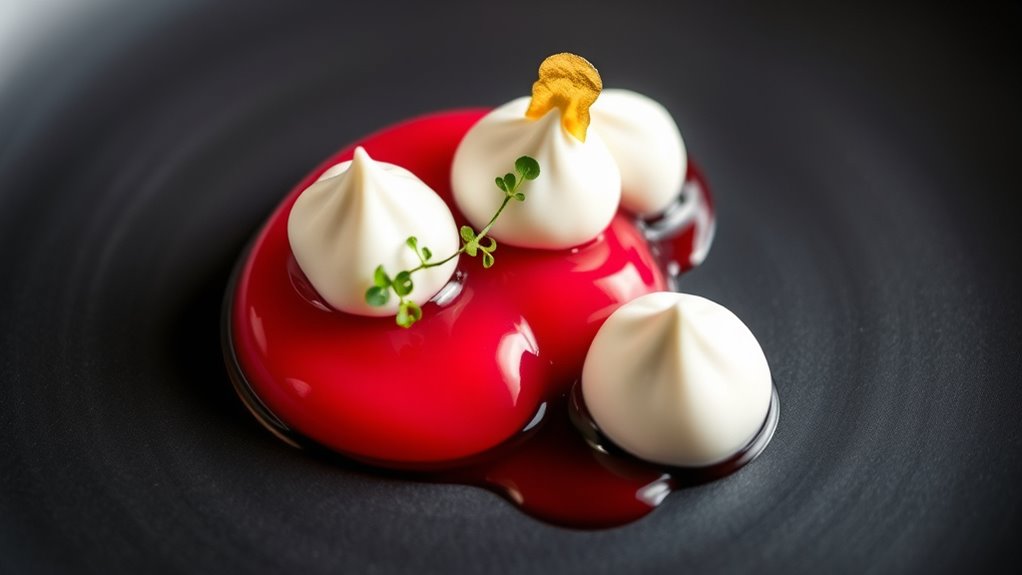
Visual appeal plays a essential role in shaping your overall dining experience because what you see often influences your expectations and enjoyment. When a dish is beautifully plated, it invites you to appreciate the artistry behind the food. Good table setting etiquette enhances this effect, creating an elegant atmosphere that elevates the meal. You’ll notice how food photography captures these details, showcasing the vibrant colors and intricate arrangements that make a dish stand out. This visual presentation not only stimulates your appetite but also deepens your connection to the culinary story being told. In luxury dining, the harmony between plating and setting transforms eating into an immersive experience, turning a simple meal into a memorable moment of art and flavor. Additionally, smart design principles can be applied to the overall ambiance to further enrich the dining environment, making the experience even more welcoming and comfortable.
Frequently Asked Questions
How Does Plating Influence Diners’ Perceptions of Taste and Quality?
Plating influences your perceptions of taste and quality by enhancing visual aesthetics and creating sensory expectations. When a dish is artfully presented, you’re more likely to anticipate a remarkable flavor experience. The careful arrangement and attention to detail make the food feel special, elevating your overall impression of quality. Fundamentally, good plating sets the stage for a memorable dining experience by appealing to your senses before you even take a bite.
What Are Common Mistakes to Avoid in Gourmet Food Presentation?
Avoid overcrowding dishes, which makes the plate look cluttered and distracts from the main elements; for example, a chef once overloaded a plate with too many garnishes, confusing diners. Also, steer clear of inconsistent color schemes, as mismatched hues can make the dish appear unbalanced. Keep your presentation simple, harmonious, and focused on highlighting the food’s natural beauty to create an elegant, appetizing look.
How Do Cultural Influences Shape Plating Styles in Luxury Restaurants?
You see that cultural influences shape plating styles through cultural symbolism and regional aesthetics. By incorporating symbols and motifs meaningful to a specific culture, you create a deeper connection with diners. Regional aesthetics influence your presentation choices, reflecting local traditions and natural surroundings. This blend of symbolism and regional style allows you to craft visually stunning and culturally rich plates, elevating the dining experience and showcasing respect for diverse culinary heritages.
What Sustainability Considerations Are Involved in High-End Food Presentation?
You prioritize sustainability by choosing recyclable materials for plating and presentation. For example, a high-end restaurant might use biodegradable plates made from bamboo or recycled glass. You also emphasize local sourcing to reduce carbon footprints and support nearby farmers. This approach not only minimizes waste but also aligns with eco-conscious diners’ values, showcasing your commitment to environmental responsibility while maintaining the artistry of high-end food presentation.
How Has Technology Impacted the Evolution of Plating Techniques?
Technology has revolutionized plating techniques through digital enhancement and 3D printing. You can now use digital tools to precisely design and visualize intricate presentations before plating, ensuring consistency and artistry. 3D printing allows for creating detailed edible decorations and unique shapes that elevate your dishes. These innovations enable you to push creative boundaries, making your presentation more innovative, personalized, and visually stunning, ultimately enhancing the dining experience.
Conclusion
Mastering the art of plating transforms your dining experience into a breathtaking visual masterpiece. When you pay attention to color, composition, and technique, you create dishes that captivate the eye and elevate the taste. Remember, your presentation can turn a simple meal into an unforgettable culinary spectacle—an artistic achievement that rivals the most famous masterpieces in history. So, embrace these principles and let your creativity turn every plate into a work of art that leaves everyone in awe.