When choosing the perfect bubbles for any celebration, focus on the champagne’s origin, production method, and flavor profile. Authentic Champagne from France’s Champagne region offers a rich, complex experience, while other sparkling wines like Cava and Franciacorta provide excellent alternatives with distinct tastes. Consider the occasion—lighter sparkling wines suit casual events, while more refined options elevate special moments. Stay curious; exploring these nuances will help you pick the ideal bubbly every time.
Key Takeaways
- Understand that true Champagne must come from France’s Champagne region and adhere to strict production regulations.
- Consider the occasion and desired flavor profile—Cava and Franciacorta offer excellent alternatives with unique characteristics.
- Traditional Méthode Champenoise produces richer, creamier textures, ideal for special celebrations.
- For casual events, sparkling wines made via Charmat method, like Prosecco, offer fresh, fruity options.
- Read labels and region-specific details to ensure authentic quality and select the best bubbles for your celebration.
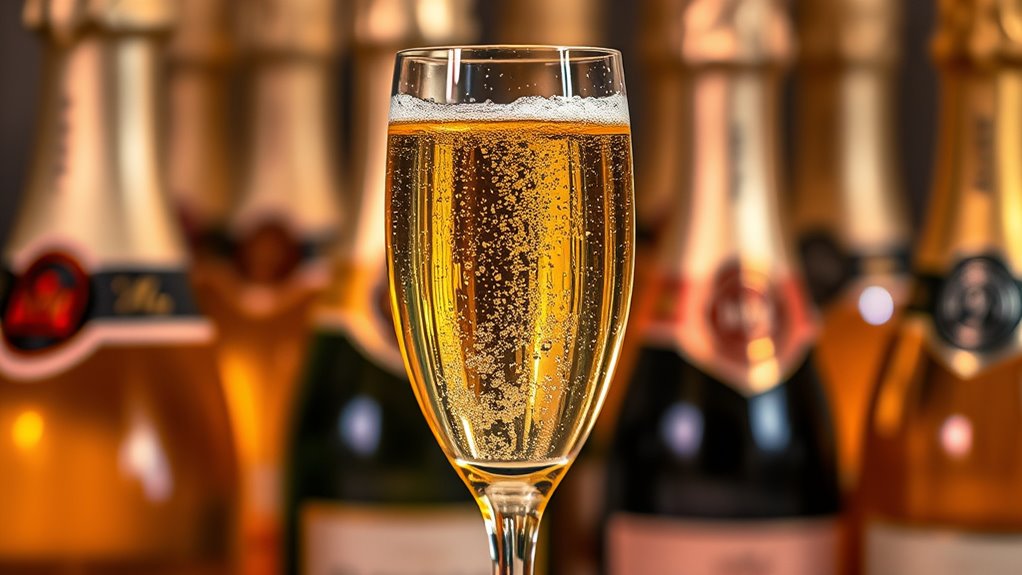
Celebrating a special occasion often calls for a glass of bubbly, and few beverages evoke elegance quite like champagne. When you think of champagne, you might imagine the iconic sparkling wine from the Champagne region in France. But not all sparkling wines are created equal, and understanding the differences can help you pick the perfect bottle for any celebration. Champagne is a specific type of sparkling wine that comes from the renowned wine regions around Champagne, France. These regions have strict regulations that govern how the wine is produced, ensuring its quality and distinctiveness. However, many other regions worldwide produce sparkling wines that can rival champagne in taste and sophistication, often at a more accessible price point.
Celebrating with bubbly? Explore champagne and other sparkling wines for every special occasion.
The charm of sparkling wine lies in its lively bubbles and complex flavors, which can vary depending on the region and production methods. When you choose a sparkling wine, consider its origin. Champagne, with its unique terroir and traditional methods like the traditional method (Méthode Champenoise), guarantees a certain level of finesse and finesse. But other wine regions, such as Italy’s Franciacorta or Spain’s Cava regions, also produce high-quality sparkling wines using similar traditional techniques. These regions have their own wine-making traditions and grapes, offering a delightful variety of flavors, from crisp and citrusy to rich and toasty.
If you’re seeking a versatile sparkling wine to serve at celebrations, it’s worth exploring options beyond champagne. Many sparkling wines from different wine regions showcase unique characteristics that can complement a variety of foods and moods. For example, a well-made Cava often offers excellent value, with bright acidity and fruity notes, perfect for casual gatherings or toasting to special moments. Meanwhile, a Franciacorta might bring more depth and complexity, ideal for more refined occasions.
When selecting sparkling wine, pay attention to labels and production techniques. Sparkling wines made via the traditional method typically have a richer, creamier texture, while those produced via the Charmat method tend to be fresher and more straightforward. Your choice can influence the overall experience, whether you’re celebrating a milestone, enjoying a romantic dinner, or simply unwinding with friends. Additionally, understanding the role of regulations in different regions can help you identify authentic and high-quality options.
Ultimately, the world of sparkling wine offers a broad spectrum of flavors, styles, and origins. Whether you stick with classic champagne or explore sparkling wines from other regions, you’re guaranteed a bubbly experience that elevates any celebration. Knowing a little about the wine regions and the different types of sparkling wine helps you make more informed choices, ensuring each toast is memorable.
Top picks for "champagne choos perfect"
Open Amazon search results for this keyword.
As an affiliate, we earn on qualifying purchases.
Frequently Asked Questions
How Should Champagne Be Stored Before Opening?
You should store champagne horizontally in a cool, dark place with a consistent temperature of around 45-50°F. Keep the cork preserved by avoiding temperature fluctuations, which can cause it to dry out or spoil the wine. guarantee the storage area is undisturbed, as vibrations or light can compromise quality. Proper storage helps maintain the bubbles and flavors, so your champagne stays fresh and ready for your celebration.
What Are the Differences Between Vintage and Non-Vintage Champagne?
Imagine a story told through bubbles—vintage champagne ages gracefully, reflecting unique character from a specific year’s harvest. Vintage champagne comes from grapes of a single year, often richer and more complex. Non-vintage blends, on the other hand, combine wines from multiple years, offering consistency. If you want a special, age-worthy experience, go for vintage; for reliability, non-vintage suits every celebration.
How Do I Properly Open a Champagne Bottle?
To properly open a champagne bottle, start by chilling it to the ideal serving temperature of 45-50°F. Remove the foil and loosen the wire cage, keeping your hand on the cork for safety. Hold the bottle at a 45-degree angle, grip the cork firmly, and slowly twist the bottle, not the cork. This guarantees cork safety and prevents unwanted spray, allowing you to enjoy your bubbly smoothly.
What Food Pairs Best With Different Types of Champagne?
You should match your champagne with cheese pairings like Brie or Camembert for a creamy touch, and seafood matches such as oysters or smoked salmon to enhance the flavors. For dry champagnes, go with light appetizers, while sweeter varieties complement desserts or fruit. Sparkling rosés work well with berries, and vintage champagnes pair beautifully with rich dishes. Keep experimenting to find your perfect pairing for every celebration!
How Do I Recognize Genuine Champagne From Counterfeit?
Imagine you’re handed a bottle claiming to be Veuve Clicquot. To recognize genuine champagne, check the label authenticity—look for clear, well-printed branding, a government-embossed label, and a cork with a wire cage. Counterfeit detection involves inspecting the bottle’s seal, ensuring the serial number matches official records, and verifying the provenance. Always buy from reputable sources to avoid fake champagne.
Conclusion
Now that you know the basics, you’re ready to pick the perfect champagne for any celebration. Remember, the right bubbly can turn an ordinary moment into an unforgettable memory—like fireworks exploding in your mouth. Trust your palate, explore different styles, and don’t be afraid to indulge in a little luxury. With your newfound knowledge, every toast will feel like the most extraordinary event in the universe. Cheers to sparkling moments ahead!