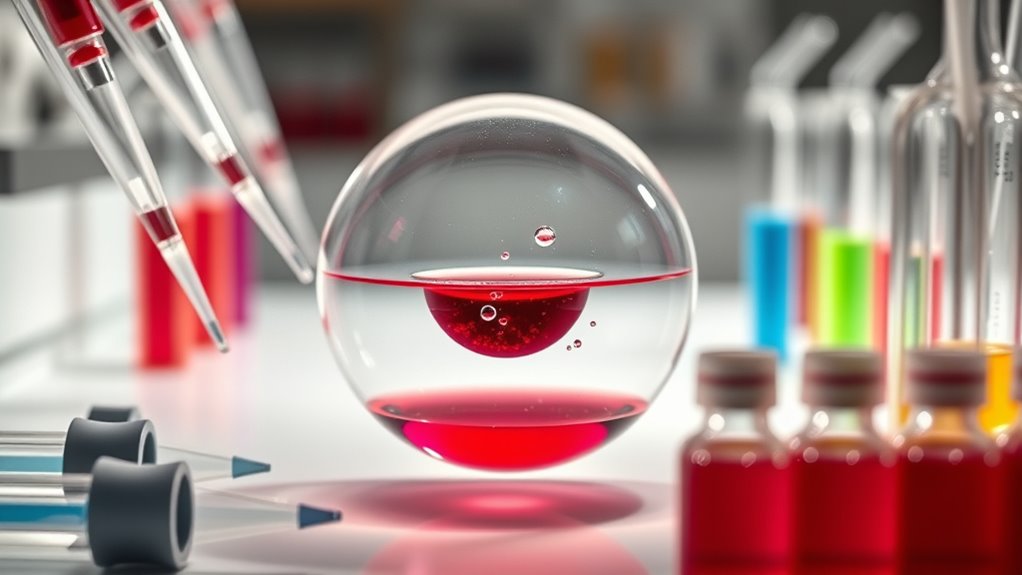

Molecular gastronomy combines science with culinary artistry to transform traditional dishes into innovative experiences. By understanding molecular processes like gelation, emulsification, and flavor encapsulation, you can create new textures, surprising flavors, and stunning presentations. Chefs like Ferran Adrià and Heston Blumenthal push boundaries, using cutting-edge techniques and ingredients that inspire unforgettable sensory journeys. If you want to discover how science takes fine dining to a new level, there’s much more to explore.
Key Takeaways
- Molecular gastronomy combines scientific techniques and culinary artistry to create innovative textures, flavors, and visual presentations in fine dining.
- Techniques like spherification, gelation, and foams enable chefs to transform traditional dishes into multisensory experiences.
- Pioneering chefs integrate science with sustainability, emphasizing eco-friendly practices and cultural influences in modern gastronomy.
- Advanced tools and ingredients, such as liquid nitrogen and agar-agar, allow for dramatic effects and unexpected flavor combinations.
- Challenges include ingredient sourcing, regulatory restrictions, cultural acceptance, and maintaining ethical, sustainable practices.
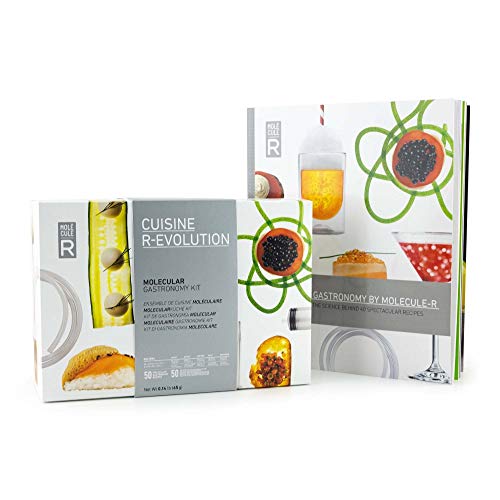
Molecule-R – Molecular Gastronomy Starter Kit + FREE Recipe Book – Spherification Kit – CUISINE R-EVOLUTION
WHAT’S INSIDE OUR MOLECULAR GASTRONOMY KIT: silicone mold – slotted spoon – measuring spoon – plastic syringe and…
As an affiliate, we earn on qualifying purchases.
As an affiliate, we earn on qualifying purchases.
The Origins and Evolution of Molecular Gastronomy

Although molecular gastronomy is a relatively recent development in the culinary world, its roots trace back to early 20th-century scientists who explored the physical and chemical processes behind cooking. The historical context reveals a fascination with understanding food at a molecular level, driven by a desire to innovate and improve culinary techniques. Cultural influences also played a significant role, as chefs and scientists from different backgrounds brought unique perspectives on food preparation and presentation. This blend of scientific inquiry and cultural expression helped shape the field’s evolution. Over time, these insights fueled experimentation, leading to modern techniques that transform traditional dishes into new sensory experiences. Today, molecular gastronomy continues to evolve, rooted in its rich scientific and cultural history, and increasingly incorporating AI-driven solutions to innovate further.
![Spherification Kit [Molecular Gastronomy] ⊘ Non-GMO Vegan OU Kosher Certified Ingredients](https://m.media-amazon.com/images/I/51ccHbEPdPL._SL500_.jpg)
Spherification Kit [Molecular Gastronomy] ⊘ Non-GMO Vegan OU Kosher Certified Ingredients
Create spherified caviar in your own kitchen.
As an affiliate, we earn on qualifying purchases.
As an affiliate, we earn on qualifying purchases.
Key Techniques and Methods Used by Chefs

Chefs utilize a variety of innovative techniques to manipulate ingredients at the molecular level, creating surprising textures and flavors. These molecular techniques enable precise control over ingredients, opening new culinary possibilities. Here are four key methods you should know:
Chefs employ innovative molecular techniques to craft surprising textures and flavors, unlocking new culinary possibilities.
- Spherification – transforms liquids into gel-like spheres, mimicking caviar or pearls.
- Foams and Espumas – incorporate air into liquids, producing light, airy textures.
- Gelification – turns liquids into gels, perfect for layering or shaping dishes.
- Flavor Pairing – uses scientific principles to combine ingredients that share aromatic compounds, enhancing taste harmony.
Understanding home safety & accessibility is important for chefs working in diverse environments and ensuring safety in the kitchen. Mastering these techniques allows you to craft dishes that challenge expectations and elevate flavor pairing, transforming the dining experience.

JOYANDRO Tools Used for HVAC Nitrogen Purging Tools,Nitrogen Regulator HVAC Purge,Nitrogen Purge Tool,Metal Nitrogen Purging Tools,Adjustable Nitrogen Flow Regulator,Red
Advanced Regulation – Our nitrogen purging system maintains consistent and finely tuned nitrogen delivery, enabling peak efficiency within…
As an affiliate, we earn on qualifying purchases.
As an affiliate, we earn on qualifying purchases.
Innovative Ingredients and Their Roles in Modern Cuisine

Innovative ingredients push your culinary boundaries by creating unexpected flavor combinations that surprise your palate. They also enable you to craft textures that challenge traditional expectations and add excitement to each bite. By incorporating edible artistry, you can transform dishes into visually stunning masterpieces that elevate the dining experience. Embracing sustainable food practices ensures that your culinary innovations align with environmentally responsible principles.
Unusual Flavor Combinations
Unusual flavor combinations have become a hallmark of modern molecular gastronomy, pushing the boundaries of traditional taste profiles. You’ll notice chefs experimenting with fusion flavors and unexpected pairings that challenge your palate. Here are four exciting examples:
- Combining sweet and savory elements, like bacon with maple syrup, creates a memorable contrast.
- Merging ingredients from different cuisines, such as wasabi with avocado, introduces surprising heat and creaminess.
- Pairing acidic citrus with rich dairy, like lemon-infused yogurt, sharpens flavors and adds depth.
- Using herbs in unexpected ways, such as basil in desserts, enhances aroma and complexity. Additionally, understanding Free Floating concepts can inspire chefs to explore innovative techniques and ingredient pairings, leading to groundbreaking culinary creations.
These innovative ingredients and unexpected pairings redefine what’s possible in modern cuisine, delighting your senses with every bite.
Textural Surprises
Textural surprises are at the heart of modern molecular gastronomy, where innovative ingredients transform how dishes feel on your palate. By combining techniques like spherification and foaming, chefs create unexpected textures that elevate flavor pairing. The right ingredient sourcing guarantees these textures remain consistent and safe. These ingredients—like agar-agar, xanthan gum, or maltodextrin—add crunch, creaminess, or lightness, challenging your expectations. They allow you to experience familiar flavors in new ways. Precision in selecting ingredients is vital for achieving desired textures without overpowering taste. Experimenting with textures enhances sensory engagement, making each bite memorable. Understanding the Youngster Choice behind ingredient selection can further refine the texture outcomes and ensure culinary success. The table below highlights some key ingredients used for textural surprises:
| Ingredient | Role |
|---|---|
| Agar-agar | Gelatinous, firm textures |
| Xanthan gum | Thickening, stabilizing |
| Maltodextrin | Crispy, powdery feel |
| Soy lecithin | Foaming agent |
| Tapioca starch | Chewy, elastic texture |
Edible Artistry
Have you ever wondered how chefs turn simple ingredients into stunning edible masterpieces? It’s all about innovative ingredients and cultural influences shaping modern cuisine. Here are four ways they do it:
- Sustainable sourcing guarantees fresh, eco-friendly ingredients that elevate dishes.
- Rare spices and herbs add vibrant flavors inspired by diverse cultures.
- Molecular techniques transform familiar ingredients into unexpected textures and forms.
- Edible art combines visual creativity with taste, turning plates into canvases.

YJSG Draft Pour Beer Dispenser,Canned Beer Draft System,Mini Kegerator,Beer Foam Maker,Beer Can Tap,Converts Any Can Into Draft for Family, Bars,Gifts for Men,Black
【Draft Beer Dispenser Beautiful and Easy To Use】: draft beer system No carbon dioxide gas cylinder is needed….
As an affiliate, we earn on qualifying purchases.
As an affiliate, we earn on qualifying purchases.
The Science Behind Texture and Flavor Manipulation

You can manipulate textures and flavors by using emulsification techniques that create stable mixtures of liquids, or by applying gelation methods to turn liquids into solids. These processes control how ingredients release aroma and taste, enhancing the overall sensory experience. Understanding these scientific principles allows you to craft dishes with precise textures and vibrant flavors. Additionally, recognizing passive voice detection can help you craft clearer and more engaging culinary descriptions.
Emulsification Techniques Explored
Emulsification is a fundamental technique in molecular gastronomy that allows chefs to manipulate texture and flavor in innovative ways. By mastering this process, you can create stunning foams, sauces, and dressings with remarkable emulsion stability. Here’s what you need to know:
- Foaming techniques: Use soda chargers or immersion blenders to transform liquids into airy, stable foams that enhance presentation.
- Emulsion stability: Achieve long-lasting mixtures by carefully controlling temperature, ingredient ratios, and using emulsifiers like lecithin.
- Types of emulsions: Differentiate between oil-in-water and water-in-oil emulsions to suit specific dishes.
- Flavor enhancement: Emulsification release new flavor profiles by combining ingredients seamlessly, intensifying taste experiences. Understanding the factors that influence emulsion stability can help you refine your techniques and achieve more consistent results.
Mastering these techniques elevates your culinary creations, blending science with artistry.
Gelation and Solidification Methods
Ever wondered how chefs create firm gels or delicate jellies that hold their shape perfectly? It all comes down to molecular gelation and solidification techniques. Molecular gelation involves transforming liquids into semi-solid or solid forms by manipulating their molecular interactions, often using gelling agents like gelatin, agar-agar, or carrageenan. These agents undergo gelation through processes like cooling or chemical reactions, creating a network that traps water and flavors. Solidification techniques include methods such as cooling, freezing, or adding agents that trigger phase changes. By carefully controlling temperature and ingredient concentrations, you can produce everything from firm gels to soft, delicate textures. These techniques allow chefs to craft innovative dishes with precise textures that enhance both presentation and taste.
Aromatic and Flavor Release
Building on the foundation of gelation and solidification, manipulating texture plays a pivotal role in how flavors are experienced in molecular gastronomy. You can enhance smell and create complex taste profiles through aroma layering and smell enhancement techniques. Consider these methods:
- Use encapsulation to trap volatile compounds, releasing aroma gradually.
- Implement aroma layering by combining different scents that activate sequentially.
- Adjust the texture to control how aromas are perceived with each bite.
- Incorporate foams or air spheres to increase surface area, intensifying aroma release.
- The choice of projector technology, such as DLP or LCD, can influence the precision of visual presentations that complement the sensory experience.
These techniques manipulate how flavors and aromas are perceived, making each dish a dynamic sensory experience. Texture becomes a tool not just for mouthfeel but for guiding your olfactory journey, elevating taste through science.
Notable Chefs and Pioneers in the Field

Several chefs have revolutionized molecular gastronomy by blending science with culinary artistry, pushing the boundaries of traditional cooking. They emphasize sustainable farming and food waste reduction, integrating eco-conscious practices into their creations. Chefs like Ferran Adrià and Heston Blumenthal pioneered techniques that transform textures and flavors, inspiring a new culinary frontier. These pioneers experiment with innovative methods to minimize waste while enhancing flavor profiles. Their work demonstrates how science can promote sustainability in fine dining. Here’s a quick overview:
| Chef | Key Contributions |
|---|---|
| Ferran Adrià | Avant-garde dishes, sustainable ingredient sourcing |
| Heston Blumenthal | Multi-sensory dining, waste reduction techniques |
| Grant Achatz | Emphasis on local, seasonal ingredients, sustainability |
| René Redzepi | Foraging, farm-to-table, eco-conscious practices |
| Massimo Bottura | Food waste reduction, culinary innovation |
Visual Spectacle: Presentation and Plating Innovations

You can elevate your dishes through artistic plating techniques that captivate the eye. Playing with color and texture adds depth and surprise to each presentation. Exploring innovative serving concepts transforms ordinary meals into memorable visual experiences. Utilizing visual enhancement techniques can further amplify the impact of your presentation and engage diners’ senses.
Artistic Plating Techniques
Artistic plating techniques transform dishes into enthralling visual experiences that enhance the overall dining journey. You can achieve this by focusing on key elements like:
- Plating symmetry — creating balanced, harmonious arrangements that draw the eye effortlessly.
- Color balance — using contrasting or complementary hues to make each component pop.
- Layering textures — stacking ingredients for depth and visual interest.
- Negative space — strategically leaving areas empty to emphasize focal points.
Mastering these techniques elevates your presentation, making dishes not just flavorful but also visually mesmerizing. When you pay attention to plating symmetry and color balance, you guide your guests’ gaze and evoke emotion. This artistic touch transforms ordinary meals into memorable culinary experiences.
Color and Texture Play
Color and texture play crucial roles in creating a striking visual spectacle on the plate, capturing your guests’ attention instantly. Achieving color harmony involves selecting hues that complement or contrast beautifully, enhancing the dish’s overall appeal. For example, vibrant reds paired with cool greens create a lively, balanced look. Texture contrast adds depth and excitement, making each bite intriguing. Crispy elements against smooth sauces or airy foams against dense components create visual interest and sensory variety. These techniques guide the eye and evoke emotion, elevating the dining experience. By thoughtfully combining color harmony and texture contrast, you transform a simple plate into an artistic masterpiece that delights both the eyes and the palate. This careful play of visual elements underscores the innovative spirit of molecular gastronomy.
Innovative Serving Concepts
Innovative serving concepts transform traditional plating into a mesmerizing visual experience that heightens anticipation and excitement. You’ll explore techniques like:
- Using pairing techniques to balance flavors and colors creatively, elevating presentation.
- Incorporating ingredient sourcing to select unique, fresh elements that enhance visual appeal.
- Playing with shapes and textures, such as spheres or gels, to surprise diners.
- Employing modern plating tools and technology to craft layered or suspended dishes.
These innovations not only captivate the eye but also deepen the dining experience. By thoughtfully combining pairing techniques with carefully sourced ingredients, you turn each dish into a work of art. The goal: surprise, delight, and leave lasting impressions through visually stunning culinary creations.
Challenges and Limitations of Molecular Gastronomy

Despite its exciting possibilities, molecular gastronomy faces several significant challenges and limitations. Ingredient sourcing can be tricky, as many specialized chemicals and techniques aren’t readily available everywhere, limiting its global accessibility. Additionally, cultural influences shape culinary preferences, making it hard to introduce experimental dishes universally without clashing with traditional tastes. Regulatory restrictions also pose hurdles, especially with unfamiliar or artificial ingredients that might not meet local safety standards. Cost is another factor; advanced equipment and rare ingredients increase expenses, making it less feasible for everyday restaurants. Furthermore, some diners may be hesitant or skeptical about science-driven techniques, preferring familiar flavors and textures. These challenges highlight that, despite innovation, molecular gastronomy still has obstacles to widespread acceptance and implementation. The importance of regulatory compliance and consumer education is crucial for its broader adoption.
How Molecular Gastronomy Is Changing Fine Dining Experiences

Molecular gastronomy is transforming fine dining by pushing the boundaries of traditional culinary artistry. It creates immersive experiences that surprise and delight your senses. Here’s how it’s changing the scene:
- Innovative presentations—using techniques like spherification and foams, chefs craft visually stunning dishes that feel futuristic.
- Enhanced flavors—scientific methods intensify or blend flavors in unexpected ways, elevating taste profiles.
- Sustainable practices—by reducing waste and utilizing innovative ingredients, chefs promote eco-friendly dining.
- Cultural influences—fusion of diverse culinary traditions inspires unique, globally inspired creations, enriching the dining experience.
Additionally, molecular gastronomy often incorporates responsible use and privacy concerns by employing eco-conscious techniques and sustainable ingredients, aligning culinary innovation with environmental responsibility.
Future Trends and Developments in the Discipline
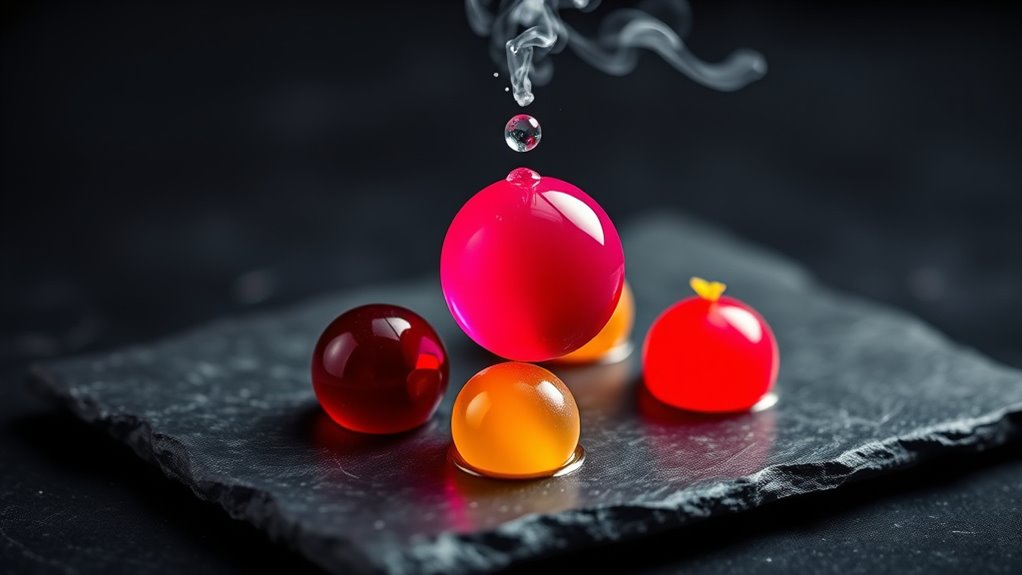
As technology continues to advance, the future of molecular gastronomy is poised to become even more innovative and accessible. You’ll see a shift toward more sustainable ingredient sourcing, with chefs exploring local, seasonal, and alternative ingredients to create exciting textures and flavors. This approach not only reduces environmental impact but also enhances the freshness and quality of dishes. Customer engagement will also grow, as diners become more curious and enthusiastic to understand the science behind their meals. Interactive experiences, such as live demonstrations and personalized tasting sessions, will deepen your connection to the culinary process. These developments will make molecular gastronomy more approachable, inspiring both chefs and guests to experiment and embrace science-driven cuisine in everyday dining. Additionally, the integration of live music and cultural performances can further elevate the dining experience, creating a multi-sensory environment that appeals to a broader audience.
Ethical and Sustainability Considerations in Molecular Cuisine

Ethical and sustainability considerations are increasingly shaping the practice of molecular cuisine, prompting chefs and diners alike to rethink their choices. You can support this shift by focusing on:
- Prioritizing sustainable sourcing to reduce environmental impact.
- Choosing ingredients that promote ethical innovation, ensuring fair labor practices.
- Reducing waste through precise techniques that maximize ingredient use.
- Supporting local producers to minimize carbon footprints and encourage community growth.
- Educating oneself about sustainable practices within the culinary industry to make more informed decisions.
Frequently Asked Questions
How Accessible Is Molecular Gastronomy for Home Cooks?
Molecular gastronomy is quite accessible for home cooks, especially since many ingredient accessibility options are readily available online or at specialized stores. While some technique complexity exists, you can start with simple experiments like spherification or foams that don’t require advanced equipment. With a bit of practice, you’ll enjoy creating innovative textures and flavors, making your culinary experience more exciting without feeling overwhelmed by the science behind it.
What Safety Precautions Are Necessary When Experimenting With Molecular Techniques?
Think of molecular gastronomy as a science-filled adventure—safety’s your trusty shield. You should handle chemicals carefully, avoiding splashes and contact with skin, like a cautious explorer. Always follow hygiene protocols to keep your workspace sterile, preventing hazards from sneaking in. Use proper protective gear, like gloves and goggles, and work in well-ventilated areas. These precautions make certain your culinary experiments stay safe, fun, and delicious.
How Does Molecular Gastronomy Influence Food Allergy Management?
Molecular gastronomy can improve food allergy management by enabling precise food allergy detection and creating allergen-free formulations. You can use scientific techniques to identify traces of allergens more accurately, ensuring safer meals for allergy sufferers. By employing these methods, you minimize cross-contamination risks and develop dishes free from common allergens. This proactive approach helps you deliver enjoyable, safe dining experiences while catering to individuals with specific dietary needs, increasing overall confidence and trust.
Are There Cultural or Regional Variations in Molecular Gastronomy Practices?
Yes, you’ll notice cultural fusion and regional authenticity influence molecular gastronomy practices. Chefs blend local ingredients with scientific techniques to create innovative dishes that honor tradition while exploring new textures and flavors. For example, Asian cuisines might incorporate molecular methods to enhance regional authenticity, while Western chefs experiment with fusion concepts. These variations reflect how culinary science adapts to cultural contexts, enriching global dining experiences with diverse, region-specific innovations.
What Are the Legal Regulations Surrounding the Use of Novel Ingredients?
You need to know that legal regulations surrounding novel ingredients often involve international standards, ensuring safety and quality. Intellectual property rights protect innovative techniques and ingredients, but regulations vary by country. You should stay informed about local food safety laws, patent laws, and labeling requirements to avoid legal issues. Always verify compliance with international standards and respect intellectual property rights when experimenting with or commercializing new ingredients in molecular gastronomy.
Conclusion
As you explore the mesmerizing world of molecular gastronomy, it’s clear that science and art blend to redefine fine dining. With innovative techniques and ingredients, you get to experience dishes that surprise and delight your senses. Will you embrace these culinary innovations and support sustainable practices? Ultimately, this exciting frontier invites you to savor not just a meal, but a journey into the future of food. Are you ready to taste the possibilities?