Deciding whether to decant wine depends on the type and age of the wine. For young reds with sediment or complex aromas, decanting helps open up flavors and remove unwanted particles. Use a wide-bowled glass and proper storage temperature to enhance the experience. Even if your wine doesn’t need decanting, pouring it into the right glass can elevate its presentation and aroma. Keep exploring to master the art of serving wine like a true sommelier.

Get your wardrobe favorites delivered free with Prime
- Fast, free delivery on millions of items
- Prime Video, Amazon Music and more included
- Member-only deals all year
Key Takeaways
- Decant wine to enhance aroma, flavor, and presentation while removing sediment from aged bottles.
- Proper storage and temperature optimize decanting effectiveness and wine development.
- Use wide-bowled glasses to maximize aeration and fully appreciate the wine’s nuances.
- Decide to decant based on wine type, age, sediment presence, and desired sensory enhancement.
- Serve decanted wine at the right temperature to ensure optimal tasting experience like a sommelier.
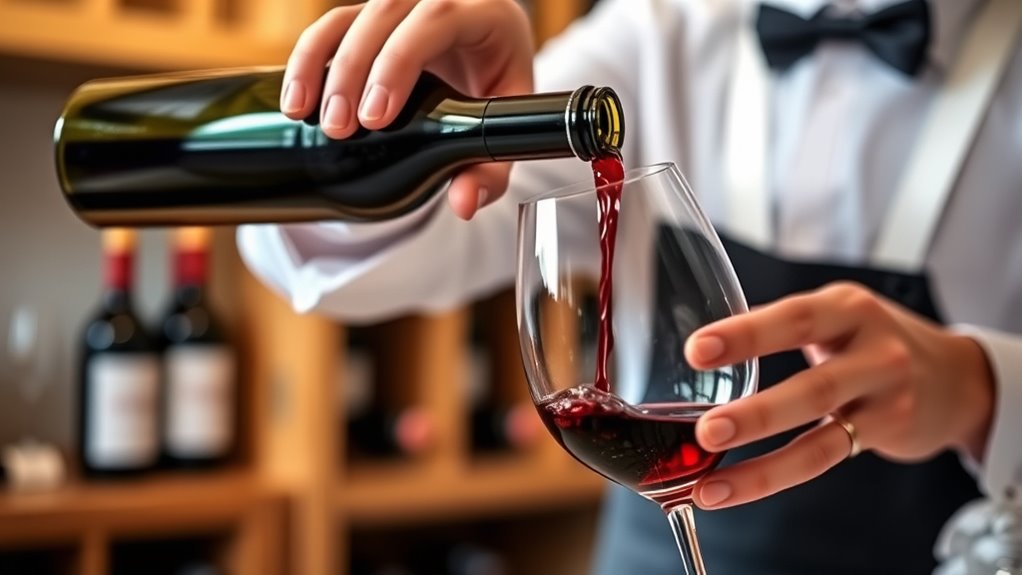
Have you ever wondered why wine is decanted before serving? It’s a common practice among sommeliers and wine enthusiasts, but understanding the reasons behind it can elevate your appreciation for wine. Decanting isn’t just about presentation; it’s a technique that enhances flavor, aroma, and overall drinking experience. One of the first considerations before decanting is how you store your wine. Proper wine storage is essential because it determines the wine’s condition and readiness for decanting. If your wine has been stored upright for a long time, it might have sediment settled at the bottom. Decanting helps separate this sediment from the liquid, preventing it from ending up in your glass. Additionally, if your wine has been stored at the correct temperature—around 55°F or 13°C—it will be more receptive to decanting, allowing its flavors and aromas to fully develop once exposed to air. Color temperature is an important factor that influences how your wine will respond during decanting and serving.
Choosing the right glassware is another pivotal step in serving wine like a professional. When decanting, you want to use a glass that enhances the wine’s qualities without overpowering them. Wide-bowled glasses are ideal because they allow the wine to breathe and release its aromas fully. This helps you appreciate the nuances in aroma and flavor that might otherwise be masked if you used a smaller or narrower glass. The choice of glassware also affects how you perceive the wine’s texture and finish, making the experience more immersive. So, when you decant, opt for glassware that complements the style of wine you’re serving, whether it’s a robust red or a delicate white.
As an affiliate, we earn on qualifying purchases.
Frequently Asked Questions
Can Decanting Improve the Taste of All Wines?
Decanting doesn’t improve the taste of all wines, but wine aeration can enhance certain types, especially young reds and tannic varieties. Decanting benefits include softening tannins and releasing complex aromas, making the wine more enjoyable. If you want to elevate flavors and enjoy a richer experience, decanting is worth trying, but for delicate whites or aged wines, it might not make much difference. Always consider the wine type before decanting.
How Long Should I Decant Different Types of Wine?
Decanting is like giving your wine a breath of fresh air. For young reds, let it aerate for 30 minutes to an hour to soften tannins, while vintage reds may need 1-2 hours for ideal flavor. For whites and rosés, decanting isn’t usually necessary. Adjust decanting speed based on wine type, and remember, patience enhances flavor, turning simple sips into a memorable experience.
Is Decanting Necessary for Aged Wines?
Decanting aged wines isn’t always necessary, but it can enhance your experience if done correctly. Proper wine storage preserves their complexity, so decanting helps aerate and remove sediment, revealing flavors. Choose the right glassware to complement the wine’s profile, allowing aromas to develop fully. If your aged wine has sediment or needs aeration, decanting can make a noticeable difference, elevating your tasting experience and showcasing the wine’s true character.
What Equipment Is Best for Decanting Wine?
Think of your decanting vessel as a stage for your wine’s grand performance. The best equipment includes a clear, wide-bowled decanter that allows aeration and easy pouring. Use decanting techniques like gently pouring and stopping before sediment. A fine crystal decanter or a glass one works beautifully. This setup enhances your wine’s aroma and flavor, making every sip a memorable experience—your personal wine theater.
Does Decanting Remove Sediment Effectively?
Yes, decanting effectively removes sediment from wine. When you use proper decanting techniques, you gently pour the wine into a decanter, allowing the sediment to stay behind in the bottle. Proper wine storage beforehand helps prevent excessive sediment. By decanting carefully, you enhance the wine’s clarity and flavors, ensuring a smoother, more enjoyable experience. Just take your time and watch for sediment as you pour.
best red wine glasses for aeration
As an affiliate, we earn on qualifying purchases.
As an affiliate, we earn on qualifying purchases.
Conclusion
Decanting isn’t just about aeration; it’s about revealing a wine’s hidden story, much like opening a treasured book. When you decide to decant, you’re inviting the wine to breathe and reveal its true character—like a secret waiting to be discovered. So, trust your senses and embrace the ritual. With a little patience, you’ll find that every sip becomes a chapter in your own personal tasting journey, turning simple wine into an unforgettable experience.
wine storage temperature control
As an affiliate, we earn on qualifying purchases.
As an affiliate, we earn on qualifying purchases.
As an affiliate, we earn on qualifying purchases.
Halloween Picks
halloween
As an affiliate, we earn on qualifying purchases.