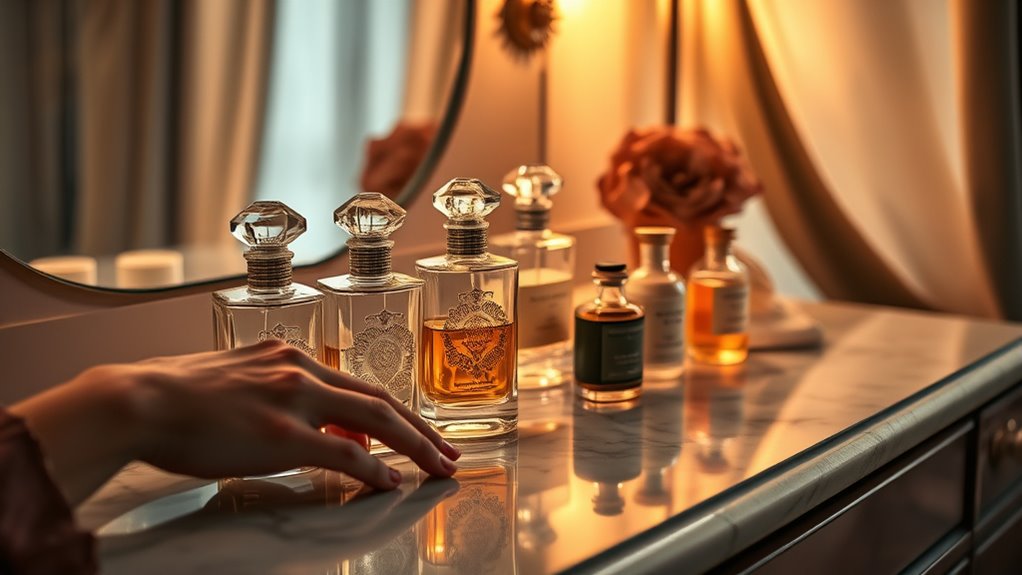

To create your own signature scent, start by selecting base notes like vanilla or musk that capture your core essence. Layer with middle notes such as floral or spicy accords for complexity, then add top notes like citrus or herbs for a fresh impression. Experiment by blending small amounts, adjusting until it feels right. Pay attention to how the scent evolves over time, ensuring it aligns with your personality and memories. Keep exploring, and you’ll uncover a truly unique fragrance that tells your story.
Key Takeaways
- Select and balance top, middle, and base notes to craft a harmonious, evolving scent that reflects your personality.
- Incorporate personal scent memories, such as floral or warm notes, to make your fragrance meaningful and unique.
- Experiment with small batches using different combinations, adjusting gradually to find what best resonates with you.
- Draw inspiration from cosmic or scientific themes to infuse your scent with harmony and personal significance.
- Test your blend throughout the day, refining it over time to create a distinctive signature fragrance.
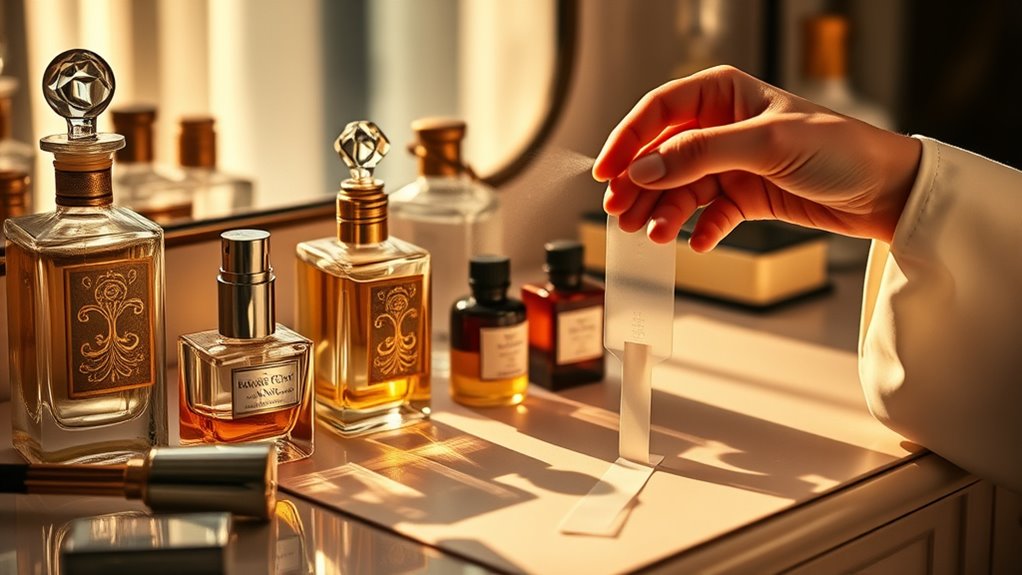
Have you ever wondered how to craft a scent that truly reflects your personality? Creating a signature scent is an art, and it starts with understanding the power of fragrance blending. When you experiment with different notes, you’re not just mixing smells—you’re telling a story about who you are. Think of fragrance blending as a way to layer scents, combining various notes to develop a complex aroma that evolves throughout the day. It’s about finding harmony between top, middle, and base notes that resonate with your personality and mood. As you explore different combinations, pay attention to how these scents interact and change over time.
Creating a signature scent involves blending notes that tell your unique personal story.
Your personal scent memory plays a crucial role in this process. Scents are deeply tied to memories and emotions, so when you select fragrances, consider the smells that evoke feelings of comfort, happiness, or confidence. Maybe a particular floral scent reminds you of a joyful spring day, or a warm vanilla base makes you feel relaxed. Incorporating these personal scent memories into your fragrance blending helps make your signature scent uniquely yours. This connection to your past creates a scent that’s not only pleasing but meaningful, giving you a sense of authenticity when you wear it.
Start by choosing a few base notes that reflect your core essence—think of these as the foundation of your scent. Warm woods, vanilla, or musk often serve as great bases because they add depth and longevity. Then, add middle notes like floral or spicy accords that bring personality and complexity. Top notes are what you smell first; citrus or light herbs work well here because they’re fresh and inviting. When you layer these elements, be mindful of balance. You want your scent to be dynamic, not overwhelming, so start with small amounts and gradually adjust.
Additionally, understanding the science behind celestial influences on personal traits can inspire you to infuse your scent with a sense of cosmic harmony, aligning your fragrance with your unique personality. As you create your signature scent, keep track of what combinations work best. Use a small bottle or rollerball to test your blends throughout the day, paying attention to how they develop on your skin. Remember, the perfect scent isn’t just about smell—it’s about how it makes you feel and the memories it evokes. Fragrance blending allows you to craft a scent that’s as unique as your fingerprint, one that captures your personality and personal scent memories. Over time, you’ll refine your formula until it becomes your unmistakable signature, a true reflection of who you are.

SCENT PORTAL Urbane Edge Perfume Making Kit – Make Your Own Perfume with 14 Aromatic Ingredients, Spray Bottles, Droppers & Guide. Create Luxurious Masculine Scents with Aromatic Citrus & Musky Notes
DIY Perfume Making Kit with Scent Portal: Discover Scent Portal, the perfume making kit for men that lets…
As an affiliate, we earn on qualifying purchases.
As an affiliate, we earn on qualifying purchases.
Frequently Asked Questions
Can Fragrance Layering Cause Skin Irritation?
Yes, fragrance layering can cause skin irritation, especially if you have fragrance allergies or sensitive skin reactions. When you mix multiple scents, you increase the risk of irritation from overlapping ingredients. To avoid this, patch-test new combinations first and choose products labeled for sensitive skin. Always listen to your skin’s response and discontinue use if you notice redness, itching, or discomfort. Proper precautions help you enjoy layering safely.
How Do I Store Layered Scents?
You should store layered scents in airtight storage containers to maintain scent longevity. Keep them away from direct sunlight and heat, as these can degrade the fragrances. Store your mixtures in a cool, dark place, like a drawer or cabinet, to preserve their quality. Proper storage guarantees your custom blends stay fresh and vibrant, so you can enjoy your signature scent for a long time.
Is It Better to Layer Perfumes From the Same Family?
Sure, layering perfumes from the same family is like trying to perfect a song—more harmony, less chaos. You’ll achieve better fragrance harmony and scent consistency, avoiding a perfume potluck where scents clash like cats in a bag. Stick to similar scent profiles, and your signature scent will flow seamlessly, leaving an elegant trail rather than a confusing scent cocktail. Keep it simple, and your fragrance will sing in perfect harmony.
How Long Does a Layered Scent Typically Last?
Layered scents usually last between 4 to 8 hours, but this depends on the fragrance’s scent longevity and fragrance durability. If you use high-quality perfumes and combine complementary notes, your layered scent can stay longer. To maximize fragrance durability, apply scents on moisturized skin and focus on pulse points. Keep in mind that factors like skin type and activity level also influence how long your layered scent remains noticeable throughout the day.
Can Layering Help Mask Unpleasant Odors?
Layering can definitely help mask unpleasant odors through scent camouflage. When you combine different fragrances, you create a complex aroma that distracts from or covers up unwanted smells. By carefully selecting scents with strong, pleasant notes, you effectively use odor masking to improve your overall scent profile. This technique not only enhances your signature scent but also guarantees you smell fresh and confident, even in challenging environments.

floraVerve Custom Natural Perfume Kit – Make Your Personalized Perfume
High-Quality Ingredients: Includes premium essential oils and propylene glycol or SDA 40B for a smooth and lasting fragrance.
As an affiliate, we earn on qualifying purchases.
As an affiliate, we earn on qualifying purchases.
Conclusion
Now that you’ve learned how to craft your signature scent, think of fragrance layering as painting your personal masterpiece—each note adding depth and personality. Don’t be afraid to experiment and trust your instincts, because your unique blend is like a fingerprint, one-of-a-kind and unforgettable. With a little patience and creativity, you’ll create a scent that’s as distinctive as you are, leaving a lasting impression just like a signature that speaks volumes without saying a word.
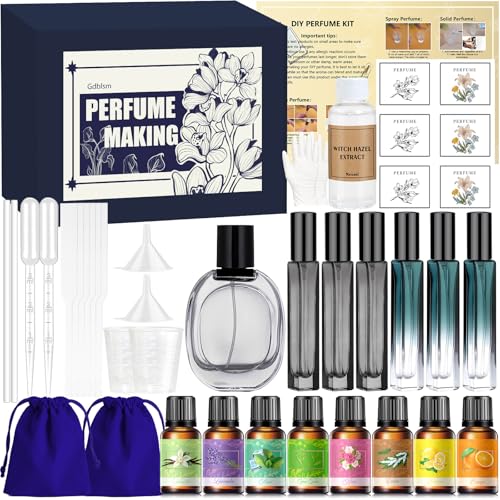
Gdblsm Perfume Making Kit- DIY Cologne Making Kit for Men, Make Your Own Scent with Essential Oil, Spray Bottle, Men's Fragrances Maker, Scent Set, Perfume Gifts for Women Girls Boyfriend
Complete Perfume Making Kit: Use the JUYRLE perfume oils for men to create your own scent! It comes…
As an affiliate, we earn on qualifying purchases.
As an affiliate, we earn on qualifying purchases.
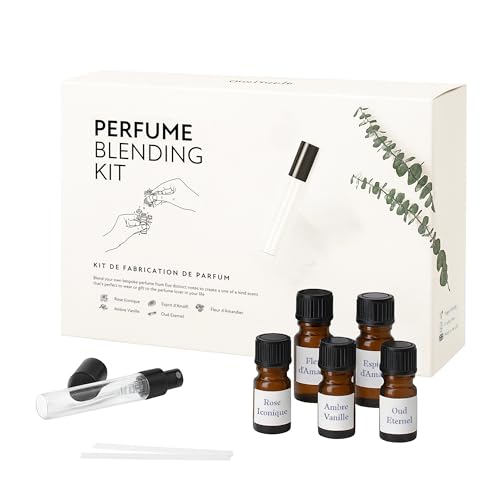
OurHands Perfume Making Kit Create Your Own Signature Perfume with 5 Premium Fragrance Oils, Perfumer’s Alcohol, Reusable Glass Atomiser, and Custom Naming Stickers
MAKE YOUR OWN PERFUME: Explore the art of perfume making with our kit, designed to help you create…
As an affiliate, we earn on qualifying purchases.
As an affiliate, we earn on qualifying purchases.