
Inside a couture atelier, you see skilled designers start with a bold concept that reflects a client’s personality and occasion. They select luxurious fabrics, sketch ideas, and use fabric draping to test shape and movement. Experts craft patterns, add intricate embellishments, and make precise fittings to guarantee perfect fit and detail. Every step focuses on craftsmanship and sustainability. If you keep exploring, you’ll discover how each element comes together to create a stunning, one-of-a-kind gown.
Key Takeaways
- The process begins with an inspiring concept that reflects the client’s personality and occasion, translating abstract ideas into sketches and fabric draping.
- Fabric selection involves evaluating textures and embellishments like beadwork and embroidery to enhance design and structure.
- Precise cutting, sewing, and fitting techniques ensure the gown’s shape, silhouette, and comfort are meticulously crafted.
- Final quality control verifies craftsmanship, including seamless finishes, embellishments, and fit before presentation.
- The gown is showcased through detailed detailing, lighting, and presentation, often incorporating vintage or sustainable elements for uniqueness.
Concept and Design: Bringing Creative Visions to Life

Creating a couture gown begins with a clear and inspiring concept that captures the client’s vision. In the fashion industry, this initial step is essential, as it sets the tone for the entire design process. You’ll draw on your creative inspiration to develop a unique idea that reflects personality, style, and occasion. During this phase, you brainstorm, sketch, and experiment with different shapes, silhouettes, and details, ensuring every element resonates with the client’s desires. Your goal is to translate abstract ideas into tangible sketches that embody elegance and originality. This process requires a keen eye for beauty and a deep understanding of current trends, all while maintaining the personal touch that makes each gown one-of-a-kind. Incorporating color accuracy into your design process can help ensure that fabric choices and visualizations remain true to the intended aesthetic.
Selecting the Perfect Fabrics and Materials

Choosing the right fabrics and materials is a essential step that directly influences the gown’s overall look, feel, and craftsmanship. During fabric selection, you evaluate various material textures—from smooth silks to luxurious velvets—to find those that enhance your design’s style and structure. The tactile quality of each fabric impacts how it drapes and moves, so you consider weight, sheen, and elasticity. You might select delicate lace for intricate details or sturdy tulle for volume. Every material choice must align with the gown’s envisioned silhouette and mood. Your goal is to balance aesthetic appeal with practicality, ensuring the fabric complements your vision while providing comfort and durability. Understanding fabric properties helps you choose materials that will perform well and maintain their beauty over time. This thoughtful selection process forms the foundation for a flawless, one-of-a-kind couture gown.
Sketching and Draping the Initial Concepts
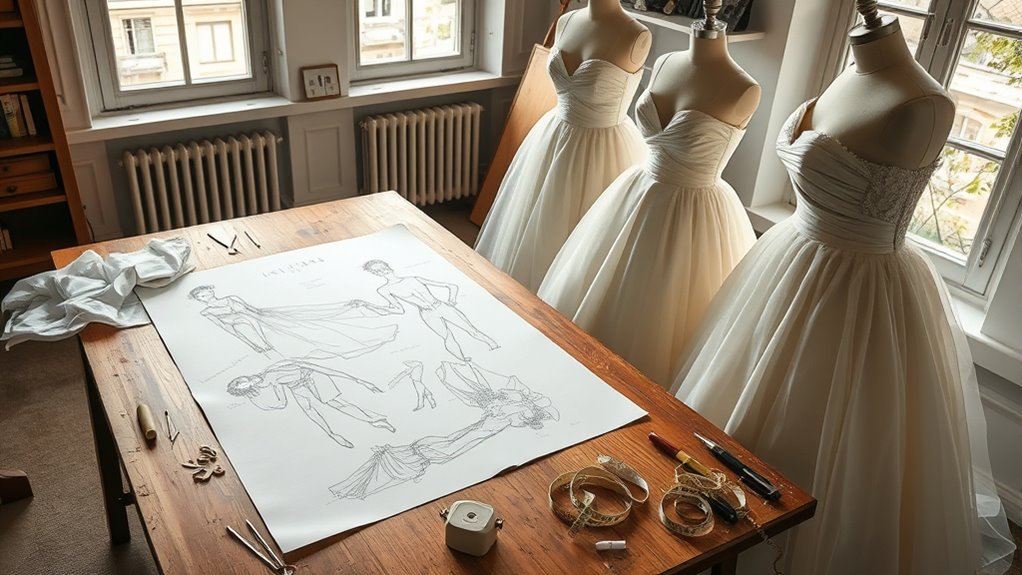
You start by translating your vision into conceptual sketches that capture the gown’s essence. Next, you use fabric draping techniques to bring those ideas to life and test how different materials behave. Throughout the design refinement stages, you adjust your sketches and draping to perfect the overall look and fit. Incorporating sustainable practices ensures that the creation process aligns with eco-friendly standards and innovative European cloud solutions.
Conceptual Sketching Process
Before translating ideas into detailed designs, you begin with conceptual sketching to explore shape, proportion, and flow. This stage allows you to experiment with form and movement, guided by your understanding of color theory and historical influences. Color theory helps you visualize mood and harmony, shaping your choices for accents or contrasts in the gown. Historical influences inspire you to incorporate timeless silhouettes or motifs, ensuring your design pays homage to couture traditions. You sketch quickly, capturing the essence of the gown’s structure and aesthetic, without focusing on fine details. This process encourages creativity and flexibility, enabling adjustments before moving to fabric draping. Incorporating principles of Free Floating design can also help you achieve a sense of movement and elegance that complements the gown’s overall silhouette. Your sketches serve as a visual foundation, translating inspiration into a tangible concept ready for the next steps.
Fabric Draping Techniques
How do you bring your conceptual sketches to life? You start by experimenting with fabric manipulation, draping textiles directly on a dress form to explore how different textile textures respond to movement and gravity. This hands-on process reveals the natural fall and shape of each fabric, allowing you to visualize how the gown will look in real life. You manipulate the fabric to create pleats, gathers, and drapes that enhance the gown’s silhouette, paying close attention to how textile textures catch light and add depth. This tactile approach helps refine your initial ideas, transforming flat sketches into three-dimensional forms. Through careful fabric draping, you gain insight into the gown’s structure, ensuring every detail aligns with your original inspiration.
Design Refinement Stages
Once the initial fabric draping provides a clear understanding of the gown’s form, the next step is to translate these insights into detailed sketches. Using digital design tools, you refine the silhouette, experimenting with different details and embellishments. This digital approach allows for precise adjustments, ensuring that every element aligns with the designer’s vision. As sustainability becomes a priority, you incorporate sustainable sourcing materials into your sketches, considering eco-friendly fabrics and finishes. The sketches serve as a blueprint for the gown, enabling you to communicate your vision clearly to pattern makers and artisans. This stage is vital for fine-tuning the design, balancing creativity with practicality, and ensuring that the gown’s final form is both stunning and ethically mindful.
Pattern Making and Pattern Development
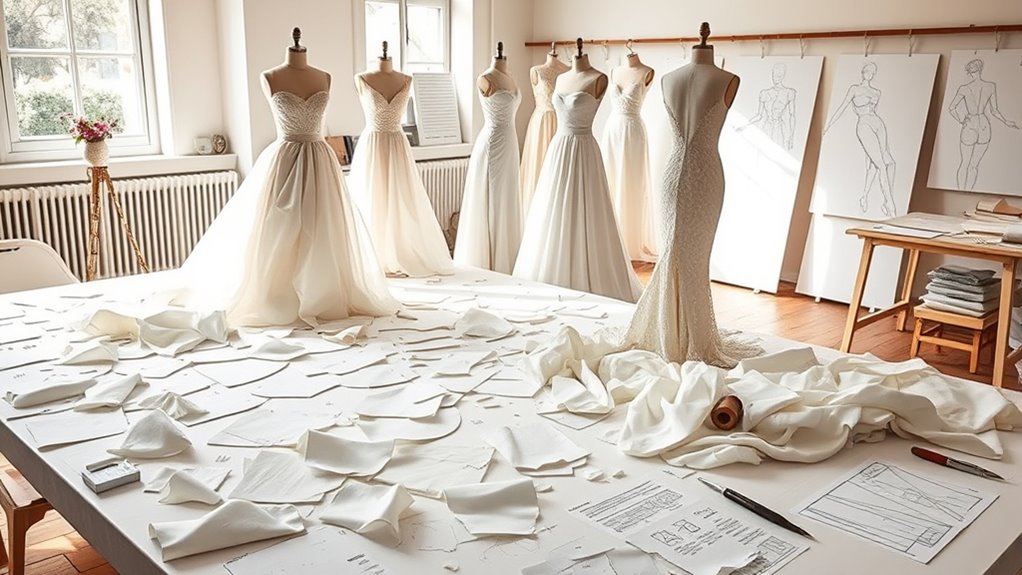
Pattern making and development serve as the foundation of any couture gown, translating design concepts into precise templates that shape the final garment. You begin with fabric patterning, carefully selecting and manipulating fabric pieces to achieve the desired silhouette and drape. This step involves meticulous measurements and adjustments to guarantee accuracy and fit. Pattern grading is then performed to create different sizes, maintaining the proportions and design integrity across variations. You refine each pattern piece, considering seam allowances and ease, to ensure smooth construction. This detailed process allows you to translate intricate sketches into workable templates, ensuring that every detail aligns perfectly during assembly. Ultimately, precise pattern making guarantees that the gown fits flawlessly and embodies the designer’s vision.
Hand Embellishments and Decorative Techniques

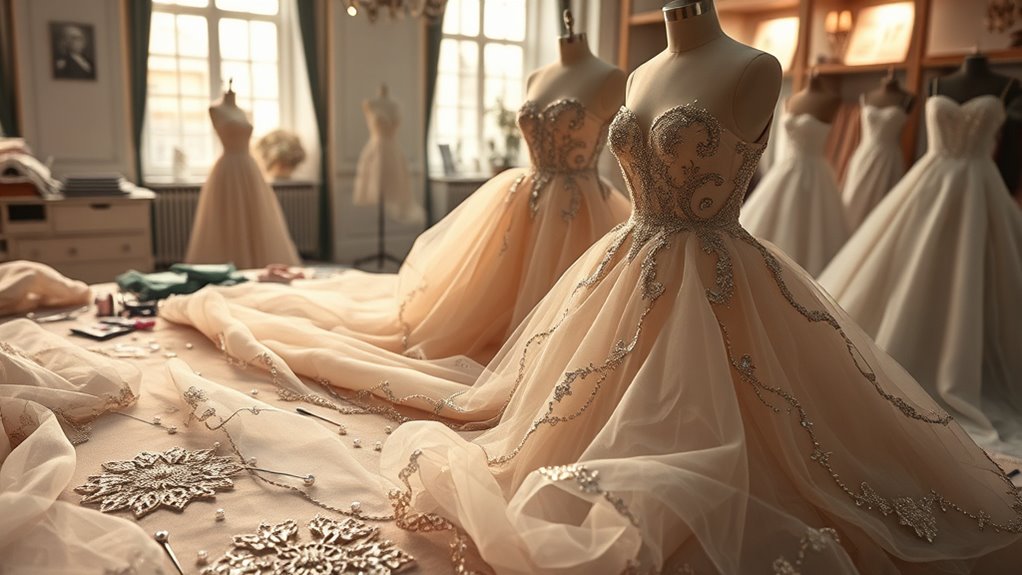
You can transform a gown with stunning hand embellishments that catch the eye. Intricate beadwork patterns add texture, while hand-stitched appliqué details create depth and dimension. Embroidery with metallic threads elevates the design, giving it a luxurious, handcrafted finish.
Intricate Beadwork Patterns
Intricate beadwork patterns elevate couture gowns by adding texture, shimmer, and a personalized touch that sets each piece apart. You’ll see how artisans skillfully apply embellishment techniques to create stunning designs. First, they select beads in various sizes and colors to craft a harmonious pattern. Second, they meticulously sew each bead onto the fabric, ensuring precision and durability. Third, they incorporate additional elements like sequins or crystals for extra sparkle. Fourth, they often use layering techniques to add depth and dimension to the design. These beadwork patterns transform simple fabrics into intricate works of art, showcasing craftsmanship and attention to detail. The combination of beadwork and embellishment techniques results in a gown that’s both visually mesmerizing and uniquely tailored to the wearer.
Hand-stitched Appliqué Details
Hand-stitched appliqué details bring a tactile elegance to couture gowns, allowing artisans to add decorative elements with exceptional precision. You’ll see how delicate layers of fabric are carefully cut and sewn onto the base material, creating intricate designs that enhance the gown’s overall aesthetic. These appliqué techniques often incorporate decorative embroidery, which adds dimension and visual interest, emphasizing the craftsmanship involved. The artisans pay close attention to fabric textures, selecting contrasting or complementary materials to achieve the desired effect. Every stitch is deliberate, ensuring the appliqué lays flat yet maintains its artistic flair. This meticulous process transforms simple fabric into a richly textured masterpiece, highlighting the artistry and skill that define couture gown creation. Recognizing quality craftsmanship is essential to appreciate the true value of these exquisite garments.
Embroidery With Metallic Threads
Embellishing couture gowns with metallic threads elevates their visual impact, adding a luxurious shimmer that captures the light beautifully. When you work with metallic embroidery, your choice of thread selection is vital to achieve the desired effect. Here are key considerations:
- Type of metallic thread—opt for smooth, durable threads like silk-wrapped or polyester-based options for easy handling.
- Color coordination—match or contrast metallic shades with fabric to enhance the design’s depth.
- Thread thickness—select finer threads for delicate details or thicker ones for bold accents.
- Application technique—use precise hand stitches to ensure the metallic thread sits flat and gleams evenly.
Careful thread selection and technique make metallic embroidery a stunning focal point in couture gown embellishments.
Cutting and Precision Sewing

To achieve a flawless couture gown, precise cutting and sewing are essential. You carefully manipulate the fabric, guaranteeing each piece is cut with exact precision to maintain the gown’s intricate design. Fabric manipulation involves detailed work like grading, notching, and darting to shape the fabric perfectly. Before sewing, you calibrate your sewing machine meticulously, adjusting stitch length and tension to match the fabric type. This assures clean, consistent stitches that hold the gown’s structure without puckering or distortion. Precision sewing demands focus; every seam must be aligned perfectly to preserve the gown’s silhouette. By paying close attention to both cutting and sewing details, you create a foundation that supports the gown’s elaborate design and secures a flawless final fit. Understanding textile properties helps you select the appropriate techniques and tools for each fabric, ensuring optimal results in couture gown creation.
Fitting and Adjustments to Achieve the Perfect Silhouette
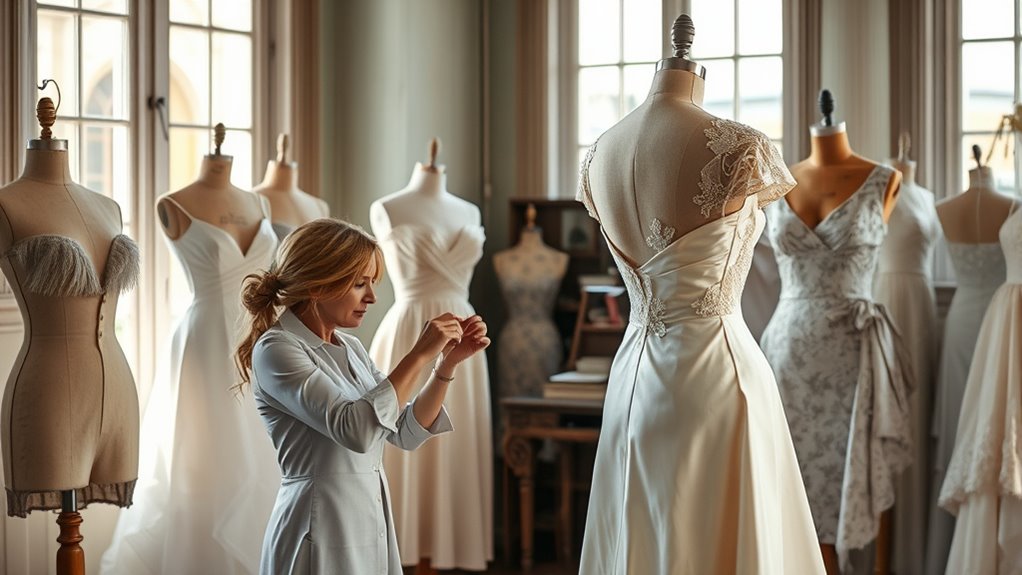
You’ll focus on perfecting the gown’s shape through precise draping and careful seamstress adjustments. During final fittings, small tweaks make a big difference in achieving the ideal silhouette. These steps guarantee your gown looks flawless and fits perfectly from every angle. Utilizing techniques like airless sprayers ensures an even and smooth application of finishing touches, just as meticulous painting methods contribute to a flawless final result.
Precision in Draping
Achieving the perfect silhouette begins with meticulous draping, where every fold and contour is carefully molded to fit the client’s unique form. Your focus is on precision, using fabric texture and draping techniques to create a flawless fit. To do this effectively, consider these key steps:
- Select fabric with the right texture for draping, ensuring it holds shape without stiffness.
- Use controlled draping techniques to mold fabric smoothly over the mannequin or client’s form.
- Adjust fabric tension to highlight natural curves and create clean, sharp lines.
- Constantly evaluate the silhouette from different angles, refining folds and contours for symmetry and balance.
With deliberate attention to detail, your draping transforms raw fabric into a stunning, custom masterpiece.
Seamstress Adjustments
Seamstress adjustments are vital for refining a gown’s fit and ensuring the final silhouette aligns perfectly with the design intent. During fittings, you’ll use seamstress tools like pins, chalk, and rulers to make precise alterations. These adjustments often involve fine-tuning seams, taking in or letting out fabric, and correcting asymmetries. Proper fabric care is essential; handling delicate textiles carefully prevents damage during these tweaks. As you work, you’ll constantly evaluate how the gown drapes on your body, making minor adjustments to achieve the perfect fit. This process guarantees that every seam lies flat, and the fabric contours smoothly to your shape. Your meticulous attention to seamstress tools and fabric care guarantees a polished, flawless finish that embodies the designer’s vision.
Final Fittings Session
The final fittings session brings all your careful adjustments together to perfect the gown’s silhouette. You’ll evaluate how the fabric texture interacts with the stylistic inspiration, ensuring every detail aligns precisely. During this session, you focus on:
- Checking the fit around the bust, waist, and hips for a flawless contour.
- Ensuring the fabric drapes naturally, highlighting its texture without puckering.
- Making minor adjustments to hem length and train flow for ideal movement.
- Confirming that all embellishments and seams align with the original design intent.
This process fine-tunes the gown, allowing you to see how the fabric’s texture and stylistic inspiration come to life. The goal is a silhouette that feels as perfect as it looks, ready to impress.
Final Details and Finishing Touches

As you near the completion of your couture gown, paying close attention to final details and finishing touches can make all the difference in achieving a polished look. You’ll carefully review fabric care instructions to guarantee the delicate textiles remain pristine during handling. During this stage, client consultations are essential; you confirm that every element aligns with the client’s vision, making adjustments if needed. You focus on precise hand-stitched finishes, delicate embellishments, and seamless hems, ensuring each detail reflects expert craftsmanship. These finishing touches add sophistication and durability to the gown. By meticulously refining these elements, you create a stunning, one-of-a-kind piece that embodies both artistry and elegance, ready to be worn with confidence and grace.
Quality Control and Inspection
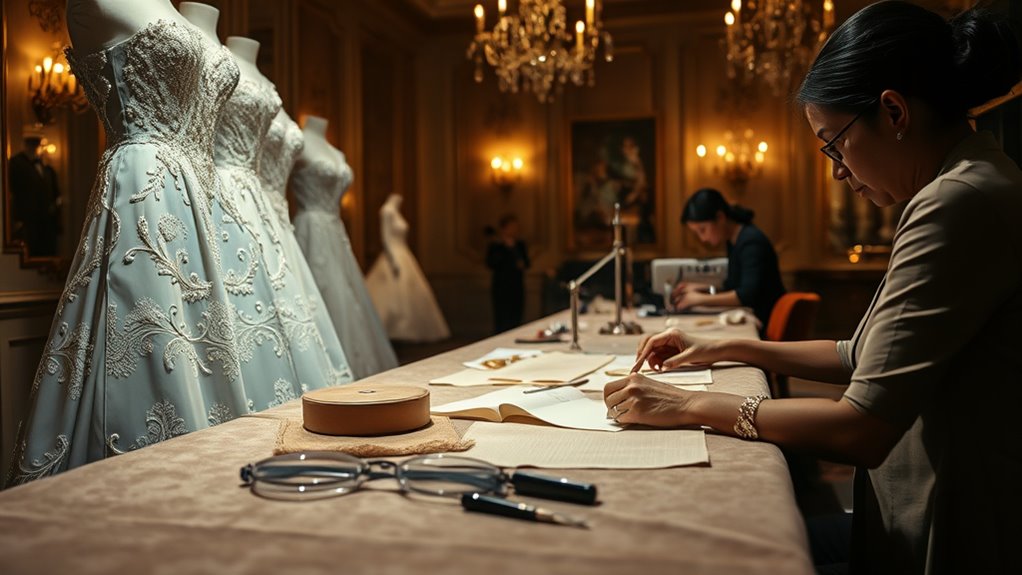
Before delivering the finished gown, thorough quality control and inspection are essential to guarantee every detail meets high standards. You carefully evaluate:
Ensuring every detail meets high standards through meticulous quality control guarantees flawless craftsmanship.
- Fabric durability, ensuring the material withstands wear without damage or fraying.
- Color consistency, checking that hues remain uniform across all sections and seams.
- Seam integrity, inspecting stitches for strength and precision without puckering or gaps.
- Embellishment placement, verifying that beads, embroidery, or appliqués are accurately positioned and securely attached.
- Incorporating connected equipment and technology-assisted tools can further enhance the precision of the inspection process.
This meticulous process ensures the gown’s craftsmanship is flawless. You verify that every element aligns with the designer’s vision, highlighting the gown’s premium quality. Only after passing these rigorous checks do you consider it ready for its final presentation.
The Final Reveal: Presenting the Masterpiece
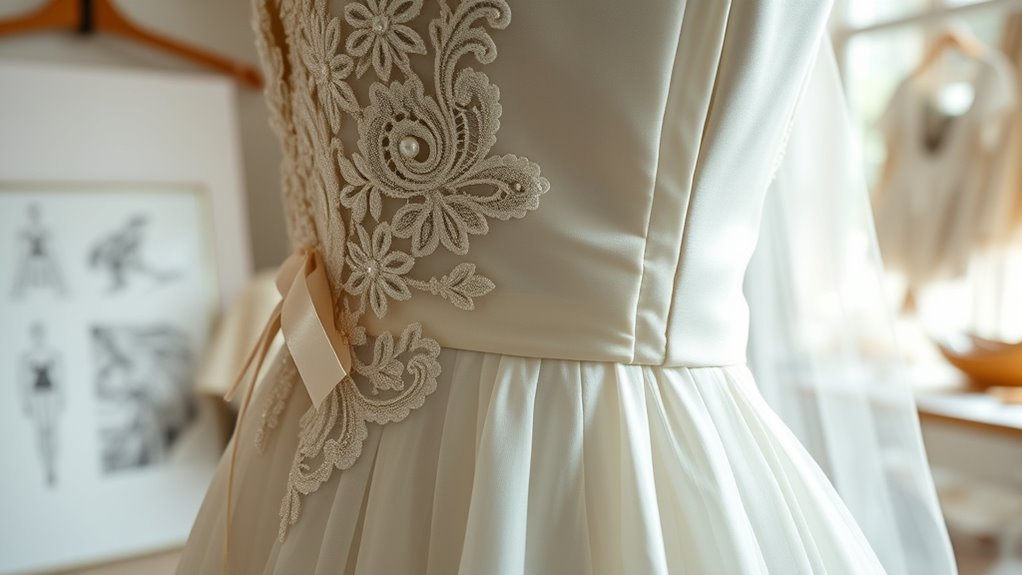
Once the gown passes all quality checks, it’s time to showcase your craftsmanship. The final reveal is your moment to shine, highlighting the artistry behind each stitch. You might choose to incorporate vintage patterns or sustainable materials, emphasizing your commitment to timeless elegance and eco-conscious design. Presenting the gown involves careful draping and positioning, ensuring every detail captivates. Use lighting to enhance the intricate details, like delicate beadwork or fabric textures. Here’s a quick look at some key elements:
| Vintage Patterns | Sustainable Materials |
|---|---|
| Unique, timeless designs | Eco-friendly fabrics |
| Inspired by past eras | Reduce environmental impact |
| Adds character to gowns | Promotes conscious fashion |
| Perfect for one-of-a-kind pieces | Aligns with modern values |
Additionally, incorporating sustainable techniques can elevate the gown’s craftsmanship and appeal to environmentally conscious clients.
Frequently Asked Questions
How Long Does It Typically Take to Create a Couture Gown?
Creating a couture gown typically takes about 150 to 200 hours, depending on the craftsmanship details involved. You’ll find that master artisans spend time hand-sewing intricate embellishments and perfecting every stitch. This time frame allows for meticulous attention to detail, ensuring each gown is one-of-a-kind. As you observe, the process is highly personalized, with designers carefully tailoring every element to match your vision, making it a true work of art.
What Are the Most Challenging Aspects of Designing One-Of-A-Kind Gowns?
The most challenging aspects of designing one-of-a-kind gowns are ensuring fabric selection aligns with your vision and maintaining craftsmanship precision throughout every detail. You need to choose luxurious, suitable fabrics that enhance the design, while carefully executing each stitch and embellishment. Balancing creativity with technical skill demands patience and attention to detail, making sure the final piece truly reflects the unique artistry and high standards of couture craftsmanship.
How Do Ateliers Ensure Each Gown’s Exclusivity and Uniqueness?
You’re at the heart of exclusivity, where every gown’s uniqueness is guaranteed by meticulous fabric selection and sky-high craftsmanship standards. The atelier ensures no two gowns are alike by handpicking rare fabrics and customizing every stitch, bead, and detail. They pour unmatched artistry into each piece, making sure your gown isn’t just one-of-a-kind — it’s a masterpiece that stands apart in the world of fashion, truly unparalleled.
What Role Does Technology Play in Modern Couture Gown Creation?
Technology plays a vital role in modern couture gown creation by enabling digital tailoring and virtual fittings. You can visualize how fabrics and designs will look before cutting a single thread, ensuring perfect fit and style. Virtual fittings let you try on gowns virtually, saving time and reducing errors. This innovation helps designers refine details quickly, making each gown more precise and personalized, ultimately elevating the couture experience for you.
How Do Couture Ateliers Manage Client Confidentiality Throughout the Process?
You manage client confidentiality by strictly following discretion protocols that prioritize client privacy at every stage. You limit access to sensitive information, use secure communication channels, and ensure staff are trained in confidentiality practices. When discussing designs or progress, you avoid revealing identifying details. This diligent approach guarantees your clients feel safe and confident, knowing their personal information and gown details remain private throughout the couture creation process.
Conclusion
Now, as you step into the world of couture, remember that each gown is a masterpiece born from passion and precision—like an artisan in a bustling atelier of the 18th century. Every stitch, embellishment, and detail reflects your dedication to beauty and craftsmanship. So, embrace the process, trust your instincts, and wear the gown with confidence, knowing it’s truly one-of-a-kind—an elegant demonstration of timeless artistry and modern flair.