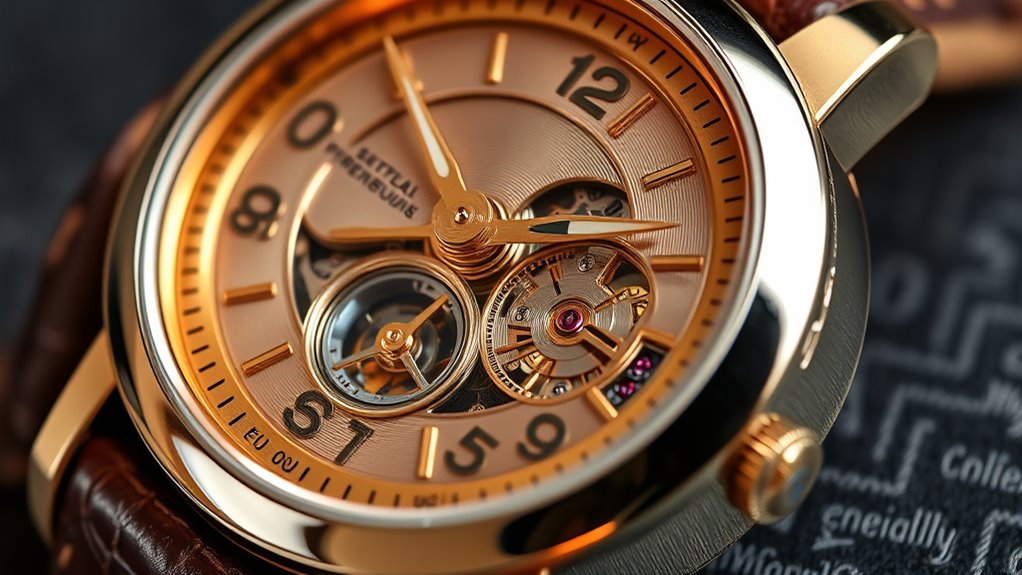

A luxury watch stands out through exceptional craftsmanship, using precise detailing and skilled artisans to craft every tiny component. It’s made with premium materials like gold, platinum, or rare gemstones, which add both beauty and value. Hand-finishing techniques and innovative movements showcase engineering mastery. Plus, brand heritage and limited editions boost exclusivity. If you want to discover what truly makes a watch luxurious, keep exploring the craftsmanship and materials behind these masterpieces.
Key Takeaways
- The use of premium materials like gold, platinum, and gemstones enhances both aesthetic appeal and value.
- Exceptional craftsmanship, including hand-assembled components and detailed finishing, elevates a watch’s artistry.
- Incorporation of complex mechanical features and innovative techniques demonstrates technical mastery.
- Brand heritage, limited editions, and exclusivity increase desirability and perceived luxury.
- Fine aesthetic design, with meticulous attention to dial details and surface textures, creates a harmonious, elegant appearance.
The Art of Watchmaking: Precision and Detailing
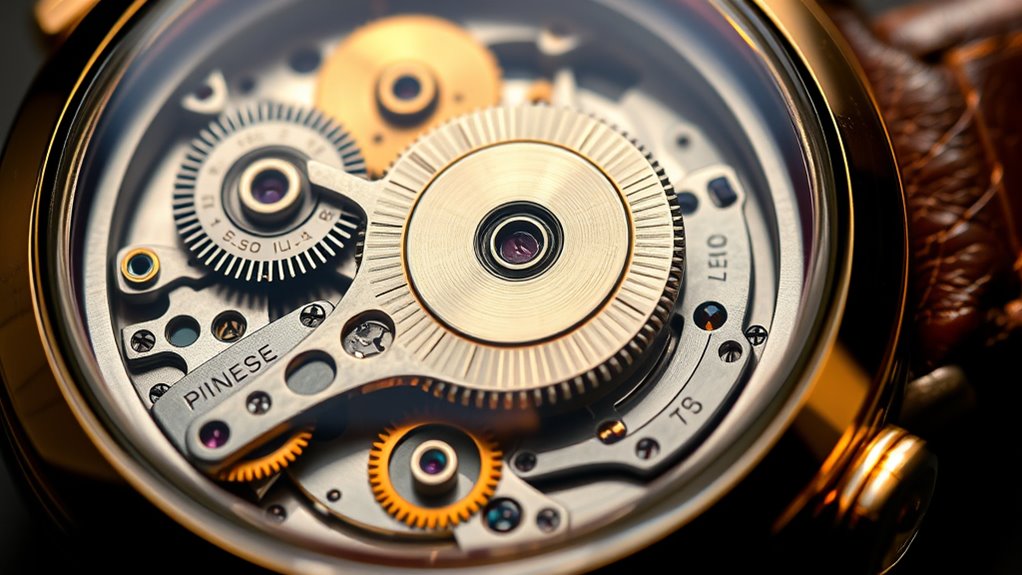
Because every tiny component matters, the art of watchmaking hinges on incredible precision and meticulous detailing. When you examine a luxury watch, notice the carefully crafted watch face; its design reflects expert artistry and attention to detail. The placement of markers, the clarity of the dial, and the finishing touches all contribute to its elegance. Equally important is the strap material, which must be selected and crafted with care to guarantee durability and comfort. Each element, from the smooth edges of the watch face to the choice of strap, showcases the watchmaker’s skill. This level of detail isn’t accidental—it’s a deliberate effort to create a timepiece that’s both functional and a work of art, embodying precision in every aspect.
The Significance of Premium Materials
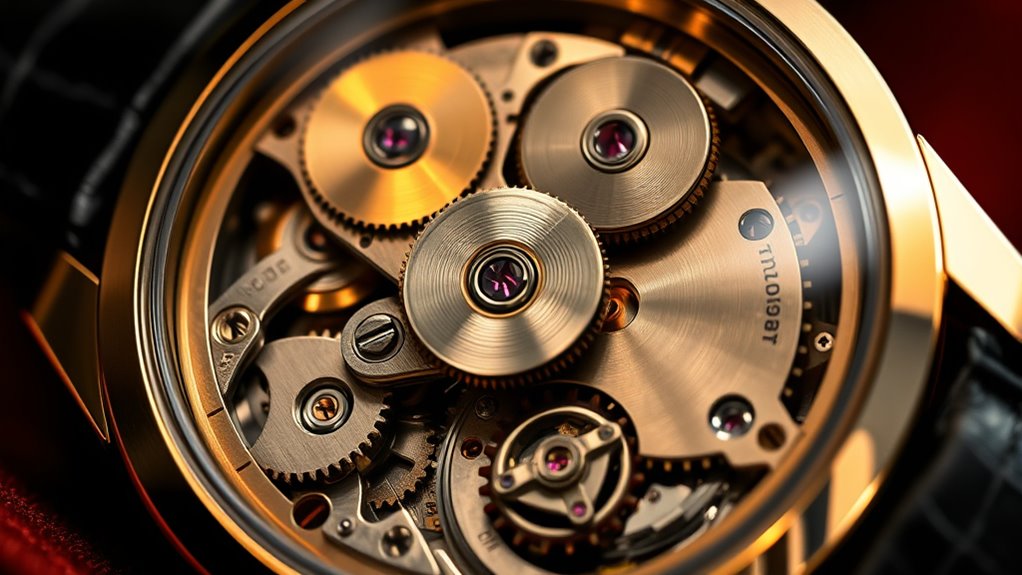
Have you ever wondered what elevates a watch from merely functional to truly luxurious? The answer lies in the materials used. Premium materials like precious metals such as gold, platinum, and palladium instantly signal exclusivity and quality. These metals aren’t just beautiful—they’re durable and resistant to tarnish, ensuring your watch remains stunning over time. Rare gemstones further enhance a watch’s luxury status, adding unique color, brilliance, and rarity. Incorporating diamonds or sapphires into the dial or bezel transforms a timepiece into a statement piece. These materials aren’t simply decorative; they embody craftsmanship and value. By choosing precious metals and rare gemstones, watchmakers create pieces that stand out, offering both aesthetic appeal and lasting worth.
Handcrafting and the Role of Artisans
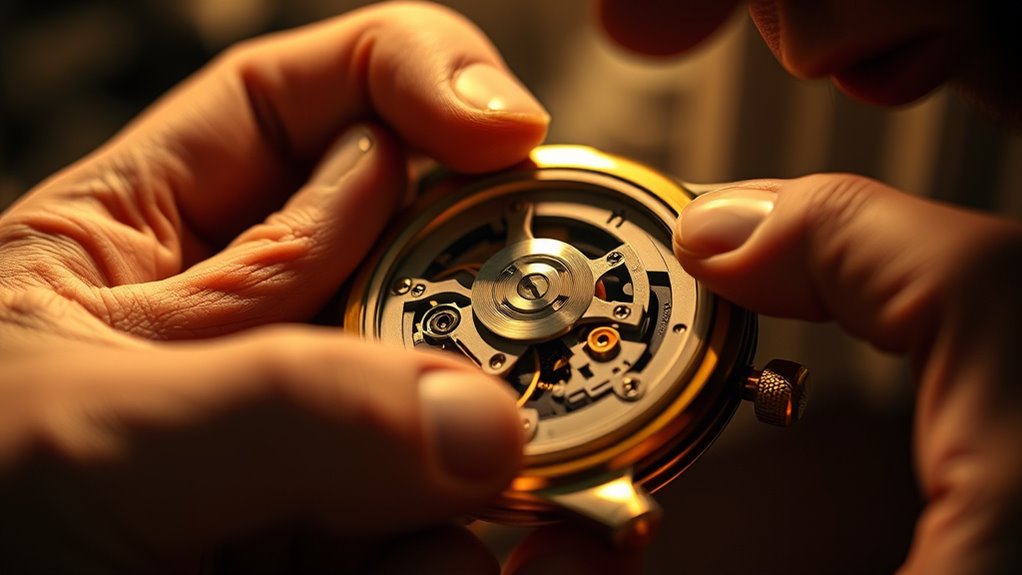
While premium materials set the foundation for luxury, it’s the skill and artistry of craftsmen that truly bring a watch to life. Artisans dedicate hours to handcrafting components, guaranteeing each piece reflects perfection. Their expertise often results in limited edition watches, where meticulous detail creates exclusivity. Additionally, artisans incorporate cultural symbolism into designs, blending tradition with innovation. This personal touch elevates a watch beyond mere function, making it a piece of art. The craftsmanship process involves a careful balance of precision and creativity, reinforcing the watch’s status as a luxury item. Proper maintenance ensures that the watch retains its value and craftsmanship quality over time. Below is a snapshot of key artisan roles in the creation process:
| Role | Focus / Significance |
|---|---|
| Watchmaker | Assembles intricate mechanical movements |
| Engraver | Adds cultural symbolism and decorative details |
| Finisher | Ensures quality and fine polishing |
Innovative Techniques and Mechanical Complexity
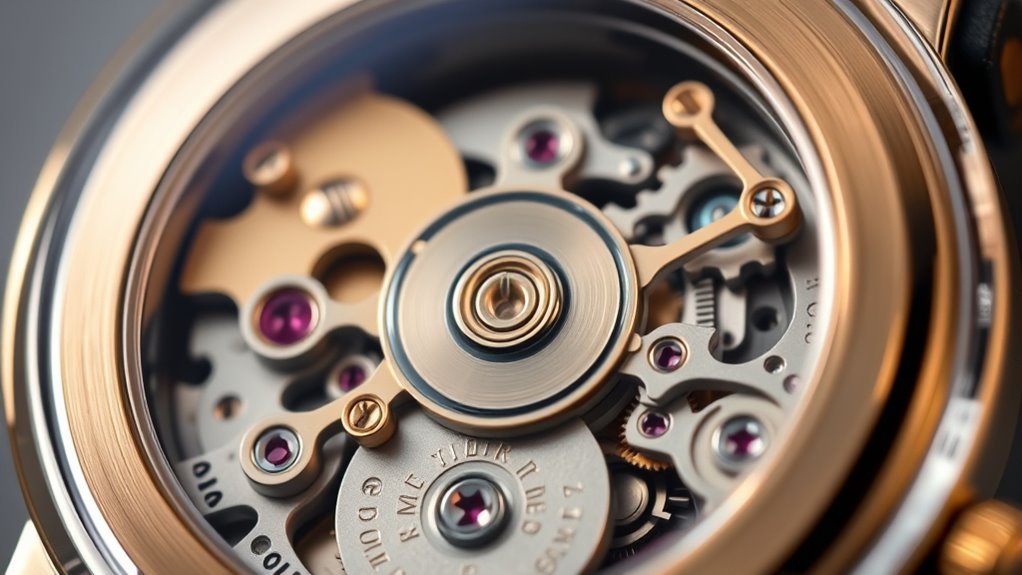
Innovative techniques and mechanical complexity are at the heart of modern luxury watches, pushing the boundaries of traditional craftsmanship. You’ll find that complication mastery defines these timepieces, combining multiple functions like moon phases, chronographs, and tourbillons into a seamless design. These features demonstrate engineering innovation, where precision engineering enhances performance without sacrificing elegance. Watchmakers invest heavily in developing new mechanisms that challenge conventional limits, creating intricate movements that are as impressive visually as they are technically. This mechanical complexity not only boosts the watch’s functionality but also showcases the brand’s technical prowess. By mastering complications, luxury watchmakers elevate their creations from mere timekeeping devices to feats of engineering artistry, making each watch a affirmation to cutting-edge innovation. Modern watch technology continues to evolve, integrating innovations like smart features and advanced materials to redefine what a luxury watch can be.
The Impact of Brand Heritage and Exclusivity

Brand heritage and exclusivity are central to what defines a luxury watch, serving as proof of a brand’s history and reputation. Your perception of a watch’s value often hinges on its brand legacy and the exclusivity value it offers. A storied history enhances credibility, making the watch more desirable. Limited editions and high-profile collaborations boost its rarity, increasing its appeal. Here’s a quick overview:
| Aspect | Description | Impact on Luxury Status |
|---|---|---|
| Brand Legacy | Long-standing reputation and craftsmanship | Builds trust and prestige |
| Limited Editions | Small production runs | Enhances exclusivity value |
| Rare Collaborations | Partnerships with notable figures or brands | Elevates desirability |
| Heritage Stories | Historical significance and milestones | Adds emotional and cultural weight |
Additionally, the craftsmanship involved in creating each watch, including meticulous assembly and finishing, significantly contributes to its luxury status.
Aesthetic Design and Finishing Touches
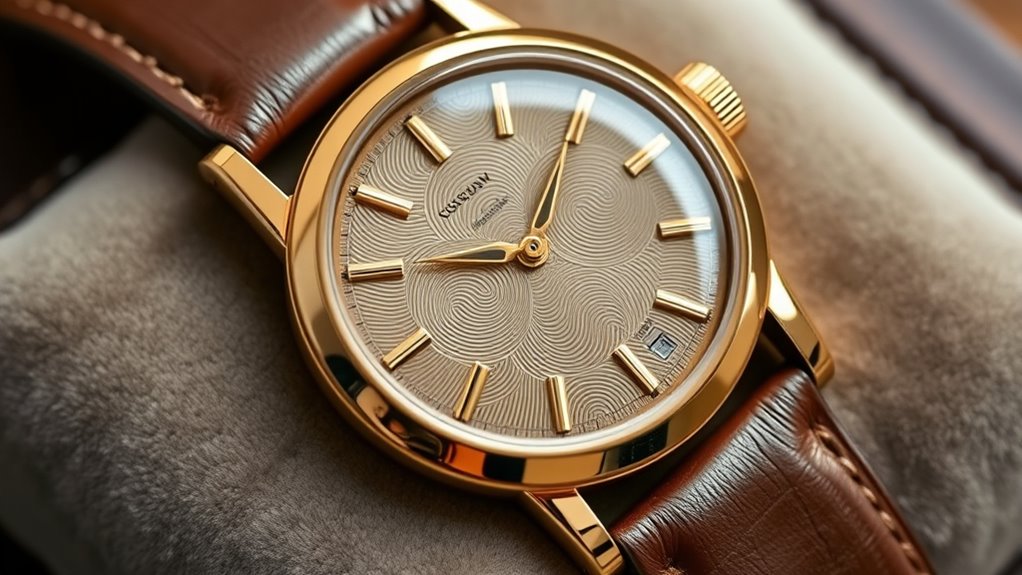
Aesthetic design and finishing touches are what truly set luxury watches apart, transforming functional timepieces into works of art. The dial aesthetic plays a pivotal role, combining intricate details with a balanced layout that draws the eye. The color palette is carefully curated, often featuring subtle hues or bold contrasts that reflect sophistication and personality. Fine finishing touches, like polished hands, applied indices, and textured surfaces, enhance the watch’s visual appeal. These elements are meticulously crafted to guarantee harmony and elegance. Every detail, from the shape of the markers to the overall dial design, contributes to a sense of exclusivity. When combined, these aesthetic choices elevate a watch from mere utility to a statement piece of craftsmanship and style.
Frequently Asked Questions
How Does a Watch’s Movement Influence Its Luxury Status?
Your watch’s movement directly impacts its luxury status through movement complexity and horological innovation. A highly intricate movement showcases expert craftsmanship, making it more valuable and prestigious. When a watch incorporates advanced complications and innovative technology, it demonstrates mastery in horology, elevating its status from mere timekeeping to a piece of art. So, the more complex and innovative the movement, the more luxurious and desirable your watch becomes.
What Role Does Limited Edition Production Play in Luxury Branding?
Imagine you’re scrolling through your vintage Rolex, feeling a bit like a modern-day Marie Antoinette. Limited edition production boosts luxury branding by creating limited exclusivity, making each watch feel unique and highly desirable. It enhances brand prestige, signaling rarity and craftsmanship. This strategy appeals to collectors and enthusiasts, who value owning something special and exclusive, elevating the watch’s status beyond mere timekeeping to a symbol of distinction.
Are There Specific Gemstones or Embellishments Exclusive to Luxury Watches?
Luxury watches often feature exclusive gemstone choices like diamonds, sapphires, and rubies, which are carefully selected for their quality and rarity. These gemstone embellishments add a distinctive elegance and exclusivity to the timepiece. You’ll find that luxury brands often use these precious stones to highlight specific design elements or create unique, limited-edition pieces, making your watch truly stand out with their exclusive gemstone choices.
How Important Is Customer Service and After-Sales Support for Luxury Watches?
Customer service and after-sales support are the backbone of a true luxury watch experience. Think of it as a finely tuned orchestra where every note matters. Your satisfaction depends on prompt repairs, genuine parts, and attentive care, ensuring your investment remains pristine. When you receive exceptional after-sales service, it’s like having a trusted partner for life, making you feel valued and confident in your choice.
Can a Watch Be Considered Luxury Without High-End Brand Recognition?
Yes, a watch can be considered luxury without high-end brand recognition if it has exceptional craftsmanship, rare materials, and a strong price perception. Your focus should be on the quality, attention to detail, and exclusivity it offers, rather than just the brand name. When these elements align, your watch stands out as a luxurious piece, demonstrating true value and sophistication regardless of its brand reputation.
Conclusion
So, what truly elevates a watch to luxury status? It’s not just the materials or craftsmanship alone—there’s an elusive blend of tradition, innovation, and exclusivity that sets it apart. As you explore these elements, you realize the real magic lies in what’s hidden beneath the surface, waiting to be discovered. The question remains: are you ready to uncover the secrets behind true luxury? The answer might just change your perspective forever.