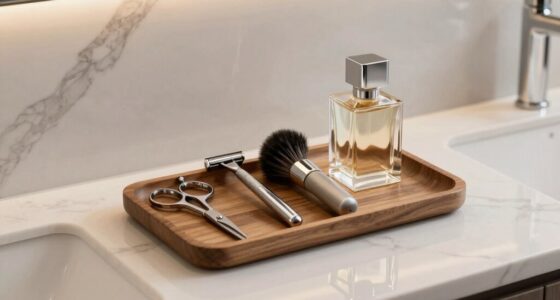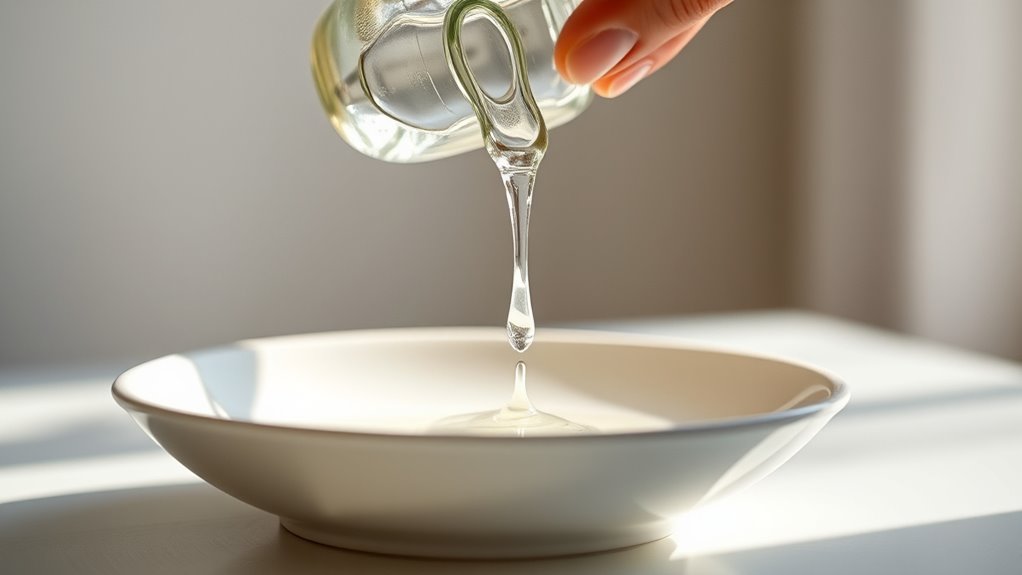
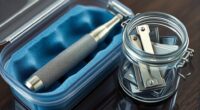
To decant perfume cleanly, work in a well-ventilated area and use a fine-mesh funnel or pipette for precise transfer. Pour slowly to minimize spills, and leave some space in the bottle for expansion. Seal bottles tightly after filling, and store them upright in a cool, dark place away from heat or sunlight. Keep tools clean and handle everything carefully to maintain the fragrance’s quality—continue further for more tips on safe and effective decanting.

Get your wardrobe favorites delivered free with Prime
- Fast, free delivery on millions of items
- Prime Video, Amazon Music and more included
- Member-only deals all year
Key Takeaways
- Use a clean, fine-mesh funnel or pipette for precise, spill-free transfer of perfume.
- Work in a well-ventilated area to prevent inhalation of aerosolized particles.
- Pour slowly and steadily to minimize splashing and waste during decanting.
- Seal bottles tightly after transfer and label them for easy identification and organization.
- Keep tools and bottles clean and dry to prevent contamination and preserve fragrance quality.
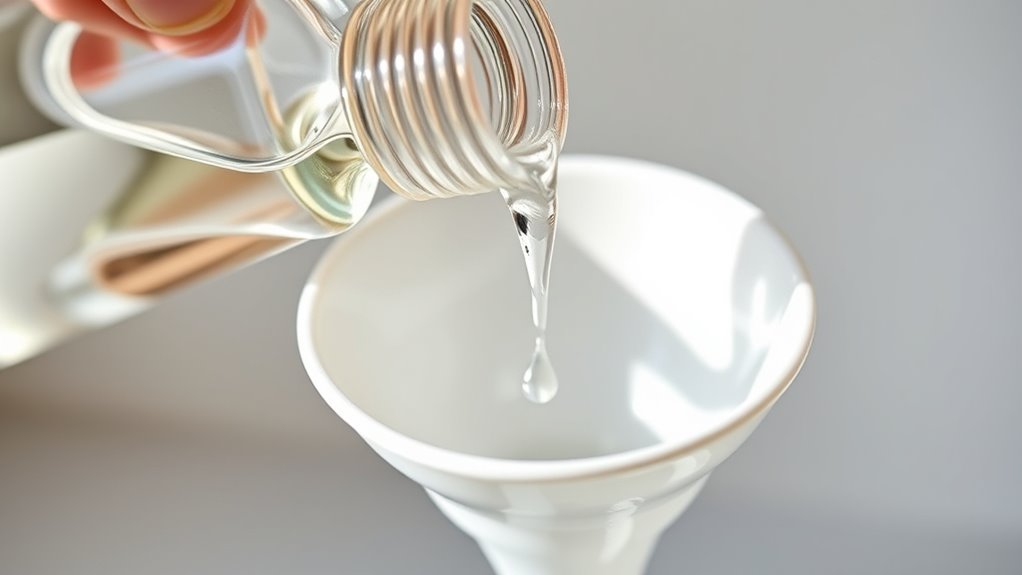
Decanting perfume is a practical way to transfer your favorite scents into smaller bottles, making them easier to carry and share. But before you start, it’s essential to prioritize safety precautions to ensure you handle the perfume correctly and avoid any accidents or damage. Always work in a well-ventilated area, especially if you’re using tools like syringes or funnels, which can create spills or aerosolized particles. Wear gloves if you’re concerned about skin irritation, and keep your workspace free of open flames or heat sources, as many perfumes are flammable. Make sure your bottles and tools are clean and dry to prevent contamination, which could alter the scent or cause clogging.
When decanting, it’s not just about transferring the perfume; proper storage tips are equally important to preserve the fragrance’s integrity. Once the perfume is safely transferred, seal the smaller bottles tightly to prevent evaporation and oxidation, which can degrade the scent over time. Store your decanted perfume in a cool, dark place away from direct sunlight, heat, or humidity. Light and temperature fluctuations can break down the delicate aromatic compounds, changing the fragrance’s character or causing it to spoil faster. Keep the bottles upright to minimize the risk of leaks and spills, and label each with the perfume name, date of decanting, and any other relevant details. This practice helps you organize your collection and track how long each scent has been decanted.
Another safety tip is to avoid overfilling your smaller bottles. Leave some space at the top to accommodate expansion and to make pouring or spraying easier. When transferring perfume, use a fine-mesh funnel or a pipette for precision, reducing waste and mess. Always pour slowly and steadily, and avoid splashing or splattering, which not only wastes product but also creates a mess that can be difficult to clean. After decanting, double-check that the bottles are properly sealed before moving them to storage, preventing accidental spills. Additionally, being aware of chemical composition can help you handle perfumes more safely, especially if you have sensitive skin or allergies.
As an affiliate, we earn on qualifying purchases.
Frequently Asked Questions
Can Decanting Damage the Perfume’s Scent?
Decanting perfume can slightly alter its scent if you’re not careful. Exposure to air contamination during transfer may cause scent alteration over time, especially if the bottle isn’t airtight. To prevent this, use clean tools and transfer quickly to reduce air contact. Proper decanting minimizes scent damage, but prolonged exposure or using contaminated containers can compromise the perfume’s original aroma.
How Long Does Decanted Perfume Last?
You might find it surprising, but decanted perfume can last up to 1-3 years if stored properly. To maximize perfume longevity, keep it in a cool, dark place away from sunlight and temperature fluctuations. Always use clean tools when decanting, and avoid exposing it to air too often. Proper storage tips make certain your fragrance stays fresh and vibrant, so enjoy your scent for as long as possible.
Is Decanting Perfume Safe for Sensitive Skin?
Decanting perfume can be safe for sensitive skin if you take precautions. You might experience skin irritation if allergens transfer from the decanting process or if you use contaminated tools. To minimize this risk, verify your containers are sterile and avoid touching the perfume directly with your hands. Always test a small amount first and wash your hands afterward. If irritation occurs, discontinue use and consult a dermatologist.
What Tools Are Best for Decanting?
You should use fine-tipped funnels or pipettes for precision pouring, ensuring you control the flow and prevent spills. Sterilization techniques like alcohol wipes or boiling tools help keep everything hygienic. Glass tools are preferable over plastic, as they’re easier to sterilize and less reactive with fragrances. Always handle tools carefully, and work in a clean environment to avoid contamination and preserve the perfume’s integrity.
Can Decanting Affect the Perfume’s Value?
Decanting can dramatically impact your perfume’s value if done poorly, risking contamination or oxidation that could devalue a treasured scent. Proper perfume storage and meticulous decanting techniques preserve its integrity, ensuring it remains as exquisite as the day you first smelled it. If you handle your perfume with care, decanting shouldn’t diminish its worth—in fact, it can enhance its appeal by keeping it fresh and beautifully preserved.
As an affiliate, we earn on qualifying purchases.
Conclusion
Now that you know how to decant perfume cleanly, you’re all set to handle your fragrances like a pro. Just remember, a little preparation goes a long way, and patience pays off. Don’t rush the process—take your time and do it right. When it’s done properly, you’ll avoid messes and keep your scents pristine. With these tips, you’ll be able to transfer perfume smoothly and confidently, proving that practice makes perfect in every bottle.
As an affiliate, we earn on qualifying purchases.
As an affiliate, we earn on qualifying purchases.
Halloween Picks
halloween
As an affiliate, we earn on qualifying purchases.