To follow proper scented candle etiquette, keep your candles lit for no more than four hours at a time to prevent overheating and tunneling. Always trim the wick to about a quarter-inch before lighting to ensure an even burn. Regularly monitor the candle for excessive flickering or smoking, and extinguish if needed. Prevent tunneling by burning long enough for the wax to melt evenly across the surface. If you want to master these tips, there’s more to discover below.
Key Takeaways
- Keep candles lit for no longer than 4 hours to prevent overheating and safety hazards.
- Trim the wick to about a quarter-inch before each use for even burning and to reduce flickering.
- To avoid tunneling, ensure the wax pool reaches the edges during each burn session.
- Regularly monitor the candle for excessive flickering or smoking, and extinguish if unsafe signs appear.
- Use lighter fragrances first and layer scents carefully to create a balanced, harmonious atmosphere.
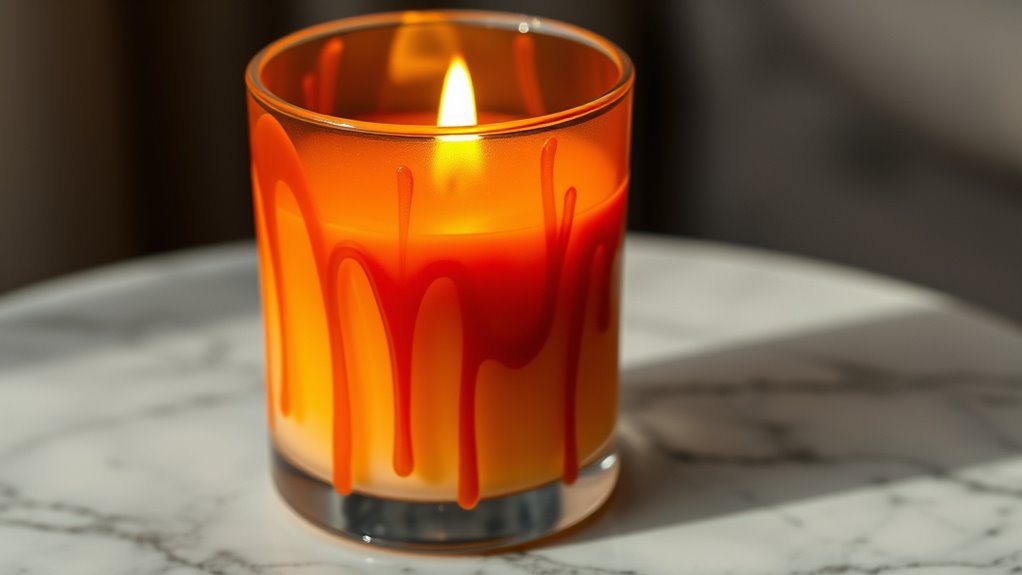
Scented candles can create a warm, inviting atmosphere, but knowing the proper etiquette guarantees everyone enjoys their aroma without discomfort. One of the most important aspects of candle etiquette is understanding proper burn times. You should aim to keep your candle lit for no more than four hours at a time. Burning it longer can lead to overheating, which not only risks safety but also shortens the lifespan of the candle. Overburning can cause tunneling—where the wax melts down the center, leaving wax untouched along the sides—reducing the candle’s effectiveness and wasting your wax. To prevent this, always trim the wick to about a quarter-inch before lighting and monitor the burn. Extinguish the candle if it starts to smoke or flicker excessively, as these are signs of improper burning or candle safety issues. Proper burn times and wick maintenance are key to maximizing candle safety and ensuring your candle burns evenly. Additionally, using natural waxes can contribute to a cleaner burn and a more eco-friendly environment. Another essential aspect of candle etiquette involves fragrance layering. When using multiple scented candles or combining candles with other air fresheners, you want to be careful not to overwhelm the space. Too many strong fragrances can cause headaches or nausea and make the environment uncomfortable. To create a balanced scent experience, start with lighter fragrances and add more intensively scented candles gradually. Think of fragrance layering like building a symphony—each note should complement the others rather than compete. Keep in mind that some scents, like vanilla or lavender, tend to blend well, while others, like cinnamon and citrus, might clash if overused. It’s polite to consider the preferences of others sharing the space; some people are sensitive to certain aromas. When lighting candles, aim for harmony. For example, pair a soft floral with a subtle vanilla to create a calming atmosphere. Avoid overloading the room with multiple candles at once, as this can create an overpowering scent, making it difficult for everyone to enjoy the ambiance comfortably.
Top picks for "scent candle etiquette"
Open Amazon search results for this keyword.
As an affiliate, we earn on qualifying purchases.
Frequently Asked Questions
Can Scented Candles Be Safely Used Outdoors?
Yes, you can safely use scented candles outdoors, but you should consider outdoor safety and wind considerations. Place your candles on stable, heat-resistant surfaces away from flammable materials. Keep them protected from strong winds that can cause uneven burning or tipping. Always stay nearby when candles are burning, and extinguish them if the wind picks up or you’re leaving the area. This guarantees a safe and enjoyable outdoor ambiance.
How Do I Prevent My Candle From Overheating?
To prevent your candle from overheating, start by trimming the wick to about a quarter inch before each burn. This helps control the flame size and reduces excess heat. Also, make certain proper container ventilation by placing the candle in a well-ventilated spot, avoiding drafts that can cause uneven burning. These steps keep your candle safe, extend its lifespan, and prevent overheating or tunneling.
Are Soy Candles Better Than Paraffin for Tunneling?
Soy candles are generally better than paraffin for preventing tunneling because they promote even wax pooling, reducing the risk of tunneling. To keep your candle burning evenly, trim the wick to about a quarter inch before each use. This prevents excess flame and soot, ensuring a clean, consistent burn. With soy, you’ll notice fewer issues, and proper wick trimming helps avoid tunneling altogether.
What Should I Do if My Candle’s Scent Is Too Strong?
If your candle’s scent is too strong, you should reduce the fragrance intensity by trimming the wick before each burn and limiting the burn time. You can also try scent layering by pairing it with a more subtle candle or diffuser. Additionally, blow out the candle sooner to prevent overwhelming aroma, and consider placing it in a smaller room or opening windows for better air circulation.
How Do I Dispose of Used Candle Wax Properly?
Think of used candle wax as a treasure chest waiting to be reopened. To dispose of it properly, let the wax cool and solidify. Then, scrape it into a recycling bin if your local facility accepts wax, or consider repurposing it for candle reuse by melting and pouring into new containers. This way, you turn waste into a new glow, keeping your eco-conscious habits shining bright.
Conclusion
To truly enjoy your scented candles, consider their gentle needs and let them serve as a calming companion. Mind the burn time and avoid tunneling, so their warm glow can softly illuminate your space without wear or tear. With a little care, your candles will reward you with soothing aromas and a cozy atmosphere, inviting serenity into your home. Embrace these small acts of kindness, and your candle experience will glow brighter than ever.