
When choosing candle wax types, you’ll find soy, beeswax, and paraffin each offer unique benefits. Soy wax is eco-friendly and provides a smooth look with excellent scent throw at lower temperatures. Beeswax offers a natural aroma, rustic appearance, and longer burn time, while paraffin is versatile, producing vibrant colors, strong scents, and a shiny finish. Understanding these differences helps you craft candles tailored to your preferences—keep exploring to discover which wax suits your style best.
Key Takeaways
- Soy wax is natural, eco-friendly, offers excellent scent throw at lower temperatures, and burns smoothly with a creamy appearance.
- Beeswax provides a natural honey scent, a rustic look, longer burn time, and a warm glow, with a slightly higher melting point.
- Paraffin wax is versatile, affordable, produces vibrant colors, strong scents, and a glossy finish, with a low melting point for quick scent dispersion.
- Burning temperature differences affect safety and burn quality: soy and paraffin burn at lower temps, beeswax at a higher temperature.
- Choosing the right wax depends on desired scent throw, aesthetic, burn time, and eco-friendliness preferences.
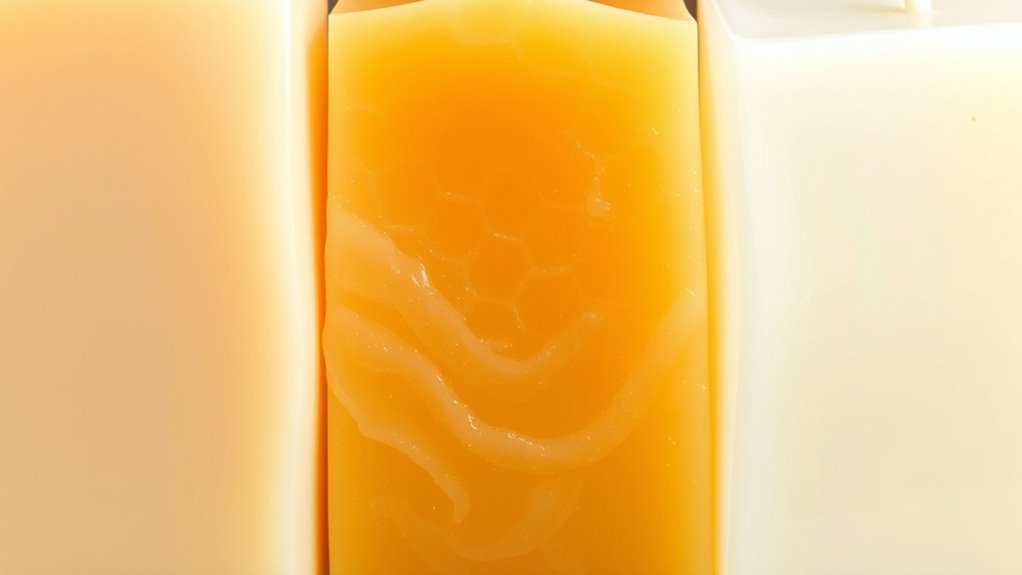
Choosing the right candle wax can substantially impact your candle’s appearance, scent throw, and burn quality. Different waxes have unique properties that influence how your candle looks and performs, so understanding these differences helps you craft the perfect product. For example, when selecting wax, pay attention to its scent throw—the way it disperses fragrance—and its burning temperature, which determines how smoothly and evenly it burns. These factors are essential in creating a candle that not only smells great but also burns safely and efficiently.
Choosing the right wax ensures your candle looks, smells, and burns beautifully and safely.
Soy wax is a popular choice because it’s natural, sustainable, and known for excellent scent throw at lower temperatures. Its burning temperature is relatively moderate, which means it melts evenly and produces a clean burn. This makes soy candles easier to work with, especially for beginners. The lower burning temperature also helps retain fragrances longer because the scent is released gradually without burning off quickly. Because soy wax tends to have a smooth, creamy appearance, it’s favored for aesthetic reasons as well. Plus, soy’s eco-friendly nature appeals to environmentally conscious consumers, making it a popular choice for handmade candles.
Beeswax, on the other hand, is a natural wax that burns cleanly with a warm, honey-like scent. Its burning temperature is slightly higher than soy, requiring a bit more attention to prevent tunneling or uneven burning. However, beeswax’s natural properties help it emit a subtle, pleasant aroma without added fragrances, and its natural scent can enhance the overall sensory experience. When it comes to scent throw, beeswax isn’t as strong as soy or paraffin but compensates with a warm, inviting glow and a long-lasting burn. Its golden hue and slightly textured surface give your candles a rustic, authentic look that appeals to those seeking natural, artisanal products.
Paraffin wax is the most common and versatile of the three, offering a high scent throw because it melts at a relatively low temperature and holds fragrance oils well. Its burning temperature is on the lower side compared to beeswax, allowing for quick, strong scent dispersion, which is ideal if you want your candles to fill a room with fragrance rapidly. Paraffin’s smooth, glossy finish makes it easy to work with and gives your candles a polished, professional appearance. While it’s not as eco-friendly as soy or beeswax, paraffin remains popular because of its affordability, reliable performance, and ability to produce vibrant colors and strong scents.
Top picks for "candle beeswax paraffin"
Open Amazon search results for this keyword.
As an affiliate, we earn on qualifying purchases.
Frequently Asked Questions
How Do Candle Wax Types Affect Burn Time?
You’ll notice that candle wax types directly affect burn time because they influence wick consumption and flame stability. Soy wax burns slower, giving you a longer-lasting candle, while beeswax burns even more slowly and stabilizes the flame, reducing soot. Paraffin burns faster and may consume the wick quicker, leading to a shorter burn time. Choosing the right wax guarantees your candle burns evenly and lasts as long as you want.
Are Soy Wax Candles Eco-Friendly?
Yes, soy wax candles are eco-friendly because they come from renewable resources, unlike paraffin, which is petroleum-based. You’ll find that soy wax has a lower environmental impact due to its biodegradability and sustainable cultivation. By choosing soy wax, you help reduce reliance on fossil fuels and support environmentally conscious practices. This makes soy candles a greener option for your home and the planet.
Can Beeswax Candles Trigger Allergies?
Beeswax candles can trigger allergy symptoms if you’re sensitive or have a beeswax allergy risk. Some people experience candle allergy symptoms like sneezing, coughing, or itchy eyes when exposed. If you notice these reactions, it’s best to avoid beeswax candles. Always test a small amount first, especially if you have respiratory issues or known allergies, to prevent any uncomfortable or serious reactions.
What Is the Melting Point of Different Wax Types?
You’ll find that beeswax melts at about 62-64°C, soy wax around 49-54°C, and paraffin wax between 46-68°C. These melting temperatures stem from their chemical properties, which influence how they behave when heated. Knowing these differences helps you choose the right wax for your candles, ensuring they melt evenly and safely. Always consider the melting point to prevent overheating and optimize your candle-making experience.
How Do Wax Types Influence Scent Throw?
Different wax types markedly influence fragrance dispersal and scent longevity. Soy wax tends to offer a strong scent throw and longer-lasting fragrance, making it ideal for intense aroma. Beeswax provides a natural scent that enhances subtle fragrances but has a softer dispersal. Paraffin wax generally delivers a powerful scent throw but may burn faster. Your choice affects how well the scent fills a space and how long it lasts.
Conclusion
Now that you know the differences between soy, beeswax, and paraffin, you can pick the perfect candle wax for your needs. Don’t let concerns about eco-friendliness or scent overpower your choice—each type offers unique benefits. Remember, experimenting with different waxes can help you find the one that creates the cozy atmosphere you love. So, go ahead, light that candle and enjoy the warm glow, knowing you chose what’s best for you.