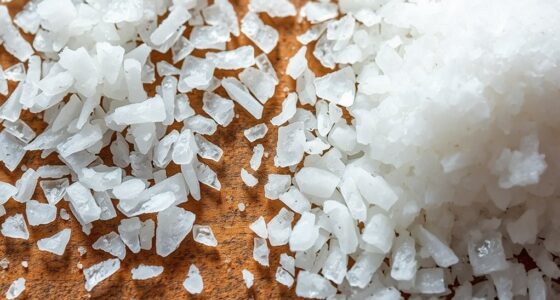
Caviar grades like Malossol are essential in helping you identify high-quality options. Malossol caviar has minimal salt, preserving delicate flavors and ensuring a fresher taste, while other grades may contain more salt or differ in texture and appearance. Factors like sourcing, appearance, and flavor profiles influence these categories. If you want to learn more about how these grades impact quality and what to look for, you’ll find useful details as you continue exploring.
Key Takeaways
- Malossol is a grading term indicating lightly salted caviar, emphasizing delicate flavor and high quality.
- Beyond Malossol, caviar grades also consider appearance, texture, flavor, and sourcing practices.
- Higher grades feature uniform, shiny, firm grains with nuanced, balanced flavors.
- Sourcing challenges, like sustainability and availability, influence grading and pricing of premium caviar.
- Additional grading systems assess salt content, freshness, and overall quality for comprehensive evaluation.
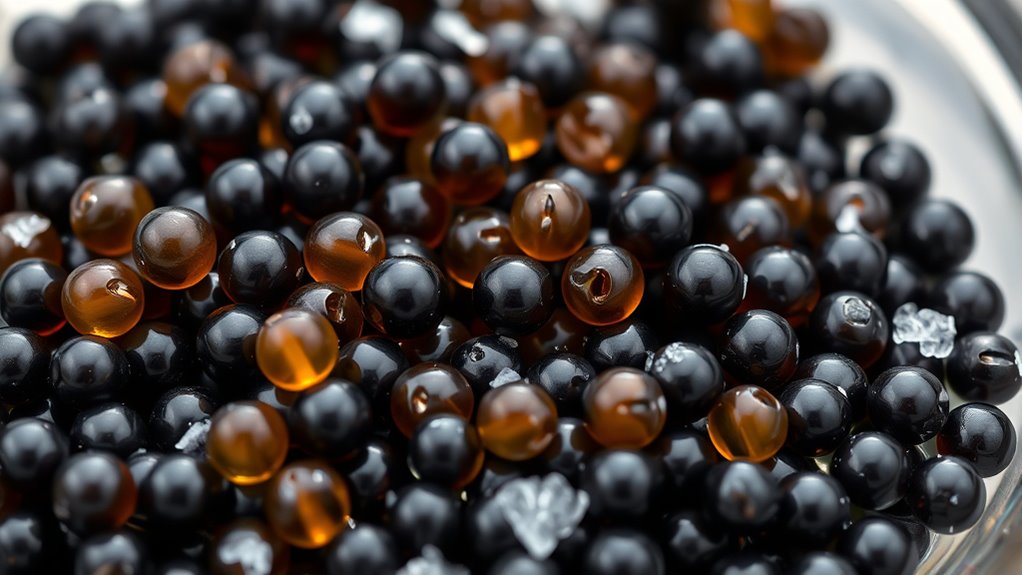
Caviar grading is crucial for understanding the quality and value of this luxurious delicacy. It helps you distinguish between different types and guarantees you’re getting the best product for your money. When it comes to grading, the process isn’t just about appearance; it involves considering sourcing challenges and flavor profiles, both of which influence the overall quality. Sourcing challenges can profoundly impact caviar grades because they affect the freshness and availability of high-quality roe. For example, wild sturgeon populations are increasingly endangered, making sustainable sourcing more difficult and often leading to higher prices and stricter regulations. This scarcity means that producers need to be meticulous about where and how they source their caviar, which directly impacts its grade. The flavor profiles of caviar are equally crucial. Higher-grade caviar typically offers a delicate balance of nutty, briny, and buttery notes, with subtle differences depending on the species and origin. Lower-grade caviar might have a more pronounced fishy taste or a less refined texture, indicating compromises in sourcing or handling. As a consumer, understanding these nuances helps you make informed choices, whether you’re seeking a premium experience or a more budget-friendly option.
When evaluating caviar, you should pay attention to its appearance. High-grade caviar usually features uniform, well-rounded grains that are shiny and firm to the touch. The color can vary depending on the type, but consistent coloration often signals careful processing and high quality. The texture is also a key indicator; premium caviar should feel firm and slightly springy, not mushy or overly dry. The size of the eggs can hint at the grade as well, with larger, intact grains generally being more desirable. But appearance alone doesn’t tell the whole story. Aroma and flavor are critical, and these are directly influenced by sourcing practices. Fresh, well-sourced caviar offers a complex, clean taste that highlights the natural qualities of the roe, whereas lower-grade or poorly sourced caviar might have a muted or off-putting flavor. Additionally, grading systems like Malossol are used to classify caviar quality, with Malossol indicating minimal salt content that preserves the delicate flavor and texture of the roe. Recognizing these factors allows you to appreciate the nuances of each grade and select caviar that aligns with your taste and budget. Ultimately, grading provides a framework for evaluating quality amidst sourcing challenges and flavor profile variations, helping you enjoy this exquisite delicacy at its best.

BESTER CAVIAR Premium Osetra Sturgeon Caviar – Traditionally Harvested Malossol Ossetra Black Roe with Mother of Pearl Spoon – Single Tin (1 oz)
Exquisite Flavor: Savor the luxurious richness of Osetra sturgeon caviar, where each lustrous pearl reveals delicate nutty undertones…
As an affiliate, we earn on qualifying purchases.
As an affiliate, we earn on qualifying purchases.
Frequently Asked Questions
How Is Caviar Sustainability Assessed?
You assess caviar sustainability by examining sustainable harvesting practices that protect fish populations and ecosystems. Look for certifications or labels indicating responsible sourcing, which guarantee minimal environmental impact. You should consider how the producer manages fish farms or wild stocks, avoiding overfishing and habitat destruction. By prioritizing these factors, you support environmentally friendly caviar production that preserves aquatic biodiversity for future generations.
What Are the Health Benefits of Different Caviar Grades?
Did you know that higher-grade caviar often contains more omega-3 fatty acids, boosting your heart health? The caviar nutritional content varies with grade, offering benefits like improved brain function and better skin. However, you should also be aware of caviar allergen risks, especially if you’re sensitive. Choosing premium grades guarantees you’re getting the most nutrients, while enjoying the luxury of this delicacy responsibly.
Can Caviar Be Safely Stored at Home Long-Term?
You can store caviar safely at home long-term by using proper storage techniques. Keep it refrigerated at temperatures between 28-32°F and guarantee the container is airtight to prevent spoilage. Be mindful of shelf life considerations; unopened caviar typically lasts 2-4 weeks, while opened caviar should be consumed within 2-3 days. For extended storage, consider freezing, but note it may affect texture and flavor.
Are There Regional Variations in Caviar Grading Standards?
Yes, regional variations exist in caviar grading standards, influenced by local caviar harvesting practices and regional caviar market trends. You’ll find different grading criteria based on country, with some emphasizing color and size, while others focus on texture and flavor. These differences mean caviar quality assessments can vary worldwide, so it’s essential to understand local standards when evaluating or purchasing caviar, ensuring you get the best quality for your preferences.
How Does Caviar Aging Affect Its Flavor Profile?
Think of caviar aging like fine wine maturing; it enhances your experience. As caviar ages, its freshness diminishes, but its flavor develops complexity and depth. You’ll notice a richer, more nuanced profile, with subtle nutty or buttery notes emerging over time. However, too long, and the caviar loses its delicate texture and vibrant flavor. To enjoy ideal flavor development, consume it within a recommended window for peak freshness and taste.

𝐁𝐄𝐒𝐓𝐒𝐄𝐋𝐋𝐄𝐑 PREMIUM Osetra Sturgeon Black Caviar – CASPIAN Collection – 1.1 oz / 30 g in Metaium Quality Malossol Sturgeon Black Roe – Classic Style – Imported
🎩 Well-Known Classical Black Caviar Taste – The most popular choice among European connoisseurs, our Russian Caviar is…
As an affiliate, we earn on qualifying purchases.
As an affiliate, we earn on qualifying purchases.
Conclusion
Now that you understand caviar grades, you’re like a connoisseur exploring a treasure chest of shimmering jewels. Each grade is a different note in a symphony of flavors, from the delicate whisper of Malossol to the bold crescendo of premium varieties. With this knowledge, you hold the key to revealing a world of luxurious indulgence, where every spoonful is a sip from the ocean’s secret garden. Immerse yourself, and savor the exquisite journey ahead.

Caviar Star – Premium Black Caviar Sturgeon from Sustainable Farms – Exquisite MALOSSOL Osetra Sturgeon Caviar – Fresh Russian Caviar Food – Gourmet Culinary Experience – 1 Ounce
Sustainably Farmed Excellence: Discover the luxury of premium Osetra caviar, harvested from the pristine waters of sustainable aquaculture…
As an affiliate, we earn on qualifying purchases.
As an affiliate, we earn on qualifying purchases.

OLMA Classic Caviar Black Caviar Gift Box – Includes 2 oz of Siberian Osetra Aurora, White Sturgeon, Paddlefish, Hackleback Sturgeon Fish Roe & Mother of Pearl Serving Spoon – Overnight Delivery
· GIFT BOX INCLUDES: 1 of each jar Siberian Osetra Aurora Caviar 0.5 oz (14g), White Sturgeon Caviar…
As an affiliate, we earn on qualifying purchases.
As an affiliate, we earn on qualifying purchases.