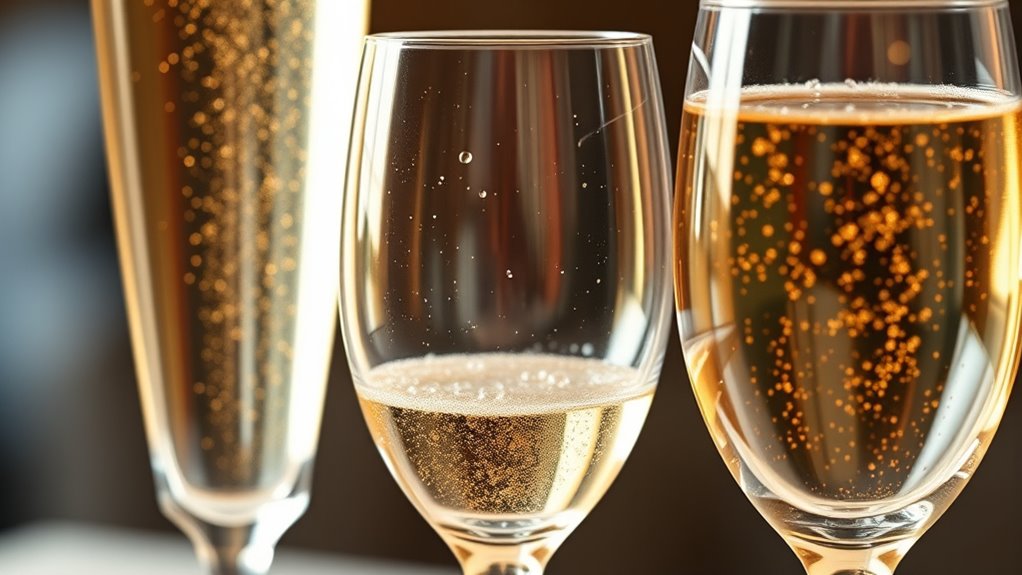

Choosing the right champagne glass depends on your occasion and how you want to enjoy the drink. Flutes are ideal for preserving bubbles and highlighting the sparkle, perfect for toasts and celebrations. Coupes offer a charming, nostalgic vibe but let bubbles escape faster. Tulip-shaped glasses balance aroma and presentation, making them great for savoring flavors. Learn more about how each shape influences your tasting experience and find the best fit for your next sip.
Key Takeaways
- Flutes are ideal for preserving bubbles and enhancing visual sparkle during formal toasts.
- Coupes evoke a nostalgic, romantic feel but cause faster bubble loss and aroma dispersal.
- Tulip glasses balance aroma concentration and bubble retention, suitable for casual and elegant occasions.
- Material and shape influence aroma release, durability, and overall sensory experience.
- Choose based on event formality, beverage appreciation, and practicality for optimal champagne enjoyment.
The History and Evolution of Champagne Glasses
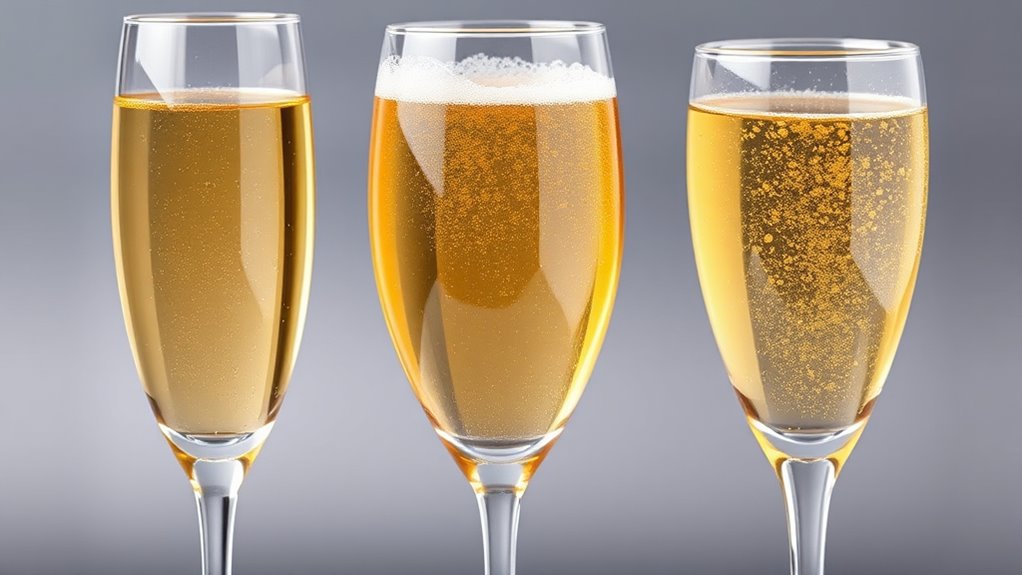
The history of champagne glasses is a fascinating journey that reflects changing tastes and technological advances. Over time, the champagne glass history has evolved from simple, open bowls to more refined shapes designed to enhance the drink’s qualities. The evolution of champagneware was driven by both aesthetics and function, with early glasses resembling wine cups. As appreciation for sparkling wine grew, so did the need for specialized glassware. The development of the flute, with its tall, narrow shape, aimed to preserve bubbles longer. Meanwhile, the coupe, with its broad bowl, was popular in the early 20th century but lost favor due to its tendency to let bubbles escape quickly. This ongoing evolution shows how design adapts to cultural trends and advances in glassmaking.
Design Features of Flutes, Coupes, and Tulips
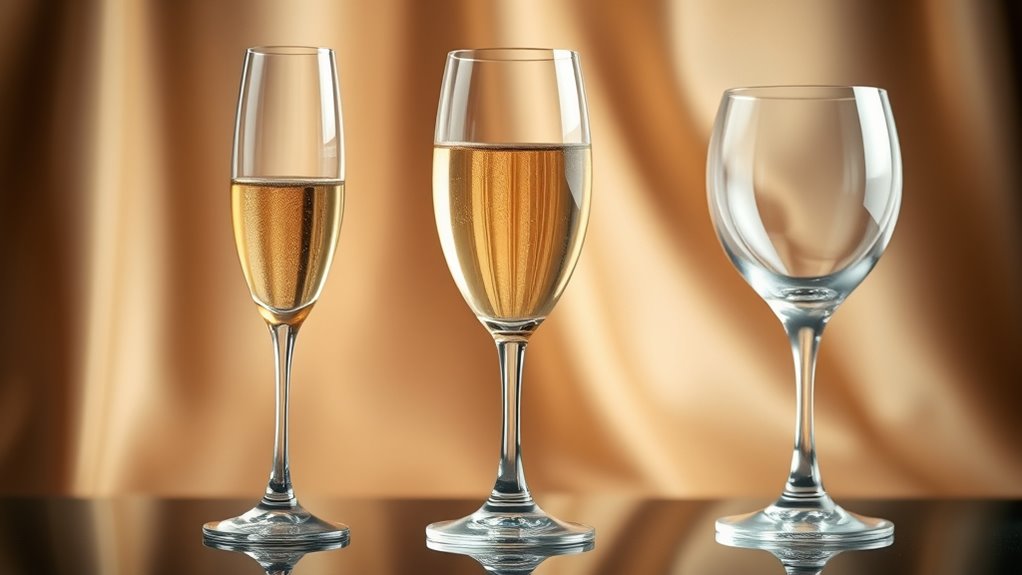
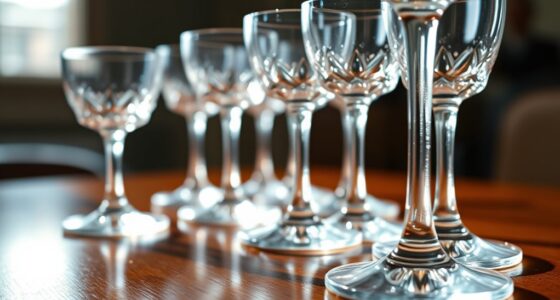
Each champagne glass shape is carefully designed to enhance your drinking experience by highlighting specific qualities of the sparkling wine. Material selection plays a vital role; high-quality glass ensures clarity and elegance while resisting chips and scratches. The thickness of the glass also matters—thinner walls create a more delicate feel and better temperature regulation, especially in flutes, which are often made with very thin glass to enhance the visual appeal. Coupes tend to have slightly thicker glass for durability, but still maintain a refined look. Tulip glasses balance durability and elegance, with moderate thickness that supports aroma concentration. Overall, thoughtful material choices and glass thickness optimize both the visual presentation and tactile experience, making each sip more enjoyable. Additionally, the design features of each style influence how the aromas and bubbles are released, further enhancing the sensory experience of your sparkling wine. The shape of each glass also affects how the bubbles rise, impacting the overall visual presentation and enjoyment.
How Shape Influences Aromas and Flavors
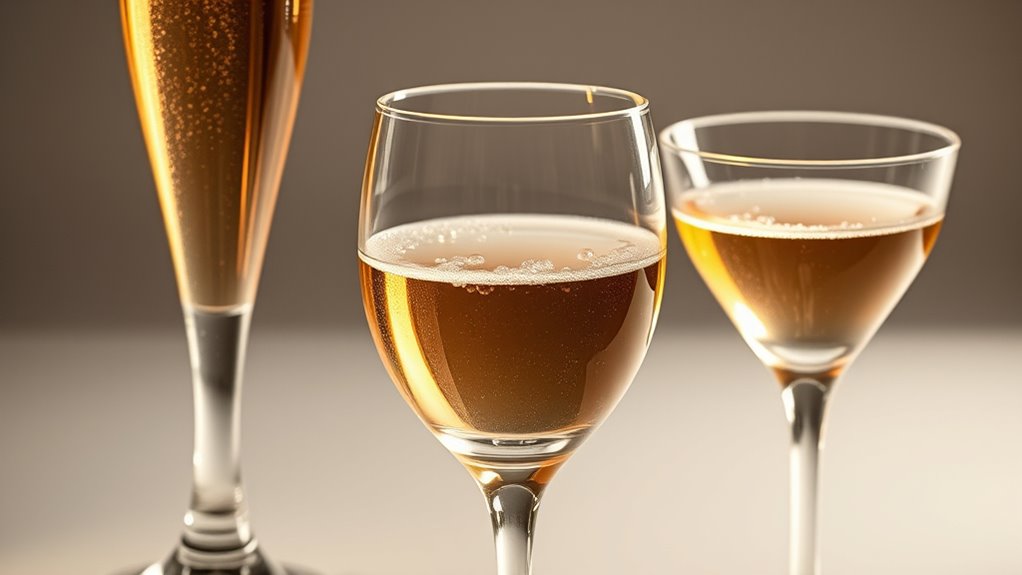
Have you ever noticed how the shape of a champagne glass can change the way aromas and flavors reach your senses? The design influences aroma concentration and flavor enhancement by directing scents toward your nose and shaping your palate’s experience. For example: 1. A tall, slender flute concentrates aromas at the narrow opening, intensifying aroma perception. 2. A wide coupe disperses aromas quickly, making flavors less focused but more immediate. 3. A tulip-shaped glass balances aroma concentration while guiding bubbles and scents upward. Your choice affects how much aroma you detect and how flavors develop on your palate. The shape guides scent flow and influences flavor perception, making each sip a tailored sensory experience. Understanding this aroma concentration helps you select the glass that best enhances your champagne’s aroma and flavor profile. Additionally, glass shape can impact how bubbles and carbonation are perceived, further influencing your drinking experience. Small design variations in the glass can significantly alter the overall sensory impact, allowing for a more personalized tasting. As with financial markets like Bitcoin, where market dynamics can shift rapidly, the way you enjoy a drink can also be influenced by subtle changes in presentation that affect perception.
Impact on Bubbles and Carbonation Retention
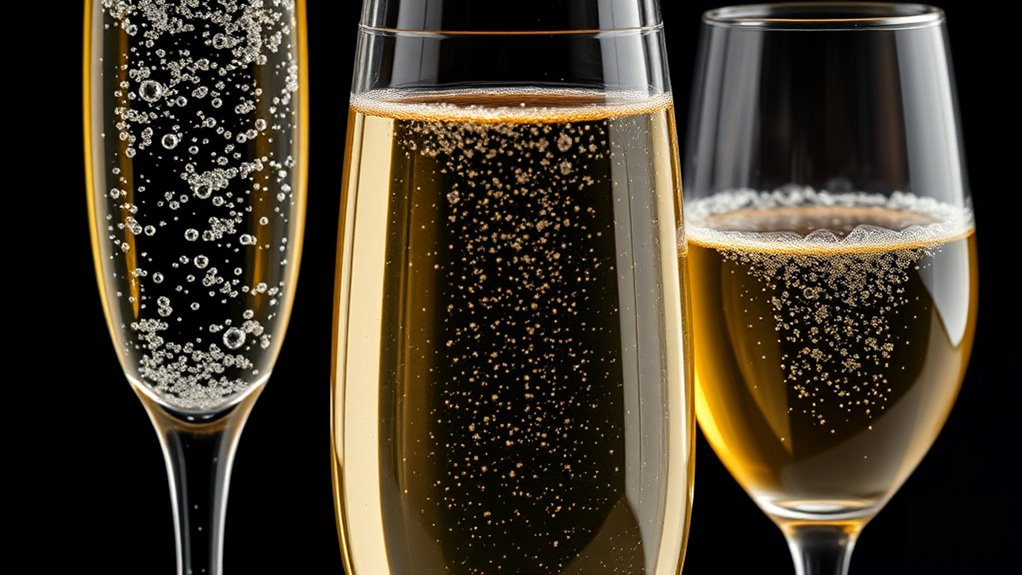
The shape of a champagne glass directly influences how well bubbles form and how long carbonation lasts. A tall, slender flute encourages bubbles preservation by reducing surface area exposure, which helps maintain carbonation retention longer. The narrow opening directs bubbles upward smoothly, minimizing disturbance and slowing escape. In contrast, a coupe’s wide bowl causes bubbles to burst quickly, leading to faster loss of carbonation. Tulip-shaped glasses strike a balance, supporting bubbles preservation while showcasing the champagne’s effervescence. Proper glass design reduces agitation and limits contact with air, keeping carbonation retention high. By choosing the right glass, you enhance the champagne’s lively bubbles and prolong its sparkling freshness, ensuring a more enjoyable drinking experience with ideal bubbles preservation.
Suitable Occasions for Each Glass Style
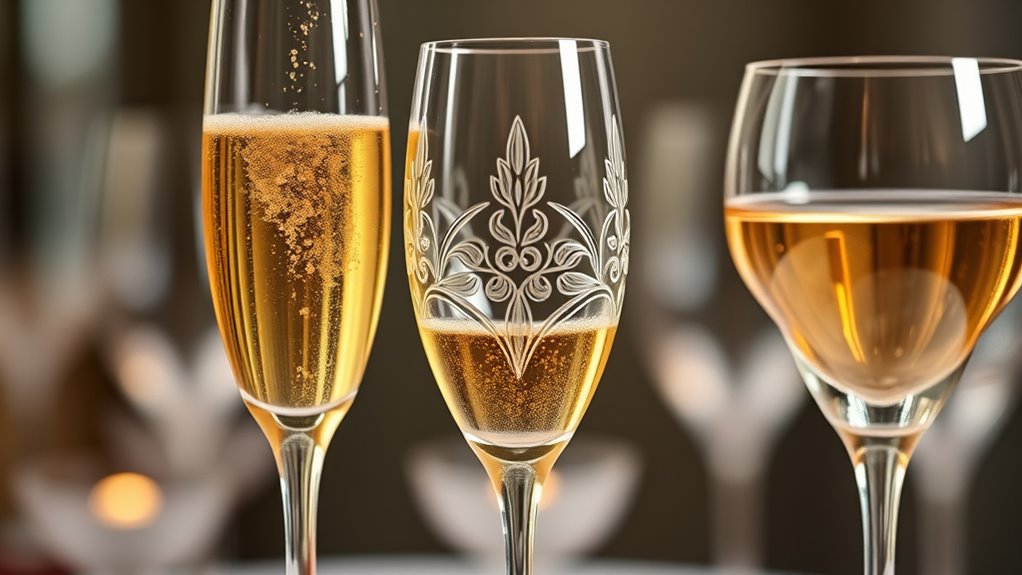
Choosing the right champagne glass for a particular occasion can elevate the drinking experience and complement the mood. Different glasses suit various events perfectly. For wedding receptions, a flute enhances elegance and showcases bubbles, making it ideal for a formal atmosphere. During anniversary dinners, a coupe adds a touch of vintage charm and intimacy. A tulip glass works well when you want to appreciate the aroma and flavors more deeply, suitable for relaxed celebrations. Keep these points in mind:
- Flutes are perfect for formal events like wedding receptions.
- Coupes evoke nostalgia, ideal for romantic anniversary dinners.
- Tulip glasses suit occasions focused on flavor appreciation.
Matching your glass style to the event creates a more memorable celebration.
Practicality and Ease of Use
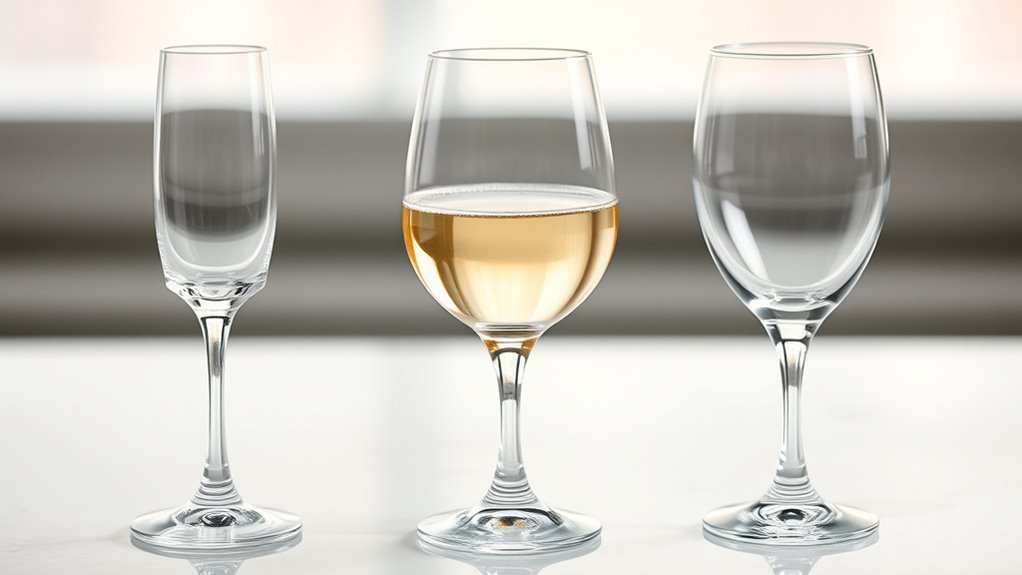
When selecting a champagne glass, practicality and ease of use are important considerations that can impact your overall experience. You want glassware that’s durable enough to withstand regular handling, so look for sturdy materials like thick glass or crystal with good glassware durability. Simple shapes are easier to clean and handle, reducing the risk of breakage. Storage considerations also matter; narrow stems and tall designs might be more fragile and take up more space, so choose a style that fits well in your storage area. Lightweight glasses are easier to hold for extended periods, making your sipping more comfortable. Additionally, understanding glassware durability can help you select pieces that last longer and maintain their appearance over time. Being aware of care and maintenance techniques can also extend the lifespan of your glasses and keep them looking their best. Proper handling tips can prevent accidental damage and ensure your glasses remain in excellent condition. Ultimately, balancing durability and convenience will ensure you enjoy your champagne without hassle or worry about damage. Additionally, understanding credit card security measures can help protect your personal information when purchasing or storing glassware online. Being aware of insurance options can also provide added peace of mind in case of accidental breakage or damage.
Aesthetic Appeal and Presentation
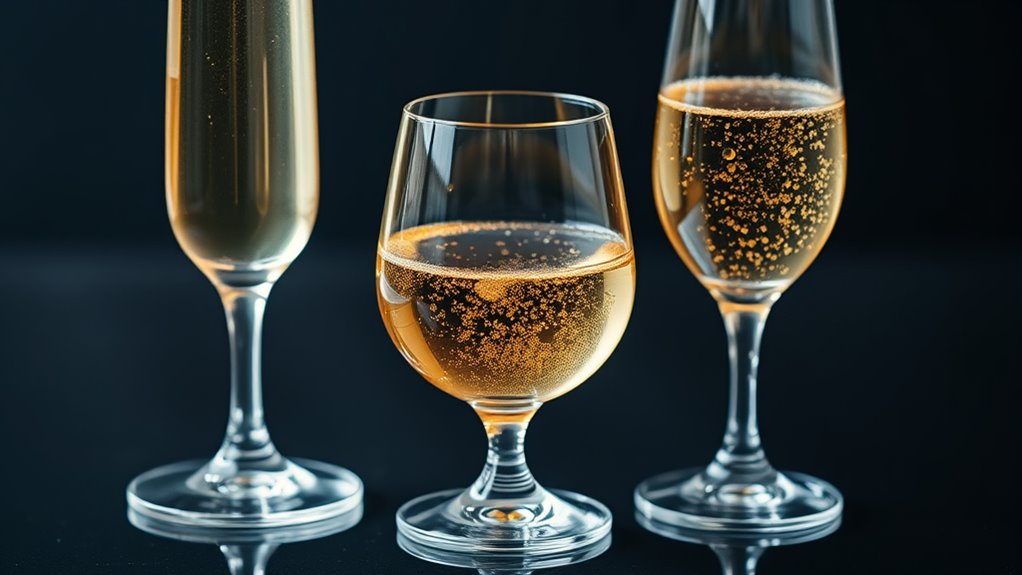
Aesthetic appeal and presentation play a crucial role in enhancing your champagne experience, as the right glass can elevate the visual and sensory enjoyment of your drink. The decorative value of your glass enhances the celebration atmosphere, making it more memorable. When selecting a glass, consider material choices like crystal or fine glass, which add elegance and sophistication. To maximize visual impact, keep these points in mind:
- Choose a shape that complements the drink’s presentation, like a tulip or flute.
- Opt for designs with intricate cut patterns or unique textures for added decorative value.
- Select high-quality materials that reflect light beautifully and enhance clarity.
- Ensure safe and proper installation practices for your glassware to maintain both safety and aesthetics. Proper handling and storage can also prevent damage, preserving the clarity and brilliance of your glasses. Additionally, choosing appropriate glass styles can further enhance the overall presentation and enjoyment of your champagne.
Understanding the importance of material quality can help you select glasses that not only look stunning but also improve your drinking experience. Incorporating proper cleaning techniques can help maintain both the beauty and longevity of your glassware. These choices not only elevate your champagne’s appearance but also contribute to a refined, luxurious presentation.
Tips for Choosing the Right Glass for Your Celebration
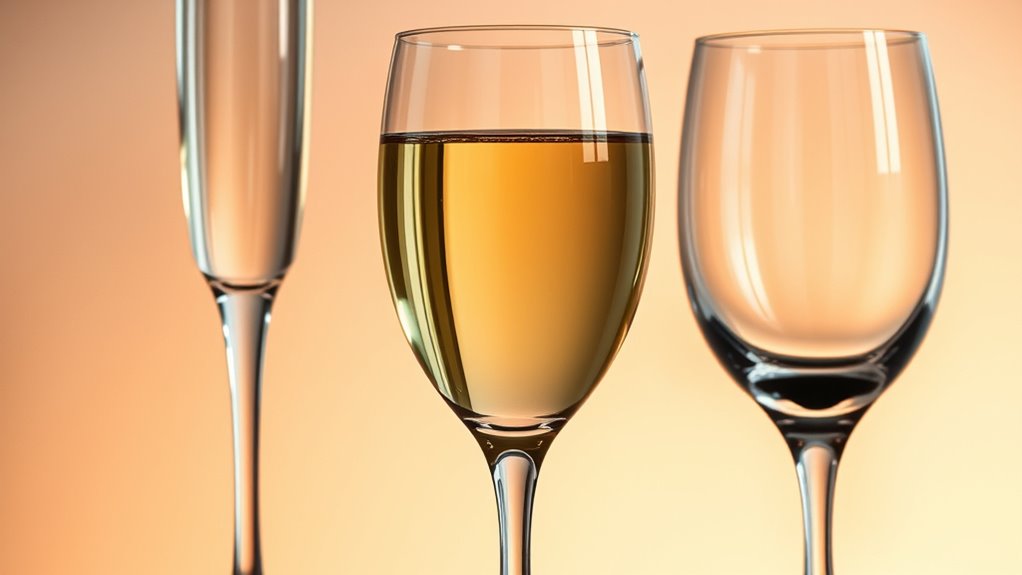
Selecting the right glass for your celebration can particularly enhance your champagne experience, as the ideal vessel complements the drink’s flavors and presentation. When choosing, consider how the glass pairs with your food; a flute’s narrow shape keeps bubbles longer, ideal for delicate appetizers, while a coupe offers a broad surface for tasting complex flavors. The tulip glass balances aroma concentration with elegance. Also, pay attention to glass material—crystal or high-quality glass enhances clarity and sound, adding to the celebratory feel. Durable materials are practical for outdoor events, whereas fine crystal elevates formal occasions. Ultimately, selecting a glass that suits your menu, setting, and personal style ensures your celebration feels both special and thoughtfully curated. glass material can significantly impact how your champagne looks and sounds, enriching the overall sensory experience. Understanding how different glass shapes influence aroma and presentation can help you choose the perfect vessel for any toast.
Care and Maintenance of Champagne Glasses
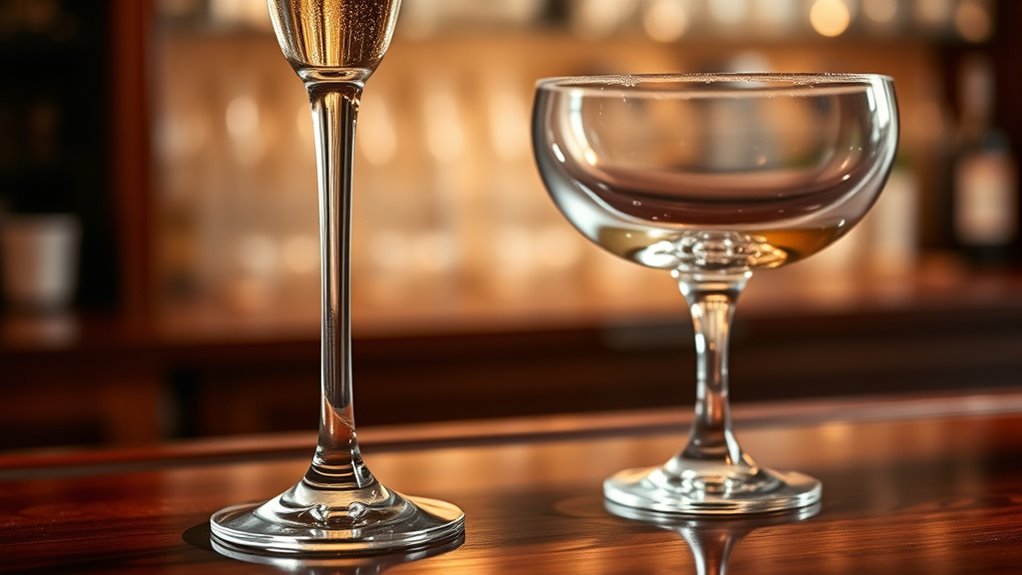
Proper care and maintenance of champagne glasses guarantee they remain beautiful and functional for every celebration. To keep them sparkling, follow effective cleaning techniques: hand wash with warm, soapy water, and avoid abrasive scrubbers. Rinsing thoroughly and drying immediately with a lint-free cloth helps prevent water spots and preserves clarity. When it comes to storage solutions, always store glasses upright in a secure cabinet or on a dedicated shelf to prevent chips or breakage. Here are some tips to ensure longevity: Use gentle cleaning techniques to preserve glass clarity. Avoid dishwasher cleaning unless glasses are dishwasher-safe. Store glasses separately to prevent scratching or damage. Additionally, understanding the thermal behavior of glass can help you avoid sudden temperature changes that might cause cracks or breakage. Being aware of vetted vacuum cleaners and their features can also inspire careful handling and maintenance practices for delicate glassware. Incorporating proper drying techniques can further help maintain the pristine appearance of your champagne glasses.
Frequently Asked Questions
Which Champagne Glass Type Enhances the Drinker’s Overall Tasting Experience?
A tulip glass enhances your tasting experience best because of its glass clarity and stem length. Its shape concentrates the aromas, letting you fully enjoy the champagne’s scent, while the stem keeps your hands away from the bowl to prevent warming the drink. The clarity of the glass also guarantees you appreciate the champagne’s bubbles and color, making each sip more immersive and enjoyable.
Are There Specific Glass Styles Recommended for Different Types of Sparkling Wines?
Think of your sparkling wine as a story waiting to unfold; the right glass enhances each chapter. For delicate champagnes, choose a flute with a slender stem design that directs bubbles upward, enhancing aroma. For richer sparkling wines, a tulip-shaped glass offers a broader bowl, allowing complex flavors to develop. Always clean your glasses thoroughly to preserve clarity and aroma, ensuring each sip tells its full story.
How Do Different Glass Shapes Affect the Perceived Temperature of Champagne?
Different glass shapes influence your perception of champagne’s temperature. Flutes, with their narrow design, help retain carbonation and keep the drink colder longer, enhancing temperature perception. Cups or coupes, being wider, allow more surface area exposure, which can make the champagne feel warmer faster. Tulip glasses strike a balance, maintaining temperature while showcasing aromas. Your choice of glass shape directly impacts how cool or warm your sparkling wine feels as you sip.
Can Using the Wrong Glass Negatively Impact Champagne’s Aroma and Flavor?
Ever wonder if using the wrong glass ruins your champagne experience? It can. Thin glass walls and an elegant stem design help concentrate aromas, enhancing flavor. When you choose a glass with thick walls or poor stem support, you risk dulling the scent and losing the delicate nuances. So, yes, selecting the right glass shape and quality impacts your champagne’s aroma and flavor, making every sip more memorable.
What Are the Best Storage Practices to Preserve the Quality of Champagne Glasses?
To keep your champagne glasses in top shape, you should regularly clean them with gentle glass cleaning solutions and avoid abrasive materials. Store them in a dust-free, dry cabinet or on a secure shelf, preferably upside down to prevent dust accumulation. Use soft storage materials like microfiber cloths or padded cases to protect delicate stems and rims. Proper storage guarantees your glasses stay sparkling and ready for your next celebration.
Conclusion
Choosing the right champagne glass elevates your celebration, whether it’s a flute, coupe, or tulip. Did you know that flutes can keep bubbles sparkling up to 20% longer than coupes? By selecting the ideal style for your occasion, you enhance aromas, flavors, and presentation. So, next time you pop open a bottle, pick the glass that best suits your mood — your senses will thank you. Cheers to memorable moments and perfect pours!