Understanding the parts of a chef’s knife—the heel, belly, and tip—helps you use it more effectively. The heel, at the back, provides leverage for cutting tougher ingredients, while the belly’s curved shape makes rocking cuts smooth and precise. The tip, pointed and delicate, is perfect for detailed work and small ingredients. Mastering these parts improves your control, safety, and overall performance. Keep exploring to learn how each part contributes to better knife handling.
Key Takeaways
- The heel is the rear, thickest part of the blade used for applying force on tough ingredients.
- The belly is the curved, flexible section ideal for rocking cuts and slicing smoothly.
- The tip is the pointed, delicate part used for detailed work like trimming and fine cuts.
- Mastering these parts improves control, precision, and safety during various kitchen tasks.
- Proper understanding aids in sharpening, maintenance, and enhancing overall cutting technique.
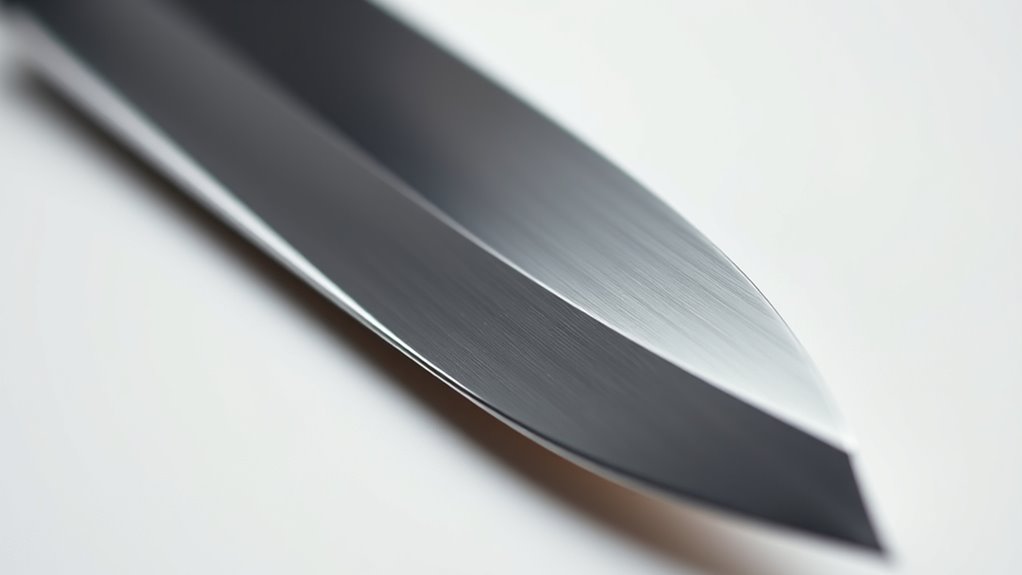
Have you ever wondered what makes a chef’s knife so versatile and efficient? The secret lies in its carefully designed anatomy, which allows you to perform a wide range of cutting techniques with precision. Understanding the different parts of the knife — specifically the heel, belly, and tip — can substantially improve your skills and confidence in the kitchen. When it comes to knife sharpening, knowing these parts helps you maintain the blade’s edge and guarantees it functions at its best for every task. Each section plays a unique role in how you handle ingredients, and mastering their use can elevate your cooking game. Properly understanding knife anatomy is essential for developing precision and control, which are crucial for both novice and professional chefs. Starting with the heel, this is the rear part of the blade, closest to the handle. It’s typically the thickest and heaviest section, providing extra leverage and power when applying force. The heel is your go-to area for cutting through tougher ingredients like thick vegetables or meat. Because of its size and weight, it’s also useful when you need to push down firmly, especially during chopping or slicing. Properly utilizing the heel during knife work helps you develop control and efficiency, especially when practicing knife sharpening — maintaining a sharp edge along the heel ensures cleaner cuts and reduces effort. When you develop good cutting techniques, you’ll find that the heel allows you to leverage your strength without tiring your hand. Moving forward, the belly is the curved, rounded section of the blade, located between the heel and the tip. This is the most flexible part of the knife, crucial for performing rocking cuts, slicing, and dicing. The curve of the belly lets you create a smooth, rocking motion on the cutting board, making it easier to handle delicate tasks like mincing herbs or slicing vegetables. When you practice your cutting techniques, focus on how the belly interacts with the ingredient — it allows for a gentle, controlled motion that minimizes fatigue and maximizes precision. Keeping the belly sharp through regular knife sharpening ensures you get clean, effortless cuts, especially when working quickly or on more delicate ingredients. Finally, the tip of the knife is the most delicate and pointed part, used for detailed work and precision cuts. It’s ideal for tasks such as trimming, peeling, or making intricate decorative cuts. The tip is also invaluable when working in tight spaces or on small ingredients where control is essential. Developing a good feel for the tip helps you execute delicate maneuvers, which is essential for presentation and finesse. Maintaining the tip’s sharpness through proper knife sharpening keeps your control sharp and prevents slips. When you combine knowledge of the heel, belly, and tip with your cutting techniques, you gain greater mastery over your kitchen tasks, making prep work faster, safer, and more enjoyable.
Frequently Asked Questions
How Does Blade Length Affect Knife Control?
A longer blade can make handling precision more challenging because it requires more control and practice. If you’re working on delicate, detailed tasks, a shorter blade offers better maneuverability and accuracy. Conversely, a longer blade provides more surface area for slicing large items but can feel unwieldy for intricate cuts. Choose the blade length that matches your skill level and the tasks you most often perform to enhance your control.
What Materials Are Best for a Chef’s Knife Handle?
The best materials for a chef’s knife handle offer an ergonomic grip and handle durability. You should look for handles made of durable materials like pakkawood, stainless steel, or high-quality plastics such as Micarta. These materials provide comfort during extended use and resist wear and moisture. Choose a handle that feels secure in your hand to improve control and reduce fatigue, ensuring your knife stays reliable and comfortable over time.
Can the Blade Shape Influence Cutting Precision?
Yes, the blade shape can influence your cutting precision. A blade with a gentle curvature allows for smoother, more controlled cuts, especially in rocking motions. The edge thickness also plays a role; a thinner edge offers more precise slicing, while a thicker one provides durability for tougher tasks. By choosing a blade shape that suits your needs, you can improve your accuracy and efficiency in the kitchen.
How Often Should a Chef’s Knife Be Sharpened?
Like a fine instrument, your knife needs regular tuning. You should sharpen your chef’s knife every 1-2 weeks if you use it daily, or when it starts to drag through ingredients. Proper knife storage and choosing the right cutting board material can prolong its sharpness. Regular honing keeps it aligned, but don’t forget to hone when dull. This routine ensures precision and safety in your culinary endeavors.
What Are the Signs of a High-Quality Chef’s Knife?
A high-quality chef’s knife offers a sharp, consistent edge that easily slices through ingredients and feels balanced in your hand. Look for craftsmanship, a durable steel blade, and an ergonomic grip that minimizes fatigue. Proper knife maintenance, like regular honing and careful sharpening, guarantees longevity. If the knife maintains its edge and feels comfortable during use, you’re likely working with a top-tier tool that enhances your cooking experience.
Conclusion
Understanding the anatomy of your chef’s knife—heel, belly, and tip—helps you use it more effectively and safely. Did you know that a well-balanced knife can reduce fatigue and improve precision? With this knowledge, you’ll chop, slice, and dice like a pro, making food prep faster and more enjoyable. Keep practicing and paying attention to each part’s role, and you’ll elevate your cooking skills in no time!