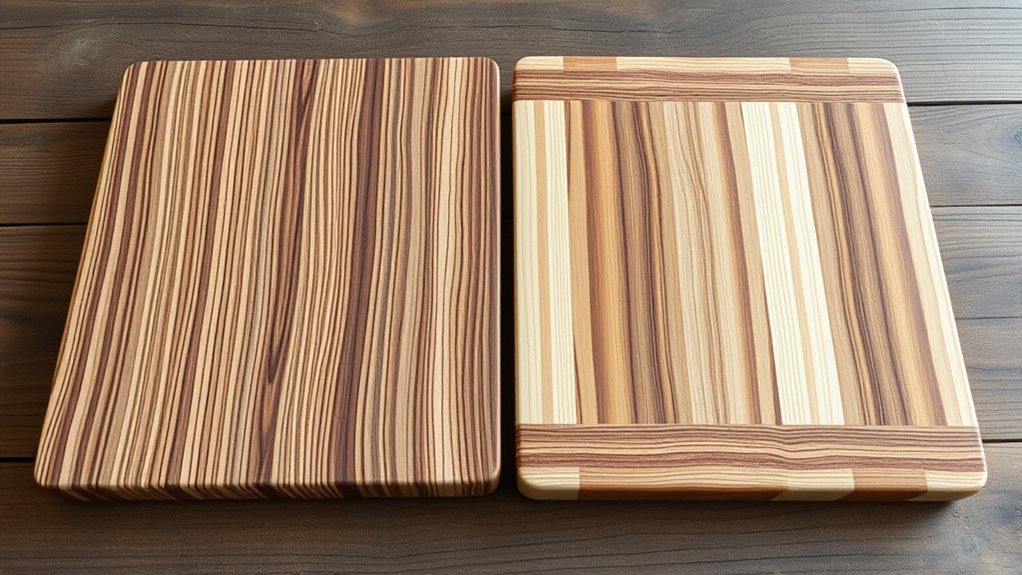
If you’re choosing between end grain and edge grain cutting boards, consider your needs for durability, hygiene, and budget. End grain boards are more resistant to cuts, self-heal minor knife marks, and resist bacteria better, making them ideal for heavy use. Edge grain boards are more affordable, easier to maintain, and still perform well for everyday tasks. To find out which option suits your cooking style best, explore the key differences in their structure and care.
Key Takeaways
- End grain boards are highly durable, resistant to cuts, and self-heal minor knife marks, making them ideal for heavy use.
- Edge grain boards are more affordable, easier to maintain, and provide a smooth surface suitable for everyday chopping.
- End grain surfaces naturally resist deep gouges and hide minor knife marks better than edge grain boards.
- Both types benefit from regular oiling and cleaning; end grain boards require less frequent maintenance for hygiene.
- Choose end grain for maximum longevity and bacteria resistance; opt for edge grain for budget-friendly, easy-to-care options.
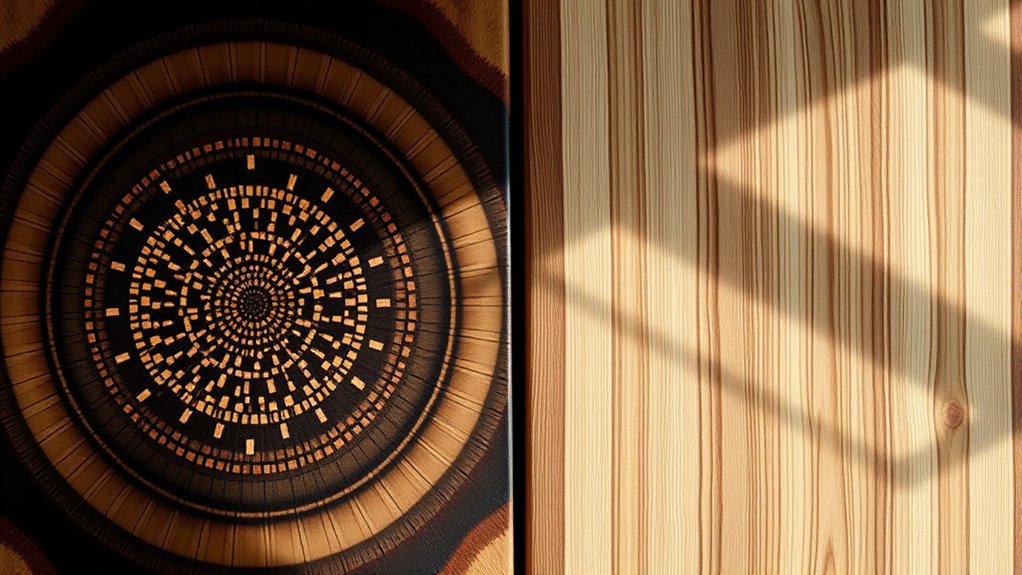
End grain cutting boards are prized for their remarkable durability. They’re made by slicing wood into blocks and then arranging the ends facing upward, so you see the “end grain” of each piece. This structure makes them highly resistant to cuts and gouges, meaning they tend to last longer under heavy use. The resilient surface also helps self-heal minor knife marks, which keeps the board smooth and less prone to harboring bacteria. Because wood is a natural material with inherent antimicrobial properties, end grain boards often require less frequent cleaning and disinfecting than synthetic options, making hygiene maintenance easier over time. Proper maintenance practices are essential to maximize their lifespan and hygiene benefits. However, they do need proper care—regular oiling helps preserve the wood’s integrity and prevents cracking or warping, ensuring the board remains a durable, safe surface for food prep.
End grain boards are highly durable, resist cuts, and naturally fight bacteria, making them ideal for heavy use.
On the other hand, edge grain cutting boards are constructed by gluing together long strips of wood with the grain running parallel to the surface. This design results in a sturdy, stable board that’s generally more affordable and easier to maintain. While they might not be as resilient to deep cuts as end grain boards, they still offer decent durability for everyday chopping tasks. When it comes to hygiene maintenance, edge grain boards are straightforward to clean, especially if they’re properly sealed and regularly oiled. The smooth surface doesn’t trap as much debris or bacteria as more porous materials, making it easier to sanitize. However, they can develop knife marks over time that might harbor bacteria if not properly cleaned and maintained. Regular oiling and cleaning are essential to keep both types of boards hygienic, but end grain boards tend to be more forgiving because their structure helps hide minor cuts and scratches.
Choosing between end grain and edge grain ultimately depends on your priorities. If you’re looking for maximum durability and easier hygiene maintenance, end grain boards are an excellent investment. They withstand frequent use, resist cuts, and naturally fight bacteria. Conversely, if you prefer a more affordable, easier-to-maintain option and don’t mind replacing it more often, edge grain boards still serve well and are simpler to care for. Either way, understanding how wood durability and hygiene maintenance differ ensures you pick the right cutting board for your kitchen, keeping your food prep safe, efficient, and enjoyable.

THETCHRY Walnut Wood Cutting Boards for Kitchen, Large Chopping Board Double Sided, End Grain Cutting Board with Handle, Charcuterie Butcher Block for Meal Prep & Serving with Gift Box, 17"×13"×1"
Still looking for a cutting board that is both beautiful and practical? THETCHRY end grain walnut cutting board…
As an affiliate, we earn on qualifying purchases.
As an affiliate, we earn on qualifying purchases.
Frequently Asked Questions
Which Type of Cutting Board Is More Hygienic?
You’ll find that end grain cutting boards are more hygienic because their surface naturally resists bacteria retention. The tight, self-healing fibers close up after cuts, reducing the buildup of bacteria and making them easier to clean thoroughly. Edge grain boards may have more grooves where bacteria can hide, but with proper cleaning, both types can be hygienic. However, end grain boards generally offer better hygienic benefits overall.
How Do I Properly Maintain My Cutting Board?
To keep your cutting board in perfect shape, you must treat it like a treasure chest of culinary secrets. Regularly clean it with hot, soapy water after each use, avoiding harsh chemicals. Use seasoning techniques like mineral oil or beeswax to prevent drying and cracking. Deep clean with vinegar or hydrogen peroxide weekly to eliminate bacteria. Proper maintenance keeps your board hygienic, durable, and ready for your next masterpiece!
Can I Use a Wood Cutting Board for Meat?
Yes, you can use a wood cutting board for meat, but it’s important to prioritize hygiene. Use proper wood treatment to keep the board in good condition and avoid bacteria buildup. Always wash it thoroughly with hot, soapy water after cutting meat, and consider applying a food-safe mineral oil regularly to maintain the cutting board materials. This helps prevent cross-contamination and keeps your board safe for all food prep.
Are There Environmental Benefits to Using Wood Over Plastic?
Think of using a wooden cutting board as planting a seed for the planet. You’ll find that wood offers significant environmental benefits, such as sustainable harvesting, which guarantees forests stay healthy. Plus, wood is biodegradable, meaning it naturally returns to the earth without pollution. Choosing wood over plastic reduces plastic waste and lowers your carbon footprint, making your kitchen greener and more eco-friendly.
How Do I Choose the Right Size for My Needs?
To choose the right size, consider your typical tasks and available storage. Opt for a thicker board if you often chop large, heavy items, as it offers durability. For smaller jobs, a thinner board works well and is easier to store. Think about storage considerations—ensure your kitchen space can accommodate the board’s size without clutter. Balancing size and practicality helps you pick the perfect cutting board for your needs.
THETCHRY Walnut Wood Cutting Boards for Kitchen, Large Chopping Board Double Sided, End Grain Cutting Board with Handle, Charcuterie Butcher Block for Meal Prep & Serving with Gift Box, 17"×13"×1"
Still looking for a cutting board that is both beautiful and practical? THETCHRY end grain walnut cutting board…
As an affiliate, we earn on qualifying purchases.
As an affiliate, we earn on qualifying purchases.
Conclusion
Ultimately, choosing between end grain and edge grain cutting boards is like selecting a trusted companion. End grain, with its resilience, symbolizes strength and endurance—standing firm against your toughest cuts. Edge grain, meanwhile, offers a smooth surface, representing versatility and ease. Whichever you pick, remember that your cutting board is more than just a tool; it’s a silent partner in your culinary journey, shaping your skills and nourishing your passion for cooking.

Freshware Bamboo Cutting Board Set of 3, Wooden Cutting Boards for Kitchen, Knife Friendly Food Grade Chopping Board, Lightweight with Hanging Hole for Easy Storage
The Ultimate Cutting Board Set for All: If you are looking for a top notch quality cutting board…
As an affiliate, we earn on qualifying purchases.
As an affiliate, we earn on qualifying purchases.
Freshware Bamboo Cutting Board Set of 3, Wooden Cutting Boards for Kitchen, Knife Friendly Food Grade Chopping Board, Lightweight with Hanging Hole for Easy Storage
The Ultimate Cutting Board Set for All: If you are looking for a top notch quality cutting board…
As an affiliate, we earn on qualifying purchases.
As an affiliate, we earn on qualifying purchases.