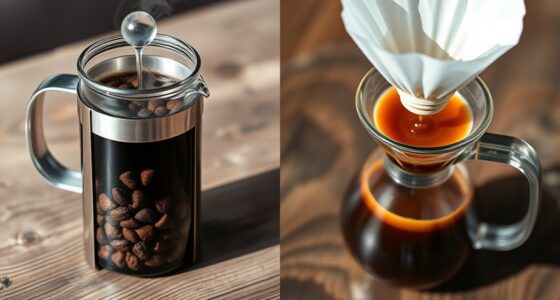

To manage espresso water chemistry at home, test your tap water’s pH and mineral levels using simple strips or meters. Adjust the mineral content with specialized additives or filters to achieve a balanced profile—ideally around pH 6.5–6.8—to enhance flavor and protect your machine from scale. Consistent tweaks help maintain ideal taste and equipment longevity. Keep exploring, and you’ll discover more ways to optimize your water for the perfect brew.
Key Takeaways
- Test your tap water’s pH and mineral levels using simple test strips or meters.
- Adjust water chemistry with mineral packets or pH modifiers to achieve ideal espresso brewing conditions.
- Use water filtration or mineral cartridges to maintain consistent mineral content and prevent scale buildup.
- Aim for a neutral pH around 7, with slight acidity (6.5–6.8) for optimal flavor extraction.
- Regularly monitor and fine-tune your water chemistry to improve espresso taste and protect your equipment.
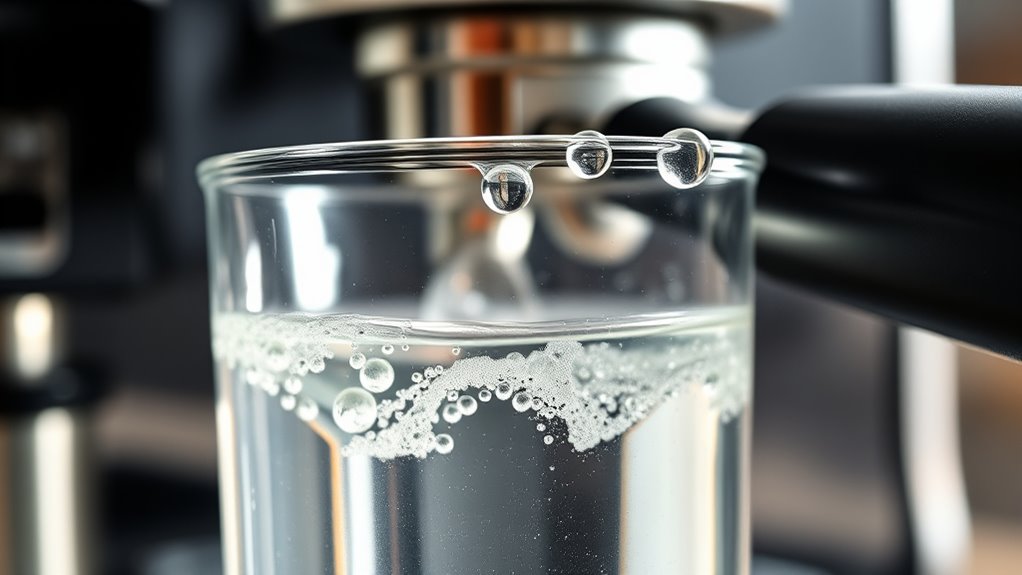
Have you ever wondered how water chemistry influences the perfect shot of espresso? It’s more than just boiling water and coffee grounds; the mineral content and pH level of your water play vital roles in extracting flavors and ensuring your equipment lasts. Understanding water mineral balance is essential because minerals like calcium, magnesium, sodium, and bicarbonates interact with coffee compounds, affecting extraction and taste. Too many minerals can lead to scale buildup inside your espresso machine, while too few might result in flat, underwhelming flavors. Striking the right balance means testing your water and adjusting it to maximize flavor and protect your equipment.
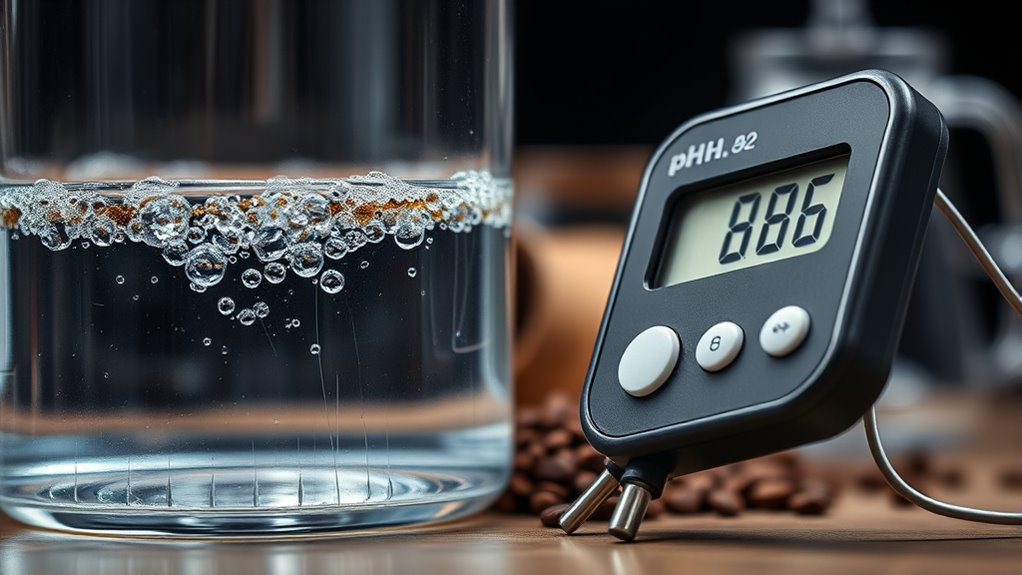
One way to fine-tune your water is through pH level adjustments. The ideal pH for espresso water hovers around 7, which is neutral, but a slightly more acidic range—around 6.5 to 6.8—is often recommended for better extraction. If your water is too alkaline (above 7), it can lead to bitter tastes and scale formation, while overly acidic water might produce sour flavors and insufficient extraction. You can check your water’s pH with inexpensive test strips or a digital meter. If adjustments are needed, adding specific mineral packets or using pH modifiers like food-grade acids can bring your water into the perfect range. These tweaks help control extraction because water with the right pH interacts more efficiently with coffee grounds, revealing complex flavors and aroma.
Maintaining a proper water mineral balance isn’t just about taste; it’s also about safeguarding your espresso machine. Hard water, rich in calcium and magnesium, causes mineral deposits that can clog heating elements and water flow paths. This buildup reduces efficiency and can lead to costly repairs. Conversely, soft water lacking minerals may cause the machine to corrode or malfunction. To prevent these issues, many enthusiasts use water filters or mineral cartridges designed specifically for espresso machines, which remove excess minerals while maintaining the necessary balance for flavor extraction. Additionally, understanding the role of mineral content helps in selecting the right filtration method, ensuring your water remains optimal.
Adjusting pH levels and mineral content isn’t complicated once you understand the basics. You can start by testing your tap water, then adding mineral additives or using concentrated water solutions tailored for espresso brewing. This process might require some trial and error, but over time, you’ll notice a marked improvement in both the taste of your espresso and the longevity of your machine. Remember, the goal is to create water that supports a balanced extraction—neither too hard nor too soft, too alkaline nor too acidic—and that enhances your coffee’s natural flavors. With a little effort, you can master water chemistry at home and consistently pull espresso shots that are rich, flavorful, and perfectly balanced.

2 Pack pH Test Strips, 160 Strips pH.1-14 Universal pH Test Paper Litmus Test Paper Soap Making Testing Strips for Water Wine Saliva Urine Soil Testing Pet Food and Diet pH Monitoring (Sealed Pack)
【Highly Accurate and Quick Readout】- 2 Pack (160pcs) HomEnjoy pH test strips is made of high-quality filter paper,…
As an affiliate, we earn on qualifying purchases.
As an affiliate, we earn on qualifying purchases.
Frequently Asked Questions
How Does Water Ph Affect Espresso Taste?
Water pH directly impacts your espresso’s taste by influencing water acidity, which affects flavor balance. If the water is too acidic (low pH), your espresso might taste sour or sharp. Conversely, if it’s too alkaline (high pH), it can produce a dull or bitter flavor. Aim for a neutral or slightly balanced pH to guarantee a smooth, well-rounded espresso. Proper water pH helps you achieve ideal flavor consistency.
What Minerals Are Ideal for Optimal Espresso Extraction?
Think of your water as a well-tuned orchestra. You need the right minerals—like calcium and magnesium—to achieve perfect harmony. A balanced mineral profile with moderate water hardness ensures ideal espresso extraction, enhancing flavor without bitterness. Too many minerals cause imbalance, while too few lead to flatness. Aim for a mineral balance that complements your beans, creating a symphony of rich, vibrant espresso every time.
Can Hard Water Damage My Espresso Machine?
Yes, hard water can damage your espresso machine. It causes mineral buildup inside the components, which can clog the pipes and affect performance. To prevent this, you should use water softening methods or filtered water. Regular descaling helps remove existing mineral deposits, ensuring your machine runs smoothly and lasts longer. Neglecting this can lead to costly repairs and poor espresso quality over time.
Should I Filter Water Before Brewing Espresso?
Yes, you should filter water before brewing espresso. Water filtration helps remove impurities and excess minerals, ensuring a better mineral balance. This prevents scale buildup and prolongs your machine’s lifespan. Proper filtration enhances flavor and aroma by reducing unwanted tastes. Use a quality filter that maintains essential minerals for ideal extraction. Regularly change your filter to keep water quality high and your espresso tasting its best.
How Often Should I Test Water Mineral Levels?
You should test your water mineral levels weekly to guarantee ideal espresso flavor. Regular water testing frequency helps you catch any changes in mineral content early. Monitoring mineral levels consistently allows you to adjust your filtration or treatment methods as needed. By staying on top of water quality, you’ll maintain consistent water chemistry, prevent scale buildup, and ensure your espresso always tastes its best.

2025 All-New 4 in 1 Tds Meter Digital Water Tester – Accurate and Reliable TDS EC & Temp(°C,°F) Meter – 0-9999ppm – Professional Testing for Drinking Water, RO/DI System, Aquariums etc
Reliable Brand: MEXYBE was founded with a simple yet important mission: to provide everyone with a accurate and…
As an affiliate, we earn on qualifying purchases.
As an affiliate, we earn on qualifying purchases.
Conclusion
Mastering espresso water chemistry is like tending a delicate garden—you need the right balance to let your flavors flourish. I once experimented with mineral adjustments, and suddenly, my shot tasted vibrant and complex, like a symphony in a cup. Just as a gardener nurtures each plant, you’ll find that understanding water chemistry transforms your brewing experience, turning everyday water into the secret ingredient that elevates your espresso from good to extraordinary.

Possiave 12-Pack Charcoal Water Filters Compatible with Breville BWF100 Machines, Breville Espresso Machine Water Filter Replacement
SUITABLE FOR MOST OF BREVILLE MACHINES – Well -designed for all Breville machine models: BES980XL, BES920XL, BES900XL, BES860XL,…
As an affiliate, we earn on qualifying purchases.
As an affiliate, we earn on qualifying purchases.

YINMIK 15 Pack PH Calibration Powder, 5 Each for PH 4.00, PH 7.00 and PH 10.01 Calibration Buffer Powder, PH Tester Calibration Packets for PH Meters
Save Money: One packet of powder yields 250ml of calibration solution. The remaining unused pH calibration solution can…
As an affiliate, we earn on qualifying purchases.
As an affiliate, we earn on qualifying purchases.