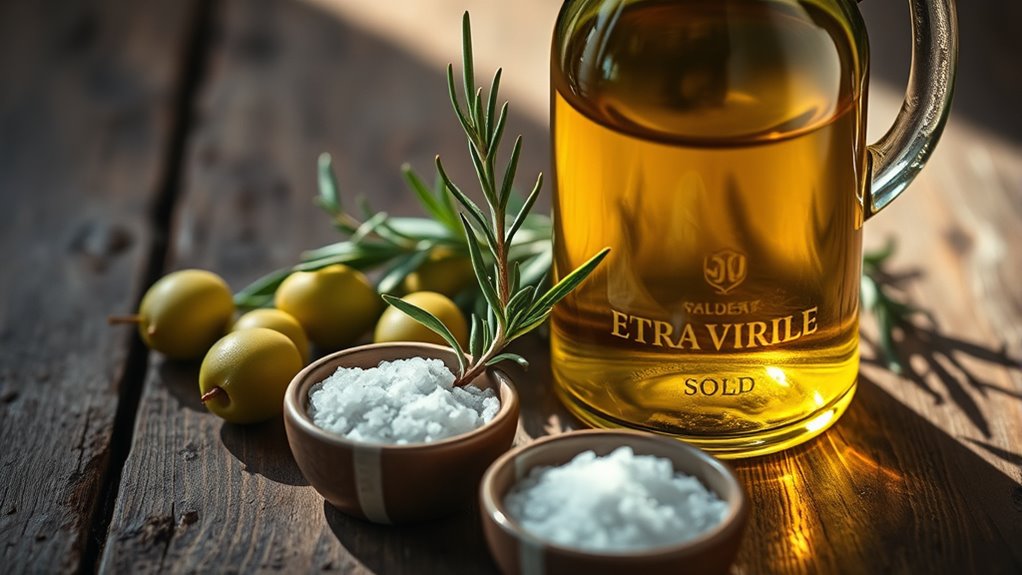

Many believe all olive oils are the same, but extra-virgin cold-pressed olive oil is truly special. It’s made by gently pressing olives without heat or chemicals, preserving natural nutrients, flavor, and antioxidants. Myths say it’s all the same quality, but real extra-virgin oil offers maximum health benefits. If you want to understand how this process impacts health and taste, keep exploring the facts behind this nutrient-rich oil.
Key Takeaways
- Extra-virgin olive oil is made by cold-pressing olives without heat or chemicals, preserving nutrients and flavor.
- Cold-pressed methods retain antioxidants, vitamins, and polyphenols, making the oil more healthful.
- Myths suggest all olive oil is the same; in reality, cold-pressed extra-virgin offers superior quality and nutritional benefits.
- Some believe heating destroys olive oil; however, cold-pressed oils are best raw or lightly heated to maintain nutrients.
- Authentic extra-virgin olive oil should have a fruity aroma, low acidity, and be labeled as cold-pressed for maximum health advantages.
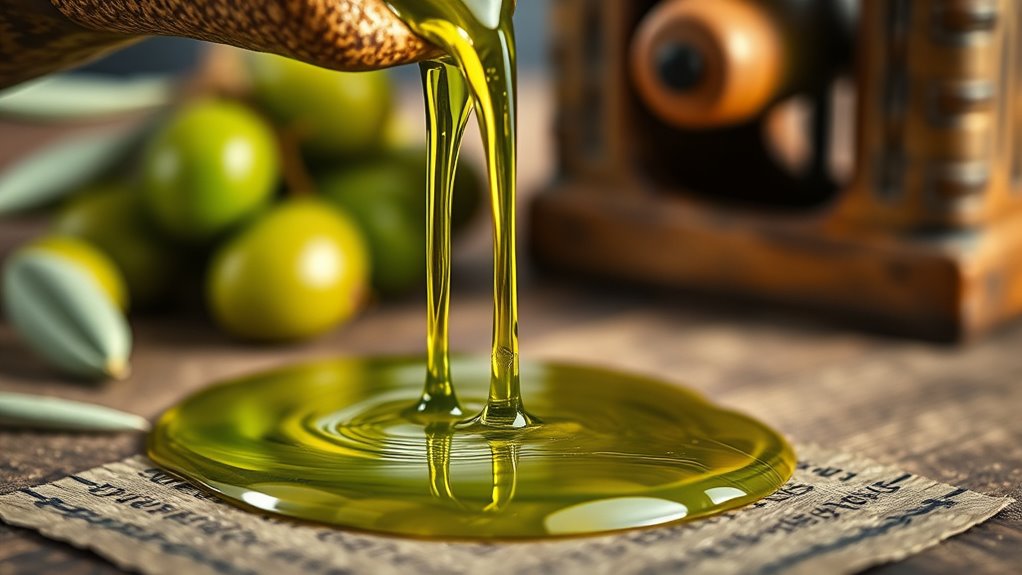
Have you ever wondered why olive oil is a staple in kitchens around the world? The answer lies in its long history, versatility, and impressive health benefits. Understanding olive oil production helps you appreciate what makes extra-virgin olive oil so special. It all starts with the careful harvesting of olives, typically by hand, to guarantee only the best fruit is used. The olives are then pressed or milled, often using cold-press methods, which preserve their natural flavors and nutrients. This process results in extra-virgin olive oil, the highest quality and purest form available. By avoiding heat and chemicals, olive oil production maintains the oil’s integrity, flavor, and antioxidant content. This is why cold-pressed extra-virgin olive oil is favored among culinary enthusiasts and health-conscious individuals alike.
The health benefits of olive oil are well-documented and form a core reason for its popularity. Rich in monounsaturated fats, particularly oleic acid, olive oil helps reduce inflammation and supports heart health. Regular consumption can lower bad cholesterol levels while boosting good cholesterol, thereby decreasing the risk of cardiovascular disease. Olive oil is also packed with antioxidants like vitamin E and polyphenols, which combat oxidative stress and reduce cell damage. These compounds contribute to the oil’s anti-inflammatory properties and may help prevent chronic diseases such as diabetes and certain cancers. Furthermore, olive oil’s natural compounds support brain health and may even promote longevity.
Contrary to some myths, extra-virgin olive oil is not just a flavor enhancer—it’s a powerhouse of nutrients. Its production process, especially cold pressing, assures that these nutrients are preserved. When you choose high-quality olive oil, you’re picking a product that retains its full spectrum of health benefits. It’s not just about adding flavor to your dishes; it’s about nourishing your body with a natural, wholesome fat. The key is to select authentic, cold-pressed extra-virgin olive oil that’s been minimally processed. This way, you maximize the health benefits and enjoy the rich, robust flavor that makes olive oil a culinary staple.
Frequently Asked Questions
How Can I Tell if Olive Oil Is Genuine or Counterfeit?
To tell if your olive oil is genuine, focus on olive oil authentication and counterfeit detection. Check the label for a harvest date, certification seals, and a harvest region. Trust reputable brands and look for dark glass bottles to preserve quality. Smell and taste also help: authentic extra-virgin olive oil should have a fresh, fruity aroma and a peppery finish. If it lacks these signs, it might be counterfeit.
Does the Color of Olive Oil Indicate Its Quality?
Color can be confusing, but it doesn’t determine quality. You should look for color consistency that signals freshness, not a particular hue. Bright green often indicates a fresh, grassy flavor, while darker shades might suggest aging. Packaging matters too—dark bottles protect the oil from light, preserving color and quality. So, trust your senses and choose well-packaged, vibrant-looking olive oil, knowing that color alone isn’t the quality cue.
Can Olive Oil Be Used for High-Heat Cooking Without Losing Nutrients?
Yes, you can use olive oil for high-heat cooking without losing nutrients. Just check the smoke point; extra-virgin olive oil’s smoke point is around 375°F (190°C), making it suitable for sautéing and frying. When you cook below or near this temperature, nutrient retention remains high. Keep the heat moderate to preserve antioxidants and healthy fats, ensuring you get the health benefits without compromising flavor or quality.
What Are the Environmental Impacts of Olive Oil Production?
You should know that olive oil production impacts the environment mainly through water use and land management. By supporting brands practicing sustainable farming, you help reduce water consumption and promote eco-friendly practices. Water conservation efforts are essential because olive groves require significant water resources. Your choices can encourage the industry to adopt more sustainable methods, ensuring that olive oil production becomes less harmful to the environment while maintaining quality and flavor.
How Long Does Olive Oil Stay Fresh After Opening?
After opening, you should use your olive oil within 1 to 3 months for maximum freshness. To extend its shelf life, store it in a cool, dark place away from heat and sunlight, and keep the bottle tightly sealed. Proper storage tips help prevent oxidation and maintain flavor. Check for signs of rancidity, like a sour smell, before using. Following these tips ensures your olive oil stays fresh longer.
Conclusion
Don’t fall for the myths that tarnish olive oil’s reputation. While some believe all extra-virgin oils are the same, the cold-pressed truth proves quality matters. Just as fresh, high-quality olive oil enhances every dish, cheap, processed alternatives diminish your culinary experience. Remember, it’s not just about the label, but the process behind it. Choose wisely, savor fully, and enjoy the genuine richness that true extra-virgin olive oil offers—because quality makes all the difference.