To guarantee sous-vide safety, you need to maintain precise temperature control and adhere to recommended cooking times for different foods. Consistently monitor your water bath, aiming for temperatures like 165°F for poultry or 130°F for fish, and stay within those ranges. Proper timing ensures bacteria are destroyed while preserving food quality. If you follow best practices, you’ll prevent unsafe bacteria growth and enjoy delicious, safe meals—if you keep exploring, you’ll find even more tips here.
Key Takeaways
- Maintain precise, stable water bath temperatures to ensure food safety and prevent bacterial growth.
- Follow recommended time and temperature guidelines for different foods, like poultry at 165°F and fish at 130°F.
- Use reliable sous-vide equipment with regular calibration to avoid temperature fluctuations.
- Monitor water temperature continuously during cooking, especially for long durations.
- Properly vacuum-seal foods and adhere to recommended cooking times to inhibit bacteria and preserve quality.
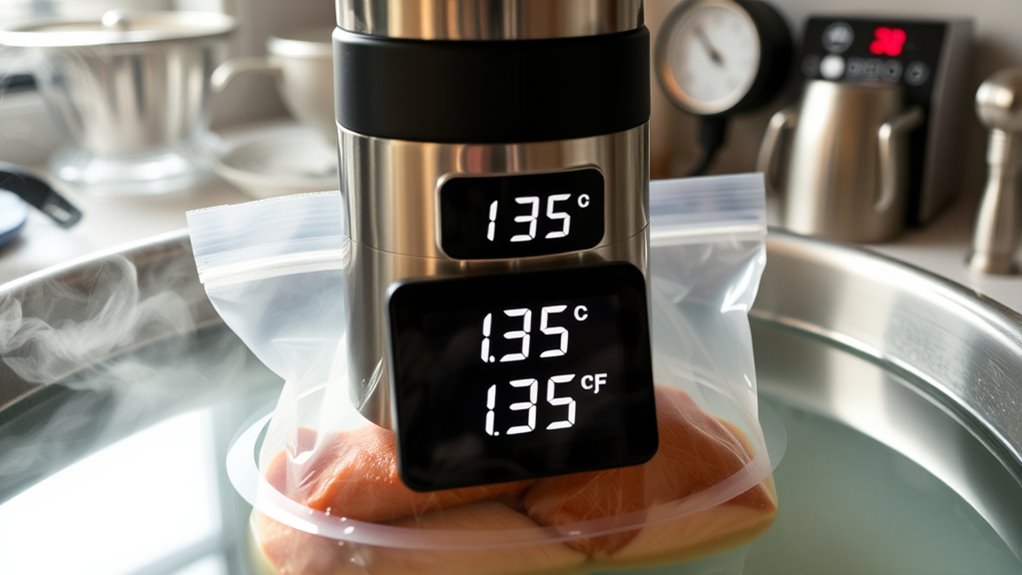
Are you confident that your sous-vide cooking method is safe? Ensuring safety starts with understanding the importance of precise temperature control. Unlike traditional cooking methods, sous-vide relies on maintaining consistent, carefully monitored temperatures to achieve both optimal results and food safety. If your water bath isn’t set correctly or fluctuates during cooking, you risk undercooking or creating an environment where harmful bacteria can thrive. Proper temperature control isn’t just about quality; it’s about preventing foodborne illnesses. By setting your sous-vide device to the right temperature, you give yourself peace of mind that the food reaches a safe level of doneness without overcooking.
Proper temperature control in sous-vide ensures food safety and prevents harmful bacteria growth.
Food preservation plays a vital role in sous-vide safety. When you vacuum-seal your food and cook it at the correct temperature for the appropriate amount of time, you inhibit bacterial growth and extend shelf life. This method is especially effective because the sealed environment prevents contamination and preserves nutrients, flavor, and texture. However, without adhering to established guidelines for time and temperature, you might inadvertently create a breeding ground for bacteria like Salmonella or Listeria. That’s why understanding the relationship between temperature and time is crucial: lower temperatures require longer cooking times to ensure pathogens are destroyed, while higher temperatures can achieve safety more quickly. Additionally, temperature stability during the entire process is essential to prevent unsafe zones that could allow bacteria to survive.
It’s essential to familiarize yourself with recommended temperature ranges for different types of food. For example, cooking poultry at 165°F (74°C) ensures all pathogens are eliminated, but holding fish at 130°F (54°C) for a longer period can also achieve safety while maintaining tenderness. The key is to maintain that temperature steadily throughout the process. Fluctuations, even minor ones, can compromise safety and food preservation efforts. Many modern sous-vide devices have built-in temperature stabilization features, making it easier to keep your water bath at a consistent temperature. Regularly calibrate your equipment to prevent inaccuracies, and never leave your water bath unattended during long cooking sessions.
Ultimately, mastering temperature control and understanding proper timing are your best tools for safe sous-vide cooking. When you pay close attention to these factors, you ensure your food is not only delicious but also safe to eat. Properly managed, sous-vide offers an excellent way to preserve food quality while reducing risks associated with undercooked or spoiled ingredients. By following guidelines for time and temperature, you can confidently enjoy the benefits of sous-vide without compromising safety.
Frequently Asked Questions
Can Sous-Vide Be Used for Canning or Preserving Foods?
You shouldn’t use sous-vide for canning or preserving foods because it isn’t designed for that purpose. Vacuum sealing and precise temperature control are great for cooking and storing, but canning requires specific high temperatures and processing times to kill bacteria and spores safely. Using sous-vide incorrectly could risk food safety. Stick to traditional canning methods or specialized equipment for preserving foods to make certain they’re safe to eat.
How Does Altitude Affect Sous-Vide Cooking Temperatures?
Imagine the rising steam escaping from a pot, signaling boiling point changes at higher altitudes. You need altitude adjustments because boiling point variations mean water heats differently. When sous-vide cooking, you might have to increase the temperature slightly to achieve the same doneness, as lower atmospheric pressure affects heat transfer. Keep in mind, precise temperature control is key, so adjust your sous-vide settings accordingly for consistent results.
Is It Safe to Leave Sous-Vide Food at Temperature for Extended Periods?
Yes, it’s safe to leave sous-vide food at the proper temperature for extended periods because good temperature control prevents bacterial growth. As long as you maintain the recommended cooking temperature, your food stays in a safe zone. Just make certain you follow guidelines for time limits, especially for delicate or high-risk foods. Proper temperature control is key to ensuring food safety during long sous-vide sessions, giving you peace of mind.
What Are the Risks of Cross-Contamination in Sous-Vide Cooking?
Cross contamination can happen in sous-vide cooking if you don’t handle food carefully. You might transfer bacteria from raw to cooked items through surface contamination or utensils. Always wash your hands, keep raw and cooked foods separate, and sanitize surfaces and equipment regularly. Using sealed bags minimizes contact with surfaces, reducing cross contamination risks. Staying vigilant helps make certain your sous-vide meals stay safe and delicious.
How Do I Ensure Sous-Vide Equipment Is Properly Sanitized?
Think of your sous-vide equipment as a trusted partner in the kitchen; you need to keep it clean to keep danger at bay. To guarantee proper sanitation, regularly wash and disinfect all equipment parts, especially the seals and water bath. Use food-safe sanitizers and follow manufacturer instructions. This practice prevents cross-contamination, keeps your food safe, and maintains the integrity of your cooking process.
Conclusion
Now that you know the ins and outs of sous-vide safety, you’re better equipped to cook confidently. Remember, following proper time and temperature guidelines is the key to avoiding trouble. Don’t put all your eggs in one basket; take safety seriously, and you’ll turn out delicious, perfectly cooked meals every time. Keep these tips in mind, and you’ll be cooking like a pro—because safety’s the name of the game when it comes to sous-vide success.