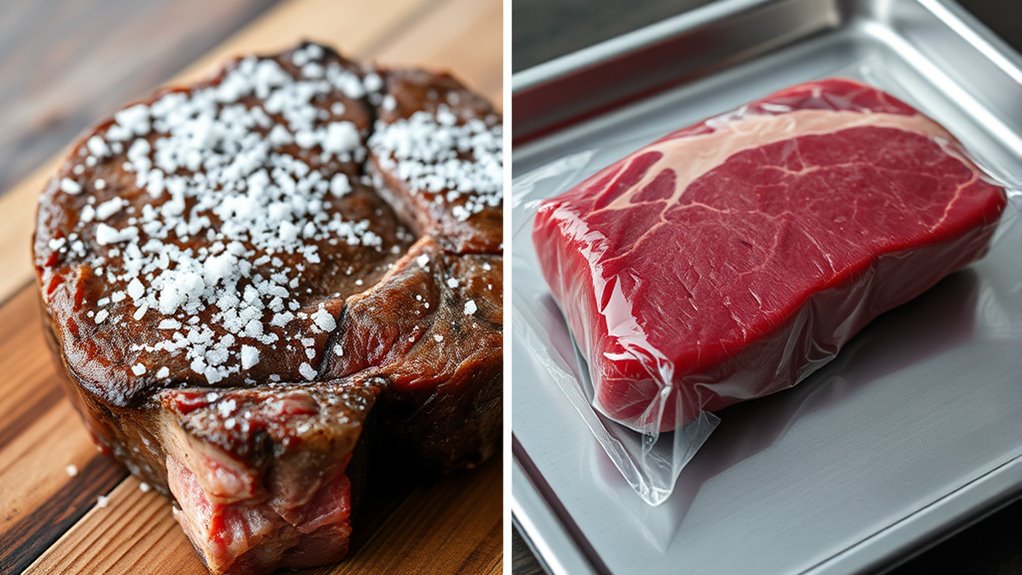
Salt aging involves coating your steak in salt and seasonings, which draws out moisture, intensifies flavor, and tenderizes the meat over several weeks. Wet aging, on the other hand, seals the steak in vacuum plastic, allowing enzymes to naturally tenderize it within 1-4 weeks while keeping it juicy. While salt aging offers a bold, concentrated taste and more effort, wet aging is simpler and preserves moisture. To discover how each method impacts your steak’s flavor and texture, keep exploring.
Key Takeaways
- Salt aging involves dry curing with salt, enhancing flavor and tenderness over several weeks, while wet aging uses vacuum-sealed bags for 1-4 weeks.
- Salt aging concentrates beef flavor and creates a more intense, beefy taste, whereas wet aging maintains juiciness and results in milder flavor.
- Salt aging inhibits bacteria by drawing out moisture, promoting enzymatic breakdown; wet aging relies on enzymes in vacuum-sealed meat for tenderization.
- Salt aging requires a controlled environment and patience, whereas wet aging is simpler, less prone to contamination, and quicker to perform.
- Both methods improve tenderness through enzymatic activity, but salt aging offers deeper flavor development and more substantial texture changes.
When it comes to aging beef, two main methods stand out: salt aging and wet aging. Each technique influences the flavor, texture, and overall quality of your steak in distinct ways. Understanding these processes helps you choose the best method for your preferences and guarantees you get a delicious, tender cut every time.
Salt aging involves a dry cure process, where you coat the beef in a generous layer of salt and sometimes additional seasonings. This method is more hands-on and requires patience. During salt aging, the salt draws moisture out of the meat, creating an environment that inhibits bacterial growth. But the magic doesn’t stop there. The dry curing process also promotes enzymatic breakdown within the muscle fibers. Enzymes naturally present in the meat begin breaking down complex proteins into simpler, tender components. This enzymatic breakdown makes the steak noticeably more tender and intensifies its flavor profile, often giving it a more concentrated, beefy taste. The meat is typically left to cure in a controlled environment for several weeks, during which the salt penetrates deeply, enhancing both flavor and tenderness.
On the other hand, wet aging involves vacuum-sealing the beef in plastic and refrigerating it for a period, usually between one to four weeks. Unlike salt aging, wet aging doesn’t remove moisture from the meat but instead relies on the natural enzymes within the beef to tenderize it. As the meat rests in its own juices, enzymatic activity continues, softening the muscle fibers over time. This process preserves the moisture content of the steak, resulting in a juicier cut that’s often more cost-effective and faster than dry curing. Because wet aging occurs in a sealed environment, it’s less prone to external contamination and doesn’t require the same level of monitoring or effort as salt aging. The flavor profile of wet-aged beef tends to be milder and less concentrated, but it still boasts good tenderness thanks to enzymatic breakdown.

Wevac Vacuum Sealer Bags 100 Quart 8×12 Inch for Food Saver, Seal a Meal, Weston. Commercial Grade, BPA Free, Heavy Duty, Great for vac storage, Meal Prep or Sous Vide
HEAVY DUTY AND PUNCTURE PREVENTION – 8×12 pre-cut Quart bags with embossed channels increase suction, keep fresh without…
As an affiliate, we earn on qualifying purchases.
As an affiliate, we earn on qualifying purchases.
Frequently Asked Questions
How Does Aging Affect Steak Tenderness and Flavor?
Aging makes your steak more tender and flavorful by allowing enzyme breakdown of muscle fibers, which softens the meat. Salt aging enhances marbling, intensifying richness and juiciness, while wet aging preserves moisture and develops deep flavor. Both methods improve tenderness, but salt aging adds a savory, concentrated taste. You’ll notice a better texture and more complex flavor, making your steak more enjoyable with every bite.
Which Aging Method Is More Cost-Effective for Restaurants?
Think of your restaurant’s budget as a garden, where every dollar must bloom. Wet aging is your cost-effective seed, requiring less investment costs and offering quick, tender results. Salt aging, like a rare bloom, demands higher investment costs but enhances flavor complexity. For steady growth, wet aging often proves more practical, maximizing cost efficiency without sacrificing quality, making it an ideal choice for budget-conscious kitchens seeking reliable, flavorful steaks.
Can You Combine Salt Aging and Wet Aging Techniques?
Yes, you can combine salt aging and wet aging techniques. Start with salt enhancement, where you salt the meat to improve flavor and texture, then follow with wet curing to retain moisture and develop tenderness. This combination allows you to maximize benefits from both methods, creating a unique, flavorful steak with enhanced juiciness and a richer taste, appealing to customers seeking a premium dining experience.
How Long Should Each Aging Process Ideally Last?
Did you know that ideal aging periods can considerably enhance steak flavor? For salt aging, aim for 30 to 40 days of storage duration to develop a rich, concentrated taste. Wet aging typically lasts 7 to 21 days, allowing enzymes to tenderize the meat. Sticking to these durations ensures you get the best texture and flavor, making your steak truly exceptional.
Are There Specific Cuts of Beef Better Suited for Each Method?
You’ll find that certain beef cuts are better suited for each aging method. For salt aging, tougher cuts like sirloin or brisket benefit from the moisture retention and flavor concentration, while wet aging works well with tender cuts such as ribeye or tenderloin, which already have high aging suitability. Your choice depends on your flavor preferences and desired tenderness, so select cuts based on how each aging process enhances their qualities.

Dry Age Bags for Meat, Easily Create DIY Aging at Home, No Vacuum Sealer Required. Breathable Membrane Kit for Beef 4pcs. 10×20 in (25×50 cm) 2-12 lb 1-5 kg – Artisan Meat LAB
MAKE DELICIOUS DRY AGED MEAT. Everything you need to make professional dry age meat is included in this…
As an affiliate, we earn on qualifying purchases.
As an affiliate, we earn on qualifying purchases.
Conclusion
Now that you know the difference, you can confidently choose between salt aging and wet aging for your steaks. Both methods uncover incredible flavors, but salt aging transforms your meat into a culinary masterpiece—almost like turning a humble cut into the stuff of legends. Whether you prefer the intense, concentrated taste of salt aging or the juicy tenderness of wet aging, your perfect steak is just a choice away. Get ready to elevate your grilling game to legendary status.
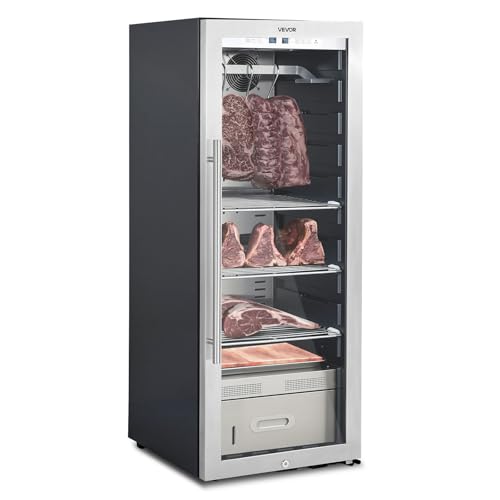
VEVOR 232 LBS Dry Aging Fridge for Steaks, Dry Ager Refrigerator for Meat with Precise Temperature & Humidity Control, Freestanding Beef Aging Machine Refrigerator, Himalayan Salt Not Included
232 lbs Large Capacity: This dry aging fridge features removable hooks, shelves, and trays for easy meat organization….
As an affiliate, we earn on qualifying purchases.
As an affiliate, we earn on qualifying purchases.

The Spice Lab Curing Salt No. 1 – Pink Prague Powder with 6.25% Sodium Nitrite – Meat Curing Salt for Bacon, Jerky, Brisket & Corned Beef – Made in USA (1 lb)
Prague Powder 1 Curing Salt: is also called Insta Cure #1, pink curing salt #1 or tinted cure….
As an affiliate, we earn on qualifying purchases.
As an affiliate, we earn on qualifying purchases.