
To get the best flavor and aroma, serve your red wines at or slightly below room temperature, around 55°F (13°C), while whites and sparkling wines should be chilled to about 45°F (7°C). Using the right glassware and proper chilling methods, like fridge or ice buckets, can enhance your tasting experience. Maintaining consistent temperatures helps prevent spoilage and reveal the wine’s full potential. Keep exploring to learn how adjusting temperatures can elevate your wine enjoyment even further.
Key Takeaways
- Red wines are best served slightly below room temperature, around 55°F (13°C), to enhance flavor and aroma.
- White wines and sparkling wines should be chilled to approximately 45°F (7°C) for optimal refreshment and crispness.
- Proper temperature control prevents flavor dilution or muted aromas, ensuring wine tastes as intended.
- Use refrigeration or ice buckets to maintain proper serving temperatures during serving.
- Adjust wine temperature by warming or chilling briefly before pouring if storage conditions are off.

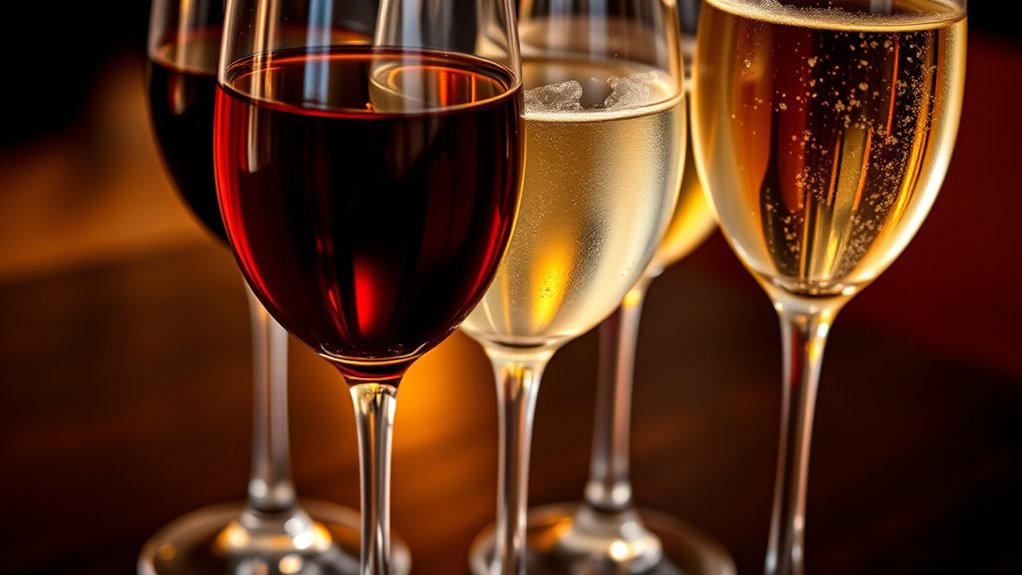
Serving wine at the right temperature can substantially enhance its flavor and aroma. To achieve this, it’s essential to pay attention to your glassware choices and storage methods. The type of glass you select influences how the wine’s aromas are directed toward your nose, intensifying your tasting experience. For reds, a large, bowl-shaped glass allows for better aeration, helping the wine open up and release its full bouquet. Whites, on the other hand, benefit from narrower glasses that focus delicate aromas without overwhelming your senses. Sparkling wines are best served in flute glasses, which preserve their bubbles and direct the aroma upward.
Proper storage methods are equally important in maintaining the ideal serving temperature. If wine isn’t stored correctly, it can warm up or cool down beyond the optimal range, diminishing its qualities. Red wines should be stored in a cool, dark place at around 55°F (13°C). If your wine is stored in a cellar or wine fridge, guarantee it stays consistent to prevent temperature fluctuations that can spoil the wine. Whites and sparkling wines are best kept slightly colder, around 45°F (7°C), which can be achieved by chilling them in the fridge for a few hours before serving. If you don’t have a wine fridge, storing bottles in an ice bucket during your gathering can help maintain the correct temperature until you’re ready to pour.
Temperature also influences your choice of glassware. For example, chilled white wines and sparkling wines are often served in stemmed glasses with thinner rims to maintain their crispness and highlight their refreshing qualities. Reds, served at room temperature or slightly below, are best enjoyed in larger, sturdier glasses that allow for swirling, releasing more of their complex aromas and flavors. Remember, serving wine at the proper temperature isn’t just about comfort; it’s about unlocking the wine’s full potential. If a bottle has been stored too warm, chill it slightly before serving, and if it’s too cold, let it sit at room temperature for a few minutes to warm up just enough.
Top picks for "wine serv temperatur"
Open Amazon search results for this keyword.
As an affiliate, we earn on qualifying purchases.
Frequently Asked Questions
How Does Ambient Room Temperature Affect Wine Serving Temperature?
Ambient room temperature considerably impacts your wine’s serving temperature. If the room is too warm, your wine may become overly warm, losing its intended flavors and aroma. Conversely, a cooler room helps maintain proper serving temperatures, especially for reds and whites. Humidity levels also matter; high humidity can affect cork integrity, risking spoilage. To enjoy your wine at its best, keep the room temperature moderate and maintain balanced humidity.
Can Serving Wine Too Cold or Too Warm Damage Its Flavor Profile?
Serving wine too cold can mute its flavors and create wine glass condensation, making it less enjoyable. Conversely, serving it too warm can exaggerate alcohol and spoil the delicate aroma. Proper wine bottle storage helps maintain ideal temperatures, preventing flavor damage. Always serve red at room temperature or slightly below, and white or sparkling chilled. This balance preserves the wine’s true profile and enhances your drinking experience.
Should Sparkling Wines Be Chilled or Served at Room Temperature?
Did you know that sparkling wine tastes best when served at 45-50°F? You should chill your sparkling wine, as serving temperature markedly impacts its bubbles and flavor. Serving it too warm dulls the acidity, while too cold can hide its complexity. Keep your sparkling wine in the fridge for a few hours before serving, ensuring you enjoy its crispness and lively effervescence at the perfect serving temperature.
How Can I Quickly Cool a Bottle of Wine Before Serving?
To quickly cool a bottle of wine, fill an ice bucket with ice, water, and a generous handful of salt. Submerge the bottle completely and let it sit for about 20-30 minutes. The salt speeds up the rapid chilling process by lowering the water’s freezing point, ensuring your wine reaches the ideal serving temperature faster. Check periodically to prevent over-chilling before serving.
Do Different Wine Types Require Different Glassware Temperatures?
Different wine types don’t require different glassware temperatures, but the glassware you choose impacts wine temperature preservation and overall experience. For example, red wine glasses are larger to aerate and enhance flavors, while white and sparkling glasses are smaller to maintain their cooler temps. By selecting appropriate wine glass selection, you help keep the wine at its ideal serving temperature longer, ensuring each sip is as flavorful and invigorating as intended.
Conclusion
Remember, serving wine at its ideal temperature is like offering it a gentle embrace—allowing its true personality to shine. When you pay attention to those subtle nuances, you create moments that linger long after the last sip. A perfectly chilled white or a softly warmed red can turn an ordinary evening into something truly special. Trust your senses and let the wine’s delicate story unfold—it’s an invitation to savor life’s quiet pleasures.