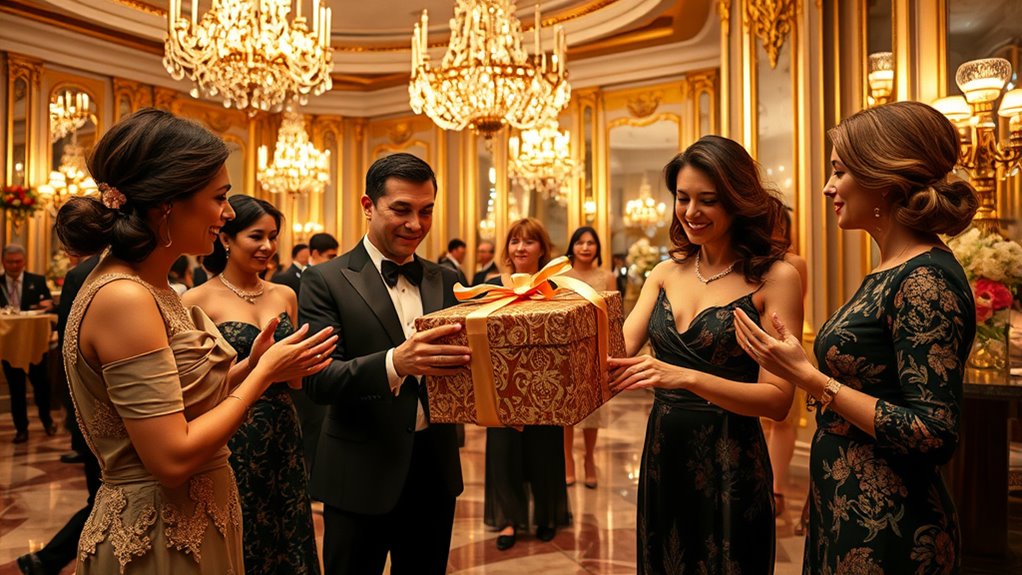

To give and receive extravagant gifts politely, focus on respecting cultural customs and adding a thoughtful touch to presentation. Handing over a gift with genuine warmth and gratitude shows respect, while appreciating a gift graciously emphasizes gratitude over extravagance. Use careful wrapping and personal details to enhance impact. Keep your attitude sincere and considerate, making the recipient feel valued. If you want to perfect your approach and leave lasting impressions, there’s more to learn on how to navigate this art gracefully.
Key Takeaways
- Show respect for cultural customs by presenting gifts appropriately and using modest wrapping to convey thoughtfulness.
- Focus on meaningfulness and personal relevance of the gift, rather than its extravagance, to demonstrate genuine care.
- Present gifts with warmth, a sincere smile, and gracious attitude to enhance the gesture’s politeness.
- When receiving, express sincere gratitude and avoid comparisons or diminishing the gift’s value.
- Enhance presentation with neat wrapping, personal touches, and considerate manner to create a memorable impression.

Have you ever wondered what makes a gift truly memorable? It’s not just about the price tag or the item itself but how you present it and the thought behind it. When giving a gift, understanding and respecting cultural customs can elevate the experience. Different cultures have unique traditions about gift-giving, from the way you present the gift to what you include or omit. For example, in Japan, it’s customary to present gifts with both hands and to avoid wrapping gifts too ostentatiously, as modesty is valued. Conversely, in many Western cultures, elaborate gift wrapping adds an element of excitement and shows effort. Paying attention to these customs demonstrates respect and thoughtfulness, making your gift more meaningful.
Respect cultural gift customs to make your gesture truly meaningful and appreciated.
Gift wrapping, in particular, plays a *vital* role in how your gesture is perceived. A beautifully wrapped present signals that you’ve taken time and care, setting the tone for the recipient’s experience. You don’t need to go overboard—simple, neat wrapping can often be more impactful than an overly elaborate design. Choose paper that suits the occasion, whether it’s festive, elegant, or minimalistic, and add a personal touch with a ribbon or a handwritten note. The presentation matters because it builds anticipation and shows your effort. Even if the gift inside is modest, a thoughtful wrapping can make it feel special and significant. Additionally, understanding quality assessment techniques can help you select appropriate gifts that resonate with the recipient’s tastes and needs.
When it comes to giving gifts, your attitude matters just as much as the item itself. Be genuine and considerate, avoiding the trap of giving to impress or for reciprocation. Focus on the recipient’s preferences and interests, which makes the gift more personal and appreciated. Keep in mind that the way you give the gift is just as important as what you give. Present it with warmth and a smile, and be prepared to graciously accept any response—whether enthusiastic or modest. If you receive a gift, show gratitude sincerely and avoid comparisons or downplaying your appreciation. A simple “thank you” and a genuine smile go a long way.
Ultimately, mastering the art of gift giving involves blending cultural awareness, thoughtful presentation, and genuine sentiment. When you pay attention to customs and take care in wrapping, you communicate respect and care. These small details turn a simple gesture into a memorable experience, strengthening relationships and creating lasting impressions. Remember, it’s not about extravagance but about making the recipient feel seen, valued, and appreciated.
Top picks for "gift give receive"
Open Amazon search results for this keyword.
As an affiliate, we earn on qualifying purchases.
Frequently Asked Questions
How Do I Decline an Extravagant Gift Graciously?
When you receive an extravagant gift and want to decline politely, follow gift etiquette by expressing genuine gratitude first. Say something like, “This is incredibly generous, but I must decline to keep things fair,” or “I truly appreciate your kindness, but I can’t accept this.” Be sincere, respectful, and clear in your polite refusal, emphasizing your appreciation while gently setting boundaries to maintain graciousness.
What Are Appropriate Gifts for Someone I Barely Know?
You might find yourself at a gathering with someone you barely know, and they offer a gift. To maintain appropriate boundaries, choose thoughtful gestures like a beautiful plant or a quality book rather than something extravagant. These gifts show kindness without overstepping. Remember, it’s the sincerity behind your gesture that matters most, and often, simple, considerate presents leave lasting positive impressions, even when your connection is just beginning.
How Can I Tell if a Gift Is Too Expensive?
You can tell if a gift is too expensive by paying attention to the recipient’s price perception and social expectations. If the gift feels markedly more luxurious or costly than what’s typical for your relationship, it might be too much. Observe their reactions to similar gifts, and consider their lifestyle and comfort level. When in doubt, opt for thoughtful, moderate gifts that show you care without crossing social boundaries.
Should I Return or Resell an Extravagant Gift?
If you receive an extravagant gift and feel uncomfortable keeping it, consider returning or reselling it, but do so politely. Follow gift card etiquette by expressing gratitude first, then explain your reasons kindly. For homemade gift tips, if it’s a personalized item, you might keep it or suggest a swap. Always show appreciation, and handle the situation with tact to maintain good relationships and respect the giver’s intentions.
How Do Cultural Differences Influence Gift-Giving Etiquette?
Cultural differences considerably influence gift-giving etiquette, so you should always consider cultural norms and gift customs before giving a gift. In some cultures, elaborate wrapping and specific presentation methods matter, while others may value modesty or symbolic gestures. Respect local traditions by researching appropriate gift types, timing, and whether certain gifts are taboo. Being mindful of these differences shows respect and helps you avoid unintentional offense.
Conclusion
Remember, the true art of gift giving isn’t about the size or extravagance, but about the thought and intention behind it. Some might worry that giving or receiving expensive gifts creates pressure or superficiality. But when done with genuine kindness and appreciation, it builds stronger connections. So, don’t shy away from generosity—instead, focus on heartfelt gestures. Ultimately, it’s the meaning behind your gift that makes it truly memorable and meaningful for both of you.