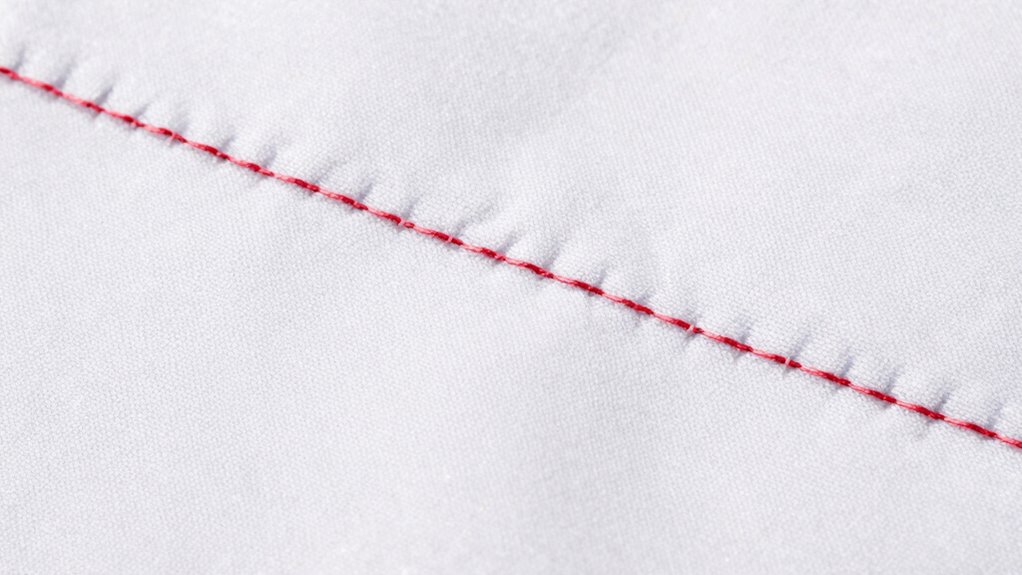

To judge stitching quality at a glance, look for even, tight stitches without loose threads or puckering. Check that seams are neatly finished with no raw edges, and test the tension by gently pulling on the seams–they shouldn’t loosen or unravel. Examine embroidery for precise, dense stitches that follow the pattern smoothly. Good stitching matches the fabric type, with reinforced edges and even topstitching. Want to master spotting quality details? Keep exploring for expert tips.
Key Takeaways
- Check for even, tight stitches with consistent length and no loose threads or puckering.
- Inspect seams for neatness, proper finishing, and absence of raw or frayed edges.
- Look for precise, dense embroidery with smooth pattern flow and no puckering.
- Ensure stitches match fabric type, especially for stretch or heavy materials.
- Confirm seams are reinforced, topstitched evenly, and hems are cleanly finished.
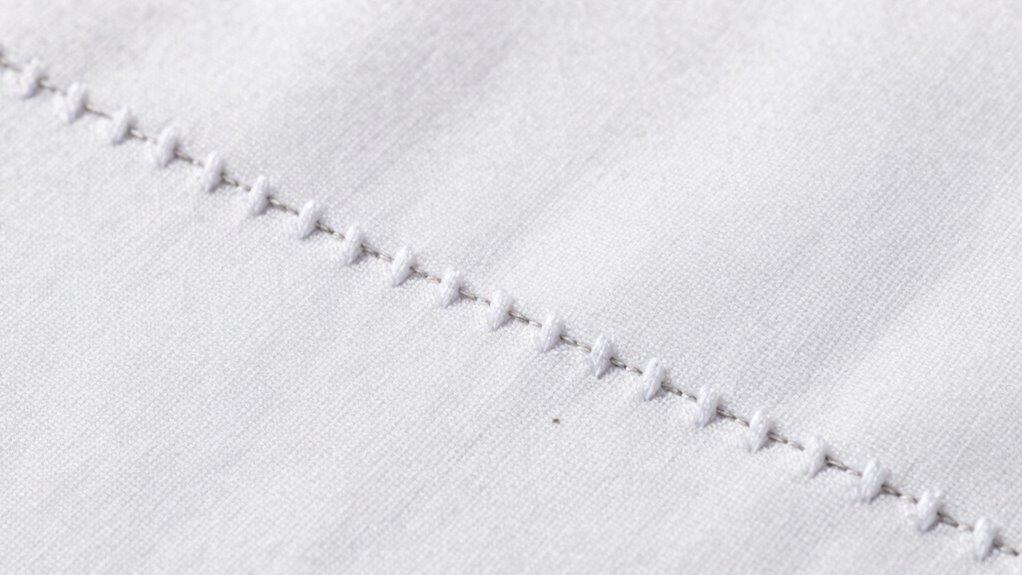
When evaluating the stitching quality of a garment, it’s essential to look beyond its appearance and focus on the details that guarantee durability and craftsmanship. One of the first things you should notice is the consistency of the stitches. High-quality garments feature even, tight stitches that don’t pull or loosen easily. If you see loose threads or uneven spacing, it indicates poor craftsmanship and could lead to unraveling over time. Additionally, examine the edges; neat, tightly finished seams suggest careful construction. Avoid garments with frayed or raw edges, as these often signify rushed or subpar sewing.
Next, pay close attention to the embroidery techniques if the piece has decorative stitching. Well-executed embroidery is intricate, with clean, precise stitches that follow the pattern smoothly. You want stitches that are dense enough to prevent the design from fraying or fading quickly but not so tight that they cause puckering or damage to the fabric. The embroidery should complement the fabric’s texture and weight — a delicate, lightweight fabric may not support heavy or dense embroidery without puckering, so fabric compatibility is essential. When evaluating embroidery, run your fingers over the design to check for any loose threads or uneven areas, which can be signs of shoddy work.
Fabric compatibility plays a critical role in determining stitching quality. The fabric should match the type of stitches used; for example, stretch fabrics require stretch stitches or zigzag stitches to maintain flexibility, while heavier fabrics need stronger, reinforced seams to handle the weight. A mismatch between fabric and stitching technique can cause puckering, tearing, or seam failure. Observe how the fabric behaves at the seams — it should lay flat without bunching or pulling. If stitches cause the fabric to pucker or if the seams look strained, it’s a sign that the garment wasn’t properly tailored for the material. Good stitching adapts to the fabric’s properties, ensuring longevity and comfort.
Finally, check the finishing details like topstitching, hemming, and seam allowances. Quality garments often feature reinforced seam allowances and clean, even topstitching that secures seams and adds durability. If these details are sloppy or uneven, it indicates hurried workmanship. By scrutinizing these aspects—stitch consistency, embroidery quality, fabric compatibility, and finishing—you can quickly gauge whether a garment is built to last or just assembled with minimal care. Remember, good stitching isn’t just about looks; it’s about craftsmanship that guarantees your clothing withstands daily wear and tear.
As an affiliate, we earn on qualifying purchases.
Frequently Asked Questions
Can Stitching Quality Affect the Durability of the Garment?
Yes, stitching quality definitely impacts the durability of your garment. When the thread tension is balanced, the stitches stay even, preventing unraveling. Seam reinforcement, like double stitching or bar tacks, adds extra strength to high-stress areas. Poor stitching with loose or uneven stitches can lead to tears and quicker wear. So, paying attention to these details guarantees your garment lasts longer and maintains its shape and integrity over time.
What Tools Can I Use to Inspect Stitching Closely?
To inspect stitching closely, you can use a magnifying glass or a seam gauge for precision. These tools help you examine thread tension and needle size, revealing inconsistencies or weak spots. A jeweler’s loupe is also handy for detailed views. By scrutinizing the stitch uniformity and tension, you guarantee the garment’s durability. Keep these tools in hand to make confident evaluations of stitching quality before purchasing or repairing.
How Does Thread Color Choice Impact Perceived Stitching Quality?
Your thread color choice greatly impacts perceived stitching quality. If you opt for thread visibility, the stitches stand out, highlighting craftsmanship or flaws. Conversely, using color matching creates a seamless look, making stitches less noticeable and giving a polished appearance. Consider the fabric and desired aesthetic; matching thread blends in, while contrasting thread adds decorative detail. Thoughtful color selection ensures your stitching looks intentional and professional.
Are Certain Stitching Patterns More Durable Than Others?
Certain stitching patterns, like double-stitched seams or reinforced bar tacks, are more durable because they boost seam strength and guarantee stitch uniformity. These patterns distribute stress evenly, resist tearing, and hold up better over time. You’ll find them in high-stress areas, making your garment more resilient. So, when durability matters, look for patterns that focus on reinforcement and consistent stitching to keep your items intact longer.
How Often Should I Check Stitching Quality During Manufacturing?
You should check stitching quality frequently throughout manufacturing, especially after sewing fabric stretches or seam allowances are processed. Regular inspections help catch issues early, guaranteeing consistent seam strength and alignment. Pay close attention to areas where fabric stretches, as weak stitches can lead to tears. By maintaining ongoing checks, you ensure that stitching remains durable and meets quality standards, reducing rework and improving overall product integrity.
garment stitching inspection tools
As an affiliate, we earn on qualifying purchases.
As an affiliate, we earn on qualifying purchases.
Conclusion
Now that you know what to look for, judging stitching quality becomes a breeze. With just a quick glance, you can spot flaws that might otherwise go unnoticed—saving you from future wardrobe disasters. Remember, good stitching is like the backbone of your garment; it holds everything together and keeps it looking flawless. Trust your eyes, stay attentive, and soon you’ll be a stitching expert, making even the most complex designs look like works of art in your hands!
As an affiliate, we earn on qualifying purchases.
seam ripper and fabric inspection tools
As an affiliate, we earn on qualifying purchases.
As an affiliate, we earn on qualifying purchases.