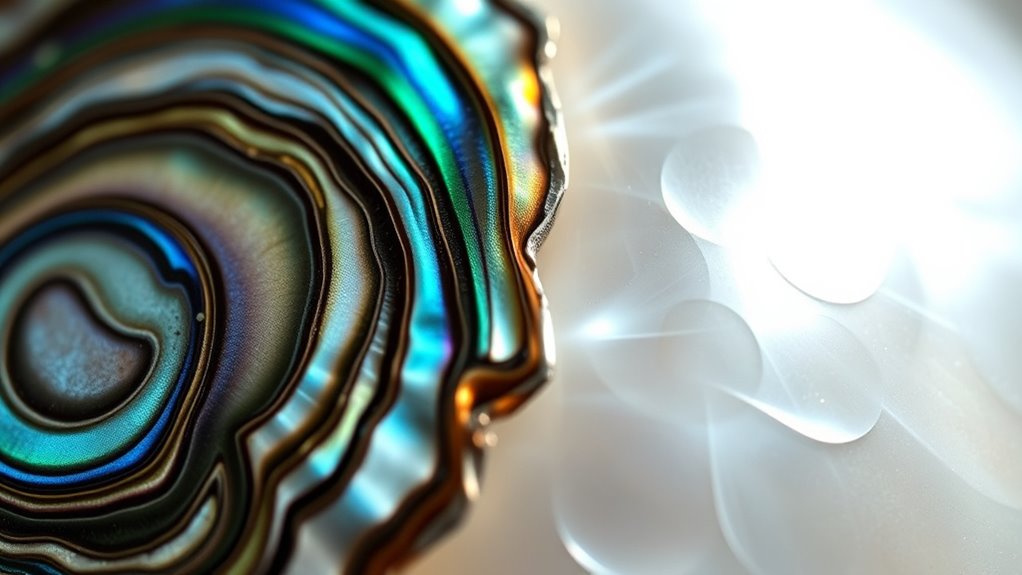

Mother-of-pearl and abalone both bring stunning iridescence to luxury jewelry and decorative items. Mother-of-pearl, made from pearl-producing mollusks like oysters, is valued for its subtle shimmer and elegant appeal, often used in buttons and accessories. Abalone, from marine snails, features vibrant, colorful interiors ideal for carvings and jewelry. While both materials showcase beauty and cultural significance, understanding their origins and sustainability can help you make informed choices—if you continue exploring, you’ll discover more details.

Get your wardrobe favorites delivered free with Prime
- Fast, free delivery on millions of items
- Prime Video, Amazon Music and more included
- Member-only deals all year
Key Takeaways
- Mother-of-pearl is commonly used in jewelry, buttons, and luxury decorative items, valued for its subtle iridescence.
- Abalone’s vibrant, colorful interior makes it highly desirable for jewelry, carvings, and statement pieces.
- Both materials are prized for their iridescence, but abalone’s vivid hues often make it more eye-catching.
- Sustainable sourcing practices are increasingly important, with farmed mother-of-pearl being more eco-friendly than wild abalone.
- Cultural significance and craftsmanship elevate both materials, reflecting tradition and luxury in high-end products.

Have you ever wondered what sets mother-of-pearl apart from abalone? Both materials are prized for their iridescence and beauty, but they serve different roles in luxury craftsmanship. While they’re often used interchangeably, understanding their differences reveals much about their cultural significance and the sustainability concerns tied to their harvesting. Mother-of-pearl, also called nacre, is a composite material secreted by mollusks, mainly oysters, to line their shells. It’s been valued for centuries for its shimmering appearance, often adorning jewelry, buttons, and luxury decorative items. Abalone, on the other hand, refers to a specific type of large marine snail whose shells produce a highly prized nacre. Its vibrant, colorful interior makes it a favorite in jewelry and carvings, especially in regions with rich indigenous traditions. The extraction methods and farming practices significantly impact their environmental footprint, influencing their sustainability status.
Mother-of-pearl and abalone differ in origin, cultural significance, and sustainability, despite both showcasing stunning iridescence.
Sustainability concerns are increasingly at the forefront when choosing between mother-of-pearl and abalone. Overharvesting has threatened wild populations of abalones, leading to strict fishing regulations and a push toward sustainable farming practices. Unsustainable collection harms ecosystems, diminishes biodiversity, and risks the depletion of these mollusks. As a conscious consumer, you might find yourself questioning whether the material’s beauty justifies its environmental impact. Cultivating abalone through aquaculture has become a viable alternative, helping to reduce pressure on wild stocks. Meanwhile, mother-of-pearl, mainly sourced from farmed oysters, is generally considered more sustainable when harvested responsibly. However, environmental concerns aren’t just about overharvesting; pollution and habitat destruction also play a role, making responsible sourcing essential.
The cultural significance of both materials adds depth to their luxury appeal. Mother-of-pearl has ancient roots, used by civilizations across the world, from Egyptian jewelry to Asian art. It embodies elegance and refinement, often associated with aristocratic and spiritual traditions. Abalone, especially in indigenous cultures of the Pacific and East Asia, holds spiritual and ceremonial importance. Its vibrant hues symbolize vitality and connection to nature, making it more than just a decorative element. When you choose items crafted from either material, you’re not only acquiring a luxurious piece but also participating in a tradition that spans generations. The craftsmanship involved in shaping and polishing these shells reflects a deep respect for nature’s artistry, emphasizing their cultural value.
Recognizing the sustainability challenges linked to harvesting these materials encourages more mindful consumption and supports ethical practices in the luxury industry.
Frequently Asked Questions
How Durable Is Mother-Of-Pearl Compared to Abalone?
Mother-of-pearl is more durable than abalone, thanks to its higher surface hardness and better resistance to scratches. You’ll find that mother-of-pearl withstands daily wear and tear more effectively, maintaining its luster longer. Abalone, while beautiful, is softer and more prone to scratching and damage. So, if durability in luxury items matters, mother-of-pearl offers a more resilient choice for jewelry and decorative pieces.
Are There Eco-Friendly Sourcing Options for Both Materials?
You can find eco-friendly sourcing options for both mother-of-pearl and abalone through sustainable harvesting practices. Look for suppliers committed to eco-conscious supply, which prioritize responsible collection methods that protect mollusk populations and marine ecosystems. Choosing certified sources guarantees you’re supporting environmentally responsible producers, helping to reduce overharvesting and habitat damage. By opting for these sustainable options, you contribute to the preservation of marine life while enjoying luxurious materials.
Can These Materials Be Used in Everyday Jewelry?
Yes, you can use Mother‑of‑Pearl and Abalone in everyday jewelry, thanks to their durability and stunning appearance. Their cultural significance adds a meaningful touch, making them more than just accessories. Artists often incorporate these materials into casual pieces, showcasing their versatility in artistic applications. Just keep in mind, proper care guarantees they stay beautiful through daily wear, highlighting their natural charm and enduring appeal.
How Do Cost Differences Affect Their Luxury Status?
You’ll find that cost differences considerably influence their luxury status, with mother-of-pearl often being more affordable than abalone. These cost implications enhance exclusivity factors, making abalone jewelry feel more luxurious and rare. When you choose abalone, you’re investing in a material that’s perceived as more prestigious due to its higher price point. This perception elevates the item’s status, emphasizing its rarity and desirability in luxury markets.
What Maintenance Is Required to Preserve Their Appearance?
Ever wonder how to keep that iridescent shine? You should regularly clean mother-of-pearl and abalone with gentle, damp cloths—avoid harsh chemicals that can damage their surface. Store them in soft pouches or separate compartments to prevent scratches. Do you visualize their shimmering beauty fading? Proper storage solutions and cleaning tips are key to preserving their luxurious appearance and ensuring your pieces stay stunning for years to come.
Conclusion
In the world of luxury, mother-of-pearl and abalone each shine like stars in the night sky. While mother-of-pearl offers timeless elegance with its iridescent glow, abalone brings a vibrant, oceanic charm. Choosing between them is like selecting a melody—each has its own rhythm and soul. Ultimately, your choice depends on the story you want your piece to tell, turning ordinary objects into treasures that shimmer with a touch of the sea’s magic.
Columbus Day / Indigenous Peoples' Day Picks
long weekend sales
As an affiliate, we earn on qualifying purchases.