
When comparing selvedge looms, shuttle looms use a shuttle to carry the weft back and forth, producing tighter, more precise edges with a craftsmanship feel, but at a slower pace. Projectile looms, on the other hand, use automated projectiles to weave faster, though their edges might be less refined. If you want to understand how these differences influence fabric quality and durability, keep exploring the details behind each technique.
Key Takeaways
- Shuttle looms use a shuttle to manually or mechanically carry weft yarn, producing precise, clean selvedge edges.
- Projectile looms employ automated projectiles for faster weaving but may result in less distinct selvedge edges.
- Shuttle weaving creates high-quality, durable denim with characteristic craftsmanship; projectile weaving prioritizes efficiency.
- Regular maintenance is crucial for both loom types to ensure fabric quality and prevent defects.
- The choice between shuttle and projectile looms influences fabric appearance, strength, and overall craftsmanship of selvedge denim.
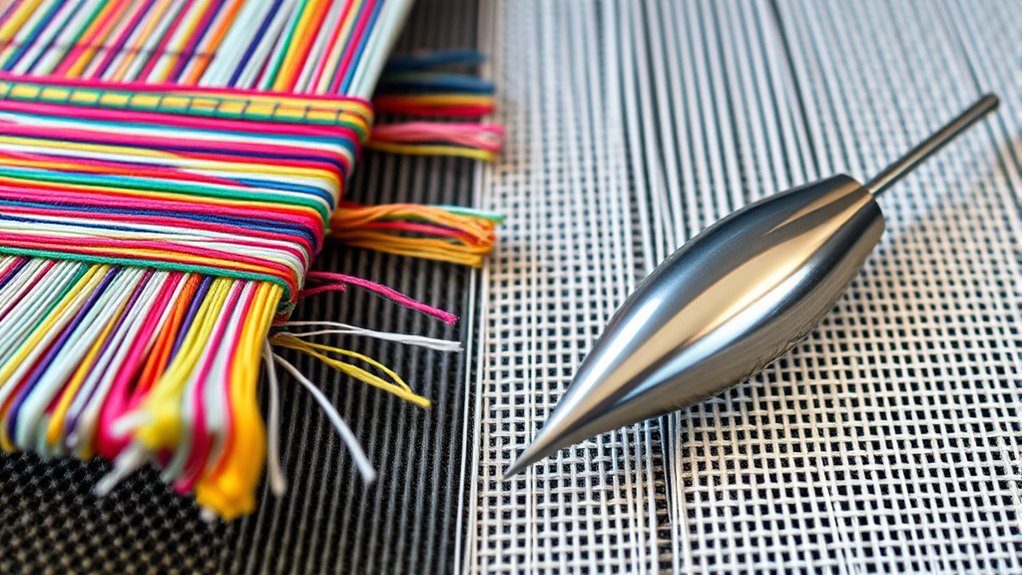
Have you ever wondered what makes selvedge denim so durable and high-quality? It all comes down to the weaving techniques used and how the loom is maintained. When you’re exploring selvedge denim, understanding the differences between shuttle and projectile looms can help you appreciate why each produces unique results. Both weaving techniques rely on specialized looms, but the way they operate and are maintained impacts the fabric’s appearance, strength, and overall craftsmanship. Proper loom maintenance is vital because it ensures consistent weaving quality, which directly influences the durability of your denim. If a loom isn’t well-maintained, it can lead to uneven weaves, loose threads, or defects that compromise the fabric’s integrity.
In shuttle looms, the weaving technique involves a shuttle that carries the weft yarn back and forth across the warp threads. This method is traditional and has been used for centuries, especially in producing high-quality selvedge denim. The shuttle’s movement is slow and deliberate, allowing for tight, precise weaves. Because shuttle looms are often larger and more robust, they require regular maintenance to keep the intricate parts functioning smoothly. Proper loom maintenance ensures the shuttle moves seamlessly, the tension remains consistent, and the fabric’s edges stay clean and finished. This meticulous upkeep preserves the integrity of the weaving technique, resulting in a durable fabric with a characteristic clean edge—what you see as the selvedge. Additionally, the weaving precision achieved with shuttle looms contributes significantly to the superior quality of the finished denim.
Projectile looms, on the other hand, use a different weaving technique. Instead of a shuttle, they employ a projectile—an automated device that carries the weft yarn through the shed. This method allows for faster production and is more suited for mass manufacturing. However, it can sometimes produce less precise selvedge edges compared to shuttle looms. Because these looms operate at higher speeds, loom maintenance becomes even more critical. Any misalignment or lack of upkeep can lead to issues such as inconsistent tension, irregular edges, or defects that weaken the fabric over time. While projectile looms are efficient, they require diligent maintenance to maintain the quality standards expected of selvedge denim.
Frequently Asked Questions
Which Loom Type Produces More Environmentally Friendly Fabrics?
You’ll find that projectile looms tend to produce more environmentally friendly fabrics because they often utilize sustainable materials and eco-friendly processes. These looms are faster and more efficient, reducing resource consumption and waste. Shuttle looms, while traditional, typically use more energy and produce more waste. So, if you’re aiming for eco-conscious production, projectile looms are generally the better choice for creating sustainable textiles.
How Does Weaving Speed Compare Between Shuttle and Projectile Looms?
You’ll find that projectile looms generally offer higher weaving efficiency and faster production speed compared to shuttle looms. This is because projectile looms can operate at higher speeds, thanks to their rapid projectile transfer system, reducing downtime. Shuttle looms, while slower, may have advantages in specific applications. Overall, if your goal is to maximize weaving speed, projectile looms are the better choice for increased production efficiency.
Can Shuttle and Projectile Looms Be Used Interchangeably?
You can’t always use shuttle and projectile looms interchangeably because of their limitations and versatility. Shuttle looms excel in traditional weaving but face constraints like slower speeds and shuttle handling issues. Projectile looms, however, offer greater versatility for diverse fabrics and faster production. Remarkably, projectile looms can weave up to 600 meters per day, making them ideal for mass production, while shuttle looms are better for specific, traditional textiles.
What Are the Maintenance Differences for Each Loom Type?
You’ll find maintenance varies between shuttle and projectile looms mainly in loom calibration and warp tension adjustments. Shuttle looms often require more frequent calibration to guarantee smooth shuttle movement, while projectile looms need precise warp tension control to prevent tension inconsistencies. Both types demand regular inspection of the warp threads and timely lubrication, but projectile looms tend to be more complex, requiring specialized skills for upkeep.
How Do Fabric Quality and Durability Compare?
You might think shuttle looms produce more durable fabric, but ironically, projectile looms often boast better fiber strength and weave consistency. This means their fabric is typically more uniform and resilient over time. While shuttle looms can create authentic selvedge, the projectile variety usually offers higher quality, blending durability with precision. So, if you want long-lasting fabric, the projectile loom might just surprise you with its superior, consistent craftsmanship.
Conclusion
Think of shuttle and projectile looms as two different brushes for painting your textile masterpiece. Shuttle looms craft intricate, traditional edges like delicate lacework, while projectile looms race ahead, weaving faster and more efficiently. Both have their place on your loom of choice, shaping your fabric’s story. By understanding their strengths, you can select the perfect tool — the brush that brings your creative vision vividly to life, like a painter’s stroke on a blank canvas.