Many believe that higher thread counts automatically mean better sheets, but that’s a myth. Thread count simply measures woven threads per square inch, not quality or durability. Cheaper, thinner fibers can be woven densely to inflate counts, but they won’t last or feel softer. Instead, focus on the quality of the cotton fibers and the fabric’s weave. To discover the real secrets behind comfy, long-lasting sheets, keep exploring these misconceptions and truths.
Key Takeaways
- High thread count alone doesn’t guarantee softness or durability; fiber quality and weave are more important.
- Thinner, lower-quality threads can increase thread count but reduce fabric strength and comfort.
- Long-staple cotton fibers (like Egyptian or Pima) significantly enhance softness and lifespan, regardless of thread count.
- Denser weaves with good construction improve durability and feel more than simply increasing thread count.
- Marketing hype often overemphasizes thread count; focus on fiber quality and weave for genuine bedding quality.
Top picks for "thread count myth"
Open Amazon search results for this keyword.
As an affiliate, we earn on qualifying purchases.
Understanding What Thread Count Actually Means
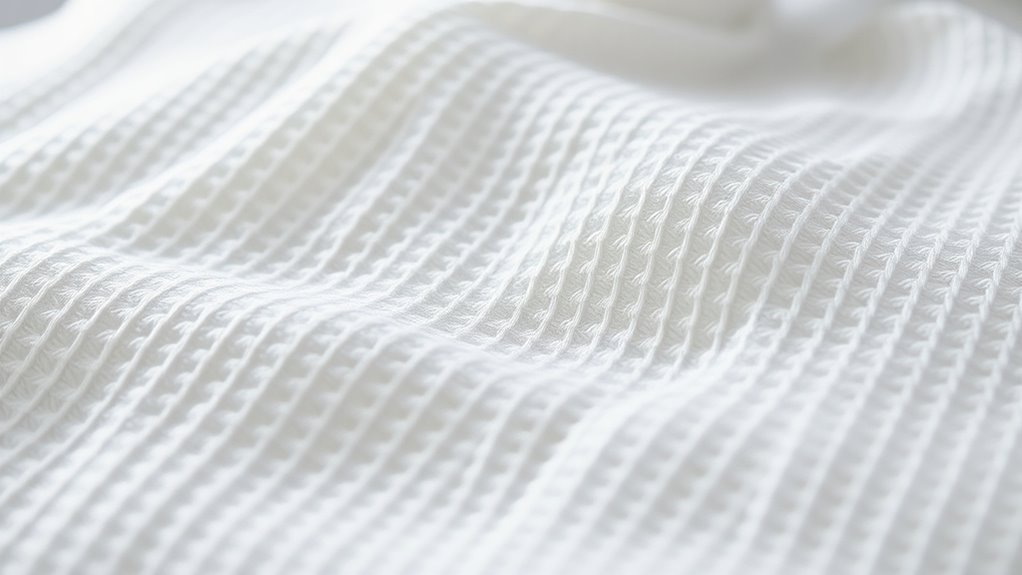
Many people assume that a higher thread count automatically means a better sheet, but that’s not always the case. This is a common thread count myth that oversimplifies what quality really depends on. Thread count refers to the number of threads woven into one square inch of fabric, but it doesn’t tell you about cotton quality or sheet durability. Sometimes, manufacturers increase thread count by adding thinner, lower-quality threads, which can make sheets feel denser but not necessarily more comfortable or long-lasting. Instead of focusing solely on thread count, you should consider the type of cotton used. High-quality cotton like Egyptian or Pima produces softer, more durable sheets, regardless of the thread count. Additionally, understanding fabric construction can help you better assess sheet quality beyond just thread count. Recognizing fiber quality is essential, as it influences softness and longevity more than thread count alone. A deeper knowledge of weaving techniques can further guide you in selecting truly durable and comfortable sheets. Moreover, being aware of performance metrics can provide insights into how well sheets will hold up over time. cotton quality plays a crucial role in the overall feel and lifespan of bedding, making it a vital factor in your selection process. Understanding these distinctions helps you choose sheets that truly meet your comfort and quality expectations.
The Limitations of High Thread Counts

While a high thread count might seem like the ultimate indicator of quality, it has significant limitations you should know about. Many thread count myths suggest that higher counts always mean better fabric, but this isn’t true. Fabric thickness doesn’t necessarily increase with thread count, and overly high counts can lead to dense, stiff sheets. Keep in mind:
High thread count doesn’t always mean better fabric; it can lead to stiffness and less breathability.
- Excessively high thread counts can cause stiffness
- Thicker fabric isn’t always softer or more durable
- Thread count myths often oversimplify quality
- Higher counts may trap heat, reducing breathability
- An ideal thread count balances softness and durability
- fiber quality plays a crucial role in determining fabric softness and lifespan. In addition, understanding weaving techniques helps consumers make more informed choices beyond just thread count. Moreover, fabric construction influences the final feel and durability of the fabric, emphasizing the importance of comprehensive quality factors.
How Fabric Weave Impacts Feel and Durability
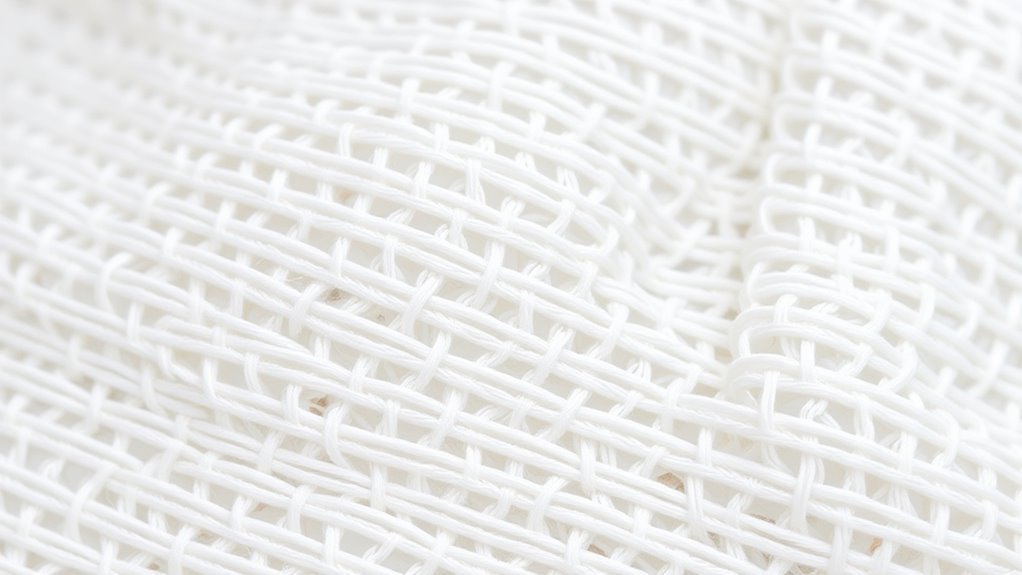
The way fabric is woven affects both how it feels and how long it lasts. Different weaves, like sateen or percale, offer distinct textures and strengths. Understanding these differences helps you choose sheets that match your comfort and durability needs. Additionally, fabric weave can influence how well sheets resist pilling and wear over time. Knowing about fabric weave can also help you select materials that maintain their appearance after multiple washes, ensuring better long-term fabric durability. Moreover, selecting the appropriate weave pattern can enhance the rug’s overall resilience and ease of cleaning, contributing to its longevity. For instance, certain weave types may provide more breathability, improving comfort during sleep.
Weave Types and Texture
Fabric weave plays an essential role in determining both the feel and durability of your sheets. The weave patterns create texture variations that influence how soft or crisp your bedding feels. Different weaves result in unique tactile experiences and impact longevity.
- Percale offers a smooth, matte finish with a crisp feel.
- Sateen provides a silky, luxurious texture with a subtle sheen.
- Twill features diagonal lines, adding durability and a softer touch.
- Jacquard weaves intricate patterns directly into the fabric, creating a textured surface.
- Linen has a looser weave, giving a natural, slightly coarse feel but excellent breathability.
Understanding these weave types helps you choose sheets with the right texture variations for your comfort and needs.
Durability of Different Weaves
Different weave patterns considerably influence how durable your sheets will be over time. For example, percale weaves tend to be tighter and more resilient, making them last longer with proper care. Sateen weaves, while soft and lustrous, can be more prone to wear and tear, especially if the thread count myth leads you to focus solely on numbers. Understanding cotton quality truths helps you see that the durability isn’t just about thread count but also the weave and fiber quality. A well-constructed weave can withstand frequent washing without pilling or fraying, regardless of the thread count myth. Choosing the right weave based on your needs ensures your sheets stay comfortable and durable, proving that quality fabrics outperform high thread counts in longevity.
The Role of Cotton Quality in Fabric Longevity
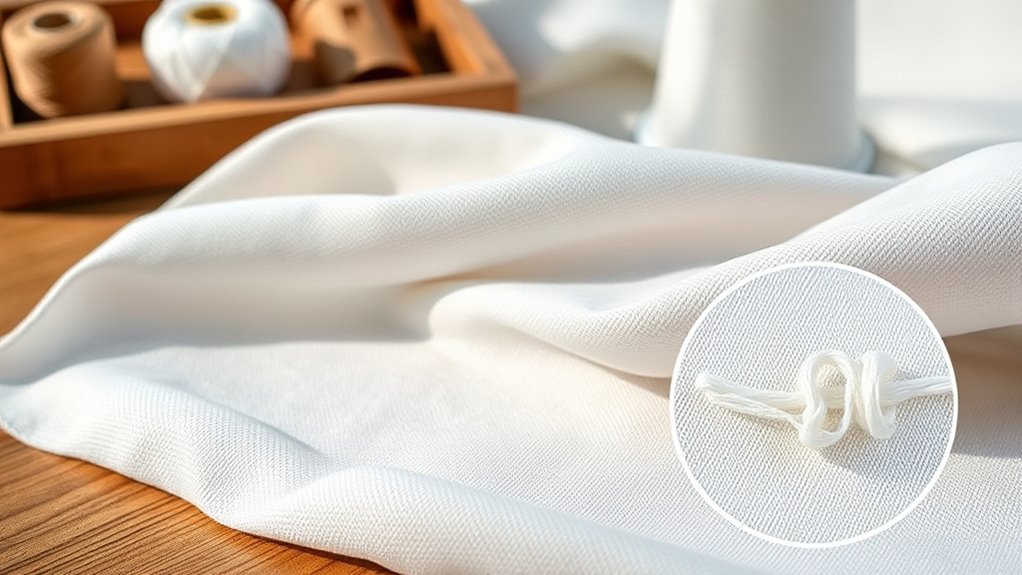
Your choice of cotton affects how long your fabric lasts, as stronger fibers resist wear better over time. Higher-quality cotton is often purer, reducing weak spots that can lead to tears or thinning. By understanding fiber strength and purity, you can select fabrics that stay soft and durable for years.
Fiber Strength and Durability
While thread count often grabs attention, the quality of the cotton fibers themselves plays a crucial role in a fabric’s strength and durability. High-quality cotton boasts superior fiber tensile, meaning it can withstand more stress without breaking. This fiber resilience ensures your sheets stay intact through countless washes and uses. When fibers are strong, the fabric resists pilling, tearing, and wear over time. Choosing cotton with excellent fiber tensile and resilience means you invest in longevity, not just a higher thread count. Remember, even the thickest fabric can wear out quickly if the fibers are weak. So, focus on fiber quality to guarantee your bedding maintains its integrity and softness longer.
- Better fiber tensile means increased strength
- Resilient cotton resists pilling and tearing
- High-quality fibers withstand frequent washing
- Strong fibers improve fabric longevity
- Durability depends on fiber resilience, not just thread count
Fiber Purity and Longevity
Focusing on fiber quality extends beyond strength to include purity, which considerably impacts fabric longevity. When your cotton has high fiber purity, it means fewer contaminants and shorter fibers, resulting in a smoother, more uniform fabric. This uniformity reduces the likelihood of pilling, tearing, or fraying over time. Pure fibers also allow for better dye absorption, maintaining vibrant colors longer. The cleaner the fiber, the less prone your fabric is to deterioration caused by impurities or inferior processing. As a result, investing in cotton with high fiber purity ensures your fabric remains durable and retains its original quality over years of use. Ultimately, fiber purity plays a crucial role in extending the lifespan of your textiles, making them look and feel better longer.
Common Misconceptions About Thread Count and Price

Many consumers believe that higher thread counts automatically mean better quality and higher prices, but this isn’t always the case. Thread count marketing often overhypes the benefits, leading to luxury bedding misconceptions. A high thread count alone doesn’t guarantee softness or durability. Instead, factors like cotton quality and weave matter more. Don’t fall for the idea that a 1000-thread count sheet is inherently superior—many are simply inflated by marketing tactics. Here are common myths to watch out for:
- Higher thread count always equals better quality
- Expensive sheets are necessarily better
- Double-ply or multi-ply threads inflate thread count unfairly
- Thread count is the only indicator of softness
- Luxury bedding is only about thread count
Understanding these misconceptions helps you make smarter, more informed choices. Cotton quality and weave techniques are often more significant indicators of a sheet’s actual comfort and longevity.
Tips for Choosing the Best Cotton Sheets for Comfort and Durability
Choosing the best cotton sheets starts with understanding the different types of cotton and their qualities. Look for sheets made from long-staple cotton, like Egyptian or Pima, which offer superior softness and durability. Pay attention to fiber blending; high-quality sheets often combine cotton with a small percentage of synthetic fibers to enhance strength without sacrificing comfort. Consider dye fastness, especially if you want vibrant, long-lasting colors—dyes that resist fading indicate better quality. Feel the fabric: smooth, tightly woven sheets tend to be more durable and comfortable. Avoid overly lightweight options, which may wear out quickly. By focusing on fiber blending and dye fastness, you ensure your sheets will stay soft, colorful, and durable through many wash cycles. Additionally, selecting sheets with UV filters can help protect your bedding from sun damage and fading over time. Understanding cotton quality and proper care can further extend the life of your sheets, especially when you choose fabrics with reliable color retention. Considering the thread count can also influence both softness and durability, helping you make an informed choice.
Frequently Asked Questions
Does Higher Thread Count Always Mean Better Sleep Quality?
Higher thread count doesn’t always mean better sleep quality. Many believe thread count myths suggest that more threads mean softer, more durable fabric, but that’s not true. Instead, focus on the fabric weave—percale or sateen—and quality cotton. A lower to mid thread count with a tight, high-quality weave can feel softer and last longer. So, prioritize fabric quality over just the thread count for a better night’s sleep.
How Does Cotton Fiber Length Affect Sheet Durability?
Cotton fiber length substantially impacts sheet durability—longer fibers, such as Egyptian or Pima cotton, are 30% more durable than shorter ones. When you choose sheets with longer cotton fibers, you’ll notice they resist pilling and tearing better over time. This means your sheets stay softer and look newer longer, providing greater value. So, always check the cotton fiber length to guarantee your sheets are both comfortable and long-lasting.
Are Organic Cotton Sheets More Breathable Than Regular Cotton?
Yes, organic cotton sheets are generally more breathable than regular cotton because organic farming avoids synthetic chemicals, allowing the fibers to preserve their natural properties. Cotton certification ensures the sheets meet strict standards, confirming their organic status. This natural cultivation process results in softer, more breathable sheets that help regulate your temperature and improve comfort, making them a better choice for sensitive skin and eco-conscious consumers.
Can Lower Thread Count Sheets Be as Soft as High Thread Count Ones?
Like a well-woven tapestry, lower thread count sheets can feel just as soft if crafted with quality cotton and thoughtful weaving. The key lies in the woven patterns and dye fastness, which influence softness and durability more than sheer thread numbers. You don’t need high thread count to enjoy plush, cozy sheets—focus on the cotton’s quality and how it’s woven, and you’ll find softness that rivals higher thread counts.
What Is the Best Way to Care for High-Quality Cotton Sheets?
To care for high-quality cotton sheets, use gentle laundry techniques like cold water washes and a delicate cycle to prevent damage. Avoid harsh detergents and fabric softeners, which can weaken fibers. Instead, opt for mild detergents that preserve fabric softness and integrity. Always dry sheets on low heat or line dry to prevent shrinking and preserve their natural feel, ensuring your sheets stay soft, fresh, and long-lasting.
Conclusion
Don’t be fooled by high thread counts alone—they often hide poorer quality cotton or dense weaves that feel stiff. Instead, prioritize cotton quality and weave type for true comfort and durability. A lower thread count with premium cotton can outlast and feel better than a high-count sheet made from inferior fibers. So, when choosing your sheets, look beyond the numbers—balance quality and craftsmanship for a better sleep experience.