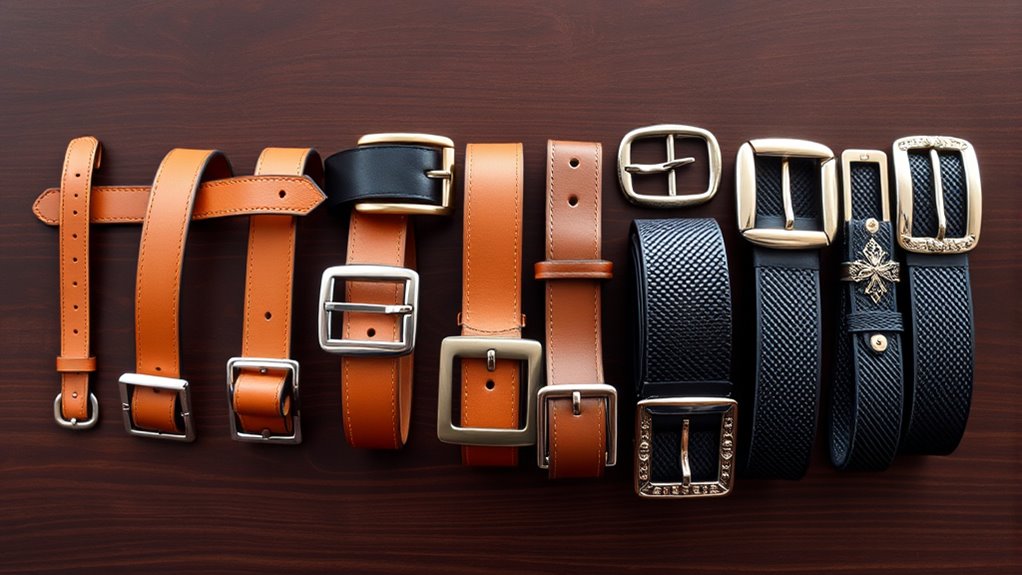
When matching belts, consider widths, buckles, and style rules for a cohesive look. Narrow belts work best with dress pants and suits, while wider ones complement casual outfits like jeans. Choose belt buckles that match your overall style—simple for formal, statement for casual. Always coordinate your belt and shoe colors to create harmony. Paying attention to these details helps you achieve a polished, put-together appearance, and exploring more will reveal even smarter style tips.
Key Takeaways
- Choose belt widths that complement your outfit, with narrow belts for formal wear and wider belts for casual looks.
- Match belt buckles in style and metal finish to your shoes and accessories for a cohesive appearance.
- Follow color coordination rules: black belts with black shoes, brown belts with brown shoes, and consider contrast for style.
- Select belt materials suitable for the occasion: leather for formal, fabric or canvas for casual styles.
- Ensure proper belt width and buckle size to balance proportion and enhance overall outfit harmony.
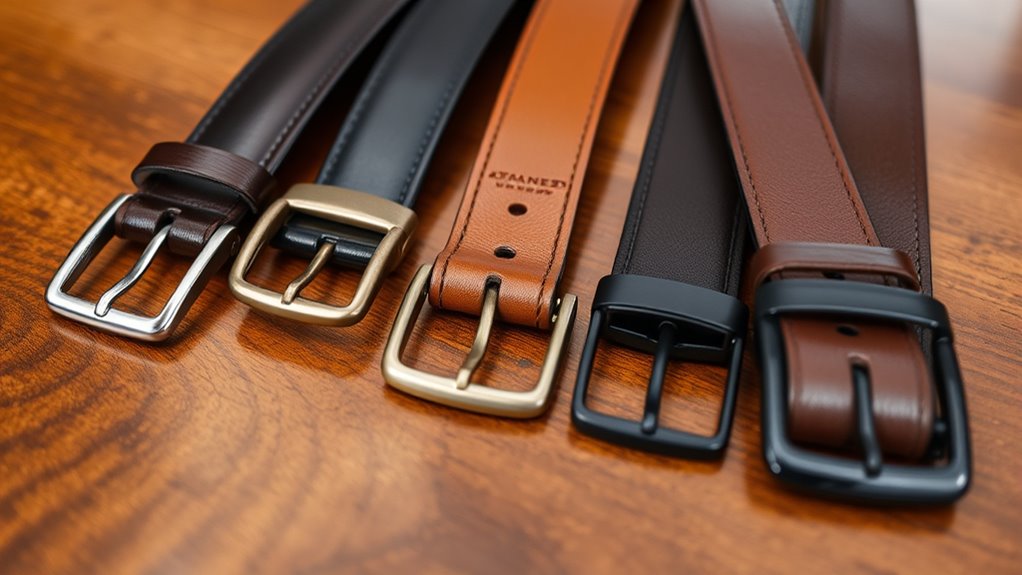
Have you ever struggled to find a belt that perfectly matches your outfit? It’s a common dilemma, but understanding some basic principles can make it much easier. One of the most important things to consider is the belt material. Leather belts are classic and versatile, suitable for both formal and casual looks. If you’re aiming for a polished appearance, a smooth, high-quality leather in black or brown often works best. For more casual or trendy styles, fabric or canvas belts can add a relaxed vibe. The material you choose influences how well your belt complements your overall look, so think about the occasion and your outfit’s style before making a decision.
Color coordination plays a crucial role in matching belts to your ensemble. When you’re trying to create a cohesive look, aim to match your belt color with your shoes. For formal occasions, black belts with black shoes and brown belts with brown shoes are the safest bets. If you want to add a touch of personality, you can experiment with contrasting colors, but keep in mind that harmony is key. For example, a navy blazer pairs well with a dark brown belt, creating a subtle yet effective contrast. When selecting a belt for casual wear, you have more leeway to mix and match different shades, but always consider the overall color palette of your outfit and avoid clashing tones.
Another aspect to consider is the belt’s width, which can influence how well it matches your attire. Narrow belts tend to be more refined and are typically used with dress pants or suits, adding a sleek, sophisticated touch. Wider belts, on the other hand, are more suited for casual or rugged outfits, like jeans or chinos. The width should complement your body type and the style of your clothing, ensuring a balanced look. When it comes to matching, a belt’s width can also serve as a visual cue to tie your outfit together, so choose one that aligns with the occasion and your personal style.
Ultimately, matching a belt isn’t just about color and material—it’s about creating harmony in your overall look. Pay attention to the details, keep your wardrobe in mind, and don’t be afraid to experiment within the rules of color coordination and appropriate materials. Understanding belt maintenance and proper care can also ensure your belts stay looking their best for years to come. With a little knowledge and observation, you’ll find it easier to pick a belt that enhances your style, making every outfit look polished and cohesive.

MILORDE Men Black Belts, Fashion & Classic Design for Dress and Causal (Size 34 (Waist 32), Basic Black)
PREMIUM QUALITY: 100% Pure Genuine Leather Belt. Handmade, Highly constructed for longer endurance and better upholding. The difference…
As an affiliate, we earn on qualifying purchases.
As an affiliate, we earn on qualifying purchases.
Frequently Asked Questions
How Do I Measure My Belt Size Accurately?
To measure your belt size accurately, start by measuring your waist where you usually wear your belt. Use a flexible tape measure or a piece of string, then mark the length and compare it to a ruler. For the best belt sizing, add 1-2 inches to your waist measurement to find your ideal belt size. Follow measurement tips like measuring over your clothing for precision.
What Materials Are Best for Formal Belts?
Think of your belt as a tailored suit—crafted with precision. For formal occasions, leather craftsmanship shines, with full-grain leather being the gold standard. This material offers unmatched durability and ages beautifully. Opt for smooth, polished finishes that exude sophistication. These materials not only elevate your look but also guarantee longevity, making your belt a dependable accessory that echoes timeless style and quality.
Can I Wear a Casual Belt With Formal Attire?
You can wear a casual belt with formal attire, but it’s best to keep the casual belt styling simple and understated. Choose a belt with a sleek, minimal design and avoid flashy buckles or casual materials. For formal belt accessories, opt for a leather belt in classic colors like black or brown. This way, your casual belt won’t clash with your formal outfit, ensuring a polished and appropriate look.
How Do I Choose the Right Belt Buckle Style?
Choosing the right belt buckle style can feel like picking a winning lottery ticket! For casual outfits, go for bold or fun belt buckle types like engraved or novelty designs. For formal attire, stick to sleek, simple buckles such as a classic frame or prong style. Always consider whether your look is casual or formal, and match your belt buckle type accordingly to make a sharp, coordinated statement.
Are There Specific Rules for Matching Belt Colors to Shoes?
Yes, there are fashion guidelines for matching belt colors to shoes. You should aim for color coordination, typically pairing a black belt with black shoes and a brown belt with brown shoes for a cohesive look. Avoid mixing shades that clash. Sticking to these rules helps your outfit look polished and intentional. Remember, matching belt and shoe colors is a simple way to elevate your overall style and adhere to classic fashion standards.

Canvas Elastic Fabric Woven Stretch Multicolored Braided Belts 2041-Coffee-M
Canvas Multicolored Braided Belts
As an affiliate, we earn on qualifying purchases.
As an affiliate, we earn on qualifying purchases.
Conclusion
Now that you know how widths, buckles, and rules come together, your belt choices will never be a tangled mess. Think of your belt as the thread weaving your style tapestry—each element a vibrant hue that, when matched perfectly, creates a seamless picture of confidence. With this knowledge, you’ll steer your fashion ship smoothly through any wardrobe storm. So go ahead, pick that belt that speaks your style language and let it be your signature touch.

Perry Ellis Men's Portfolio Park Ave Textured Leather Dress Belt, Park Ave Brown, 34
GENUINE LEATHER: This modern dress belt for men is a classic well-crafted staple. Made with 100% genuine leather,…
As an affiliate, we earn on qualifying purchases.
As an affiliate, we earn on qualifying purchases.

JASGOOD Women Braided Woven Elastic Stretch Belt Canvas Casual Belt for Jeans Pants, A-Beige
Women Braided Belt—This braided belt is made of braided fabric stretch belt strap. High quality material makes the…
As an affiliate, we earn on qualifying purchases.
As an affiliate, we earn on qualifying purchases.