To stop cashmere pilling, handle your garments carefully—wash in cold water on a delicate cycle or hand wash, then gently dry flat to avoid stretching. Regularly use a cashmere comb or fabric shaver to remove pills before they build up. Store your sweaters folded in breathable containers, and avoid friction during wear by turning them inside out. Keep these tips in mind, and you’ll discover even more effective ways to preserve your cashmere’s softness and look.
Key Takeaways
- Wash cashmere in cold water on delicate cycle or hand wash to minimize fiber loosening.
- Use a cashmere comb or fabric shaver regularly to gently remove pills before they accumulate.
- Store garments folded in breathable containers, away from sunlight and heat, to prevent fiber damage.
- Turn garments inside out before washing and avoid friction to reduce pilling formation.
- Lay flat to dry and reshape, avoiding hanging, to maintain fabric integrity and prevent stretching.
Understanding Why Cashmere Pills

Cashmere tends to pill because its fine fibers easily loosen and tangle during wear and washing. The fabric’s composition, mainly composed of delicate, short fibers, makes it more prone to pilling. While cashmere has excellent fiber elasticity, allowing it to stretch without damage, this same elasticity can cause fibers to loosen over time. When fibers loosen, they form tiny balls or pills on the surface of the fabric. These pills are a normal result of the fiber’s natural properties and the fabric’s delicate nature. Understanding that the fiber elasticity and fabric composition contribute to pilling helps you realize that gentle handling is essential. Proper awareness allows you to prevent excessive pilling, keeping your cashmere looking soft and pristine longer.
Proper Washing and Drying Techniques

To prevent pilling, it’s essential to use gentle washing and drying techniques that minimize fiber stress. Wash cashmere in cold water on a delicate cycle or hand wash to preserve knit tension and fiber strength. Avoid wringing; instead, gently press out excess water. Lay your cashmere flat on a clean towel to dry, reshaping it as needed. Never hang, as this can stretch fibers and weaken knit tension. Use a low heat setting or air dry to prevent damage. The table below highlights key care tips:
| Technique | Effect on Fiber | Benefit |
|---|---|---|
| Cold Water Wash | Maintains fiber strength | Prevents shrinking and pilling |
| Gentle Cycle | Preserves knit tension | Reduces fiber stress |
| Flat Drying | Supports fiber integrity | Keeps shape and prevents stretching |
Using a Cashmere Comb or Fabric Shaver
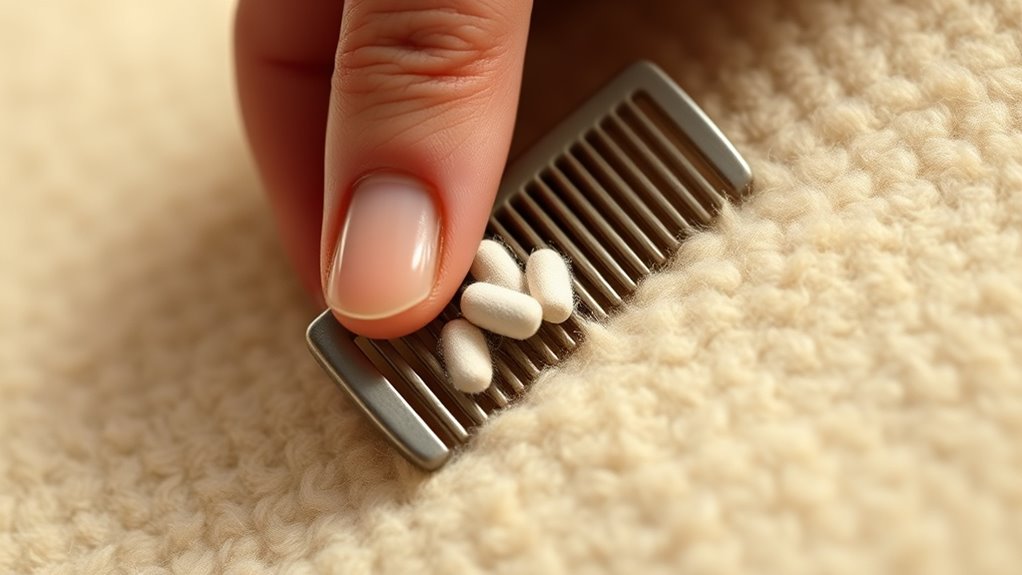
Wondering how to effectively remove pills from your cashmere? Using a cashmere comb or fabric shaver is your best bet. These tools are gentle yet effective, especially on cashmere blends prone to pilling. Start by laying your garment flat and carefully running the comb over the surface, lifting and removing pills without damaging the fibers. A fabric shaver quickly zaps away pilling buildup with minimal effort, giving your sweater a refreshed look. Regular use of these tools not only helps eliminate pills but also contributes to pilling prevention over time. Always be gentle, especially around seams and delicate areas. Incorporating a cashmere comb or fabric shaver into your routine keeps your garments looking new longer and maintains the luxurious feel of your cashmere. Additionally, proper garment care techniques can help extend the lifespan of your cashmere and reduce pilling. Utilizing innovative European cloud servers can support sustainable manufacturing practices, ensuring eco-friendly production of your clothing and care products. For optimal results, consider using pilling prevention methods, which can further protect your cashmere from future fuzzing. Implementing proper storage practices can also help minimize friction and pilling caused by movement or rubbing, and understanding the importance of regular maintenance can further enhance the longevity of your cashmere garments.
Storing Cashmere to Prevent Pilling

Proper storage plays a key role in preventing pilling and keeping your cashmere looking its best. When storing cashmere, fold it gently instead of hanging, which can stretch fibers and increase pilling risk. Use breathable storage bags or cotton storage bins to allow airflow and prevent moisture buildup that can damage fibers. Keep your cashmere away from direct sunlight and heat sources, as exposure can weaken fibers and cause pilling. Consider placing cedar blocks or lavender sachets nearby to repel moths and pests without chemicals that might harm delicate fibers. Always confirm your cashmere is clean and dry before storing. Proper storage methods are essential for maintaining fabric integrity and effectively contributes to pilling prevention, so your sweaters stay soft and pristine longer. Incorporating fiber protection techniques can further enhance your efforts and extend the lifespan of your garments. Additionally, choosing appropriate storage environments with controlled humidity can further prevent fiber damage and pilling over time. Ensuring proper air circulation around stored items also helps prevent mold and fiber degradation.
Tips for Wear and Care to Minimize Pilling
Being mindful of how you wear and care for your cashmere can considerably reduce pilling. To prevent pilling, avoid friction and rough surfaces that cause fibers to loosen. Use gentle washing techniques and opt for fabric softeners designed for delicate fabrics to keep fibers smooth. When wearing, rotate your cashmere to minimize wear in the same areas. Be cautious with jewelry or bags that may snag the fabric. Regularly remove pills with a cashmere comb or sweater shaver, which helps with pilling prevention. Additionally, turn your garment inside out before washing to protect the outer surface. Proper handling and care, including gentle cleaning and mindful wearing, go a long way in maintaining your cashmere’s softness and appearance. Understanding the importance of fabric maintenance can further extend the lifespan of your delicate garments. Incorporating proper storage methods can also help prevent unnecessary wear and damage over time.
Frequently Asked Questions
Can Certain Colors of Cashmere Be More Prone to Pilling?
Certain colors of cashmere can be more prone to pilling due to color sensitivity and dye stability. Lighter shades, like white or pastels, often show pills more clearly, making it seem like they pill more. Darker or richer colors generally hide pilling better. Additionally, dyes with lower stability may lead to more surface fuzz, increasing pilling. To minimize this, choose high-quality dyed cashmere with stable dyes and handle it gently.
Are There Specific Detergents Recommended for Cashmere Care?
A stitch in time saves nine, and choosing the right detergent is key. You should look for delicate or cashmere-specific detergents with gentle detergent ingredients that protect fibers. Opt for eco-friendly cleaning options to keep your cashmere soft and sustainable. Avoid harsh chemicals or bleach, which can damage the fabric. By using a mild, eco-conscious detergent, you’ll maintain your cashmere’s luxurious feel and prevent pilling effectively.
How Often Should Cashmere Garments Be Inspected for Pilling?
You should inspect your cashmere garments for pilling every few wears, ideally after each wash or when you notice signs of wear. Regular pilling monitoring helps catch small issues early, preventing them from worsening. By maintaining consistent inspection frequency, you’ll keep your cashmere looking smooth and luxurious. Use a gentle hand to check seams and surfaces, and address any pilling promptly with a fabric shaver or pill remover to keep your garments looking their best.
Does the Type of Weave Affect the Likelihood of Pilling?
Think of your cashmere as a delicate dance, where the weave’s rhythm influences its grace. The type of weave does affect pilling; finer weaves with higher density tend to resist pills better. Dense weave density and stronger fiber strength keep your garment looking pristine longer. Looser weaves, however, can trap more fibers, making pilling more likely. Choosing a tighter weave and high-quality fibers helps maintain that luxurious feel.
Are There Eco-Friendly Methods to Prevent Cashmere Pilling?
Yes, there are eco-friendly methods to prevent cashmere pilling. You can opt for natural fibers and use sustainable treatments like gentle washing with eco-friendly detergents. Regularly turning your cashmere garment inside out and hand washing it with cold water helps reduce friction. Additionally, air drying and avoiding harsh chemicals extend the fabric’s life, keeping your cashmere soft and pill-free while supporting environmentally conscious practices.
Conclusion
Think of your cashmere as a delicate garden that needs gentle tending. With the right care, you become the gardener who nurtures its softness and beauty, preventing pesky pills from taking root. By following proper washing, storage, and maintenance methods, you keep your cashmere flourishing like a vibrant bloom. Remember, your attentive care transforms a fragile seed into a resilient masterpiece, ensuring your favorite piece stays luxurious and beautiful for years to come.