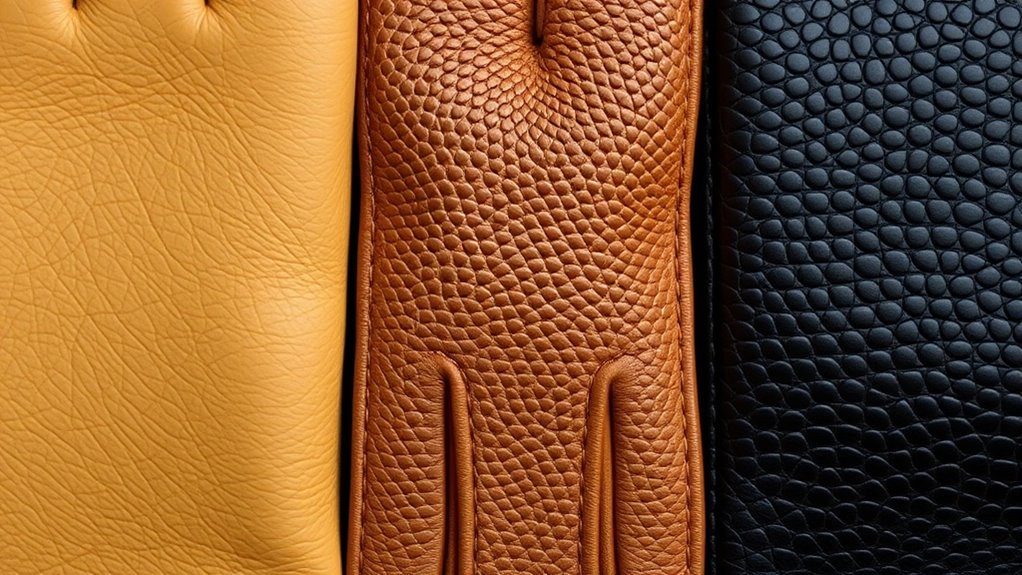

When choosing glove leathers, you’ll notice differences in feel, durability, and look. Nappa leather, processed with chrome tanning, offers a soft, luxurious, and flexible experience that improves with age. Peccary combines vegetable and chrome tanning to create a resilient, scratch-resistant, and naturally graining leather with a smooth feel. Carpincho is lightweight yet sturdy, maintaining natural water resistance through traditional tanning methods. Exploring these options helps you pick the best leather for comfort and longevity—there’s more to discover if you keep exploring.
Key Takeaways
- Nappa leather is chrome-tanned, soft, and supple, offering luxury and enhanced water resistance for gloves.
- Peccary leather combines vegetable and chrome tanning, highlighting natural grain, softness, and scratch resistance.
- Carpincho leather is lightweight, durable, and soft, produced through traditional tanning methods emphasizing natural water and wear resistance.
- Full-grain tanning preserves the outer layer of hides, ensuring high strength, natural appearance, and longevity in glove leathers.
- Handcrafting enhances each leather’s unique features, ensuring a comfortable fit and durable gloves with premium leather types.

Have you ever wondered what makes glove leathers so durable and comfortable? The secret lies in the meticulous handcrafting techniques and the leather tanning processes used to produce each type of leather. When artisans craft gloves, they select specific leathers that balance flexibility with strength, guaranteeing longevity and comfort. The handcrafting techniques involve careful cutting, stitching, and finishing to maximize the leather’s natural qualities. Meanwhile, the leather tanning processes transform raw hides into supple, resilient materials suited for glove making. These processes are essential because they influence the final texture, durability, and appearance of the leather. For example, full-grain tanning preserves the outer layer of the hide, offering superior strength and a natural look, which is highly valued in premium glove leathers. Additionally, tanning techniques play a crucial role in determining the leather’s final characteristics and performance.
Meticulous handcrafting and tanning processes make glove leathers durable, comfortable, and beautifully natural.
Nappa leather, for instance, begins with high-quality hides that undergo chrome tanning—a process that uses chromium salts to produce a soft, smooth, and highly flexible leather. During tanning, artisans pay close attention to handcrafting techniques, ensuring the leather’s fibers are evenly treated and that the surface remains uniformly refined. This results in a leather that feels luxurious against your skin, with a buttery softness that improves with age. The tanning process also enhances the leather’s resistance to water and wear, making Nappa a popular choice for high-end gloves. Its fine grain and supple nature make it ideal for those who prioritize comfort without sacrificing durability.
Peccary leather, derived from wild pig hides, is renowned for its exceptional quality and unique texture. The leather tanning process for peccary involves a combination of vegetable and chrome tanning, which helps retain the hide’s natural resilience while softening it. Handcrafting techniques further refine peccary leather, emphasizing the natural grain pattern and ensuring the gloves mold comfortably to your hand. This leather’s dense fibers and tight grain structure give it superior resistance to scratches and wear, making it a favorite among glove enthusiasts seeking both luxury and practicality. The tanning process emphasizes preserving the distinctive appearance of peccary, while handcrafting ensures each pair offers a perfect fit and longevity.
Carpincho, or capybara leather, stands out for its lightweight yet sturdy qualities. Its tanning process involves a careful combination of traditional methods that maintain the leather’s strength while keeping it soft and pliable. Handcrafting techniques focus on precise stitching and finishing, which highlight the leather’s smooth surface and fine grain. Carpincho’s natural resistance to water and wear makes it an excellent choice for everyday gloves. The tanning process, along with skilled craftsmanship, guarantees that each glove is both comfortable and durable, providing a balance of practicality and luxury.
Frequently Asked Questions
Which Glove Leather Is Most Environmentally Sustainable?
You’ll find that Peccary leather is often the most environmentally sustainable choice because it benefits from sustainable sourcing practices and eco-friendly tanning methods. Unlike other leathers, Peccary can be sourced responsibly, reducing environmental impact. By choosing gloves made from Peccary, you support eco-conscious production, helping to minimize pollution and conserve resources. Always check for certifications or labels indicating sustainable sourcing and eco-friendly tanning to guarantee your glove leather aligns with your values.
How Do I Properly Care for Exotic Glove Leathers?
To properly care for exotic glove leathers, start with gentle leather cleaning using a soft, damp cloth and avoid harsh chemicals. Store them in a cool, dry place away from direct sunlight, preferably in breathable bags or boxes. Keep your gloves flat or gently stuffed to maintain shape. Regularly condition with a leather-specific moisturizer to keep the leather supple and prevent cracking, ensuring your exotic gloves stay in great condition for years.
Are There Significant Price Differences Among Nappa, Peccary, and Carpincho?
Yes, there are significant price differences among Nappa, Peccary, and Carpincho leathers, mainly due to leather quality and rarity. Nappa is generally more affordable because it’s widely available and easier to work with. Peccary and Carpincho are pricier, reflecting their luxurious feel and scarcity. When buying gloves, consider your budget and desired quality, as these factors influence the overall cost and durability of your gloves.
Can Glove Leathers Be Dyed in Custom Colors?
Yes, you can dye glove leathers to create custom glove colors. Dyeing glove leathers allows you to personalize your gloves and match specific styles or preferences. Skilled artisans use special techniques to dye leathers like nappa, peccary, and carpincho, ensuring even color application and maintaining leather durability. So, if you want unique, custom glove colors, dyeing glove leathers is a great option to explore.
How Long Does Each Type of Glove Leather Typically Last?
You can expect glove leather durability to vary: Nappa lasts around 1-3 years with proper maintenance, while peccary and carpincho can last up to 5 years or more. To extend their lifespan, follow maintenance tips for exotic leathers, like regular conditioning and avoiding excessive moisture. Proper storage also helps preserve their quality, ensuring your gloves stay in excellent condition longer.
Conclusion
Now that you’ve explored these exquisite glove leathers—nappa, peccary, and carpincho—you can truly appreciate their unique charm. With each choice, you’re embracing a touch of luxury and craftsmanship that whispers elegance and warmth. Remember, every stitch and grain tells a story, inviting you to feel confident and refined. So, go ahead and select the leather that resonates with your spirit—your perfect pair awaits, ready to make every moment just a little more special.