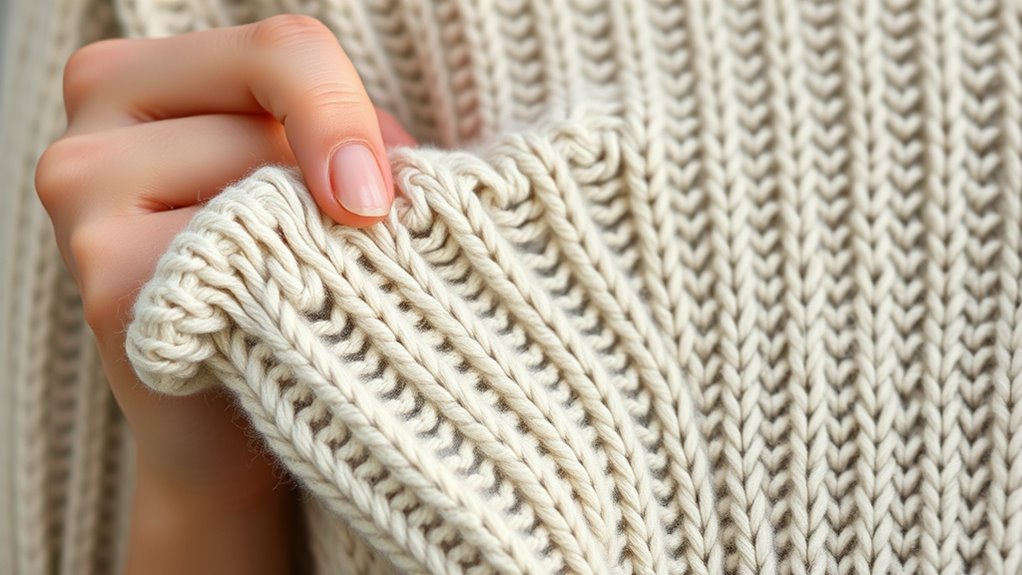
To spot quality knitwear quickly, check for natural fibers like wool, cashmere, or cotton—these feel softer and last longer. Examine the stitches; they should be tight, even, and free of loose threads or gaps. Look closely at the knit pattern; it should be consistent and well-constructed, with no loose loops. Attention to these details can help you identify high-quality pieces fast—and if you keep looking, you’ll find even more tips to make smart choices.
Key Takeaways
- Check for natural fibers like wool, cashmere, or cotton on the label for better quality.
- Examine stitching for tight, even, and secure seams without loose threads.
- Feel the fabric to ensure it’s smooth, consistent, and free of gaps or loose loops.
- Look for uniform knit patterns with proper tension, indicating skilled craftsmanship.
- Inspect stress points and seams for reinforcement and overall construction quality.
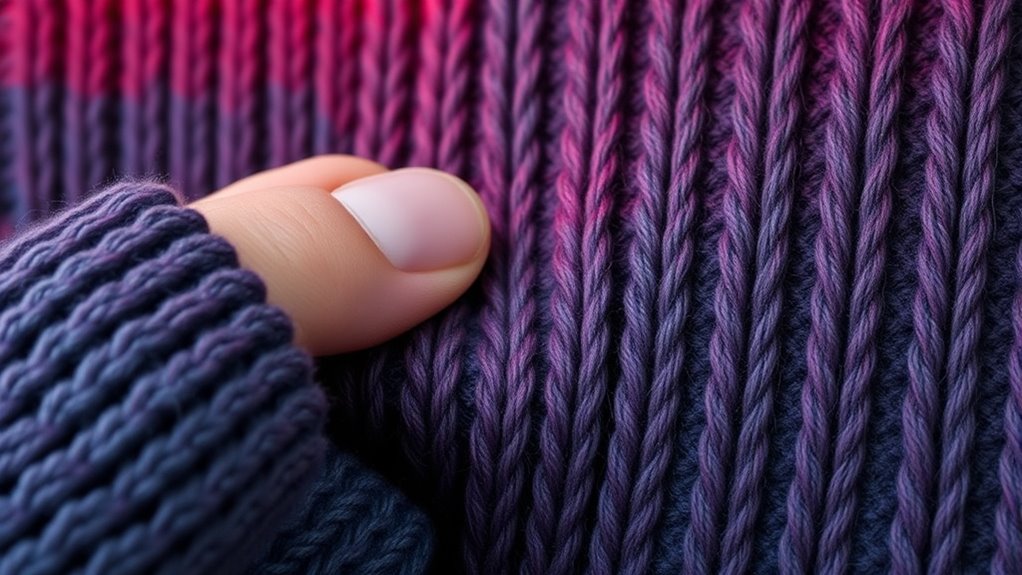
Ever wondered how to tell if a piece of knitwear is truly high quality? It’s easier than you might think if you know what to look for. First, pay attention to the fiber content. The best knitwear is made from natural fibers like wool, cashmere, or cotton. These materials not only feel better against your skin but also tend to last longer and age more gracefully. Synthetic blends, while sometimes affordable, often lack the durability and softness of natural fibers. When shopping, check the label carefully—if it lists fibers like merino wool or alpaca, you’re likely looking at a piece crafted with quality in mind. Avoid items with vague or minimal fiber content, as they may be made from cheaper, less durable materials that won’t stand the test of time.
Next, take a close look at the stitching details. The quality of the stitching can tell you a lot about the garment’s overall craftsmanship. High-quality knitwear will feature tight, even stitches that are uniform throughout. You shouldn’t see loose threads, skipped stitches, or uneven rows, as these are signs of rushed or poor workmanship. Run your fingers along the seams—if they feel smooth and secure, that’s a good sign. Also, pay attention to how the knit pattern appears; a consistent, tight weave indicates careful construction. If you notice gaps or loose loops, that’s a red flag. Well-made knitwear often uses reinforced stitching at stress points, like the shoulders or underarm areas, which helps prolong its lifespan. These details may seem small, but they make a significant difference in comfort and durability. Additionally, proper tension in the knit ensures the fabric maintains its shape over time, reflecting skilled craftsmanship.

100% Cotton Cashmere & Wool Storage Bag – Breathable Sweater Storage Bag for Cashmere, Wool, Knitwear & Delicate Garments – Dust & Moisture Protection
✅100% Natural Cotton, Fully Breathable – Made from pure cotton fabric that allows air circulation while protecting garments….
As an affiliate, we earn on qualifying purchases.
As an affiliate, we earn on qualifying purchases.
Frequently Asked Questions
What Are Common Signs of Synthetic Fibers in Knitwear?
You can tell synthetic fibers in knitwear by checking the fiber composition on the label. Synthetic fibers often feel slick, smooth, or slightly plastic-like compared to natural fibers. When fabric feels unusually stiff or plasticky, it’s likely synthetic. You might also notice that synthetic knitwear doesn’t breathe well or absorb moisture easily. These signs help you identify synthetic fibers quickly, ensuring you choose quality knitwear with the right fiber composition and fabric feel.
How Does Stitch Density Affect Knitwear Durability?
You’ll notice that higher stitch density directly boosts knitwear durability because tighter stitches resist stretching and pilling. When you examine the fabric, look for consistent stitch tightness, which indicates quality craftsmanship. Fiber uniformity also matters—uniform fibers help maintain the fabric’s integrity over time. Together, these factors make certain your knitwear lasts longer, keeps its shape, and maintains a polished appearance even after multiple washes.
Can Color Fading Indicate Poor Quality Knitwear?
Think of fading like a warning sign on a ship’s mast—if your knitwear shows color fading or fabric discoloration, it’s a sign of poor quality. These issues often indicate low-quality dyes or weak fibers that can’t withstand washing or wear. So, if your knitwear’s colors aren’t vibrant anymore, you’re likely dealing with inferior materials. Always check for consistent, rich color to verify longevity and quality.
What Are Eco-Friendly Indicators in Knitwear Labels?
When checking eco-friendly indicators on knitwear labels, look for sustainable certifications like GOTS, OEKO-TEX, or Fair Trade, which guarantee eco-conscious production. Also, notice eco label symbols that suggest organic or recycled materials. These symbols and certifications show the garment meets environmental standards, helping you choose knitwear that’s both stylish and sustainable. Always read the label carefully to make certain you’re making an eco-friendly purchase that aligns with your values.
How Do I Assess Knitwear’s Pilling Resistance Quickly?
To assess knitwear’s pilling resistance quickly, check the fiber composition—materials like wool or acrylic tend to pill more than cotton or silk. Feel the fabric finish; smooth, tightly woven knitwear resists pilling better. Gently rub the surface with your fingers or a small brush to see if pills form easily. Higher-quality finishes and certain fibers make knitwear more durable and resistant to pilling, ensuring long-lasting wear.

Chanyarn Women's Cashmere Long Sleeve Sweater Crewneck 2025 Fall Winter Seamless Knit Pullover Warm Soft 100% Merino Wool Sweater (Navy Blue,L)
Raw Material: Made of 26Nm/2 pure Merino wool fine yarn, this 100% merino wool sweater has a wool…
As an affiliate, we earn on qualifying purchases.
As an affiliate, we earn on qualifying purchases.
Conclusion
Now that you know what to look for, spotting quality knitwear becomes quick and effortless. Think of it as the difference between a fleeting glance and a lasting impression—both happen instantly, but only one reveals true craftsmanship. With a keen eye, you’ll see the difference in a second, just like recognizing a friend in a crowd. Trust your instincts, and soon, you’ll be effortlessly choosing knitwear that’s both beautiful and durable, in the blink of an eye.
durable knitwear with reinforced seams
As an affiliate, we earn on qualifying purchases.
As an affiliate, we earn on qualifying purchases.
inspection tools for knitwear quality
As an affiliate, we earn on qualifying purchases.
As an affiliate, we earn on qualifying purchases.