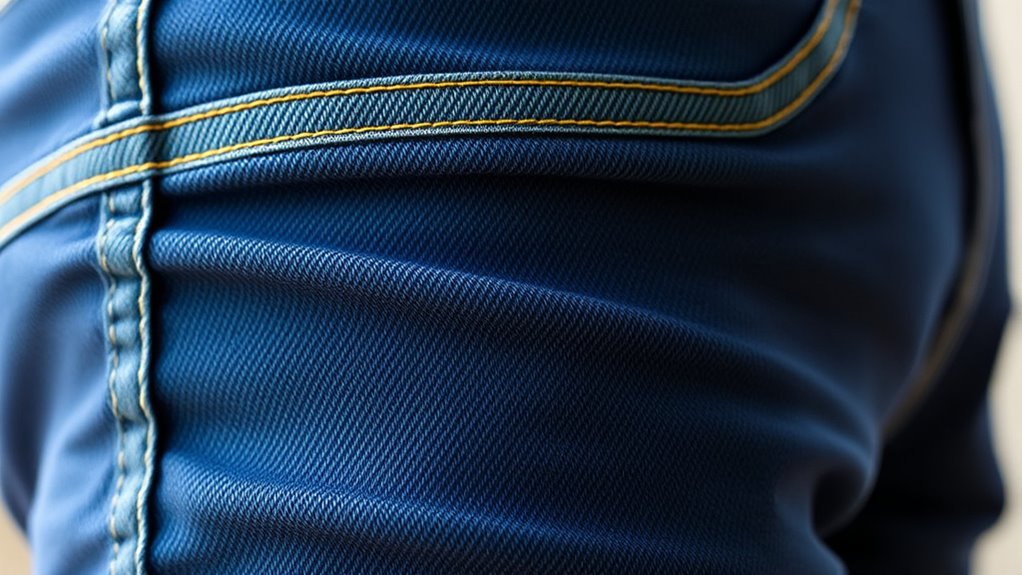

Selvedge denim comes from a traditional weaving method that produces a tight, durable edge with a signature colored line. You’ll recognize genuine selvedge by its clean, narrow self-finished edge, often heavier seams, and expert craftsmanship. This fabric is known for lasting longer, developing a unique fade, and supporting sustainable practices. If you want to understand what makes selvedge denim special and how to spot authentic pieces, there’s more to uncover about its rich heritage and benefits.
Key Takeaways
- Selvedge denim is produced on traditional shuttle looms, creating a narrow, tightly woven edge that prevents fraying.
- The distinctive colored edge and clean selvedge line identify authentic selvedge denim.
- It offers higher durability, better aging, and a premium look compared to regular denim.
- Its production process emphasizes craftsmanship, heritage, and sustainable practices.
- Proper care, such as minimal washing and gentle handling, preserves its quality and extends its lifespan.
The Origin of Selvedge Denim
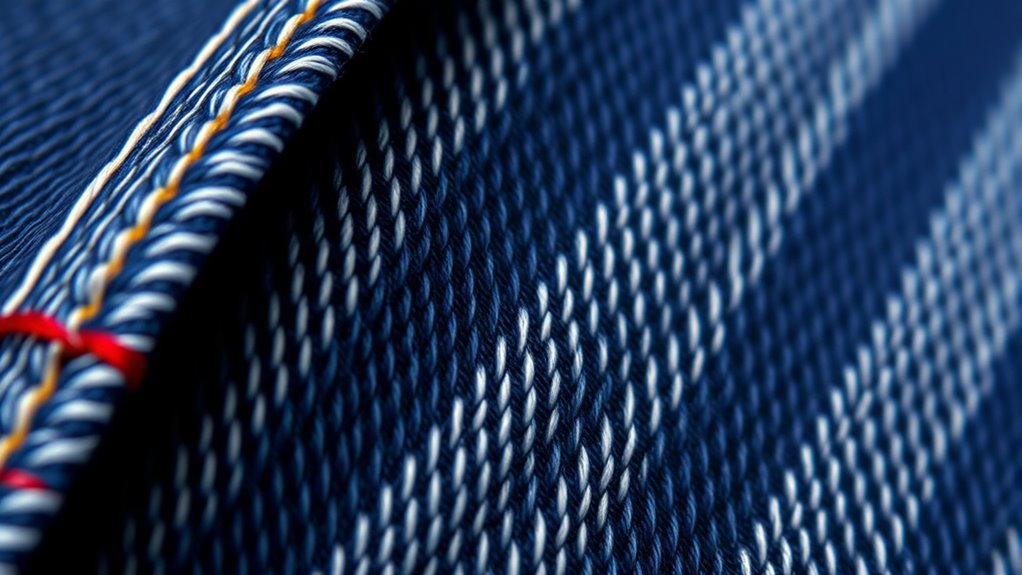
The origin of selvedge denim traces back to the early 20th century when denim manufacturers started weaving fabric on narrow shuttle looms. This method preserved heritage craftsmanship, allowing for tightly woven edges that prevent fraying. Loom technology at the time focused on consistency and durability, resulting in a superior fabric that became highly valued. As you explore selvedge denim, you’ll notice its distinct, clean edge, a direct result of traditional shuttle loom technology. This technique not only enhances the denim’s longevity but also reflects a dedication to quality rooted in history. The craftsmanship involved in using vintage looms connects you to a time when fabric was woven with precision and care, making selvedge denim a symbol of authentic heritage manufacturing.
What Defines Selvedge Fabric?
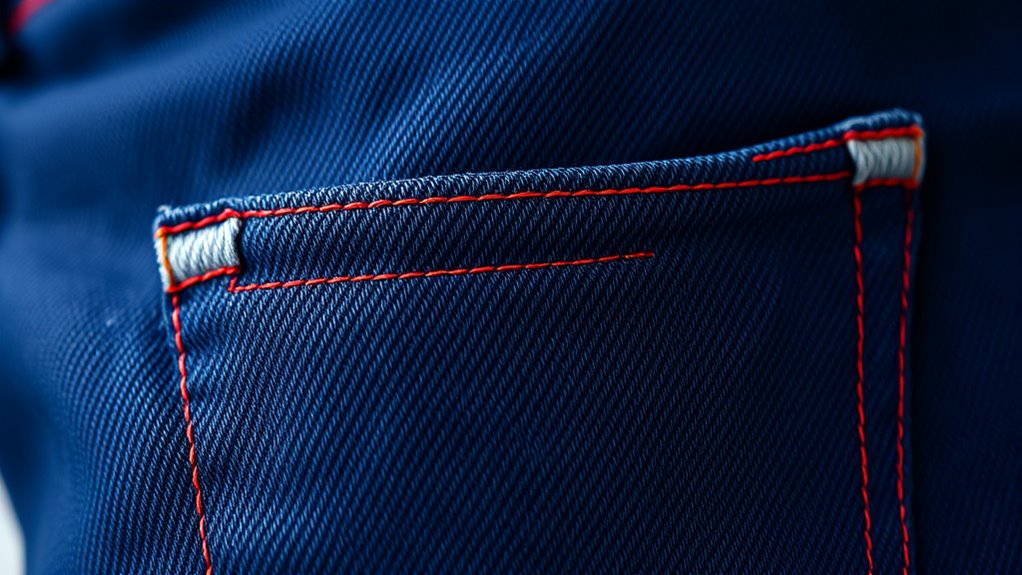
Selvedge fabric is defined by its narrow self-edge weave, which guarantees fraying and gives denim a clean finish. This fabric is produced using traditional loom processes that assure high quality and unique character. You’ll notice a distinct seam finish on selvedge denim, often with a clean, colored edge that sets it apart from standard fabrics. Additionally, travel‑friendly features like durability and classic style make selvedge denim a popular choice for those seeking long-lasting clothing options. The traditional loom techniques used in its production contribute to the fabric’s durability and distinctive appearance. Furthermore, understanding the craftsmanship behind selvedge denim can further enhance appreciation for its detailed construction and enduring appeal. Recognizing the importance of sustainable manufacturing practices can also add to the value of authentic selvedge denim.
Narrow Self-Edge Weave
A defining feature of selvedge denim is its narrow self-edge weave, which creates a clean, finished edge along the fabric’s length. This woven edge prevents fraying, making it essential for fabric durability. The narrow self-edge is tightly woven on traditional shuttle looms, resulting in a smooth, consistent finish that’s distinct from wider, cut edges. This woven edge not only enhances the denim’s appearance but also signals quality and craftsmanship. Because of its durability, selvedge denim resists unraveling over time, even with frequent wear and washing. The self-edge’s precision and strength contribute to the longevity of your jeans, ensuring they hold up better than standard denim. Ultimately, this narrow self-edge weave is what sets selvedge fabric apart in both quality and style.
Traditional Loom Process
Traditional loom processes are what give selvedge denim its distinctive quality. When you choose denim made on these looms, you’re selecting fabric with superior durability. These looms weave tightly, producing a dense, strong fabric that withstands daily wear. As denim ages, the fabric’s durability becomes evident, developing unique fades and character over time. Unlike mass-produced denim, selvedge fabric from traditional looms maintains its integrity longer, ensuring your jeans stay intact and look better with age. The self-finished edges, created during the weaving process, prevent fraying and add to the fabric’s authenticity. This meticulous method ensures each pair of selvedge jeans is crafted with precision, resulting in a timeless piece that gains character and strength as it ages.
Distinct Seam Finish
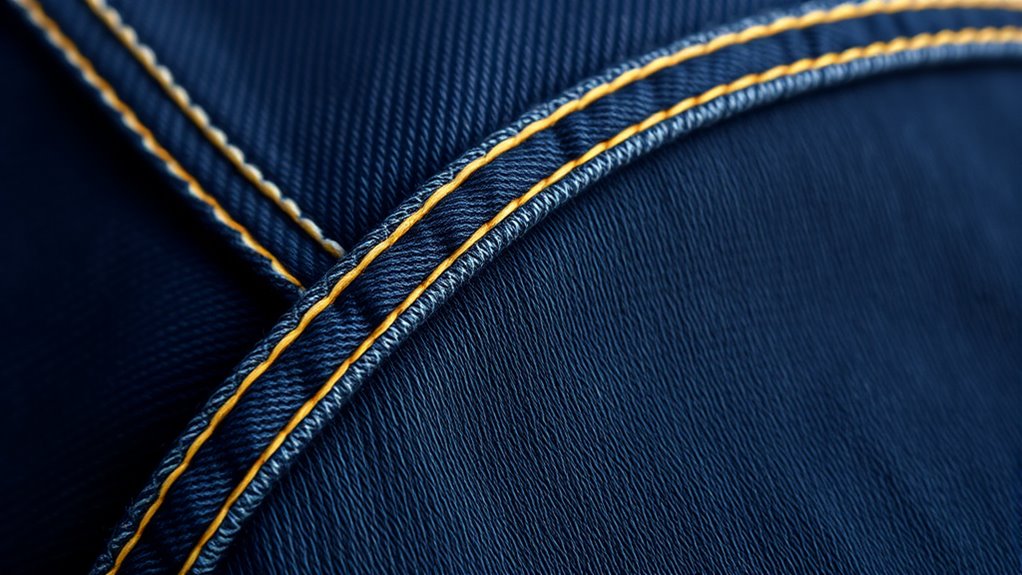
The defining feature of selvedge denim’s durability isn’t just the tight weaving but also the distinctive seam finish that runs along the fabric’s edges. This seam finish, often called edge stitching, is created during the weaving process on traditional looms, resulting in a clean, finished edge that won’t fray or unravel. Unlike standard denim, where raw edges can fray over time, selvedge denim’s edge stitching is tightly woven and neatly finished, giving it a polished look and added strength. When you examine selvedge denim, you’ll notice the clean, narrow edge with a colored thread running through it—this is the hallmark of its seam finish. This meticulous craftsmanship ensures longevity and makes selvedge denim highly recognizable among denim enthusiasts.
The Unique Weaving Process
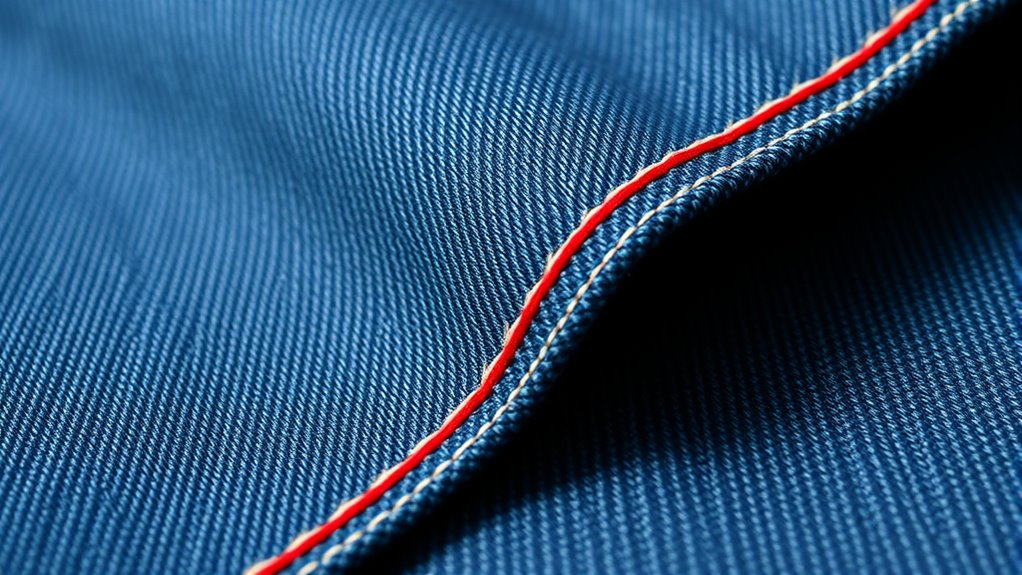
Because selvedge denim is woven on narrow shuttle looms, its weaving process creates a distinctive edge that’s both durable and visually appealing. This process involves carefully controlling weaving tension, which guarantees the fabric’s tight, consistent weave. The narrow width of the shuttle loom allows for precise tension adjustment, resulting in a denser fabric that resists fraying. Additionally, the weaving method influences dye penetration; since the yarns are woven tightly, the dye penetrates evenly, producing vibrant, long-lasting colors. This meticulous process not only enhances the denim’s durability but also contributes to its unique edge finish. The combination of weaving tension and dye penetration makes selvedge denim stand out, giving it a quality and character that’s hard to replicate with mass-produced fabrics. Modern tech in weaving ensures even greater precision and consistency in the final product, supporting the importance of craftsmanship in high-quality denim manufacturing.
How to Identify Genuine Selvedge Denim
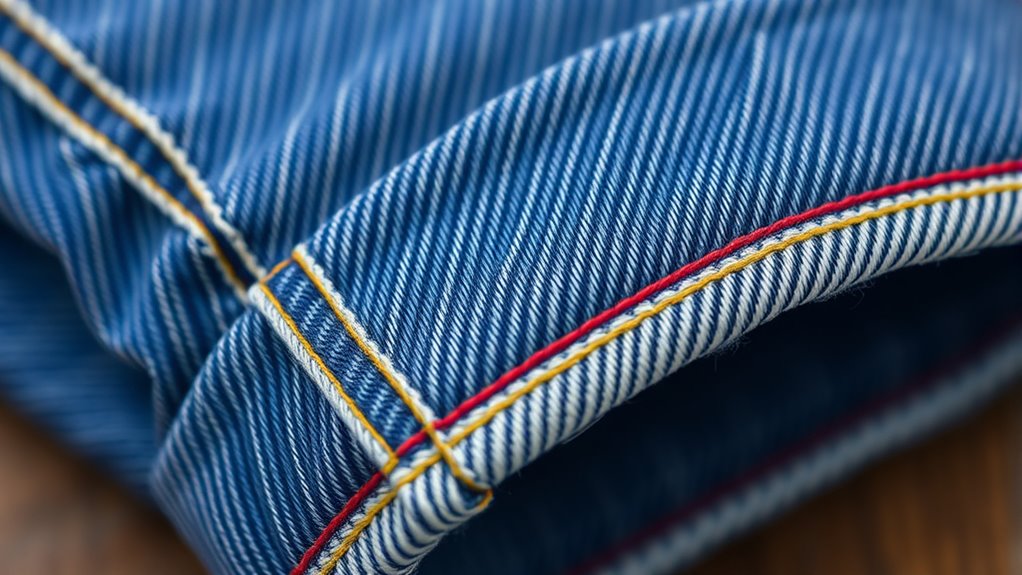
Ever wonder how to spot authentic selvedge denim from the countless reproductions? The key is examining fabric durability and denim authenticity. Genuine selvedge denim typically features a tightly woven edge with a clean, finished selvedge line. Look for selvedge ID, often a colored thread in the selvage edge, indicating quality. Check the fabric weight; authentic selvedge denim is usually heavier and more durable. The weave pattern should be consistent and tight, showing expert craftsmanship. Additionally, understanding fabric composition can help identify genuine materials and ensure the denim’s authenticity. Recognizing the woven structure can also assist in distinguishing authentic selvedge denim from imitations, as it reflects the craftsmanship involved. Paying attention to the loom used can further verify the origin, since traditional shuttle looms are typically used for authentic selvedge denim. Moreover, inspecting the finishing details can reveal the meticulous work that authentic selvedge denim undergoes during production. Being familiar with production techniques can further enhance your ability to identify genuine pieces.
Benefits of Choosing Selvedge Over Non-Selvedge
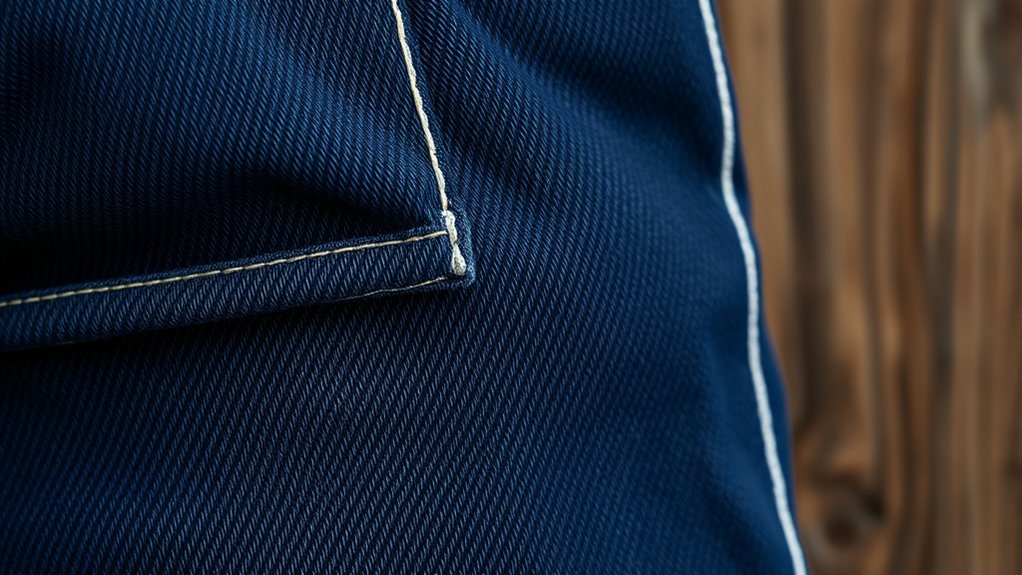
Choosing selvedge denim offers distinct advantages over non-selvedge options, primarily in quality and durability. Because of its tighter weave and traditional manufacturing process, selvedge denim tends to last longer and age beautifully, making it a smarter investment. Beyond durability, selvedge denim provides notable sustainability benefits; its production often involves less waste and fewer chemicals, supporting eco-friendly practices. Additionally, selvedge denim offers greater style versatility—you can dress them up or down, and their unique edge detailing adds a refined touch. Wearing selvedge denim allows you to enjoy a garment that combines timeless craftsmanship with eco-conscious choices. Incorporating seasonal maintenance tips can help preserve the fabric and extend its lifespan. Practicing ethical manufacturing principles can further enhance your confidence in the sustainability of your denim. Understanding fabric construction can help you make more informed choices and appreciate the quality of selvedge denim. Notably, the weaving process used in selvedge denim contributes to its durability and premium feel. For those interested in long-term investment, selvedge denim typically maintains its value and appeal over time. Overall, choosing selvedge over non-selvedge means prioritizing longevity, sustainability, and versatile style in your wardrobe.
Common Myths About Selvedge Denim

Many people assume that selvedge denim is overly expensive or difficult to find, but these beliefs are based on misconceptions. The idea that selvedge denim isn’t durable isn’t true; in fact, its tight weave often results in greater denim durability, meaning your jeans can last years with proper care. Some think selvedge denim is outdated or no longer relevant to current fashion trends, but it remains a stylish choice embraced by many for its classic look and craftsmanship. The myth that selvedge denim is just a luxury item also ignores its functional qualities. In reality, selvedge denim combines heritage, durability, and style, making it a worthwhile investment for those who value quality over fleeting trends. Additionally, understanding the weaving process behind selvedge denim can help appreciate its unique characteristics and why it’s prized among denim enthusiasts. Recognizing the fabric construction can also shed light on its overall quality and longevity. Furthermore, the traditional manufacturing methods used in creating selvedge denim contribute to its durability and distinctive finish, setting it apart from mass-produced alternatives.
The Cost and Value of Selvedge Jeans

While selvedge jeans often come with a higher price tag, their true value lies in their quality and longevity. When you compare prices, you’ll notice they cost more upfront, but durability factors make them worth the investment. They’re crafted with tighter, higher-quality yarns, resulting in stronger fabric that resists wear. Over time, this means fewer replacements and a longer lifespan. Here’s a quick comparison:
| Brand | Price Range | Durability Factors |
|---|---|---|
| Brand A | $100 – $150 | Tighter weave, premium denim |
| Brand B | $120 – $200 | Heavyweight fabric |
| Brand C | $80 – $130 | Reinforced stitching |
| Brand D | $150 – $250 | Longer break-in period |
| Brand E | $90 – $180 | Better color retention |
Investing in selvedge denim pays off through durability and timeless style.
Caring for Your Selvedge Denim
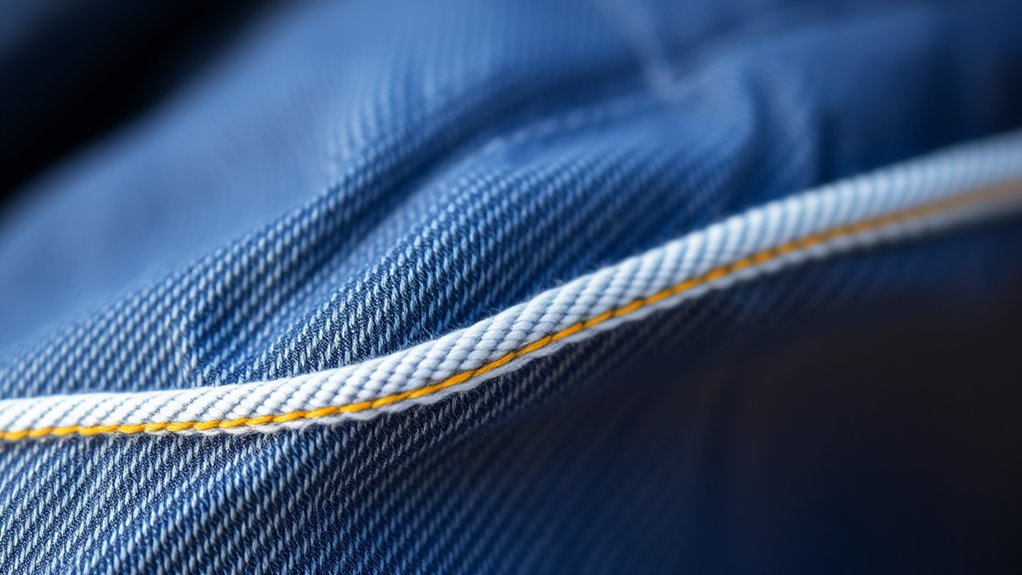
To keep your selvedge denim looking its best and lasting longer, proper care is essential. Understanding denim history helps you appreciate its craftsmanship, while respecting current fashion trends keeps your style fresh. To preserve the fabric’s integrity, follow these tips:
- Wash infrequently to maintain the denim’s color and texture
- Turn jeans inside out before washing to protect the selvedge edge
- Use cold water and gentle cycles to prevent fading and shrinkage
- Avoid bleach and harsh detergents that damage fibers
- Hang dry instead of tumble drying to retain shape and longevity
Is Selvedge Denim Right for You?
Choosing the right denim style depends on your personal preferences and lifestyle, and selvedge denim offers a distinctive option for those who value quality and craftsmanship. If you’re into timeless fashion trends and care about environmental impact, selvedge denim might be a good fit. It’s durable, often produced with sustainable practices, and ages beautifully. However, it’s typically more expensive and requires more maintenance. To help you decide, consider this comparison:
| Aspect | Selvedge Denim | Regular Denim | Your Lifestyle |
|---|---|---|---|
| Fashion Trends | Classic, timeless | Fast fashion, changing styles | Do you prefer trendiness or longevity? |
| Environmental Impact | Generally eco-friendlier | Varies, often less sustainable | Do eco-concerns influence your choices? |
| Durability | High, lasts longer | Moderate | Do you need rugged, long-lasting wear? |
| Cost | Higher | Lower | Are you willing to invest? |
| Maintenance | Requires gentle care | Easier to care for | Do you want low-maintenance denim? |
Ultimately, selvedge denim suits those who prioritize craftsmanship, sustainability, and timeless style.
Frequently Asked Questions
Can Selvedge Denim Be Customized or Personalized?
Yes, you can customize or personalize selvedge denim. Many brands offer personalization options like custom stitching, allowing you to add unique details that reflect your style. You might choose different thread colors, embroidery, or even tailor the fit to your preferences. These options make your selvedge denim truly one-of-a-kind, helping you stand out and enjoy a personalized piece that ages beautifully over time.
Does the Width of the Selvedge Affect Denim Quality?
Think of denim as a fortress, where width is like the battlements—wider battlements don’t necessarily mean stronger walls. The width of the selvedge doesn’t directly affect fabric strength; instead, weaving precision and quality of the yarn matter most. A narrower width often allows for tighter, more controlled weaving, resulting in higher quality denim. So, focus on craftsmanship rather than just width when judging denim’s durability.
Are There Specific Brands Known for Authentic Selvedge Denim?
You’ll find that brands like Levi’s, Iron Heart, and Nudie Jeans are renowned for authentic selvedge denim, reflecting heritage craftsmanship and premium craftsmanship. These brands prioritize quality, using traditional weaving techniques that preserve the integrity of selvedge denim. When you choose products from them, you’re investing in durable, well-crafted pieces that showcase the artistry and history behind genuine selvedge denim.
How Does Aging Differ Between Selvedge and Non-Selvedge Jeans?
You’ll notice that aging differs between selvedge and non-selvedge jeans, especially in fading patterns and wear characteristics. Selvedge denim tends to develop more unique and gradual fades, thanks to its tighter weave and higher quality. As you wear them, the wear naturally highlights the selvedge edge, creating distinctive fades. Non-selvedge jeans might fade faster and less uniformly, but both will develop personalized character over time.
Is Selvedge Denim More Environmentally Sustainable Than Other Types?
You might find selvedge denim more eco-friendly compared to other types because it often comes from sustainable manufacturing practices. While it’s not a perfect solution, its durability means you wear it longer, reducing waste. The eco friendliness comparison highlights that selvedge jeans typically use less water and chemicals during production. By choosing selvedge, you support a more mindful approach to fashion, helping lessen your environmental impact with each wear.
Conclusion
Once you experience selvedge denim, it’s like discovering a hidden gem in a sea of ordinary fabric. Just as a master chef selects only the freshest ingredients, choosing genuine selvedge means valuing quality over cost. When you wear it, your jeans age like a fine wine, developing character and story with each wear. If you appreciate craftsmanship and authenticity, selvedge denim isn’t just a choice—it’s a statement that becomes part of your journey.