
To store cashmere for summer, start by thoroughly cleaning and drying it from any oils or dirt, then fold it gently to avoid stretching. Use airtight containers with silica gel packs or moisture absorbers to keep it dry and pest-free, placing moth repellents like cedar or lavender inside. Store everything in a cool, dark, well-ventilated space away from sunlight and heat. For helpful tips on maintaining your cashmere’s softness, keep exploring the best storage methods.
Key Takeaways
- Clean and thoroughly dry cashmere before storage to prevent pests and stains.
- Use airtight containers with silica gel packs to control humidity and moisture.
- Incorporate natural moth repellents like cedar blocks or lavender sachets inside storage.
- Store in a cool, dark, and well-ventilated area away from sunlight and heat sources.
- Fold cashmere gently, inspect periodically, and replace repellents to maintain freshness.
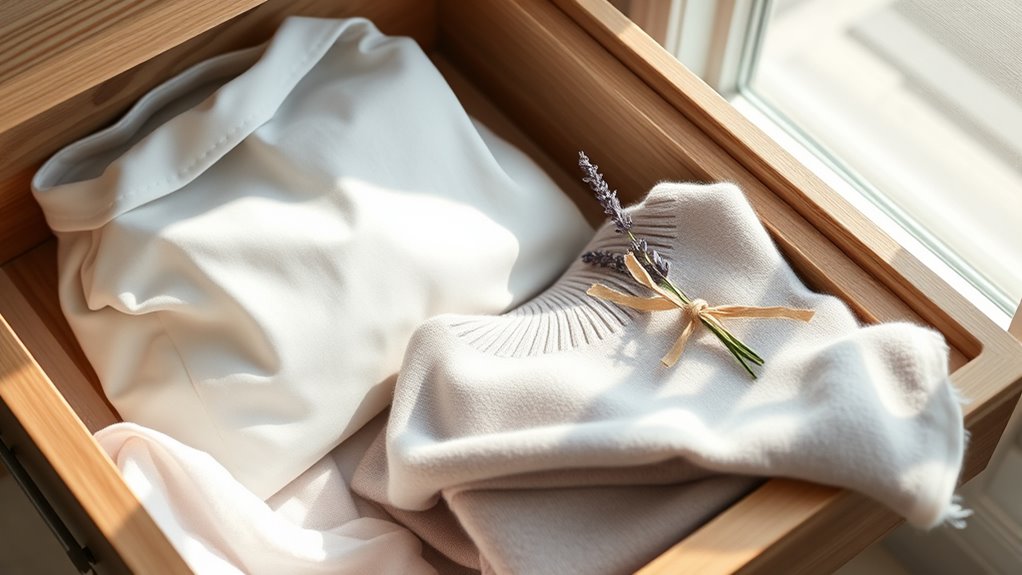
As summer approaches, it’s important to store your cashmere properly to keep it soft and in good condition for next season. Proper storage prevents damage from pests, humidity, and dust, ensuring your favorite sweaters stay fresh and ready to wear when colder weather returns. The first step is to clean your cashmere thoroughly. Washing it according to the care label removes oils, dirt, and any residues that could attract pests or cause discoloration over time. Once clean, let it dry completely in a well-ventilated area, avoiding direct sunlight, which can weaken the fibers.
Properly cleaning and drying your cashmere safeguards it from pests and discoloration.
After cleaning, you need to choose the right storage containers. Air tight containers are ideal because they create a sealed environment that keeps out moisture, dust, and pests. These containers prevent moths and other insects from infiltrating your cashmere, which is essential since moths are notorious for damaging wool and delicate fibers. When placing your cashmere into storage, fold it gently rather than hanging it, as hanging can stretch the fibers and distort the shape of your sweaters. Once folded, place your cashmere into the air tight container, ensuring it’s not overly compressed, which can lead to creases or misshaping.
To further protect your cashmere from pests, consider using moth repellents inside the storage area. Mothballs, cedar blocks, or lavender sachets are popular options. Mothballs work well but have a strong odor, so if you prefer a more natural approach, lavender sachets or cedar blocks are effective and scent pleasant. Place these repellents inside the container or nearby in your storage area to deter moths and other insects. Be sure to check these regularly and replace them as needed to maintain their effectiveness.
Humidity control is indispensable during summer storage. Use silica gel packs or moisture absorbers inside the containers to keep the environment dry. Excess moisture can cause mold, mildew, or fiber damage, so maintaining a dry space is essential. Additionally, free floating pests like moths can be kept at bay by ensuring your storage area is well-sealed and free from drafts. Store your containers in a cool, dark place, such as a closet or drawer, away from direct sunlight and heat sources. This not only preserves the fabric’s color and texture but also prevents deterioration caused by fluctuating temperatures.
Top picks for "store cashmere summer"
Open Amazon search results for this keyword.
As an affiliate, we earn on qualifying purchases.
Frequently Asked Questions
Can Cashmere Be Stored in a Closet With Other Fabrics?
Yes, you can store cashmere in a closet with other fabrics, but guarantee proper fabric protection. Use breathable garment bags or storage bins to prevent moth damage and dust accumulation. Keep the storage environment cool, dry, and dark to maintain quality. Avoid overcrowding, which can cause wrinkles or fabric stress. Properly folded, cashmere stays soft and fresh, even alongside other fabrics, as long as space and protection are prioritized.
How Often Should I Check My Stored Cashmere?
Did you know that cashmere fibers are delicate and can deteriorate in just a few months if not inspected? You should check your stored cashmere every 2-3 months to guarantee it stays in good condition. Follow a proper care routine and store it in a cool, dry environment. Regular inspections help catch pests or damage early, keeping your cashmere soft and luxurious for seasons to come.
Is It Safe to Store Cashmere in Plastic Containers?
Storing cashmere in plastic containers can be safe if you choose airtight storage options. Make sure the containers are clean, dry, and have a tight seal to prevent moisture, pests, and dust from damaging your sweaters. Avoid thin or flimsy plastic that might allow air or pests in. Using high-quality, airtight plastic containers helps protect your cashmere, keeping it fresh and ready for when you need it again.
What Are Signs of Moth Damage in Stored Cashmere?
Moth damage on your stored cashmere shows itself through tiny holes or fuzziness. While inspecting your fabric, look for these signs and any shed fibers around storage areas. To prevent moths, use cedar blocks or lavender sachets, and regularly check your items. Fabric inspection is key—spotting issues early helps you take action before moths cause significant damage. Stay vigilant and protect your precious cashmere even during summer.
Should I Wash Cashmere Before Storing for Summer?
You should wash your cashmere before storing it for summer. Use a gentle detergent designed for delicate fabrics to prevent damage. After washing, lay the item flat to dry, avoiding direct sunlight or heat sources. Proper cleaning removes oils, dirt, and moth-attracting residues, helping your cashmere stay fresh and protected during storage. This guarantees it remains soft, clean, and ready for your next cozy wear.
Conclusion
By properly storing your cashmere, you’re safeguarding a piece of winter’s warmth for future cozy days. Think of your stored sweaters as sleeping bears, resting peacefully until the cold awakens them again. When you gently fold and tuck them away, you’re creating a safe haven, a quiet hibernation that preserves their softness and beauty. Come winter, they’ll be ready to wrap you in comfort once more, a gentle reminder that good care keeps memories alive.