Waterproof leather combines the classic look and durability of genuine leather with water-resistant features, thanks to special treatments that repel water and stains. While it offers strong protection against moisture, it still needs proper care, like regular cleaning and reapplication of waterproof coatings, to stay effective. Unlike synthetic options, it maintains a premium feel and appearance. To discover more about maintaining and maximizing your waterproof leather, keep exploring how it works and how to care for it properly.
Key Takeaways
- Waterproof leather combines natural leather durability with water-resistant coatings to repel moisture and prevent staining.
- Proper care, including regular cleaning and reapplication of water-repellent treatments, is essential to maintain its water resistance.
- Unlike synthetic waterproof materials, waterproof leather offers a premium look, better durability, and breathability.
- Exposure to excessive sunlight or improper storage can weaken the waterproof coating, reducing its effectiveness over time.
- Waterproof leather is not entirely waterproof; it resists water but can eventually absorb moisture if the coating wears down.
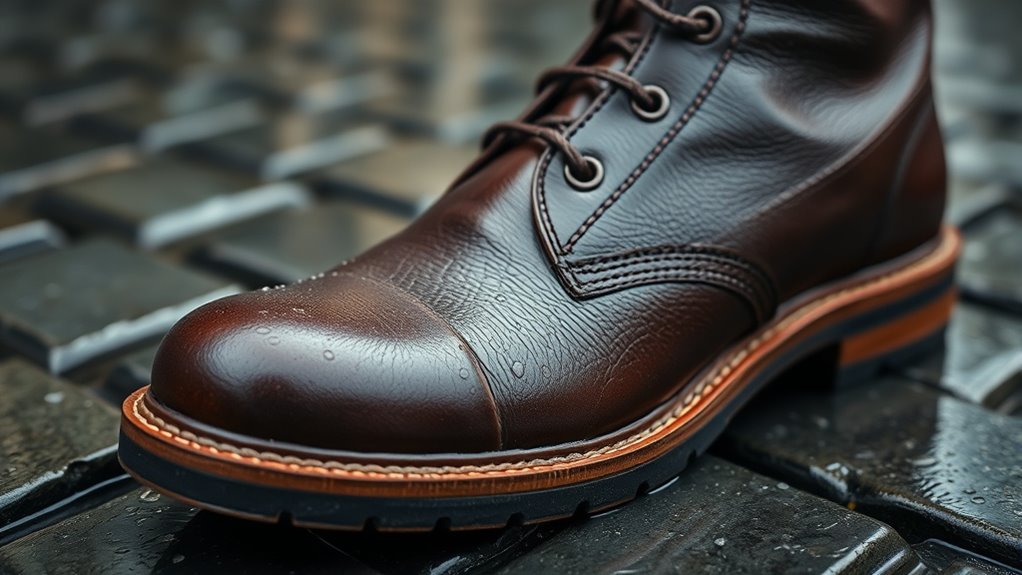
Waterproof leather combines the classic durability of traditional leather with advanced water-resistant properties, making it an ideal choice for outdoor activities and daily wear. When you opt for waterproof leather, it’s essential to understand how to care for it properly to maintain its appearance and longevity. Leather care involves more than just cleaning; it requires specific techniques to preserve its water-resistant coating and overall quality. Unlike standard leather, which can absorb moisture and stain easily, waterproof leather is treated to repel water, but it still needs regular maintenance to keep its protective layer intact. Use a damp cloth to wipe off dirt and debris, and avoid harsh chemicals that can damage the water-resistant finish. Applying a specialized leather conditioner periodically helps keep the material supple and prevents cracking, especially if you notice the water resistance waning over time. Proper storage in a cool, dry place also helps prolong its water-resistant properties and overall lifespan.
When considering material comparison, waterproof leather stands out from other options like synthetic or fabric materials. Synthetic waterproof materials, such as nylon or polyester with waterproof coatings, may offer comparable water resistance but often lack the breathability and natural feel of leather. Leather, particularly waterproof varieties, provides a more premium look and feel, along with superior durability. Compared to traditional leather, waterproof leather offers enhanced resilience against moisture, but it may not be as breathable as some high-tech fabrics. This makes waterproof leather a balanced choice for those who want the aesthetic and durability of leather with added water resistance, without sacrificing too much comfort.
It’s also worth noting that waterproof leather can be more forgiving when it comes to exposure to the elements, but it’s not entirely maintenance-free. You still need to store it properly—preferably in a cool, dry place—and avoid excessive exposure to direct sunlight, which can weaken the waterproof coating over time. Regularly inspecting your waterproof leather products helps identify any signs of wear or damage early on, allowing you to take corrective action, such as reapplying a water-repellent treatment if necessary. Additionally, understanding waterproof coatings and how they function can help you better maintain and extend the life of your waterproof leather items.
Frequently Asked Questions
Does Waterproof Leather Withstand Extreme Weather Conditions?
Waterproof leather can withstand many weather conditions, but it has durability concerns in extreme environments. You might find that prolonged exposure to heavy rain, snow, or intense heat can compromise its waterproof properties over time. Additionally, breathability issues may arise, making it less comfortable during long wear. To guarantee longevity, it’s crucial to maintain your waterproof leather properly and understand its limitations under severe weather conditions.
Can Waterproof Leather Be Repaired if Damaged?
Think of your waterproof leather as a loyal shield; when it’s damaged, you can repair it with proper leather care. Small scratches or tears might be fixed using leather repair kits, but for major issues, seek professional help. Regular water resistance testing helps identify vulnerabilities early. Remember, like a well-maintained shield, waterproof leather can be restored, keeping it resilient against the elements and extending its life.
Is Waterproof Leather Suitable for All Types of Footwear?
Waterproof leather isn’t ideal for all footwear types because it can compromise leather breathability and durability. If your shoes need to be breathable, waterproof leather might cause discomfort, especially during extended wear. However, for outdoor or wet conditions, it offers excellent waterproofing and durability. You should choose footwear based on your activity; waterproof leather works best where protection from moisture outweighs breathability concerns.
How Long Does Waterproof Treatment Last on Leather?
You’ll find that waterproof treatment on leather typically lasts around six months to a year, depending on how often you wear and care for your shoes. To guarantee waterproof longevity, regular leather maintenance is key—clean and condition your footwear to keep the protective layer intact. Remember, the more you nurture your leather, the longer its water resistance will stay effective, helping your shoes stay dry and looking great.
Is Waterproof Leather More Environmentally Friendly Than Synthetic Options?
Waterproof leather can be more eco-friendly than synthetic options if it uses sustainable production methods and eco-friendly coatings. When you choose leather treated with natural or non-toxic waterproofing agents, you’re reducing chemical runoff and pollution. While some waterproof leathers rely on traditional chemical treatments, opting for sustainably produced, eco-conscious options helps lower environmental impact. So, by being selective, you can enjoy durable waterproof leather that aligns with eco-friendly values.
Conclusion
So, now that you know waterproof leather isn’t truly invincible, go ahead and splash around confidently—just maybe don’t expect it to save you from a monsoon. Remember, it’s more like a stylish, slightly stubborn shield than an impenetrable fortress. So, next time your shoes get soaked, don’t cry wolf; just smirk, dry them off, and pretend you never believed they were waterproof in the first place. After all, fashion always wins over function, right?