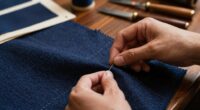
Fabric weight is essential because it affects how your clothes look, feel, and last. Heavier fabrics are more durable and ideal for outerwear, while lighter ones offer breathability and comfort for summer or layering. The weight also influences dye absorption, environmental impact, and how a fabric drapes. Choosing the right weight can enhance both style and sustainability. If you keep exploring, you’ll discover even more about how fabric weight shapes your wardrobe choices.

Get your wardrobe favorites delivered free with Prime
- Fast, free delivery on millions of items
- Prime Video, Amazon Music and more included
- Member-only deals all year
Key Takeaways
- Fabric weight influences durability, making heavier fabrics better suited for long-lasting outerwear and workwear.
- Heavier fabrics create a more substantial drape andFeel, impacting the garment’s look and perceived quality.
- Lighter fabrics offer better breathability and comfort, ideal for summer clothing and layered outfits.
- Fabric weight affects dye absorption, influencing color vibrancy and environmental impact of the dyeing process.
- Choosing the right fabric weight aligns with sustainability goals by reducing water, chemical use, and environmental footprint.

When choosing fabrics, understanding weight is vital because it directly influences the garment’s durability, feel, and suitability for different uses. Heavier fabrics tend to be more robust and long-lasting, making them ideal for items like outerwear or workwear that need to withstand daily wear and tear. Lighter fabrics, on the other hand, offer breathability and comfort, perfect for summer clothing or layering pieces. Recognizing this distinction helps you select the right material for your specific needs, guaranteeing your garment performs well over time.
Fabric weight also plays a significant role in the overall look and feel of a finished piece. A heavier fabric often drapes differently and feels more substantial against your skin, giving a sense of quality and durability. Conversely, lighter fabrics create a softer, more flowing silhouette, which can add elegance or comfort to your wardrobe. Choosing the appropriate weight means you’re tailoring the garment not just to the occasion but also to your personal preference for comfort and style. Additionally, the fabric composition impacts how the fabric behaves and its suitability for various environments, making it an important consideration alongside weight. Considering fabric manufacturing processes can also influence the final quality and environmental impact of your choices.
Another important aspect tied to fabric weight is the environmental impact, particularly when considering eco-friendly dyes. Lighter fabrics generally require less dye, which can reduce water usage and chemical waste during production. When you opt for eco-friendly dyes, the benefits of selecting a lighter fabric weight become even more significant, as it minimizes environmental footprint while still delivering vibrant colors. Heavier fabrics may need more dye to achieve the same intensity, but with advancements in eco-friendly dye technology, you can still make responsible choices that align with sustainability goals.
heavyweight durable outdoor jackets
As an affiliate, we earn on qualifying purchases.
As an affiliate, we earn on qualifying purchases.
Frequently Asked Questions
How Is Fabric Weight Measured Accurately?
You measure fabric weight accurately by using a precision scale to weigh a specific, standardized fabric sample, usually in grams per square meter (GSM). First, cut a clean, square piece, weigh it precisely, then calculate its GSM by dividing the weight by the fabric’s area. This method guarantees an accurate fabric assessment, allowing you to compare fabrics effectively and choose the right weight for your project.
Does Fabric Weight Affect Clothing Durability?
You might think fabric weight doesn’t impact durability, but it truly does. Heavier fabrics with higher fiber density are more resistant to wear and tear, lasting longer over time. Manufacturing techniques also play a vital role, strengthening the fabric’s structure. So, investing in heavier, well-made textiles means your clothing will stand up better to daily use, saving you money and the frustration of frequent replacements.
Can Fabric Weight Influence Comfort in Different Climates?
Yes, fabric weight can influence your comfort in different climates. Heavier fabrics offer better climate adaptability, keeping you warm in cold weather, while lighter fabrics help with moisture regulation and breathability in hot, humid conditions. Choosing the right fabric weight guarantees you stay comfortable, whether you’re facing winter’s chill or summer’s heat. Pay attention to fabric weight to optimize your clothing’s performance across various climates.
Is Heavier Fabric Always Better Quality?
Heavier fabric isn’t always better quality. Instead, look at fabric density and weight distribution. A dense fabric with even weight distribution often indicates durability and quality, but some lightweight fabrics can be just as high-quality if made with premium materials. Consider what you need—lighter fabrics for breathability or heavier ones for durability—and remember, quality depends more on the material and craftsmanship than weight alone.
How Does Fabric Weight Impact Fabric Care and Maintenance?
Fabric weight considerably impacts care and maintenance because heavier fabrics, with their denser structure, tend to hold dye better, ensuring vibrant colors over time. Additionally, fabric weight influences the texture feel; lighter fabrics are often more delicate and require gentle washing, while heavier ones are more durable and can withstand more rigorous care. Knowing your fabric’s weight helps you choose proper washing, drying, and ironing methods, prolonging its lifespan.
lightweight breathable summer tops
As an affiliate, we earn on qualifying purchases.
As an affiliate, we earn on qualifying purchases.
Conclusion
Remember, you get what you pay for, and fabric weight is a prime example. Choosing the right weight guarantees your clothing feels comfortable, lasts longer, and suits your needs perfectly. Don’t overlook this detail—your wardrobe will thank you. When in doubt, trust the old saying: “The proof of the pudding is in the eating.” In this case, the proof of quality is in the weight of the fabric itself.
eco-friendly fabric dyeing supplies
As an affiliate, we earn on qualifying purchases.
As an affiliate, we earn on qualifying purchases.
As an affiliate, we earn on qualifying purchases.
Fall Picks
fall essentials
As an affiliate, we earn on qualifying purchases.