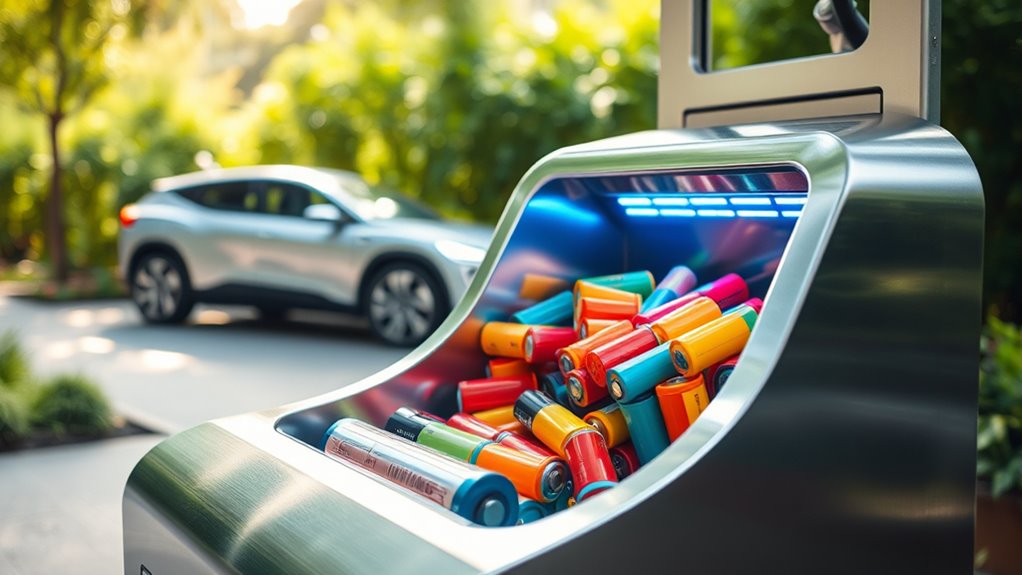

Recycling batteries helps you stay connected to cutting-edge tech while protecting the planet. By recycling, you support innovations that recover valuable materials like lithium and cobalt, reducing environmental harm and conserving resources. It also promotes a circular economy, making batteries last longer and lowering the need for harmful mining. Your participation drives manufacturers to design easier-to-recycle, eco-friendly devices. Keep exploring how these advancements allow you to enjoy tech that’s both luxurious and green.
Key Takeaways
- Recycling batteries reduces environmental harm and conserves valuable resources like lithium and cobalt.
- Innovative recycling technologies recover high-purity materials, supporting longer-lasting, eco-friendly batteries.
- Participating in battery recycling promotes a circular economy, encouraging sustainable product design and manufacturing.
- Proper disposal and recycling empower consumers to make eco-conscious choices and reduce landfill waste.
- Recycling advancements help maintain cutting-edge tech while minimizing environmental impact and resource depletion.
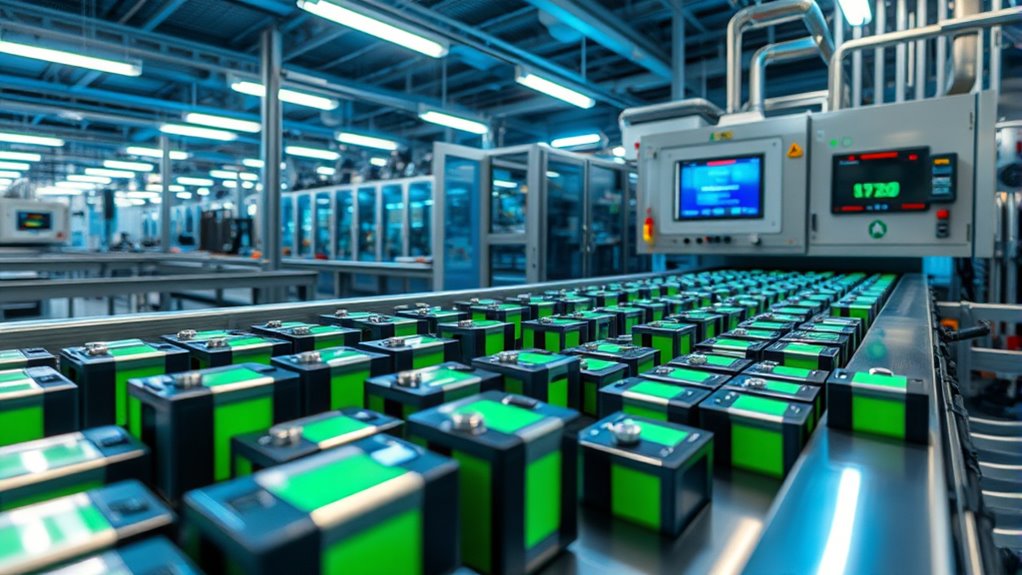
Battery recycling is an essential process that helps reduce environmental harm and conserves valuable resources. As someone who relies on devices powered by batteries daily, understanding how recycling impacts the environment and your tech is vital. Modern recycling innovations are transforming the way we manage used batteries, making the process more efficient and sustainable. These advancements play a significant role in extending battery lifespan indirectly by promoting better manufacturing practices, encouraging the development of longer-lasting batteries, and reducing the need for new raw materials. When you recycle your batteries, you’re not just discarding waste; you’re actively participating in a cycle that minimizes resource depletion and environmental pollution. recycling innovations are also making it easier for consumers to participate in sustainable practices without inconvenience.
Recycling batteries reduces environmental impact and conserves vital resources for sustainable technology.
The concept of battery lifespan is central to understanding why recycling matters so much. Batteries, especially rechargeable ones, are designed to last for a certain number of charge cycles. Once they reach the end of their usable life, many people toss them aside without considering the impact. However, recycling innovations have made it possible to recover a significant portion of the materials inside these batteries—like lithium, cobalt, and nickel—that are essential for manufacturing new batteries. This process reduces the extraction of raw materials, which can be environmentally damaging and energy-intensive. When you choose to recycle, you’re helping to close the loop, ensuring these valuable materials are reused efficiently, ultimately supporting the creation of batteries with longer, more reliable lifespans.
Furthermore, cutting-edge recycling technologies are making the process safer and more cost-effective. These innovations enable the recovery of high-purity materials that can be reintroduced into the manufacturing cycle, reducing dependency on mining and lowering the carbon footprint associated with battery production. This means that future batteries will not only last longer but also be produced with a smaller environmental footprint. For you, this translates into accessing more durable, eco-friendly devices, and contributing to a greener planet. By staying informed about recycling innovations, you can make smarter choices about how you dispose of batteries and advocate for sustainable practices in your community.
In addition, recycling efforts foster a circular economy for batteries, which encourages manufacturers to design products that are easier to recycle and more sustainable overall. Your participation in recycling programs helps drive demand for such innovations, pushing companies to prioritize eco-conscious design and materials. Over time, this leads to the development of batteries that are safer, more efficient, and built with sustainability in mind. As a consumer, your commitment to proper disposal and recycling supports these advancements, ensuring that your tech remains both luxurious and environmentally responsible. Ultimately, embracing recycling and understanding these innovations empower you to enjoy cutting-edge technology while making a positive impact on the planet.
Top picks for "battery recycl keep"
Open Amazon search results for this keyword.
As an affiliate, we earn on qualifying purchases.
Frequently Asked Questions
How Can I Identify if My Battery Is Recyclable?
You can identify if your battery is recyclable by checking its battery lifespan and looking for recycling symbols. Batteries with a limited lifespan may need recycling, especially if they no longer hold a charge effectively. Look for symbols like the recycling triangle or a specific battery recycling icon on the battery or packaging. These indicators tell you it’s safe and environmentally responsible to recycle, helping reduce waste and support sustainability.
Are There Any Fees for Battery Recycling Services?
Wondering if you’ll face charges for battery disposal? It depends, but many recycling programs offer free services to encourage eco-friendly practices. Some places might charge a small fee, especially for large or hazardous batteries. It’s best to check local recycling programs or drop-off centers beforehand. By doing so, you guarantee proper disposal without surprises, helping the environment while keeping your conscience clear. Always stay informed about potential fees before recycling your batteries.
What Types of Batteries Are Accepted for Recycling?
You can recycle various types of batteries, including lithium-ion, nickel-cadmium, and lead-acid batteries. To guarantee battery safety and comply with recycling regulations, handle them carefully and avoid damage. Always check with local recycling programs for specific accepted battery types, as regulations may vary. Proper recycling helps prevent environmental harm and promotes sustainable waste management. Remember, following safety tips and regulations is key when recycling different battery types.
How Long Does the Recycling Process Take?
You’ll be thrilled to know that battery recycling usually takes just a few days at most, so you won’t be left waiting longer than a coffee break. This speedy process helps reduce environmental impact by efficiently sending batteries to recycling facilities. Your quick action guarantees batteries are processed swiftly, making a big difference for the planet. Plus, it’s so easy, even your lazy self can do it.
Can Recycled Batteries Be Used in New Devices?
Yes, recycled batteries can be used in new devices. When you recycle batteries, valuable materials like lithium and cobalt are recovered, extending their battery lifespan in new products. Recycling regulations ensure these materials are safely processed and reused, reducing environmental impact. This process helps keep batteries sustainable and efficient, so your devices benefit from high-quality, eco-friendly power sources while supporting responsible resource management.
Conclusion
By embracing battery recycling, you turn trash into treasure, transforming waste into wealth with wisdom and will. Your commitment can curb clutter, conserve currents, and cultivate a cleaner, greener globe. Let your actions amplify awareness, inspiring innovation and igniting change. Together, you can keep tech trendy and truly sustainable, ensuring a brighter, better future. So, seize the cycle, support sustainability, and spark a powerful, positive planet—because every effort energizes our earth’s endless potential.