
If you’re exploring leather alternatives, you’ll find options ranging from plant-based leathers like cactus, mushroom, and pineapple fibers, which are eco-friendly and durable, to synthetic versions made from polyurethane that mimic real leather. Emerging materials like biodegradable and lab-grown options offer more sustainable choices. Consider factors like durability, care, and ethics to choose what suits your style and values best. Keep exploring; more insights await to help you make informed decisions.
Key Takeaways
- Plant-based leathers like cactus, mushroom, and pineapple offer sustainable, eco-friendly alternatives with durability and natural feel.
- Synthetic options made from polyurethane mimic traditional leather but may have environmental concerns like microplastics.
- Emerging materials such as lab-grown and biodegradable leathers focus on reducing waste and ecological impact.
- Durability, ease of care, and cost-effectiveness vary; plant-based and synthetic leathers balance longevity and maintenance.
- Ethical sourcing and responsible manufacturing practices ensure environmentally friendly, cruelty-free, and socially responsible leather alternatives.
Plant-Based Leather Options
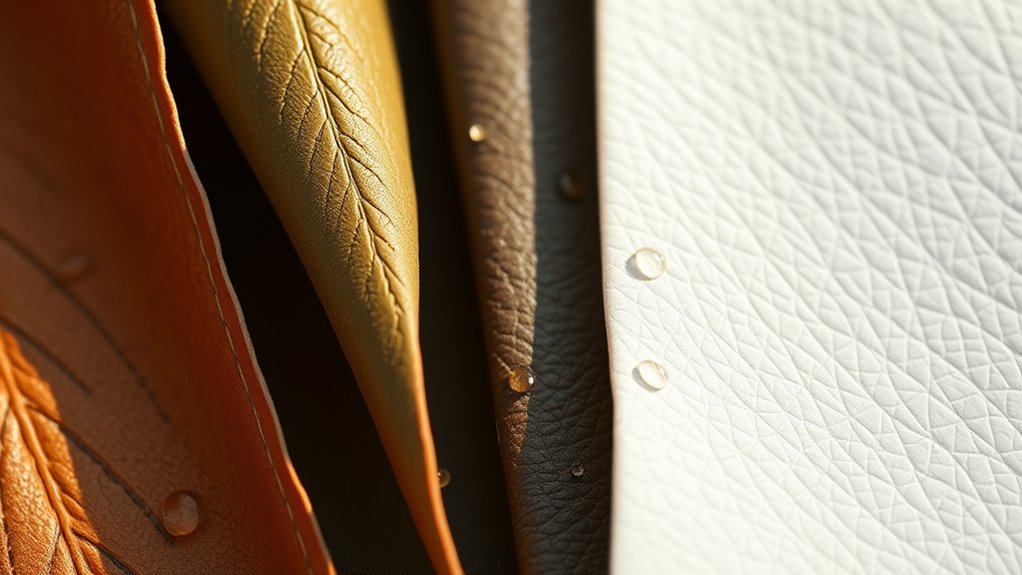
Plant-based leather options have gained popularity as sustainable alternatives to traditional animal leather. These materials often use innovative tanning processes that reduce the environmental impact compared to conventional methods, which can involve harmful chemicals. Instead of relying on animal hides, manufacturers source plant-based materials like cactus, mushroom, pineapple, or cork, making the material sourcing more ethical and eco-friendly. The tanning processes for plant-based leathers focus on preserving the natural qualities of the materials while ensuring durability and flexibility. By choosing these options, you support environmentally conscious practices and reduce reliance on animal agriculture. Additionally, the development of eco-friendly tanning techniques further minimizes the ecological footprint of producing plant-based leathers. The color accuracy of these materials can be optimized through specific treatments, enhancing their visual appeal and making them more competitive with traditional leather. Advances in sustainable manufacturing are also helping to improve the quality and affordability of plant-based leathers, broadening their appeal. As awareness grows, innovations like biodegradable materials are making plant-based leathers an even more attractive choice for eco-conscious consumers. Moreover, ongoing research into renewable resources is expanding the variety and availability of plant-based options, making them more accessible. As a result, plant-based leathers offer a promising, sustainable choice for those seeking stylish, cruelty-free products without compromising on quality.
Synthetic Leather Alternatives
Synthetic leather alternatives have become a popular choice for those seeking cruelty-free and environmentally conscious options. If you’re into vegan fashion, these materials let you enjoy stylish products without harming animals. They often mimic the look and feel of traditional leather, making them an attractive option for fashion-conscious consumers. Beyond animal welfare, synthetic alternatives can reduce the environmental impact associated with livestock farming, which contributes to greenhouse gases and resource depletion. Many brands now produce high-quality synthetic leathers from polyurethane or other eco-friendly polymers, offering durability and style. While some concerns about microplastics exist, ongoing innovations aim to improve sustainability. Choosing synthetic leather alternatives allows you to support cruelty-free practices while still enjoying trendy, long-lasting pieces that align with your values. Additionally, as the demand for sustainable fashion grows, some eco-friendly options are sourced from eco-conscious materials, further reducing environmental footprints. Incorporating water-saving practices in manufacturing processes can also help minimize resource use and pollution.
Innovative Materials on the Horizon
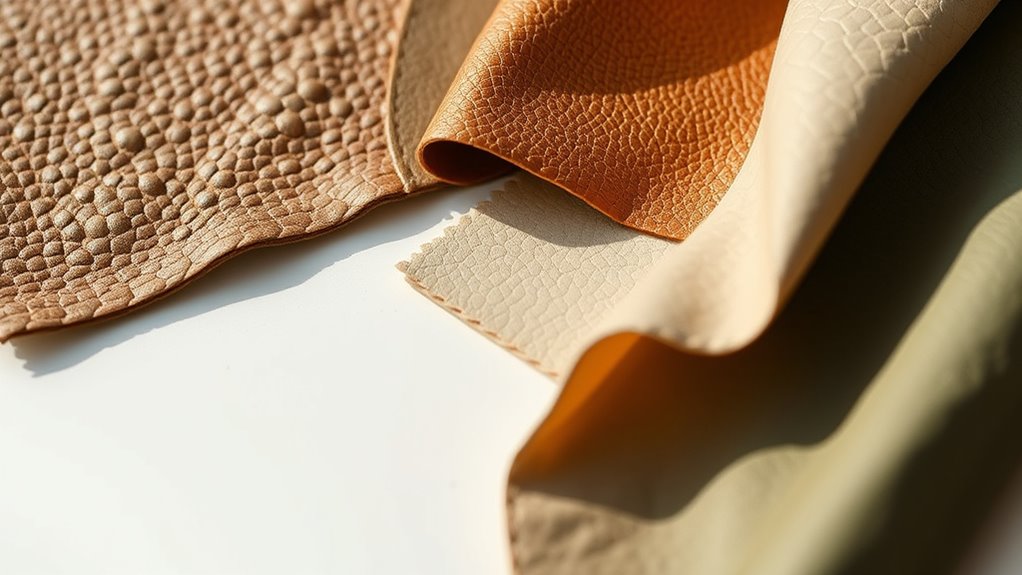
As researchers continue to explore new frontiers in materials science, innovative options for leather alternatives are emerging that promise to be more sustainable and functional. Biodegradable innovations are gaining traction, offering materials that break down naturally without harming the environment. These innovations include plant-based leathers made from mushrooms, cactus, or pineapple fibers, which are both eco-friendly and durable. Lab-grown materials are also advancing, allowing for the creation of leather-like substances in laboratories without animal involvement. These lab grown options can be customized for texture and appearance, reducing waste and environmental impact. Moreover, biodegradable materials are increasingly being integrated into fashion and accessories, aligning with consumer demand for environmentally conscious products. Additionally, sustainable manufacturing practices are being adopted by many companies to further reduce their ecological footprint. Furthermore, embracing environmentally friendly production methods enhances the appeal of these innovative materials in the global market. Understanding the cultural beliefs surrounding astrology and beauty can influence consumer preferences and acceptance of new materials in fashion and accessories. As these technologies develop, you’ll find more sustainable, cruelty-free alternatives that mimic the qualities of traditional leather while contributing to a greener future and innovative material development.
Comparing Durability and Care

When evaluating leather alternatives, durability and care requirements are key factors to contemplate. You’ll want materials that stand up to daily use without sacrificing appearance. Some options, like vegan leather, tend to be less durable but easier to maintain, while others, such as certain plant-based fibers, can offer comparable longevity. Consider how much time and effort you’re willing to invest in upkeep. Choices that avoid animal cruelty often provide cost-effective benefits over time, especially since some synthetic options resist stains and scratches better. Keep in mind:
- Synthetic leathers may crack or peel faster but are easier to clean.
- Plant-based fabrics might require specific treatments to maintain durability.
- Cost effectiveness varies based on lifespan and maintenance needs, influencing long-term value.
- In Free Floating backyard transformations, selecting durable materials can contribute to a more sustainable and low-maintenance outdoor space.
- Additionally, understanding the wear-and-tear policies associated with leasing can help you select materials that withstand frequent use and potential damage over time. To make informed decisions, it’s helpful to research the material compositions and their expected lifespans.
- Considering material science can provide insights into how different materials perform under various conditions, aiding in your selection process. Incorporating innovative manufacturing techniques can further enhance the durability of certain materials.
Environmental and Ethical Considerations
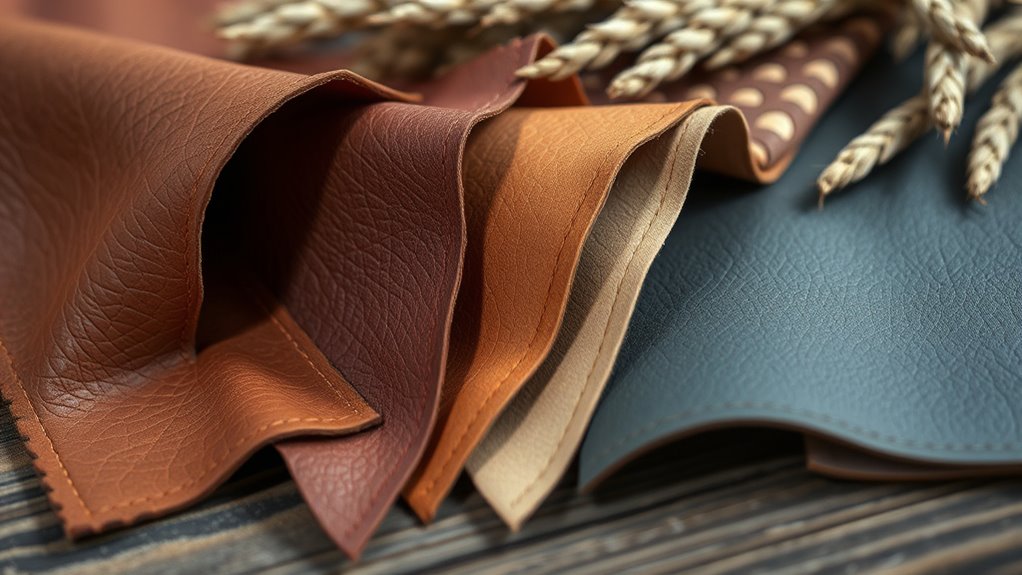
Environmental and ethical considerations play a crucial role when choosing leather alternatives, as they can greatly impact the planet and the lives of animals. You should look for products with vegan certification, which ensures no animal products are used and that ethical standards are met. This certification also indicates that the supply chain adheres to sustainable practices, minimizing environmental harm. Ethical sourcing emphasizes reducing waste, lowering carbon footprints, and avoiding exploitative labor practices. By choosing options with transparent supply chains, you gain confidence that the materials are produced responsibly. Additionally, understanding vetted supply chains can help ensure that your choices support genuinely sustainable and ethical manufacturing practices. Incorporating sustainable practices in the selection process further reinforces your commitment to reducing environmental impact. Considering the impact of material production on biodiversity can help you make more environmentally conscious decisions. Recognizing the importance of ethical manufacturing can guide you toward brands that prioritize fair labor and humane treatment of workers. Moreover, adopting eco-friendly materials can further lessen your ecological footprint. Ultimately, considering these factors helps you make informed decisions that support animal welfare, reduce environmental impact, and promote ethical manufacturing practices.
Frequently Asked Questions
Are Plant-Based Leathers Truly Biodegradable?
Plant-based leathers are generally biodegradable, but their biodegradability factors depend on the materials used and processing methods. Some plant-based options break down quickly in natural environments, reducing environmental impact, while others may contain additives that hinder biodegradation. To truly benefit from their eco-friendly potential, look for products made from natural, untreated fibers. This way, you guarantee your choices contribute positively to sustainability by minimizing waste and environmental harm.
How Does Synthetic Leather Impact Indoor Air Quality?
Synthetic leather can negatively impact your indoor air quality by releasing VOC emissions, which may cause headaches, dizziness, or respiratory issues. These materials often contain chemicals that aren’t always safe, so it’s essential to evaluate chemical safety when choosing your furniture or accessories. To minimize exposure, look for products with low VOC emissions and proper ventilation, ensuring your indoor environment stays healthier and safer for you and your family.
What Are Emerging Materials Promising for Future Leather Alternatives?
You’ll find that emerging materials like biodegradable composites and bioengineered skins show great promise for future leather alternatives. These innovations aim to be more sustainable, reducing environmental impact, and often mimic the look and feel of traditional leather. By using biodegradable composites, you get materials that break down naturally, while bioengineered skins offer customizable, animal-free options. These advancements could revolutionize the industry, combining eco-friendliness with durability and style.
Can Vegan Leather Be Repaired Like Traditional Leather?
Vegan leather repair depends on the material’s synthetic leather durability. While some vegan leathers can be fixed with patching or specialized adhesives, others may not hold up well after damage. You should check the product’s care instructions, as not all vegan leathers respond to repair methods used for traditional leather. Generally, synthetic leather durability varies, so proper maintenance can extend its lifespan, but repairs might be limited compared to genuine leather.
Do Ethical Concerns Vary Between Different Leather Alternative Sources?
Yes, ethical concerns vary between leather alternative sources. You should consider animal welfare, as some options like mushroom or pineapple leather don’t involve animal harm, making them more ethical. Others, like synthetic leather, may have a higher environmental impact due to plastic use. You’ll want to weigh these factors carefully, choosing sources that align with your values around reducing harm and minimizing environmental footprint.
Conclusion
Now that you know your options, choosing a leather alternative feels like wielding the power to change the world. Whether you pick plant-based, synthetic, or innovative materials, each choice impacts the environment and ethics. Think of your decision as a ripple that could turn into a tidal wave of positive change—your small step can make a huge difference. So, go ahead, make a conscious choice, and wear your values proudly!