
To extend the life of vintage leather, handle it gently by avoiding harsh chemicals and soaking, and clean with soft, damp cloths or mild soap when needed. Keep it conditioned using high-quality leather conditioners, focusing on dry areas, to prevent cracking. Store it in a cool, dry, well-ventilated space, avoiding plastic covers, and support the shape with tissue paper. Proper care helps preserve its unique character—learn more ways to protect your vintage leather over time.
Key Takeaways
- Clean surfaces gently with soft, damp cloths and mild soap, avoiding harsh chemicals or soaking the leather.
- Regularly apply high-quality leather conditioner to maintain suppleness and prevent cracking.
- Store vintage leather in a cool, dry, and well-ventilated area, using breathable covers to prevent mold and fading.
- Handle leather carefully, avoiding long-term hanging or stacking, to preserve shape and structural integrity.
- Conduct routine inspections and address signs of wear early to prolong the leather’s lifespan and preserve its character.
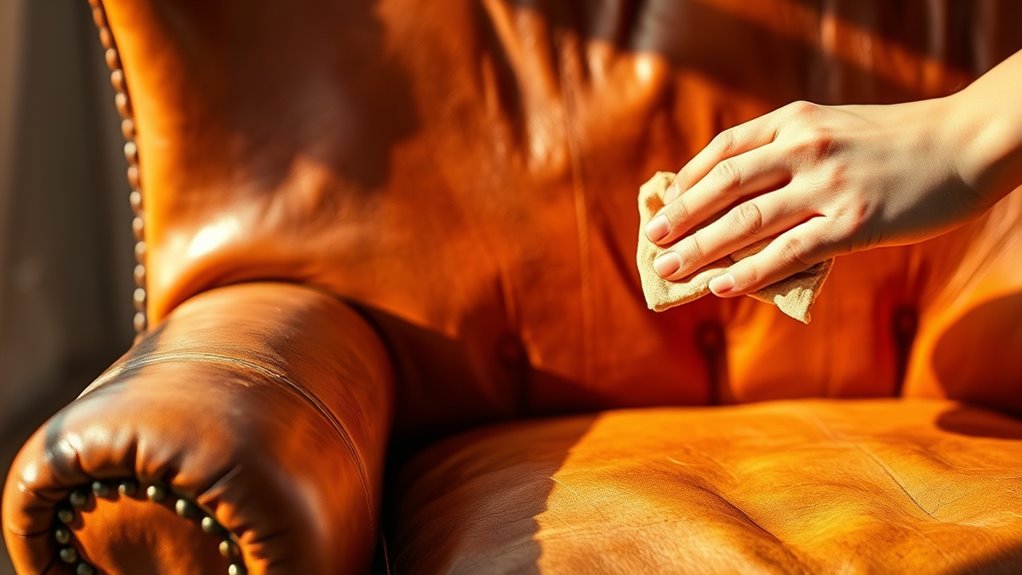
Have you ever wondered how to keep your leather items looking their best for years? Vintage leather pieces have a timeless charm, but they require proper care to preserve that beauty over time. One of the most important aspects is understanding effective cleaning techniques. Unlike newer leather, vintage items often have layers of patina and character that you don’t want to strip away. Instead of harsh chemicals, opt for gentle cleaning methods. Use a soft, damp cloth to wipe away surface dust and dirt. For stubborn stains, a mixture of mild soap and water applied with a clean cloth can do the trick, but always test on a small, hidden area first. Avoid soaking the leather or using abrasive cleaners, which can damage the surface and accelerate aging. After cleaning, it’s essential to keep your leather conditioned. Applying a high-quality leather conditioner helps maintain suppleness and prevents cracking. When conditioning, use a light hand and focus on areas prone to dryness, especially if the leather has been stored away for a while. Incorporating proper storage practices further prolongs the life of vintage leather.
Storage solutions play just as significant a role in extending your vintage leather’s life. Proper storage prevents unnecessary damage and keeps your pieces in prime condition. Store leather items in a cool, dry place away from direct sunlight, which can fade and dry out the leather. Avoid plastic containers or bags that trap moisture, leading to mold and mildew; instead, opt for breathable fabric covers or cotton dust bags. If you’re storing larger pieces like vintage leather sofas or chairs, use furniture covers that allow air circulation. For smaller accessories like bags and wallets, stuffing them with acid-free tissue paper helps retain their shape and prevents creases. Be cautious about hanging leather items for long periods, as it can distort their shape; instead, lay them flat or store them on padded surfaces. Additionally, avoid stacking heavy objects on top of your vintage leather, as this can cause indentations or deformities over time. Regularly inspecting your leather for signs of wear or damage allows you to address issues early and maintain their integrity.
Consistent care is key to preserving the character and integrity of vintage leather. Regularly cleaning with gentle techniques, conditioning, and thoughtful storage solutions work together to extend the life of your treasured pieces. By respecting their age and unique qualities, you make sure that these timeless items continue to tell their story for generations to come. Proper maintenance not only enhances their appearance but also safeguards their structure, making sure your vintage leather stays beautiful and functional for years, if not decades, ahead.
Frequently Asked Questions
Can Vintage Leather Be Restored to Look Brand New?
Yes, you can restore vintage leather to look nearly new by using proper restoration techniques. Start with cleaning to remove dirt and oils, then condition to nourish the leather and slow aging processes. For more extensive damage, consider professional restoration to address scratches or discoloration. While vintage leather naturally ages, these techniques help preserve its character and extend its life, making it look refreshed and well-maintained.
How Often Should I Condition Vintage Leather Items?
You should condition your vintage leather items every 6 to 12 months, even if they don’t show signs of dryness. Many believe frequent conditioning can damage leather, but a proper routine preserves its leather scent and prevents cracking. When storing your vintage pieces, keep them in a cool, dry Leather storage environment. Regular conditioning keeps your leather soft, supple, and beautifully aged, ensuring it remains stunning for years to come.
Are There Specific Cleaners for Different Types of Vintage Leather?
Yes, there are specific cleaners for different types of vintage leather. You should use gentle leather cleaning products tailored to your item’s leather type, ensuring vintage preservation. For example, nubuck or suede needs special cleaners, while smooth leather benefits from mild, pH-balanced solutions. Always test a small area first to avoid damage, and follow up with appropriate conditioning to maintain the leather’s beauty and longevity.
What Are Common Mistakes to Avoid When Caring for Vintage Leather?
Did you know improper care can reduce vintage leather’s lifespan by up to 50%? To avoid this, steer clear of common mistakes like using harsh cleaners or neglecting proper storage. Always opt for gentle, pH-balanced cleaning products, and store your leather in a cool, dry place away from direct sunlight. Regularly conditioning your vintage leather guarantees it stays supple and vibrant, prolonging its beauty for years to come.
How Can I Identify Genuine Vintage Leather From Synthetic Alternatives?
You can identify genuine vintage leather by examining its leather grain, which is typically irregular and natural-looking, unlike the uniform pattern found in synthetics. Smell the material; authentic vintage leather often has a rich, earthy scent, whereas synthetic alternatives usually emit a chemical or plastic smell. Feel the texture—genuine leather is supple and warm, while synthetics tend to be stiffer. These clues help you distinguish real vintage leather from fake alternatives.
Conclusion
Treat your vintage leather like a treasured friend; with gentle care and attention, you breathe new life into its story. Each polish and conditioning session is a stitch in the fabric of its history, ensuring it ages gracefully alongside you. Remember, leather isn’t just material—it’s a living memory, waiting to be preserved. By caring for it, you’re not just maintaining its beauty—you’re keeping a timeless legacy alive, echoing stories in every crack and creases.