
Understanding audiophile jargon helps you choose and enjoy high-quality sound gear more confidently. Terms like amplifier, DAC, impedance, and soundstage describe how equipment works and what influences sound quality. Knowing these makes it easier to compare products and get the best listening experience. Clear explanations reveal how equipment reproduces sound faithfully and minimizes distortion. If you continue exploring, you’ll discover even more about these concepts, helping you become a more knowledgeable listener.

Get your wardrobe favorites delivered free with Prime
- Fast, free delivery on millions of items
- Prime Video, Amazon Music and more included
- Member-only deals all year
Key Takeaways
- Simplifies technical terms like impedance, THD, and frequency response for easy understanding.
- Explains core audio components such as amplifiers, DACs, speakers, and headphones in plain language.
- Highlights how sound quality metrics affect listening experience, including soundstage and transparency.
- Clarifies technical concepts like signal loss and equipment compatibility in straightforward terms.
- Provides practical tips on selecting and appreciating high-fidelity audio gear with simplified jargon.

Diving into the world of high-fidelity sound can be overwhelming, especially with the specialized terminology used by audiophiles. When you’re exploring audio equipment and sound engineering, it’s common to encounter jargon that seems confusing at first. But understanding these terms makes it easier to choose the right gear and appreciate the nuances of quality sound.
For starters, you’ll come across “amplifiers,” which are devices that boost audio signals so they can drive speakers effectively. Think of them as the power behind your sound system, ensuring every note is clear and strong. Then there’s “DAC,” short for Digital-to-Analog Converter. This device transforms digital audio files into analog signals that your speakers can produce. Knowing about DACs helps you understand how digital music becomes the rich, detailed sound you love.
In sound engineering, “frequency response” is a key term. It describes how accurately your audio equipment reproduces different sound frequencies, from deep bass to high treble. A broader frequency response often means more detailed sound, so when shopping for audio gear, pay attention to this specification. Similarly, “total harmonic distortion” (THD) measures how much your equipment alters the original sound. Lower THD values indicate cleaner, more faithful audio reproduction.
You’ll also hear “impedance,” which relates to the electrical resistance of speakers or headphones. Matching impedance levels between components ensures ideal performance and prevents damage. For example, high-impedance headphones need more power to perform well, which is why understanding impedance is essential when selecting your gear.
Another common term is “soundstage,” referring to the perceived spatial location of sounds in a recording. A good soundstage makes it feel as if the music surrounds you, adding depth to your listening experience. This aspect is heavily influenced by sound engineering techniques and the quality of your audio equipment. “Transparency,” meanwhile, describes how faithfully your gear reproduces the original recording without coloration or added effects. When your equipment is transparent, you’re hearing the music as it was intended.
Additionally, high-fidelity components are designed to minimize signal loss and distortion, ensuring the most accurate sound reproduction possible.
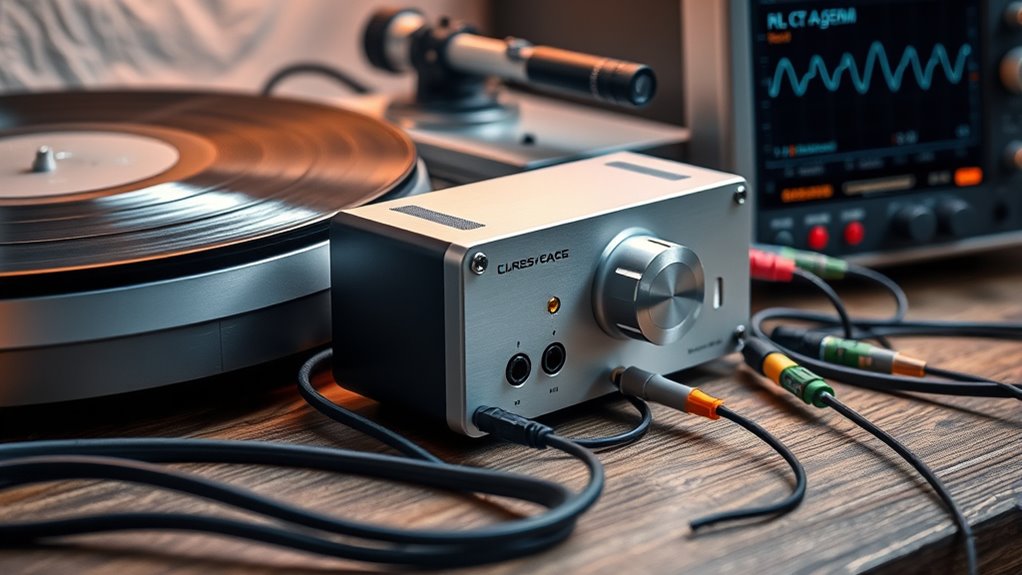
high fidelity headphone amplifier
As an affiliate, we earn on qualifying purchases.
As an affiliate, we earn on qualifying purchases.
Frequently Asked Questions
How Do I Choose the Right Audiophile Equipment for My Budget?
To select the right audiophile equipment within your budget, start by evaluating your space for proper speaker placement to optimize sound. Consider the power requirements of your components to guarantee compatibility and avoid damage. Set a realistic budget, prioritize essential items like speakers and amplifier, and read reviews. You don’t need the most expensive gear—focus on quality and how well your setup suits your listening environment.
What’s the Difference Between Balanced and Unbalanced Audio Connections?
Balanced audio connections are like superheroes, fighting off signal noise with their extra shielding and two conductors, while unbalanced connections are more vulnerable. The main difference is that balanced cables use two signal wires and a ground, reducing interference. This makes them ideal for long runs. Unbalanced cables, with less shielding, work better in short distances but can pick up more noise, impacting your sound quality.
How Important Is Room Acoustics for High-Fidelity Listening?
Room acoustics are essential for high-fidelity listening because they directly affect sound clarity and detail. You should focus on speaker placement to optimize sound direction and minimize reflections. Using room treatment, like acoustic panels or diffusers, can reduce echo and improve sound quality. Ignoring room acoustics can result in muddled or unbalanced audio, so investing in proper setup makes a significant difference in your listening experience.
Can I Upgrade My Existing Audio System Easily?
Upgrading your audio system can be straightforward, much like tuning a guitar. Start with speaker placement—positioning your speakers properly enhances sound clarity. Check if your existing amplifier meets the power requirements for new components; sometimes a simple upgrade or adjustment suffices. You might replace only a few parts, like cables or speakers, to see significant improvements without a full overhaul. It’s doable and can dramatically boost your listening experience.
What Are the Best Maintenance Tips for Audiophile Gear?
To keep your audiophile gear in top shape, regularly use gentle cleaning techniques on your components and speakers to prevent dust buildup. Make sure to unplug equipment before cleaning and use soft, lint-free cloths. Good cable management is essential; avoid tangle and strain, which can affect sound quality. Periodically check connections and replace worn cables. Proper maintenance guarantees your system sounds as good as the day you set it up.
As an affiliate, we earn on qualifying purchases.
Conclusion
Think of this glossary as your personal map through the world of audiophile jargon. With these definitions, you’ll navigate the audio landscape with confidence, like a skilled captain steering through clear waters. Remember, understanding the terms isn’t just about technical know-how—it’s about enriching your listening journey. So, keep exploring, experimenting, and tuning into your passion. Before long, you’ll find yourself sailing smoothly, fully immersed in the vibrant, enthralling soundscape you’ve helped create.
audio equipment impedance matching
As an affiliate, we earn on qualifying purchases.
As an affiliate, we earn on qualifying purchases.
As an affiliate, we earn on qualifying purchases.
Halloween Picks
halloween
As an affiliate, we earn on qualifying purchases.