

Get your wardrobe favorites delivered free with Prime
- Fast, free delivery on millions of items
- Prime Video, Amazon Music and more included
- Member-only deals all year
Key Takeaways
- DJI dominates the premium segment with its ecosystem, but FeiyuTech remains a strong contender for users who prefer native joystick operation over touchscreen-first interfaces.
- The ‘Mini’ and ‘Lite’ variants have closed the performance gap with full-size models, making the full-size RS 4 series only necessary for setups exceeding 3-4 lbs payload.
- Native joystick integration is a major differentiator; models like the FeiyuTech SCORP 2 and DJI RS 4 Pro allow for intuitive pan/tilt control that touchscreen-only models lack.
- Battery life is rarely the bottleneck in modern gimbals; thermal management and motor torque under heavy loads are more critical factors for sustained shooting sessions.
- AI tracking capabilities, as seen in the Hohem iSteady MT3 Pro, represent a new tier of solo-operator utility that traditional stabilizers like the DJI RS series do not natively offer without external modules.
| DJI RS 4 Combo Gimbal Stabilizer for Camera |  | Best Overall | Payload capacity: 3 kg (6.6 lb) | Compatibility: Mirrorless cameras and lenses | Vertical shooting: Supported | VIEW ON AMAZON | See Our Full Breakdown |
| FeiyuTech SCORP 2 3-Axis Camera Gimbal Stabilizer |  | Best for Built-In Subject Tracking | Type: 3-axis camera gimbal stabilizer | Compatible cameras: DSLR and mirrorless cameras, including Sony, Canon, Panasonic, and Nikon | Payload: 2.5 kg | VIEW ON AMAZON | See Our Full Breakdown |
| DJI RS 2 – 3-Axis Gimbal Stabilizer for DSLR and Mirrorless Cameras, 10lbs Payload, Touchscreen, Carbon Fiber, Black |  | Best for Heavy DSLR Setups | Payload capacity: 10 lb | Compatibility: DSLR and mirrorless cameras | Construction: Carbon fiber | VIEW ON AMAZON | See Our Full Breakdown |
| DJI RS 4 Pro Gimbal Stabilizer for DSLR and Cinema Cameras | 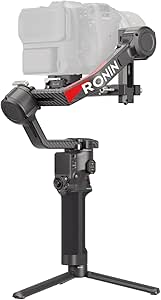 | Best Premium Cinema-Rig Pick | Payload capacity: 4.5 kg (10 lb) | Compatible cameras: DSLR and cinema cameras | Vertical shooting: Native support | VIEW ON AMAZON | See Our Full Breakdown |
| DJI RS 3 Mini Camera Gimbal Stabilizer |  | Best Compact Travel Pick | Weight: 795 g in portrait mode; 850 g with horizontal arm | Payload capacity: 0.4–2 kg (0.8–4.4 lb) | Compatibility: Compatible mirrorless cameras and lenses | VIEW ON AMAZON | See Our Full Breakdown |
| DJI RS 4 Mini Combo Gimbal Stabilizer |  | Best Compact All-Rounder | Brand: DJI | Model: RS 4 Mini | Maximum payload: 2 kg (4.4 lbs) | VIEW ON AMAZON | See Our Full Breakdown |
| DJI RS 3 Pro Combo 3-Axis Gimbal Stabilizer for DSLR and Cinema Cameras |  | Best Professional Studio Kit | Weight: 1.5 kg (gimbal + battery + plates) | Payload Capacity: 4.5 kg (10 lbs) | Arm Material: Carbon fiber | VIEW ON AMAZON | See Our Full Breakdown |
| DJI RS 3 Pro 3-Axis Camera Gimbal Stabilizer |  | Best Modular Professional Rig | Brand: DJI | Model: RS 3 Pro | Gimbal Axes: 3 | VIEW ON AMAZON | See Our Full Breakdown |
| Hohem iSteady MT3 Pro 3-Axis Camera Gimbal Stabilizer |  | Best Value Multi-Device Stabilizer | Brand: Hohem | Model: iSteady MT3 Pro | Stabilization: 3-axis; iSteady 10.0 | VIEW ON AMAZON | See Our Full Breakdown |
| DJI RS 4 Gimbal Stabilizer for Camera |  | Best Modern All-Rounder | Payload Capacity: 3 kg (6.6 lbs) | Extended Tilt Axis: Yes | Battery Runtime: Up to 29.5 hours | VIEW ON AMAZON | See Our Full Breakdown |
| premium camera gimbal | Payload capacity | Compatibility |
|---|---|---|
| DJI RS 4 Combo Gimbal Stabiliz | 3 kg (6.6 lb) | Mirrorless cameras and lenses |
| FeiyuTech SCORP 2 3-Axis Camer | — | — |
| DJI RS 2 | 10 lb | DSLR and mirrorless cameras |
| DJI RS 4 Pro Gimbal Stabilizer | 4.5 kg (10 lb) | — |
| DJI RS 3 Mini Camera Gimbal St | 0.4–2 kg (0.8–4.4 lb) | Compatible mirrorless cameras and lenses |
| DJI RS 4 Mini Combo Gimbal Sta | — | — |
| DJI RS 3 Pro Combo 3-Axis Gimb | 4.5 kg (10 lbs) | DSLR and cinema cameras |
| DJI RS 3 Pro 3-Axis Camera Gim | — | — |
| Hohem iSteady MT3 Pro 3-Axis C | Up to 2.5 kg (5.51 lbs) | — |
| DJI RS 4 Gimbal Stabilizer for | 3 kg (6.6 lbs) | Canon, Sony, Nikon, Fujifilm |
More Details on Our Top Picks
DJI RS 4 Combo Gimbal Stabilizer for Camera
The DJI RS 4 Combo is my strongest all-around pick for mirrorless shooters who need a premium gimbal that can handle both standard video and frequent vertical content. Its 3 kg payload and extended tilt axis give more balancing room than the lighter RS 3 Mini, while native vertical shooting makes portrait-format work practical. The combo’s battery grip and included accessories suit solo creators who want a more complete setup, although the stated 29.5-hour runtime depends on the BG70 grip, which may be sold separately. Switching orientations still calls for rebalancing, so fast format changes are not entirely frictionless. I’d choose the RS 4 over the SCORP 2 when payload headroom and the DJI system matter more than built-in AI tracking.
Pros:- 3 kg payload suits a broad range of mirrorless camera and lens combinations.
- Native vertical shooting supports portrait-format production.
- Extended tilt axis gives more room to balance larger camera setups.
- Combo accessories and optional high-capacity grip support extended solo shoots.
Cons:- Changing between horizontal and vertical setups requires rebalancing.
- The maximum 29.5-hour runtime depends on the BG70 grip, which may be sold separately.
- Android users must download the DJI Ronin app from DJI’s website rather than Google Play.
Best for: Mirrorless creators who regularly shoot both horizontal video and vertical social content, and want more payload room than a compact gimbal offers.
Not ideal for: Shooters who need rapid orientation changes without rebalancing, or buyers who expect the BG70 grip to be included for the quoted maximum runtime.
- Payload capacity:3 kg (6.6 lb)
- Compatibility:Mirrorless cameras and lenses
- Vertical shooting:Supported
- Extended tilt axis:Yes
- Battery runtime:Up to 29.5 hours with BG70 battery grip
- Control port:RSA communication port
Our verdict“Choose the RS 4 Combo for a capable mirrorless workhorse with useful portrait shooting and more balancing room than the RS 3 Mini.”
FeiyuTech SCORP 2 3-Axis Camera Gimbal Stabilizer
The FeiyuTech SCORP 2 stands apart from the DJI RS 4 because its AI tracking module is built in, so solo operators can track a subject without adding a separate tracking accessory. Gesture controls, a 1.3-inch touchscreen, and both wired and Bluetooth camera connections make it a flexible choice for creators who want controls close at hand. Its 2.5 kg payload is lower than the RS 4’s 3 kg, which leaves less room for heavier camera-and-lens combinations. Quick-install vertical shooting is useful for social video, but the provided information does not state battery life or gimbal weight, making it harder to plan long handheld shoots. I’d favor the SCORP 2 for tracking convenience, not for maximum payload or documented endurance.
Pros:- Built-in AI tracking and gesture controls support solo filming.
- 2.5 kg payload accommodates many DSLR and mirrorless setups.
- Quick-install vertical shooting suits portrait-format content.
- Wired and Bluetooth camera-control options offer connection flexibility.
Cons:- Payload capacity is lower than the DJI RS 4’s 3 kg limit.
- Camera-control functions depend on compatibility with the specific camera.
- Battery runtime and gimbal weight are not specified in the supplied product data.
Best for: Solo videographers using compatible DSLR or mirrorless cameras who want subject tracking and gesture control without adding a tracking module.
Not ideal for: Filmmakers with heavier camera builds or buyers who need published battery-runtime and gimbal-weight details before planning long shoots.
- Type:3-axis camera gimbal stabilizer
- Compatible cameras:DSLR and mirrorless cameras, including Sony, Canon, Panasonic, and Nikon
- Payload:2.5 kg
- Tracking:Built-in AI tracking module with gesture controls
- Screen:1.3-inch touchscreen
- Camera connection:Control cable or Bluetooth
- Vertical shooting:Quick-install support
- App:Feiyu SCORP app
Our verdict“Pick the SCORP 2 if built-in tracking matters more to your solo workflow than the RS 4’s higher payload capacity.”
DJI RS 2 – 3-Axis Gimbal Stabilizer for DSLR and Mirrorless Cameras, 10lbs Payload, Touchscreen, Carbon Fiber, Black
The DJI RS 2 is the payload-focused choice here: its 10 lb capacity matches the RS 4 Pro on paper and exceeds the RS 4’s 3 kg limit, making it a fit for heavier DSLR or mirrorless rigs. The carbon-fiber construction keeps the frame durable without giving up the fast handling that videographers need, and the 1.4-inch touchscreen puts adjustments on the gimbal. Compared with the newer RS 4 Pro, though, the RS 2’s supplied details do not list native vertical shooting or LiDAR support, so it is less compelling for creators who depend on those newer workflow options. Its feature set can also take time to learn, and platform compatibility may call for updates from DJI’s website. I’d shortlist it for payload first, not for the simplest setup.
Pros:- 10 lb payload supports heavier DSLR and mirrorless configurations.
- Carbon-fiber construction combines durability with a lightweight frame.
- 1.4-inch full-color touchscreen provides on-device adjustments.
- Auto axis locks and quick vertical switching support faster setup.
Cons:- Complex features can take time for beginners to learn.
- Platform compatibility issues may require updates from DJI’s website.
- The supplied product data does not list LiDAR support or native vertical shooting.
Best for: Videographers balancing heavier DSLR or mirrorless camera rigs who value high payload capacity and carbon-fiber construction.
Not ideal for: New gimbal users seeking a simple learning curve, or creators who want the RS 4 Pro’s specified LiDAR focusing and native vertical-shooting features.
- Payload capacity:10 lb
- Compatibility:DSLR and mirrorless cameras
- Construction:Carbon fiber
- Screen:1.4-inch full-color touchscreen
- Gimbal type:3-axis
- Color:Black
Our verdict“Choose the RS 2 for a heavy camera build when payload capacity matters more than the newer workflow features listed for the RS 4 Pro.”
DJI RS 4 Pro Gimbal Stabilizer for DSLR and Cinema Cameras
The DJI RS 4 Pro earns the premium cinema-rig role with a 4.5 kg (10 lb) payload and LiDAR focusing support rated for up to 20 m. That extra capacity over the standard RS 4 makes it the better fit for heavier camera packages, while the joystick can control gimbal movement or compatible lens focus and zoom. The included BG30 grip is a practical starting point; the headline up to 29-hour runtime, however, depends on a separately sold BG70 grip. Compared with the RS 2, the RS 4 Pro adds specified native vertical shooting and LiDAR support, but it still requires rebalancing when switching orientations. I’d reserve it for production setups that can use the payload and focus tools rather than choosing it for a lightweight mirrorless kit.
Pros:- 4.5 kg (10 lb) payload supports heavier DSLR and cinema-camera rigs.
- Native vertical shooting supports portrait-format production.
- Joystick can control gimbal movement or compatible lens focus and zoom.
- LiDAR focusing supports 76,800 ranging points at distances up to 20 m.
Cons:- The up-to-29-hour runtime depends on a separately sold BG70 grip.
- Changing between horizontal and vertical shooting requires rebalancing.
- The DJI Ronin app must be downloaded from DJI’s website rather than Google Play.
Best for: Professional videographers and cinema-camera operators using heavier rigs who can make use of LiDAR focusing and joystick lens control.
Not ideal for: Travel creators with lightweight mirrorless cameras, or shooters who need the longest stated runtime without buying an additional BG70 grip.
- Payload capacity:4.5 kg (10 lb)
- Compatible cameras:DSLR and cinema cameras
- Vertical shooting:Native support
- LiDAR ranging points:76,800
- LiDAR range:Up to 20 m
- Battery runtime:Up to 29 hours with separately sold BG70 battery grip
- Included battery grip:BG30
Our verdict“Choose the RS 4 Pro for a heavier cinema setup that can use its LiDAR and lens-control options, not for a lightweight everyday kit.”
DJI RS 3 Mini Camera Gimbal Stabilizer
For travel and lighter camera kits, the DJI RS 3 Mini puts portability ahead of payload: it weighs 795 g in portrait mode and supports compatible mirrorless setups up to 2 kg. That is a meaningful contrast with the DJI RS 4, whose 3 kg capacity leaves more room for larger lenses and accessories. The Mini still offers native vertical shooting, a touchscreen, and Bluetooth shutter control, so reducing carry weight does not mean giving up core solo-shooting conveniences. Its ceiling is the key tradeoff: heavier builds are out, and the supplied information does not give a battery-runtime figure. I’d choose it for compact travel kits and frequent handheld moves, while creators planning to expand their camera setup should look to the RS 4 instead.
Pros:- Low listed weight supports a more portable travel kit.
- Native vertical shooting suits portrait-format work.
- Bluetooth shutter control supports wireless camera operation.
- Includes a quick-release plate, tripod, control cable, and USB-C charging cable.
Cons:- 2 kg payload limit excludes heavier camera-and-lens combinations.
- Lacks the payload headroom of the DJI RS 4.
- The supplied product data does not specify battery runtime.
- Android users must download the DJI Ronin app from DJI’s website rather than Google Play.
Best for: Travel filmmakers and solo creators using compact mirrorless cameras who prioritize a lighter gimbal and native portrait shooting.
Not ideal for: Videographers using heavier camera-and-lens combinations above 2 kg or needing a specified battery runtime for long shoots.
- Weight:795 g in portrait mode; 850 g with horizontal arm
- Payload capacity:0.4–2 kg (0.8–4.4 lb)
- Compatibility:Compatible mirrorless cameras and lenses
- Stabilization:Third-generation RS algorithm
- Screen:1.4-inch full-color touchscreen
- Vertical shooting:Native support
- Camera control:Bluetooth shutter control
- Included accessories:Quick-release plate, tripod, multi-camera control cable, and USB-C charging cable
Our verdict“Pick the RS 3 Mini for a compact mirrorless travel setup, but choose the RS 4 if your camera build needs more payload headroom.”
DJI RS 4 Mini Combo Gimbal Stabilizer
This gimbal stands out for its compact form factor and the generous accessory bundle included in the Combo kit. Unlike the bulkier DJI RS 3 Pro, the RS 4 Mini prioritizes portability without sacrificing essential stabilizing features like automated axis locks. The inclusion of the Intelligent Tracking Module is a significant advantage for solo creators who need to keep subjects in frame without a dedicated camera operator. However, the 2 kg payload limit restricts it to lighter mirrorless setups, meaning users with heavier cinema rigs will need to look at the RS 4 Pro. The app dependency is a notable friction point, as the DJI Ronin app is not available on all Android devices, potentially limiting initial setup ease.
Pros:- Includes Intelligent Tracking Module for autonomous subject framing
- Automated axis locks reduce setup time significantly
- Combo kit provides tripod and briefcase handle for versatile angles
Cons:- DJI Ronin app availability is inconsistent on some Android devices
- Limited payload capacity restricts heavier professional camera rigs
Best for: Solo vloggers and travel creators who need a lightweight kit with built-in tracking and vertical shooting capabilities.
Not ideal for: Cinema shooters using heavy DSLR bodies or large zoom lenses that exceed the 2 kg weight limit.
- Brand:DJI
- Model:RS 4 Mini
- Maximum payload:2 kg (4.4 lbs)
- Compatible devices:Mirrorless cameras, vlog cameras, smartphones
- Key Features:Automated axis locks, intelligent tracking, native vertical shooting
- Combo Includes:Gimbal, tripod, tracking module, briefcase handle, cables
Our verdict“The best choice for creators who want a ready-to-shoot kit with AI tracking without carrying heavy gear.”
DJI RS 3 Pro Combo 3-Axis Gimbal Stabilizer for DSLR and Cinema Cameras
Designed for high-end production, this Combo kit offers a comprehensive package for professionals who need reliability over portability. With a 4.5 kg payload, it handles cinema cameras like the Sony FX6 with ease, a task that would overwhelm the lighter DJI RS 4 Mini. The extended carbon fiber arms provide superior balance for complex lens configurations. While the 6 km video transmission range is exceptional for director monitoring, the setup is heavy and requires a learning curve. The Combo format adds value by including essential grips and cases, but beginners may find the complexity and weight manageable only with prior gimbal experience.
Pros:- Massive 4.5 kg payload supports heavy cinema setups
- Includes extensive accessories like briefcase handle and cases
- Long-range 6 km video transmission for director monitoring
Cons:- Heavy and complex for solo handheld operation
- Steep learning curve for new gimbal users
Best for: Professional videographers and production teams using heavy cinema cameras who need robust support and long-range monitoring.
Not ideal for: Beginners or casual users who will struggle with the weight, complexity, and cost of this professional-grade system.
- Weight:1.5 kg (gimbal + battery + plates)
- Payload Capacity:4.5 kg (10 lbs)
- Arm Material:Carbon fiber
- Transmission Range:6 km / 20,000 ft
- Compatibility:DSLR and cinema cameras
- Key Features:Automated axis locks, long-range transmission
Our verdict“The definitive choice for professional productions requiring heavy payload support and advanced monitoring features.”
DJI RS 3 Pro 3-Axis Camera Gimbal Stabilizer
This standalone version of the DJI RS 3 Pro offers the same 4.5 kg payload capacity as its Combo counterpart but allows users to customize their accessory stack. It is ideal for professionals who already own specific grips or monitors and want to avoid paying for bundled items they might not use. The automatic axis locks streamline transitions between shots, a feature that remains critical for fast-paced environments. Compared to the DJI RS 4, the RS 3 Pro offers higher payload support, making it better suited for heavier lenses. However, the lack of included accessories means the total cost can escalate quickly if you need to buy grips and cases separately.
Pros:- High 4.5 kg payload for professional camera bodies
- Modular design allows for customized accessory integration
- Low-latency video transmission for remote monitoring
Cons:- Essential accessories are sold separately, increasing total cost
- Heavier than consumer-focused gimbals like the RS 4 Mini
Best for: Experienced gimbal operators who want the raw power of the RS 3 Pro but prefer to select their own accessories.
Not ideal for: First-time buyers who need a complete out-of-the-box solution with grips and cases included.
- Brand:DJI
- Model:RS 3 Pro
- Gimbal Axes:3
- Max Tested Payload:4.5 kg (10 lbs)
- Gimbal Weight:1.5 kg
- Transmission Range:Up to 6 km
- Included Components:Gimbal, battery handle, quick-release plates, cables
Our verdict“A powerful, modular option for professionals who want to build a custom rig without bundled extras.”
Hohem iSteady MT3 Pro 3-Axis Camera Gimbal Stabilizer
The Hohem iSteady MT3 Pro challenges the DJI dominance by offering independent AI tracking that does not rely on a smartphone app connection. This feature alone makes it a compelling alternative to the DJI RS 4 Mini, which requires app integration for similar functionality. The integrated RGB/CCT fill light is a unique addition for creators shooting in low-light conditions, eliminating the need for external lighting accessories. While it supports a decent 2.5 kg payload, it is not designed for the heavy cinema rigs handled by the DJI RS 3 Pro. The 20-hour battery life is competitive, but build quality and software refinement may feel less polished than DJI’s ecosystem.
Pros:- Independent AI tracking works without app or Bluetooth restrictions
- Built-in adjustable RGB/CCT fill light for low-light shooting
- Long 20-hour battery life supports extended filming sessions
Cons:- Bluetooth shutter control depends on specific camera compatibility
- Software ecosystem is less refined than DJI’s Ronin app
Best for: Budget-conscious creators who need reliable AI tracking and built-in lighting without app dependencies.
Not ideal for: Users requiring the highest level of software integration or those with heavy professional camera setups.
- Brand:Hohem
- Model:iSteady MT3 Pro
- Stabilization:3-axis; iSteady 10.0
- Payload Capacity:Up to 2.5 kg (5.51 lbs)
- Battery Life:Up to 20 hours
- Tilt Range:320°
- Controls:Detachable touchscreen controller
Our verdict“A versatile, app-free option for creators who value built-in lighting and autonomous tracking.”
DJI RS 4 Gimbal Stabilizer for Camera
The DJI RS 4 refines the formula established by the RS 3, introducing a new horizontal plate that simplifies switching between vertical and horizontal shooting. This addresses a common pain point where users had to rebalance the gimbal entirely when changing orientations. With a 29.5-hour battery life, it outlasts the Hohem iSteady MT3 Pro, making it better suited for full-day shoots. The 3 kg payload is a sweet spot for modern mirrorless cameras, though it falls short of the RS 3 Pro’s 4.5 kg capacity. The removal of the motor in the standalone version means buyers must ensure they have compatible accessories, adding to the total cost of ownership.
Pros:- Quick switch between vertical and horizontal shooting modes
- Extended 29.5-hour battery life for long-duration shoots
- Teflon-coated axes provide smooth balancing and reduced friction
Cons:- Motor is sold separately in the standalone version
- Requires rebalancing when switching between certain shooting modes
Best for: Mirrorless camera users who shoot both vertical and horizontal content and need long battery life.
Not ideal for: Users who already own a DJI motor or want a complete kit out of the box without buying separate batteries.
- Payload Capacity:3 kg (6.6 lbs)
- Extended Tilt Axis:Yes
- Battery Runtime:Up to 29.5 hours
- Control Ports:RSA port
- Compatibility:Canon, Sony, Nikon, Fujifilm
- Key Feature:Horizontal plate for vertical shooting
Our verdict“The most balanced option for mirrorless shooters who need flexibility between social media and standard formats.”
How We Picked
I evaluated these gimbals based on three core pillars: payload headroom, ergonomic efficiency, and ecosystem integration. Payload headroom refers not just to the maximum weight rating, but how stable the gimbal remains when pushed to 80% of its capacity. I looked for models that maintain horizon leveling under stress rather than just listing a theoretical max weight.
Ergonomic efficiency was assessed by examining control layouts, screen visibility in daylight, and the ease of switching between handheld and tripod modes. I also prioritized models that offer native joystick controls or seamless integration with follow-focus systems, as these features directly impact shooting speed. Finally, I considered the availability of accessories; a gimbal is only as good as its mounting options, so models with robust ecosystems like DJI’s got a boost, provided they didn’t lock users into overly expensive proprietary add-ons.
| premium camera gimbal | Compatibility |
|---|---|
| DJI RS 4 Combo Gimbal Stabiliz | Mirrorless cameras and lenses |
| FeiyuTech SCORP 2 3-Axis Camer | — |
| DJI RS 2 | DSLR and mirrorless cameras |
| DJI RS 4 Pro Gimbal Stabilizer | — |
| DJI RS 3 Mini Camera Gimbal St | Compatible mirrorless cameras and lenses |
| DJI RS 4 Mini Combo Gimbal Sta | — |
| DJI RS 3 Pro Combo 3-Axis Gimb | DSLR and cinema cameras |
| DJI RS 3 Pro 3-Axis Camera Gim | — |
| Hohem iSteady MT3 Pro 3-Axis C | — |
| DJI RS 4 Gimbal Stabilizer for | Canon, Sony, Nikon, Fujifilm |
Factors to Consider When Choosing Premium Camera Gimbal
Selecting a premium gimbal is less about finding the ‘best’ one and more about matching the tool to your specific rig and shooting style. Here are the key factors to weigh before buying.Payload Capacity vs. Real-World Rig Weight
Many buyers make the mistake of buying a gimbal rated exactly for their camera’s weight, which leaves zero room for growth or accessories like matte boxes and external monitors. Payload headroom is critical because motors work harder and drain batteries faster when operating near their limit. If your current setup weighs 2 lbs, aim for a gimbal rated for at least 4-5 lbs to ensure smooth operation and longevity. This buffer also allows you to upgrade to heavier cinema lenses later without replacing your stabilizer.Control Interface: Touchscreen vs. Joystick
The interface choice dictates your shooting speed. Touchscreen-first models like the DJI RS 4 rely on swiping and tapping, which is intuitive for menu navigation but slower for adjusting tilt or pan angles during a take. Conversely, gimbals with native joysticks, such as the FeiyuTech SCORP 2, allow for tactile, blind adjustments that are far superior for dynamic shots. If you frequently change shot compositions on the fly, a joystick is a more efficient tool than a touchscreen.Ecosystem and Accessory Availability
A premium gimbal is rarely used in isolation; you will likely need follow focus motors, monitor mounts, and lens supports. Proprietary ecosystems like DJI’s RS series offer seamless plug-and-play compatibility, reducing setup time and potential connectivity issues. However, this convenience often comes with higher accessory costs and less flexibility to use third-party gear. Open-standard gimbals might require more manual balancing and calibration but offer greater freedom to mix and match budget-friendly accessories.Battery Life and Charging Speed
While battery life is often marketed in hours, real-world performance depends on motor load and ambient temperature. Look for gimbals that support PD (Power Delivery) charging or have USB-C ports that allow for power bank charging in the field. This feature is a lifesaver during long documentary shoots or events where swapping batteries is impractical. Also, consider if the battery is built-in or removable; removable batteries offer continuity, but built-in designs often allow for more compact form factors.Solo Operator Features and AI Integration
If you shoot without a focus puller or camera assistant, features like AI subject tracking and native follow focus become highly valuable. The Hohem iSteady MT3 Pro, for instance, integrates tracking directly into the gimbal, reducing the need for external hardware. Traditional stabilizers rely on manual focus or external LiDAR systems, which add weight and complexity. For solo creators, integrated smart features can justify a higher price tag by eliminating the need for a crew.Frequently Asked Questions
Do I really need a LiDAR module for a premium gimbal?
A LiDAR module, like the DJI LiDAR Range Finder, is not strictly necessary for all shooters, but it significantly speeds up manual focus acquisition in low-light or high-contrast situations. If you frequently shoot in variable lighting or use fast prime lenses with shallow depth of field, the module provides a reliable focus map that works with the gimbal’s follow focus motor. For daylight videography or deep-focus landscapes, you can skip this expensive add-on and rely on standard autofocus or manual focus. It is a pro-level tool that solves a specific problem rather than a universal requirement.Is a touchscreen gimbal better than one with a joystick?
This depends entirely on your shooting style. Touchscreens offer a modern, clean interface for menu navigation and quick setting changes, which is great for beginners or vloggers who adjust settings between shots. However, joysticks provide tactile feedback and allow for precise, continuous adjustments to pan and tilt during a recording, which is preferred by cinematographers who need to adjust framing mid-take. If you prioritize dynamic movement and precise control, a joystick-equipped model is superior; if you value simplicity and compactness, a touchscreen model suffices.Can I use a mirrorless camera gimbal for a DSLR?
Yes, provided the gimbal’s payload capacity exceeds the total weight of your DSLR body and lens. Modern mirrorless cameras and DSLRs often have similar weight profiles, so a gimbal rated for 4-5 lbs will typically handle both. The key difference lies in mounting plates; ensure you have the correct Arca-Swiss or proprietary quick-release plate for your specific camera model. Always test balance at the center of gravity before shooting to prevent motor strain, regardless of the camera type.Why are ‘Mini’ gimbals so expensive compared to full-size older models?
‘Mini’ gimbals command premium pricing due to their advanced engineering, which packs powerful motors and sophisticated stabilization algorithms into a compact, lightweight chassis. They use newer, more efficient processors and often include features like Bluetooth shutter control and native joystick integration that older, bulkier models lacked. The cost reflects the research and development required to reduce size without sacrificing stability. If you travel frequently or shoot handheld for extended periods, the weight savings and ergonomic improvements justify the higher price over an older, heavier full-size model.Is AI tracking on gimbals accurate enough for professional work?
Current AI tracking technology, such as that found on the Hohem iSteady MT3 Pro, is surprisingly accurate for static or slow-moving subjects, making it ideal for interviews, product shots, or solo vlogging. It struggles with fast, erratic movements or when the subject leaves the frame, requiring you to take manual control. For professional narrative work, it is a useful assistant but not a replacement for a skilled camera operator. It is best viewed as a tool for solo creators to maintain framing, rather than a system for complex, dynamic cinematic moves.Conclusion
If you need the best overall premium gimbal for heavy cinema rigs and advanced workflows, the DJI RS 4 Pro is the clear winner due to its payload capacity and LiDAR compatibility. For those seeking the best value without sacrificing core stabilization quality, the DJI RS 4 Combo provides a robust feature set at a more accessible entry point. Beginners and travel shooters should look at the DJI RS 4 Mini Combo for its compact size and ease of use. If you prefer tactile control and a different ecosystem, the FeiyuTech SCORP 2 remains a strong alternative with its native joystick. For solo creators who prioritize automated framing, the Hohem iSteady MT3 Pro offers unique AI tracking features that traditional stabilizers lack.
Halloween Picks
halloween
As an affiliate, we earn on qualifying purchases.