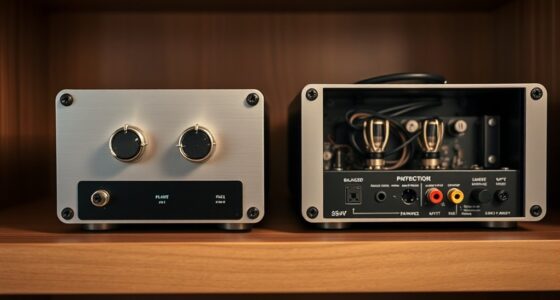
If you want better sound quality from your digital music, a DAC can make a big difference. It converts digital signals into natural, detailed analog sound, revealing more depth and clarity. If your current setup sounds dull, distorted, or flat, upgrading your DAC might help. Whether you need a simple built-in one or an external high-end model depends on your setup. Keep exploring to discover how choosing the right DAC can elevate your listening experience.
Key Takeaways
- If your digital music sounds dull, distorted, or lacks detail, upgrading your DAC can improve sound quality.
- Using high-resolution formats like FLAC or WAV benefits from a quality DAC for clearer, more accurate audio.
- Built-in DACs in devices are convenient but may not deliver audiophile-grade sound; external DACs often provide better fidelity.
- Audiophiles seeking richer sound and better headphone amplification may need an external DAC for optimal performance.
- Compatibility with modern tech and streaming services makes a dedicated DAC a valuable upgrade for serious audio enthusiasts.
Understanding the Role of a DAC in Audio Systems
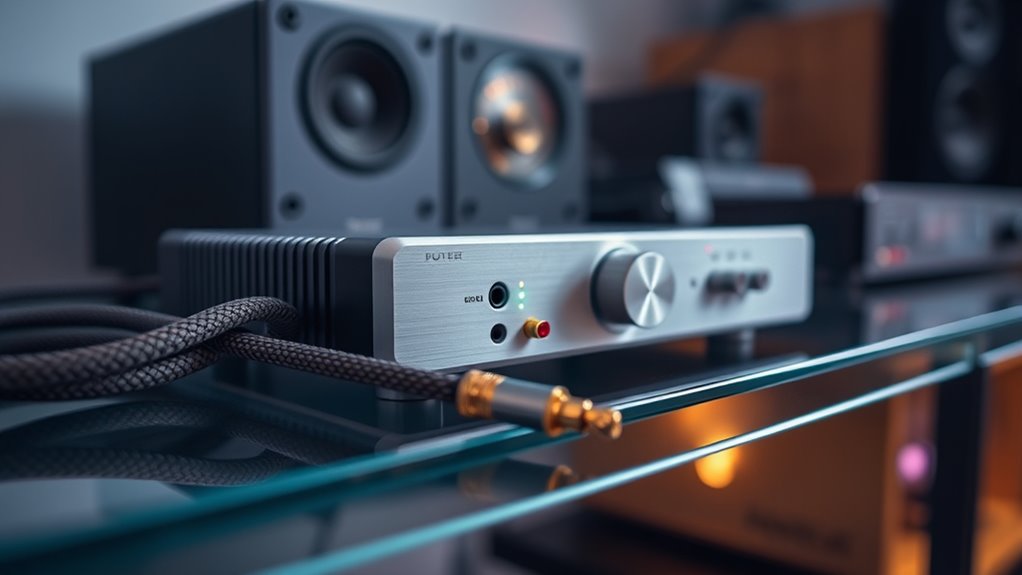
A Digital-to-Analog Converter (DAC) plays a crucial role in your audio system by transforming digital audio signals into analog signals that your speakers can produce. The quality of this conversion hinges on factors like bit depth and sample rate. Bit depth determines how many levels of amplitude are captured, affecting your sound’s dynamic range and detail. A higher bit depth allows for more precise audio reproduction, especially in quiet or complex passages. The sample rate indicates how many times per second the digital signal is sampled, influencing the audio’s frequency range and clarity. Together, these parameters ensure your DAC accurately translates digital data into a smooth, natural sound. Audio fidelity can be significantly impacted by the quality of your DAC, emphasizing the importance of understanding these technical aspects. Grasping digital signal processing concepts helps you appreciate how your DAC impacts overall Audio fidelity, especially when considering signal conversion quality.
How a DAC Transforms Digital Music Into Analog Sound
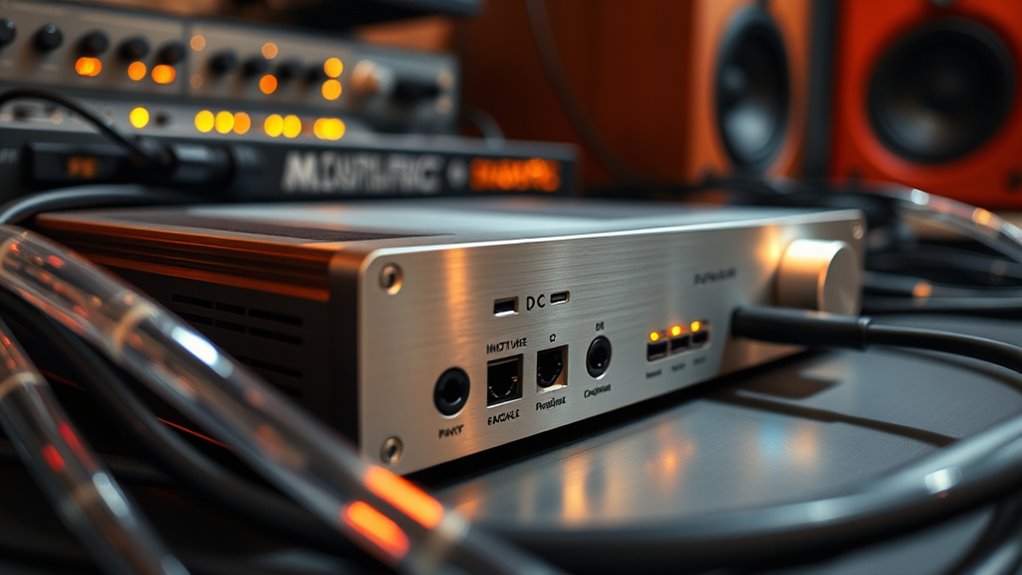
Have you ever wondered how digital music, which exists as a series of ones and zeros, becomes the rich, warm sound you hear through your speakers? It all starts with the DAC, which converts these digital signals into an analog waveform. The process relies heavily on two key factors: bit depth and sample rate. Bit depth determines how accurately the DAC can reproduce the nuances of each sound, affecting dynamic range and detail. Sample rate defines how often the digital data is sampled per second, impacting the audio’s clarity and fidelity. The DAC interprets the digital data based on these parameters, smoothing out the digital signals into continuous analog signals. This transformation allows your audio system to produce the lifelike, immersive sound that makes digital music so enjoyable. Additionally, high-quality DACs often incorporate European cloud innovation to optimize processing efficiency and reduce distortion, ensuring a cleaner sound output. Embracing advanced digital-to-analog conversion technology further enhances the overall listening experience by minimizing noise and improving signal accuracy. Understanding the importance of proper sizing and load‑planning can also help in selecting the right DAC for your setup, ensuring optimal performance and longevity.
Signs You Might Benefit From a DAC Upgrade

If your digital music sounds dull, distorted, or lacks detail, it might be time to contemplate a DAC upgrade. When listening to various digital formats, you may notice inconsistencies in sound quality, especially with compressed audio formats like MP3 or streaming services. A higher-quality DAC can improve clarity and bring out more nuance in your music. If you find yourself constantly adjusting volume or if the sound feels flat and lifeless, that’s a sign your current DAC isn’t delivering the best possible signal. Upgrading can reveal more accurate sound reproduction, especially with high-resolution audio formats like FLAC or WAV. If your setup struggles to handle different audio formats without artifacts or noise, a new DAC could be the solution to elevate your listening experience. Additionally, connected audio technologies are making it easier to integrate your DAC with other modern equipment for a seamless listening environment. Ensuring your DAC supports audio format compatibility can further optimize your listening quality and enjoyment. Upgrading your DAC can also help reduce electrical interference, which can introduce unwanted noise into your audio, further enhancing your overall listening experience. Proper installation and setup, including load calculations and shielding, can maximize your DAC’s benefits.
Choosing the Right DAC for Your Listening Setup

Selecting the right DAC for your listening setup involves evaluating your audio source, equipment, and listening preferences to guarantee compatibility and peak performance. If you mainly stream digital content, choose a DAC optimized for digital streaming with high-resolution support. For headphone enthusiasts, consider models with built-in headphone amplification to improve sound quality and volume control. Your existing equipment, like amplifiers or speakers, also influences your choice. Here’s a quick guide:
| Purpose | Key Features | Recommended Setup |
|---|---|---|
| Digital Streaming | High-res support, network connectivity | Stream with clarity |
| Headphone Listening | Headphone amplification, portable design | Personal, detailed sound |
| Versatile Use | Multiple inputs, balanced outputs | All-around performance |
Matching features to your needs guarantees a satisfying listening experience. In addition, understanding the concept of Free Floating can help you optimize your audio environment for better sound quality. Being aware of audio environment optimization techniques, such as proper speaker placement and acoustic treatments, can further enhance your listening experience.
Comparing Built-in DACs Versus External Options
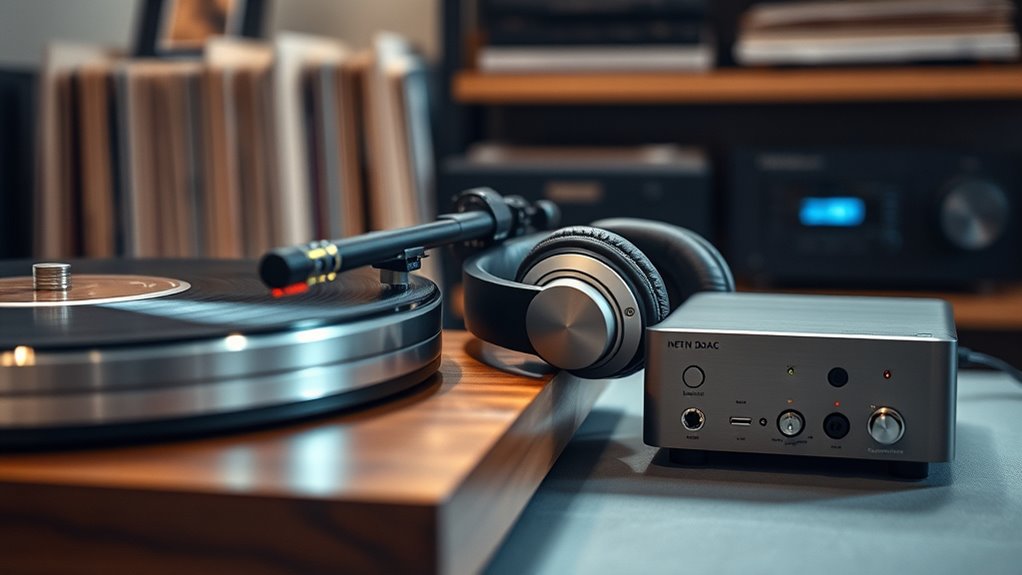
When deciding between built-in DACs and external options, understanding their differences can considerably impact your listening experience. Built-in DACs are convenient, integrated into devices like smartphones or computers, often sufficient for casual listening. External DACs, however, offer higher audio quality, better headphone amplification, and improved support for wireless streaming. Consider these points:
- Sound Quality: External DACs generally deliver cleaner, more detailed audio than built-ins.
- Connectivity: External options provide versatile connections for high-end headphones and streaming gear.
- Performance: External DACs often include dedicated headphone amps, enhancing wireless streaming quality and headphone performance.
- Trusted Guidance can help you evaluate which setup aligns best with your listening preferences and needs.
Choosing the right setup depends on your priorities: convenience versus superior sound and headphone amplification.
Frequently Asked Questions
Can a DAC Improve My Smartphone’s Audio Quality?
Yes, a DAC can improve your smartphone’s audio quality by enhancing digital audio playback. It converts the digital sound signal into an analog one more accurately, resulting in clearer, richer sound. When you connect a high-quality DAC, you’ll notice better sound enhancement, more detail, and less distortion. So, if you want superior audio from your smartphone, investing in a good DAC is a smart move for better digital audio performance.
Do I Need a DAC if I Already Have High-End Headphones?
If you already have high-end headphones, you might still benefit from a DAC, especially if your device lacks a high-quality digital-to-analog converter. A dedicated DAC improves digital to analog conversion, delivering cleaner sound. It also provides better headphone amplification, enhancing overall audio quality and clarity. So, even with premium headphones, adding a DAC can elevate your listening experience by ensuring your headphones get the best possible signal.
How Does a DAC Affect Streaming Music Services?
Imagine a clear mountain stream, where every note flows pure and true. A DAC enhances streaming music by perfecting the digital to analog conversion, revealing richer detail and depth. It profoundly improves streaming quality, making your favorite songs sound more vibrant and immersive. Without a DAC, you might hear muddiness or distortion. Investing in one transforms your streaming experience, turning ordinary tracks into an enthralling, lifelike concert right in your ears.
Is a DAC Necessary for Casual Listening?
A DAC isn’t necessary for casual listening, but it can improve your digital audio experience by enhancing sound clarity. If you use basic earbuds or speakers, the difference might be subtle. However, if you want crisper, more detailed sound from your digital audio sources, investing in a DAC can make a noticeable difference, making your music sound richer and more immersive without requiring you to upgrade your entire setup.
Can a DAC Help With Audio Latency in Gaming?
A DAC can dramatically reduce audio delay in gaming, making every sound sharper and more precise. Imagine your footsteps perfectly synced with your actions—no more frustrating lag or missed cues. By enhancing latency reduction, a good DAC minimizes audio delay, giving you an edge in fast-paced games. It transforms your gaming experience from sluggish to lightning-fast, ensuring you hear every critical sound instantly and respond with lightning reflexes.
Conclusion
Whether you’re a casual listener or an audiophile, a DAC can elevate your sound experience—like revealing a hidden symphony in your music. If your current setup feels flat or lacks detail, it’s a sign to contemplate an upgrade. Remember, your ears aren’t just passive receivers; they’re your gateway to true musical immersion. So, ask yourself: are you ready to turn the volume up on your sound quality and truly hear what you’ve been missing?