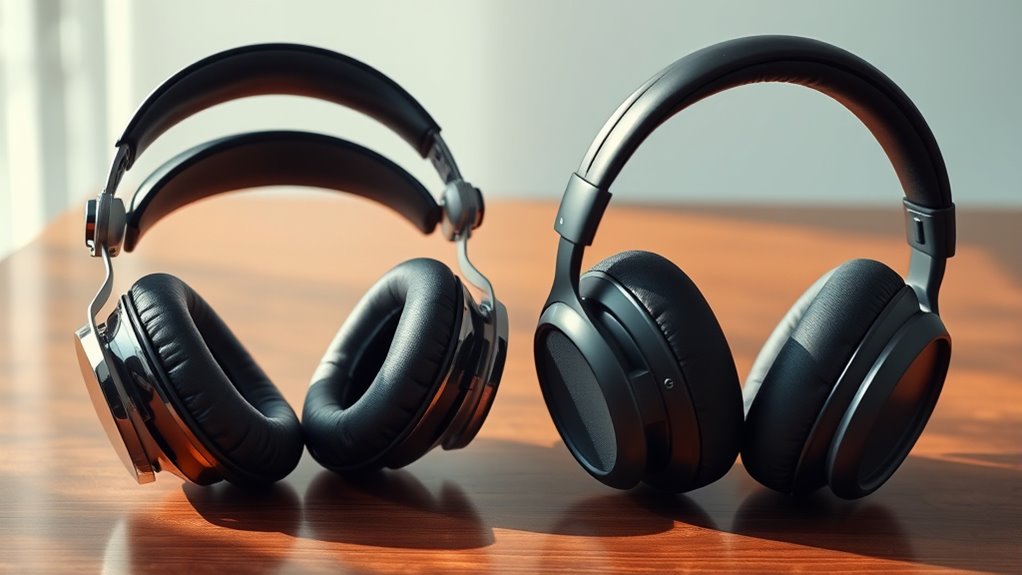

When choosing between open-back and closed-back headphones, consider your environment and preferences. Open-backs give you a spacious sound with clearer details, but they leak sound and are less suitable for noisy places. Closed-backs focus on isolating sound, blocking external noise, and are more portable, but may feel less airy and natural. Understanding these tradeoffs helps you pick the best pair for your needs—explore further to find the perfect fit.
Key Takeaways
- Open-back headphones offer a natural, spacious soundstage but leak sound and are unsuitable for noisy environments.
- Closed-back headphones provide better noise isolation and bass, making them ideal for public or loud settings.
- Open-backs tend to be lighter and more comfortable for long listening sessions, while closed-backs are often bulkier and more portable.
- Open-back designs prioritize sound quality and immersion, whereas closed-backs focus on privacy and external noise reduction.
- Choice depends on environment, use case, and preference for sound openness versus isolation.

Philips Open Back Wired Headphones – Cushioned Over Ear Headphones with Adjustable Headband for Ultimate Comfort and Superior Sound Quality, Plugs into TV, Stereo or PC, Ideal for Podcasts or Music
Elevate Your Listening Experience – Top-tier performance, comfort, and style: Our SHP9600 wired headphones are the perfect fusion…
As an affiliate, we earn on qualifying purchases.
As an affiliate, we earn on qualifying purchases.
Sound Quality and Acoustic Environment

When it comes to sound quality, open-back and closed-back headphones offer distinct experiences, and your choice depends on your priorities. Open-back headphones provide a more natural, spacious soundstage, making them ideal for enjoying detailed music and immersive listening. They often deliver superior audio clarity because they don’t trap sound inside, but this also means they leak sound and aren’t suitable for noisy environments. Closed-back models, on the other hand, isolate sound better, offering enhanced bass and a more intimate listening experience. They tend to have a sleek aesthetic appeal, especially with wireless convenience, making them stylish and portable. If you value sound openness and environment awareness, open-backs shine; for privacy and noise isolation, closed-backs are the better pick. Additionally, choosing between them can also depend on audio quality preferences and the specific use case. For example, sound leakage can be a critical factor for those using headphones in shared spaces. Understanding the technology behind each type can help you make a more informed decision tailored to your listening environment and needs. Moreover, the design and build quality of each headphone type can influence comfort during extended listening sessions. Recognizing the importance of user comfort can help ensure a satisfying long-term listening experience.

Soundcore by Anker Q20i Hybrid Active Noise Cancelling Headphones, Wireless Over-Ear Bluetooth, 40H Long ANC Playtime, Hi-Res Audio, Big Bass, Customize via an App, Transparency Mode
Block the World, Keep the Music: Four built-in mics work together to filter out background noise — whether…
As an affiliate, we earn on qualifying purchases.
As an affiliate, we earn on qualifying purchases.
Comfort and Wearability

Comfort and wearability are essential factors to contemplate, as they directly impact how long you can enjoy your headphones without discomfort. Open-back headphones often feel lighter and more breathable, reducing ear fatigue over extended listening sessions. They tend to distribute head pressure more evenly, which can lessen discomfort around the crown and sides of your head. The fit and padding quality play key roles—well-padded, adjustable headbands and ear cups can considerably improve comfort. Additionally, natural materials used in padding and headbands can enhance comfort and reduce skin irritation. Moreover, choosing headphones with ergonomic design features tailored to your head shape can significantly improve overall comfort. Properly balanced weight distribution is crucial to prevent strain during long listening periods. Ensuring that the fit accommodates different head sizes can further enhance comfort and prevent pressure points. Selecting headphones with customizable fit options allows for even better comfort tailored to individual preferences. Ultimately, choosing headphones that suit your head shape and preferences ensures you can wear them comfortably for hours without pressure points or fatigue.
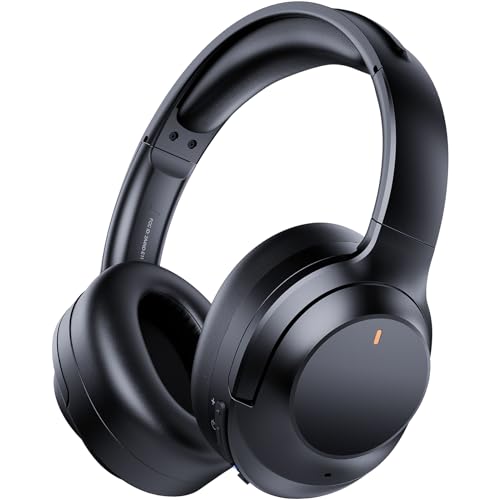
Upgraded Pro‑level Hybrid Active Noise Cancelling Headphones, HD Sound & Big Bass, 2X Softer Comfort, Long ANC Playtime, Wireless Over-Ear Bluetooth Headphones Perfect for Home Office|Travel|Pair
Hybrid Active Noise Cancellation & Immersive Sound: Engineered by Vonaural, these hybrid active noise cancelling headphones are designed…
As an affiliate, we earn on qualifying purchases.
As an affiliate, we earn on qualifying purchases.
Portability and Practicality

Open-back headphones generally prioritize sound quality over portability, making them less convenient to carry around. Their open design often means they’re larger and less compact, which can be a challenge when traveling or commuting. If portability is a priority, closed-back models with a compact design are more practical. They’re easier to fold, store, and slip into a bag, enhancing travel convenience. While open-back headphones excel in delivering a natural, spacious sound, their bulkiness and fragility can limit where you take them. For everyday use on the go, closed-back headphones give you the practicality you need without sacrificing too much audio quality. Consider your lifestyle and travel habits when choosing between the two, balancing sound performance with everyday convenience. In addition, closed-back headphones can sometimes provide better passive noise isolation, further enhancing their noise reduction capabilities for portable use. Additionally, their durability can be a significant advantage for frequent travelers or daily commuters, especially when combined with build quality considerations. Moreover, understanding the design tradeoffs helps in selecting headphones that best suit your specific needs.
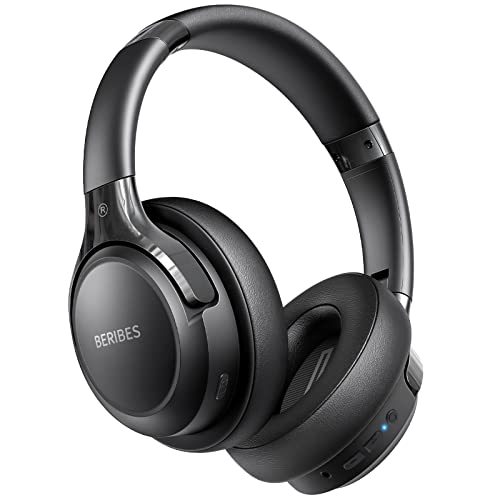
BERIBES Bluetooth Headphones Over Ear, 65H Playtime and 6 EQ Music Modes Wireless Headphones with Microphone, HiFi Stereo Foldable Lightweight Headset, Deep Bass for Home Office Cellphone PC Ect.
65 Hours Playtime: Low power consumption technology applied, BERIBES bluetooth headphones with built-in 500mAh battery can continually play…
As an affiliate, we earn on qualifying purchases.
As an affiliate, we earn on qualifying purchases.
Privacy and External Noise Isolation

While open-back headphones excel in delivering a natural, spacious sound, their design often makes it difficult to keep external noise out. Because of their vented construction, outside sounds easily seep in, compromising your privacy and focus. If you need to block out distractions, closed-back headphones are a better choice, as they provide superior external noise isolation. Wireless connectivity can help you stay mobile without cables, but it doesn’t impact noise isolation directly. The aesthetic design of open-back models often emphasizes a sleek, minimal look, which may prioritize style over soundproofing. If privacy is a concern—such as in shared spaces or noisy environments—closed-back headphones offer a more effective barrier, ensuring your listening remains private and undisturbed. Additionally, understanding the soundproofing qualities of different headphone types can help you make an informed choice based on your specific needs. Recognizing the sound leakage characteristics of each design can prevent unintended audio disturbances for those around you. Moreover, privacy considerations are essential when selecting headphones for use in public or shared settings. Knowing the noise isolation performance of headphones can significantly improve your listening experience in various environments.
Ideal Usage Scenarios and Recommendations

Choosing the right headphones depends heavily on your specific needs and environment. If you value wireless connectivity for convenience, closed-back headphones often excel, providing a secure fit and better noise isolation, making them ideal for commuting or noisy settings. Open-back headphones are better suited for home use, studio work, or quiet environments since they offer superior soundstage and natural audio. Consider aesthetic appeal if style matters; open-back designs often look more sleek and modern, but closed-backs can be more discreet. For active lifestyles or outdoor activities, wireless models with a durable build are recommended. Additionally, the sound quality of open-back headphones tends to be more natural and spacious, enhancing the listening experience in appropriate settings. The material quality of headphones also plays a crucial role in durability and comfort, especially for extended use. Ultimately, your choice should align with where and how you’ll use them most, balancing sound quality, comfort, and style to enhance your listening experience.
Frequently Asked Questions
How Do Open-Back and Closed-Back Headphones Affect Long-Term Listening Health?
Open-back headphones tend to reduce ear fatigue because they allow airflow, keeping your ears cooler and more comfortable during long sessions. However, because they don’t block out external noise, you might turn up the volume, risking hearing damage. Closed-back headphones offer better hearing protection by isolating sound, but they can cause ear fatigue over time due to heat buildup and pressure. Choose wisely to protect your hearing during extended use.
Can Open-Back Headphones Be Used Effectively in Noisy Public Spaces?
Yes, you can use open-back headphones in noisy public spaces, but they aren’t ideal. They let in ambient noise, which can make it hard to hear your surroundings clearly. This reduces your situational awareness, potentially putting you at risk. If you want better noise cancellation, closed-back headphones are a smarter choice. However, if you prefer natural sound and don’t mind the ambient noise, open-back headphones work fine outdoors or in quiet environments.
Are There Significant Differences in Durability Between Open-Back and Closed-Back Designs?
Imagine your headphones as a fortress—closed-back designs act as sturdy walls, offering greater durability through robust build quality and resilient materials. Open-back models, like delicate windows, often use lighter, more fragile components, making them slightly less durable. While both can last with proper care, closed-back headphones generally withstand daily wear and tear better, thanks to their stronger construction and resilience.
How Do Open-Back Headphones Influence Sound Leakage During Recordings?
Open-back headphones allow more sound leakage during recordings because they offer less sound isolation, which can affect the clarity of your recordings. The increased leakage mainly occurs across various frequencies, impacting how well you hear detail and stereo imaging. If you’re recording, you’ll want to contemplate closed-back headphones for better sound isolation, whereas open-back models are better suited for mixing and casual listening, where natural sound and wider frequency response matter most.
What Maintenance or Cleaning Considerations Are Unique to Each Headphone Type?
You need to regularly clean and maintain both headphone types to prevent dust buildup. For open-back headphones, clean the grille and ear cups more frequently due to exposure to open air, which attracts dust. Closed-back headphones require less frequent cleaning but still benefit from wiping down ear pads and regularly inspecting for dirt or debris. Use a soft cloth and gentle cleaning solutions to keep your headphones in top shape and guarantee ideal sound quality.
Conclusion
So, whether you choose open-back or closed-back headphones, remember it’s all about your personal drama. Want studio-quality sound and to impress your friends with your impeccable taste? Go open-back. Need to drown out the world and keep your secret playlist just yours? Closed-back’s your new best friend. Either way, you’re now equipped to make a choice—just don’t expect your ears to thank you equally. Happy listening, headphone hero!