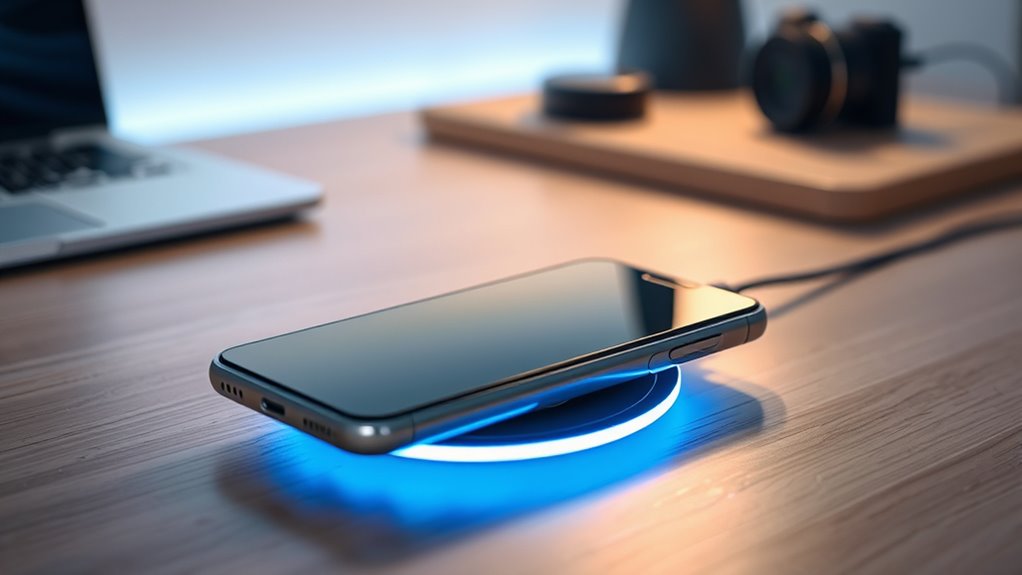

Wireless charging uses electromagnetic fields to power your devices without cables. Qi is the most common standard, offering broad compatibility, while MagSafe adds magnetic alignment for Apple devices, providing faster and more secure charging. Qi2, the newest update, enhances efficiency and device support across ecosystems. If you want to understand how these standards work together, their advantages, and what future trends hold, keep exploring how wireless charging is evolving.
Key Takeaways
- Qi is a universal wireless charging standard supporting a wide range of devices with varying power efficiencies.
- MagSafe uses magnetic alignment technology for precise, secure charging specifically for Apple devices.
- Qi2 is the next-generation standard aimed at improving efficiency, interoperability, and device compatibility across ecosystems.
- Proper alignment and safety features like foreign object detection are essential for efficient, safe wireless charging.
- Internal design and magnetic enhancements in devices improve charging speed, durability, and user convenience.
What Is Wireless Charging and How Does It Work?
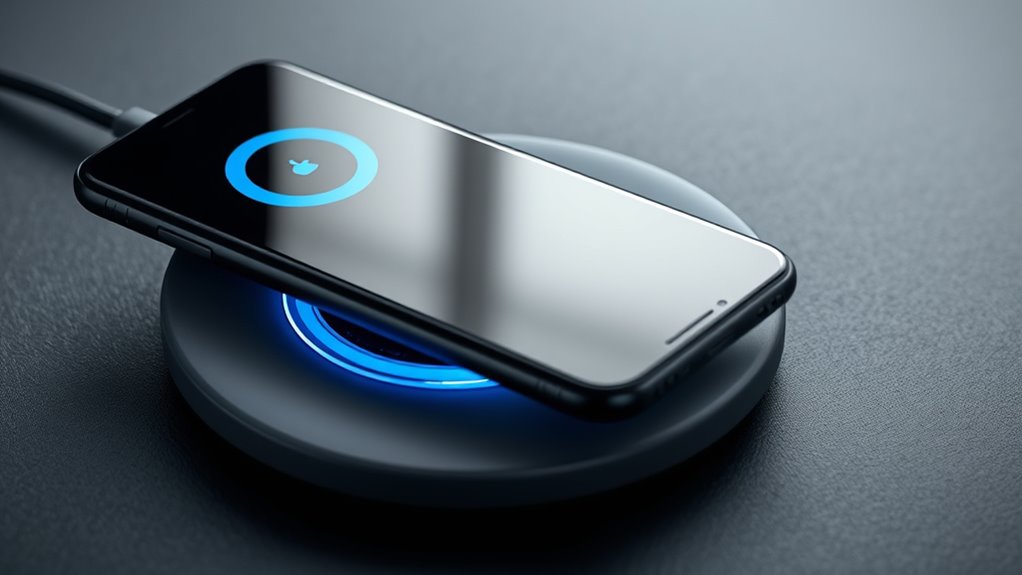
Wireless charging allows you to power your devices without plugging in a cable. It works through electromagnetic fields generated by a charging pad, which transfer energy to your device’s receiver coil. When aligned properly, this process maintains efficient charging, but it can impact battery health over time if not managed correctly. Poor alignment or constant exposure to electromagnetic interference may cause irregular charging and potentially degrade your device’s battery faster. To keep your battery healthy, avoid leaving your device on the charger unnecessarily or exposing it to strong electromagnetic sources. Additionally, smart home technology can integrate wireless charging stations to optimize energy use and device management. Proper wireless charging practices can extend your device’s lifespan and ensure safe operation. Understanding electromagnetic field exposure and its effects can help users better manage their device’s longevity and performance. Being aware of battery management strategies can further support device health and longevity over time. Regularly monitoring charge cycles can also help prevent battery degradation and prolong device usability.
The Evolution of Qi Standard

The Qi standard has evolved considerably since its inception, with a clear development timeline guiding its progress. You’ll see how key advancements have improved wireless power transfer and compatibility across devices. Understanding this evolution helps you appreciate the current capabilities and future potential of wireless charging. Additionally, the ongoing enhancements focus on increasing efficiency and speed for a seamless user experience. As technology advances, improvements such as power transfer efficiency continue to optimize the performance of wireless charging systems, making them more reliable and faster. Furthermore, the integration of new standards like Qi2 aims to further enhance interoperability and charging performance across a broader range of devices, reflecting the ongoing commitment to technological innovation. These improvements are driven by the need for universal compatibility, ensuring that a wider variety of devices can benefit from wireless charging advancements.
Standard Development Timeline
Since its inception, the Qi standard has undergone a rapid evolution driven by technological advancements and industry collaboration. Its history overview highlights key milestones, such as the initial release in 2010, establishing baseline compatibility. Regulatory milestones, like global safety standards, helped legitimize wireless charging and foster industry trust. Over the years, updates improved power transfer efficiency and device compatibility, reflecting evolving industry needs. The development timeline shows a pattern of collaborative efforts among tech giants, leading to widespread adoption. These milestones also prompted the creation of related standards, like Qi2, to enhance interoperability. Overall, this timeline illustrates a dynamic process, adapting to technological shifts and regulatory requirements, ensuring Qi remains a leading wireless charging standard.
Advancements in Wireless Power
As technology advances, the Qi standard has continually evolved to deliver faster, more efficient wireless power transfer. These improvements help extend your device’s battery longevity by enabling quicker charging cycles and reducing heat buildup. Engineers also focus on minimizing electromagnetic interference, which can disrupt nearby electronic devices and degrade charging performance. The latest updates aim to optimize power transfer efficiency while maintaining safety standards, ensuring your device charges reliably without overheating. These advancements mean you spend less time plugged in and more time using your device. As the Qi standard progresses, expect even smarter, more integrated wireless charging solutions that enhance overall device lifespan and reduce electromagnetic noise, ultimately providing a seamless and safer charging experience.
How MagSafe Enhances Wireless Charging on Apple Devices
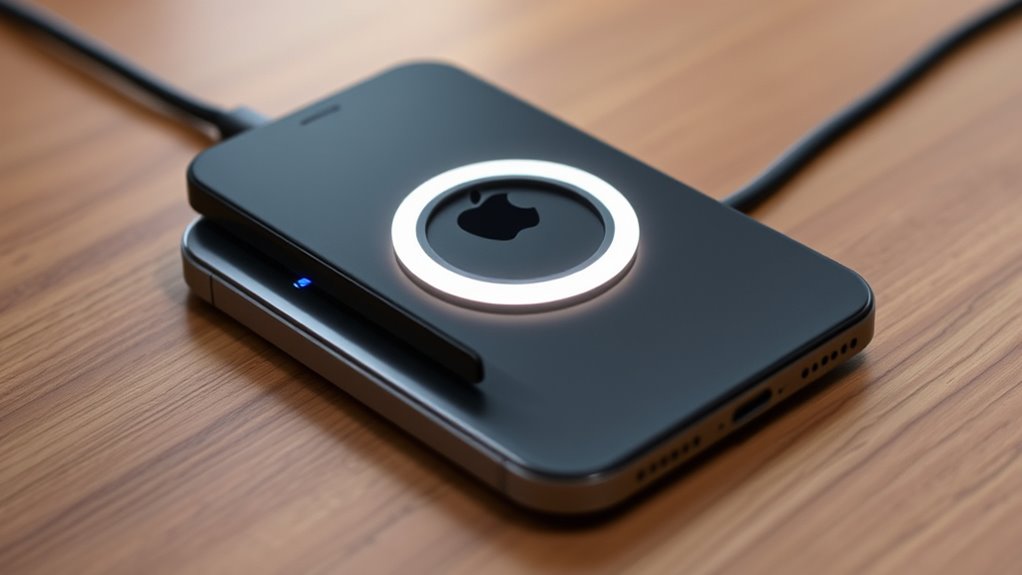
MagSafe considerably improves wireless charging for Apple devices by providing a precise and secure connection. Its magnetic alignment ensures your device stays perfectly positioned on the charging pad, maximizing wireless power transfer efficiency. Unlike traditional wireless chargers, MagSafe’s magnets snap your iPhone into the ideal charging spot every time, reducing the risk of misalignment and slower charging speeds. This magnetic feature allows for faster, more reliable wireless power delivery, so your device charges quickly and consistently. Plus, the magnetic connection prevents accidental disconnections, which can interrupt charging. As a result, MagSafe offers a seamless experience, combining convenience and stability. Additionally, the efficient power transfer benefits from the magnetic alignment, ensuring you get the most out of your charging sessions. Proper device positioning is essential for optimal charging performance and safety. Furthermore, the magnetic connection helps to prevent damage to your device and charger by maintaining a secure fit. Developing advanced magnetic materials could further enhance the strength and durability of magnetic connections in future wireless charging solutions. Understanding time zone information can also assist in scheduling your charging and device use more effectively during travel or long-term use.
Comparing Qi and MagSafe: Strengths and Limitations
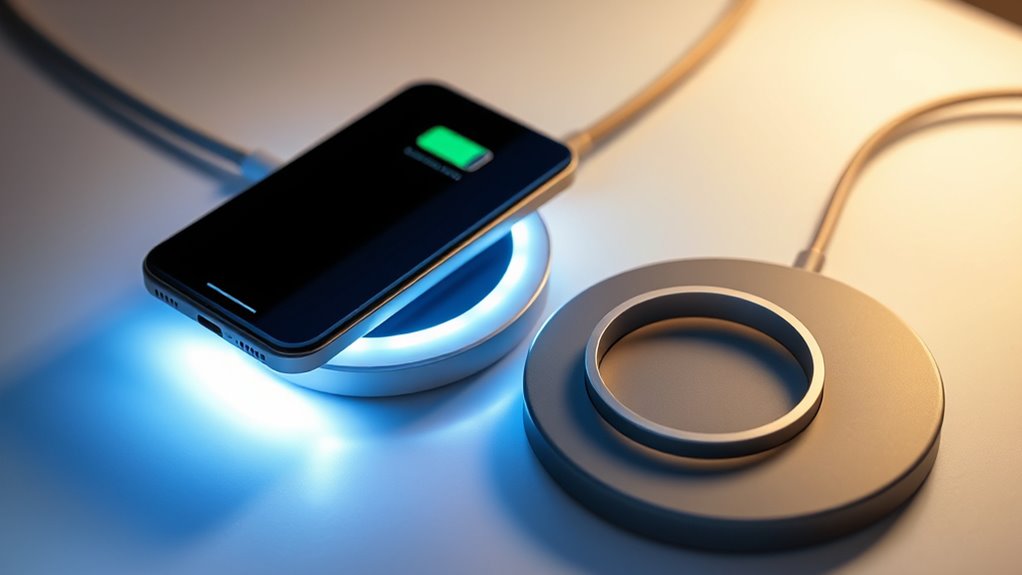
While both Qi and MagSafe enable wireless charging, they serve different needs and offer distinct advantages. Qi is widely compatible, supporting various devices with flexible placement, but it lacks magnetic alignment, which can affect charging efficiency. MagSafe, on the other hand, uses magnets for precise positioning, ensuring optimal magnetic alignment and consistent charging speed. However, its compatibility is limited to Apple devices. The table below highlights their key differences:
| Feature | Qi | MagSafe | Limitations |
|---|---|---|---|
| Magnetic Alignment | No | Yes | Limited to compatible devices |
| Charging Speed | Moderate | Faster (optimized) | Only Apple devices |
| Compatibility | Broad | Apple-specific | Less universal |
| Ease of Use | Flexible placement | Precise placement | Slightly less flexible |
| Power Efficiency | Variable | Consistently high | Proprietary technology |
Additionally, advancements in wireless charging standards are continuously improving overall performance and compatibility across devices.
The Role of Qi2 in Shaping the Future of Wireless Power

Qi2 promises to boost wireless charging efficiency, meaning your devices will charge faster and more reliably. It also aims to expand compatibility, so more gadgets can benefit from wireless power without special adapters. This technology will likely transform how you experience wireless charging in everyday life. Additionally, as the technology develops, more diverse devices such as earbuds, smartwatches, and even larger electronics will become compatible with Qi2, enhancing convenience across all your gadgets.
Enhanced Charging Efficiency
Enhanced charging efficiency is transforming how seamlessly devices can power up without cables. With Qi2’s advancements, magnetic resonance plays a key role in improving energy transfer between your device and the charger. This technology allows for more flexible positioning, reducing alignment issues and maximizing power transfer. As a result, your device charges faster and more reliably, even if not perfectly aligned on the pad. Qi2’s focus on optimized energy transfer minimizes energy loss, making the process more efficient and environmentally friendly. You’ll notice less heat generation and better overall performance. This leap in efficiency means you won’t have to worry about precise placement or slow charging times, allowing you to enjoy truly cable-free convenience without sacrificing speed or reliability.
Broader Device Compatibility
As wireless charging technology advances, it’s becoming more capable of supporting a wider range of devices, from smartphones and earbuds to smartwatches and even some laptops. Qi2 plays a key role in expanding the device ecosystem by enabling better cross-platform compatibility. This means you can charge different brands and types of devices seamlessly using a single wireless charger, reducing the need for multiple cables and adapters. With standardized protocols like Qi2, manufacturers can design chargers that work universally across various devices, fostering a more integrated and convenient charging experience. As a result, your device ecosystem becomes more flexible, allowing you to simplify your setup and keep all your gadgets powered effortlessly.
Compatibility and Device Integration
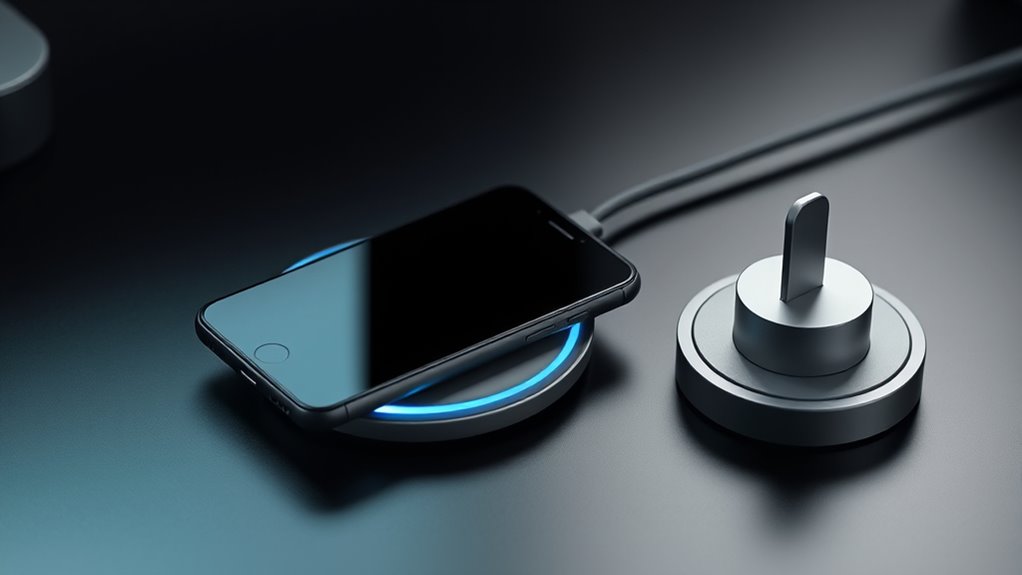
Ever wondered if your devices will work seamlessly with wireless charging? Compatibility depends on how well your device supports inductive coupling, the core technology that transfers power wirelessly. Most modern smartphones and accessories are designed to align with established standards like Qi or MagSafe, ensuring smooth integration. Additionally, proper device alignment and positioning are crucial for efficient charging. Proper device design and shielding are also implemented by manufacturers to minimize electromagnetic interference from nearby electronic devices, which can disrupt charging efficiency or cause connection issues. To prevent this, manufacturers optimize device design and shielding, making sure your device recognizes compatible chargers and minimizes interference. Understanding electromagnetic interference helps in selecting the right charging setup and environment for optimal performance. When choosing a wireless charger, check for compatibility with your device’s charging protocol and standards. For optimal performance, it’s also helpful to stay informed about the latest wireless charging innovations and standards updates. Moreover, selecting chargers with advanced shielding features can further improve reliability and safety during wireless charging. Proper device integration ensures you get reliable, fast wireless charging without frustration or interruptions.
Safety and Efficiency in Wireless Charging Technologies
Safety measures guarantee your device isn’t exposed to harmful electromagnetic fields during charging, reducing risks like overheating or interference. Energy efficiency standards help you get the most power with minimal waste, saving battery life and energy costs. By understanding these safety and efficiency practices, you can use wireless charging confidently and responsibly.
Power Transfer Safety Measures
Ensuring safety during wireless power transfer is essential for protecting users and maintaining system integrity. When it comes to wireless safety, manufacturers implement strict measures to prevent overheating, electromagnetic interference, and accidental exposure. These precautions help guarantee reliable power transfer without risking your device or health. To keep you safe, consider these key safety measures:
- Automatic shutoff if foreign objects are detected, preventing unwanted power transfer.
- Temperature controls that monitor and limit heat buildup during wireless charging.
- Alignment sensors to ensure proper positioning, optimizing power transfer efficiency and safety.
Energy Efficiency Standards
To maximize the benefits of wireless charging, manufacturers must adhere to strict energy efficiency standards that minimize power waste and reduce environmental impact. These standards ensure devices use energy conservation practices, preventing unnecessary energy loss during charging. By optimizing power transfer processes, manufacturers help reduce the environmental impact associated with excess energy consumption. Efficient wireless chargers incorporate advanced technology to regulate power flow, ensuring only the necessary energy is used. This not only prolongs device battery life but also conserves electricity, lowering overall energy demand. Meeting these standards encourages sustainable manufacturing and responsible usage, aligning with global efforts to decrease carbon footprints. Ultimately, energy efficiency standards in wireless charging support eco-friendly practices and help you save energy while enjoying seamless device charging.
Innovations and Trends to Watch in Wireless Power
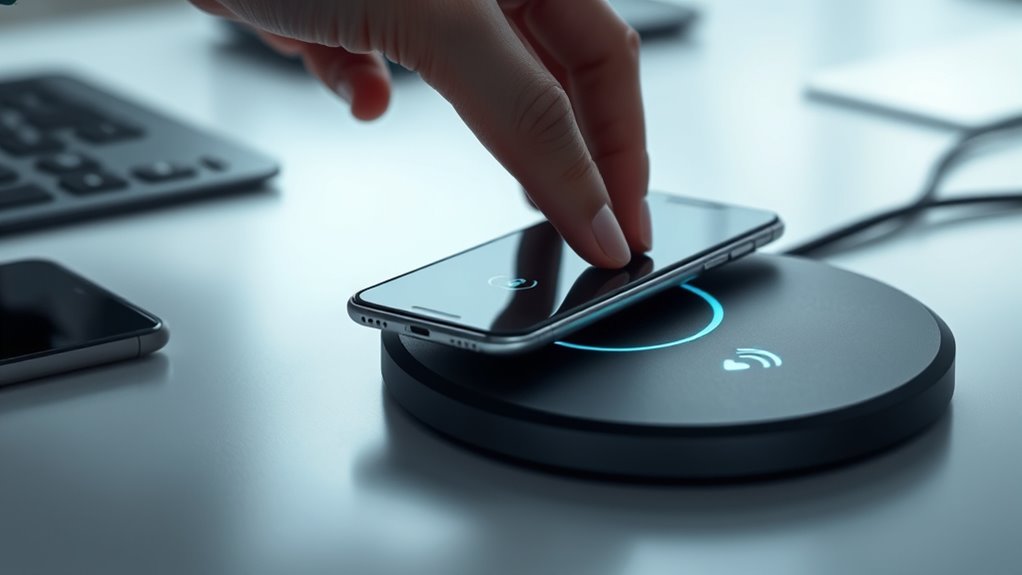
Advancements in wireless power technology are rapidly transforming how you charge devices, making it more efficient and versatile than ever before. Innovations like improved inductive coupling enable faster, more reliable connections. Resonant transfer allows multiple devices to charge simultaneously without precise alignment, giving you more freedom. Keep an eye on these emerging trends:
- Increased Power Levels – Larger devices can be charged effortlessly, reducing the need for cables.
- Smart Power Management – Devices communicate with chargers to optimize energy flow, enhancing efficiency.
- Extended Range – Wireless power may soon work over greater distances, freeing you from direct contact.
These breakthroughs promise a future where charging becomes seamless, intuitive, and integrated into your daily life.
Practical Tips for Optimizing Wireless Charging Experience

As wireless power technology continues to improve with faster charging speeds and greater range, you can make the most of these advancements by optimizing your setup. To do this, verify your device is compatible with the wireless power standard used by your charger, whether Qi, MagSafe, or Qi2. Use a high-quality charging pad that matches your device’s specifications for the best performance. Keep your device centered on the charging surface to maximize efficiency and avoid interruptions. Remove any metal cases or accessories that could interfere with charging. Additionally, place your device on a flat, stable surface to prevent misalignment. Regularly update your device’s firmware and the charger’s firmware (if applicable) to benefit from the latest optimizations. These simple steps help you enjoy a faster, more reliable wireless power experience.
The Impact of Wireless Charging on Mobile Device Design

Wireless charging has markedly influenced mobile device design by prompting manufacturers to integrate specialized hardware and reconfigure internal layouts. This shift enhances battery longevity and allows for sleeker, more seamless aesthetic integration. As a result, your device can support faster charging without bulky ports, creating a cleaner look.
Consider these emotional impacts:
- Feel confident knowing your device is optimized for longevity and durability.
- Enjoy the sleek aesthetic that blends seamlessly into your daily life.
- Experience the convenience of wireless charging, reducing wear on ports and extending battery health.
Design changes may include thinner bodies, improved internal component placement, and unobtrusive charging coils. These innovations aim to enhance your user experience while maintaining device durability and visual appeal.
Frequently Asked Questions
How Does Wireless Charging Affect Battery Lifespan?
Wireless charging can impact your battery lifespan by increasing battery degradation over time due to heat and repeated charging cycles. While it offers convenience, lower charging efficiency compared to wired methods may cause your device to charge longer, generating more heat that accelerates battery wear. To prolong battery health, avoid frequent wireless charging and keep your device cool during the process. Proper usage helps maintain ideal battery performance over time.
Can Wireless Chargers Interfere With Other Electronic Devices?
You might be surprised to learn that wireless chargers can cause electromagnetic interference, which affects about 10% of devices nearby. This interference can disrupt device performance or connectivity, especially if the devices aren’t compatible with wireless charging standards. To minimize issues, make certain your charger is compatible with your device and keep it away from sensitive electronics like medical devices, routers, or speakers, preventing potential interference problems.
What Are the Environmental Impacts of Wireless Charging Technology?
Wireless charging technology impacts the environment mainly through energy consumption and material sustainability. You might not realize it, but some chargers use more energy than wired options, increasing your carbon footprint. Additionally, the production of wireless chargers involves materials that may not be sustainably sourced, contributing to resource depletion. To minimize these impacts, choose energy-efficient devices and support manufacturers committed to sustainable practices, helping protect the environment.
Are There Any Health Risks Associated With Wireless Charging?
You might wonder if wireless charging poses health risks. Generally, it doesn’t cause significant radiation exposure or harmful electromagnetic fields, as the technology uses low-level, non-ionizing radiation. Devices are designed to meet safety standards, minimizing potential health effects. However, prolonged close exposure to electromagnetic fields may cause discomfort for some, so it’s wise to keep a reasonable distance and follow manufacturer guidelines for safe use.
How Does Wireless Charging Perform in Extreme Temperatures?
Wireless charging can struggle in extreme temperatures, as thermal efficiency drops when it’s too hot or cold. You might notice slower charging speeds or the device stopping altogether to protect itself. Temperatures outside the ideal range can also affect material durability, causing wear over time. To guarantee consistent performance, keep your charging area within recommended temperature limits, and use quality charging pads designed to handle thermal variations effectively.
Conclusion
So, now you’re all set to embrace the wireless future—no more fumbling with cables, just a magical wave of your device over a pad. Just remember, while Qi, MagSafe, and Qi2 promise convenience, don’t be surprised if your phone still refuses to charge during a thunderstorm or if your charger has a mind of its own. Happy charging, and may your batteries always be full—because, really, who needs a wired life anyway?