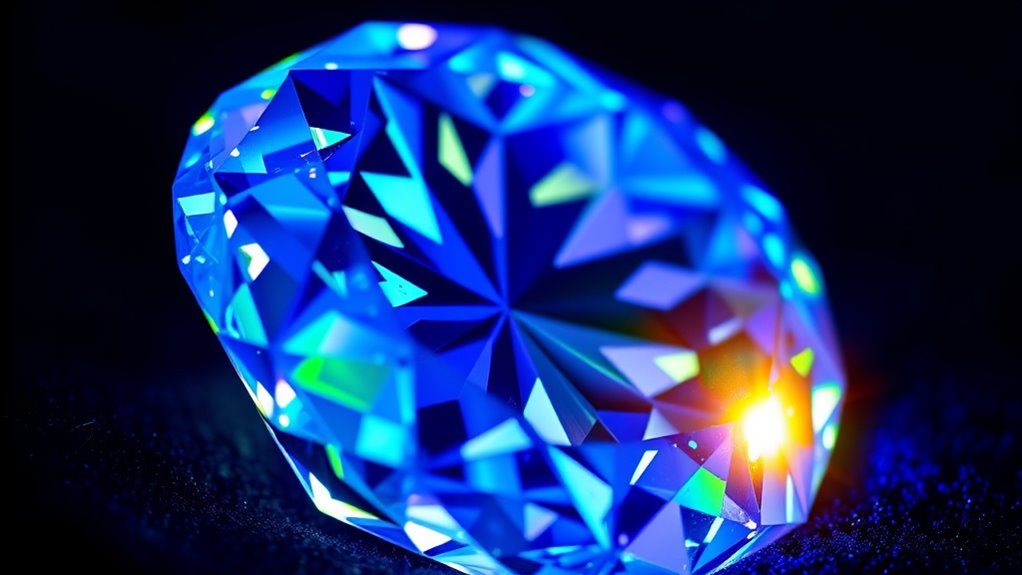
Diamond fluorescence can be both a friend and a foe, depending on how it influences your view and the stone’s value. It can enhance a diamond’s glow under UV light, making it look strikingly unique. However, it can also be artificially enhanced or hidden, possibly misleading you about its authenticity and worth. Understanding whether fluorescence is natural or treated is key. If you want to uncover the nuances that affect your diamond choices, there’s more to explore ahead.
Key Takeaways
- Fluorescence can enhance a diamond’s appearance in certain lighting but may also cause cloudiness or a milky look at high intensities.
- Natural fluorescence generally adds value, but artificially enhanced fluorescence can mislead buyers and distort prices.
- Proper certification is essential to distinguish natural from treated fluorescence, ensuring transparency and informed purchasing decisions.
- In some cases, fluorescence can make a diamond appear whiter or more appealing, but overuse or artificial enhancement can negatively impact value.
- Overall, fluorescence is neither inherently good nor bad; its impact depends on natural occurrence, intensity, and disclosure transparency.

Diamond fluorescence is the phenomenon where a diamond emits visible light when exposed to ultraviolet or other specific wavelengths of radiation. This glow can range from faint to intense, influencing how a diamond looks under different lighting conditions. As a buyer or seller, understanding fluorescence’s role is key because it can affect a diamond’s appearance and perceived value. Some diamonds fluoresce naturally, while others might have been artificially enhanced through synthetic means. Synthetic enhancement involves treatments that alter a diamond’s properties, including its fluorescence, to improve its visual appeal or mask imperfections. This practice has significant retail implications because it can deceive buyers into thinking they’re purchasing a natural diamond with desirable qualities, when in fact, the fluorescence might have been artificially induced or altered.
You should be aware that synthetic enhancement is a contentious issue in the jewelry industry. While some treatments are widely accepted and disclosed openly, others are less transparent, creating a murky market. When it comes to fluorescence, synthetic enhancement can increase or modify the glow, which might make a lower-quality stone look more appealing. This can lead to inflated prices or misrepresentation in sales, posing ethical concerns and risking consumer trust. Retailers who fail to disclose such treatments run the risk of legal repercussions and damaging their reputation.
From your perspective, recognizing the signs of synthetic enhancement is vital during the buying process. A diamond’s fluorescence alone isn’t enough to determine its authenticity or value. You should look for certification from reputable labs, which often specify whether fluorescence has been artificially enhanced or if the diamond is natural. Retail implications are vast here: transparency about treatments ensures you’re making an informed purchase and helps maintain industry integrity. If you’re a seller, emphasizing disclosure builds trust and avoids future disputes. On the other hand, unregulated or undisclosed synthetic enhancements can lead to market distortions, where genuine natural diamonds are undervalued or overshadowed by artificially enhanced stones.
Top picks for "diamond fluorescence friend"
Open Amazon search results for this keyword.
As an affiliate, we earn on qualifying purchases.
Frequently Asked Questions
Does Fluorescence Affect a Diamond’s Durability Over Time?
Fluorescence doesn’t substantially impact a diamond’s durability over time. The ultraviolet glow caused by fluorescence is just a visual effect and doesn’t weaken the stone’s structure. Durability concerns are more linked to the diamond’s initial quality and how it’s handled, rather than its fluorescence. So, you can enjoy a fluorescing diamond without worrying about it losing its strength or integrity due to ultraviolet glow.
Can Fluorescence Influence a Diamond’s Resale Value?
Yes, fluorescence can influence a diamond’s resale value. Some buyers view strong fluorescence negatively, fearing it might affect appearance or rarity, which impacts market perception. This can lower resale valuation, especially if the fluorescence is prominent. However, for certain buyers, fluorescence doesn’t matter much, so it may not considerably affect resale price. Overall, it’s a factor to evaluate when appraising a diamond’s future market value.
Are Fluorescence Effects Visible to the Naked Eye?
Bright flashes under UV light can make fluorescence effects quite evident to the naked eye, especially in diamonds with strong or very strong fluorescence. While subtle fluorescence often remains unnoticed without UV illumination, intense fluorescence can sometimes give the diamond a slight color enhancement, making it appear warmer or more colorful. So, if you’re evaluating a diamond’s appearance, keep in mind that fluorescence might subtly influence how vibrant or lively it looks in everyday lighting.
How Does Fluorescence Impact the Diamond’s Color Grading?
Fluorescence can impact your diamond’s color grading by causing color enhancement or masking actual color, affecting its visual appearance. When a diamond exhibits strong fluorescence, it might appear whiter or more vibrant in certain lighting, which can lead to a higher color grade. However, in some cases, it may also dull or alter the true color, so understanding how fluorescence influences the visual appeal helps you select a diamond that best fits your preferences.
Is Fluorescence More Common in Certain Diamond Shapes or Sizes?
You’ll find fluorescence more common in certain diamond shapes, like elongated cuts such as emerald or marquise, and in larger diamond sizes, especially over one carat. This is because the surface area and shape influence how light interacts with the diamond, making fluorescence more noticeable. Smaller or more popular shapes like round brilliant tend to have less fluorescence, which might be preferable if you want a more consistent look without any glow.
Conclusion
Ultimately, whether fluorescence is a friend or foe depends on your preferences. If you love a diamond that sparkles with a bit of mystery, fluorescence can add a unique charm like a hidden treasure. But if you prefer a clear, unblemished stone, it might feel like a shadow you’d rather avoid. Think of fluorescence as a double-edged sword—enhancing some and diminishing others—making it essential to understand what truly makes a diamond special to you.