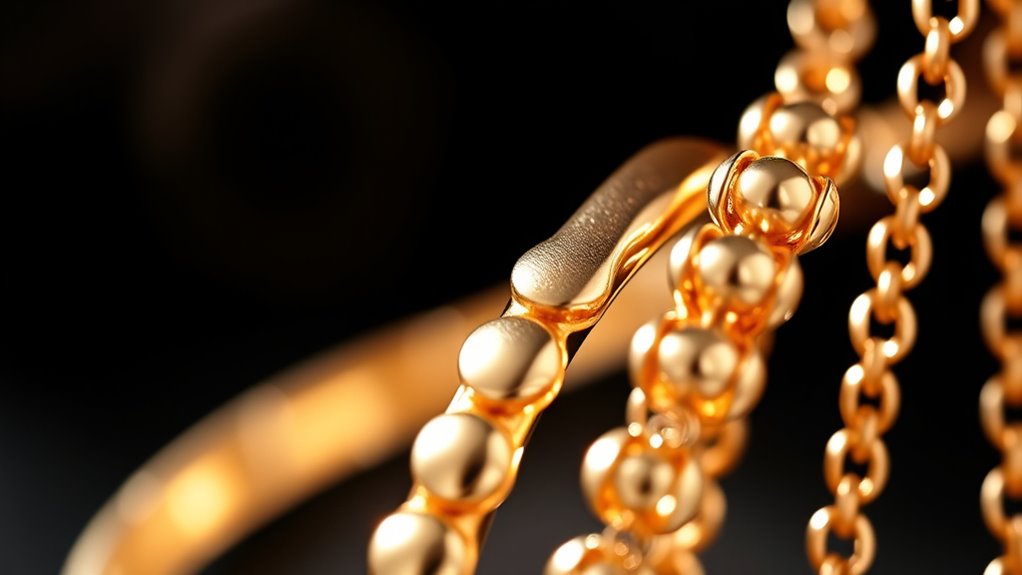

You’ll notice that yellow, white, and rose gold each offer unique looks and meanings. Yellow gold is classic and symbolizes strength and happiness, giving a warm, rich glow. White gold has a sleek, modern appearance, created by blending gold with silvery metals, and suggests sophistication. Rose gold’s pinkish hue stands for love and passion, adding a touch of tenderness. To find out how these colors suit your style and what makes each special, keep exploring these beautiful options.

Get your wardrobe favorites delivered free with Prime
- Fast, free delivery on millions of items
- Prime Video, Amazon Music and more included
- Member-only deals all year
Key Takeaways
- Yellow gold is traditional and rich, symbolizing strength and prosperity, with a warm, classic appearance.
- White gold has a silvery, modern look created by alloying gold with white metals like palladium or silver.
- Rose gold is alloyed with copper, giving it a pinkish hue that signifies love, passion, and warmth.
- The different colors reflect varying symbolism and aesthetic styles, from timeless elegance to contemporary chic.
- All three gold types share properties of malleability and durability, suitable for detailed and lasting jewelry.
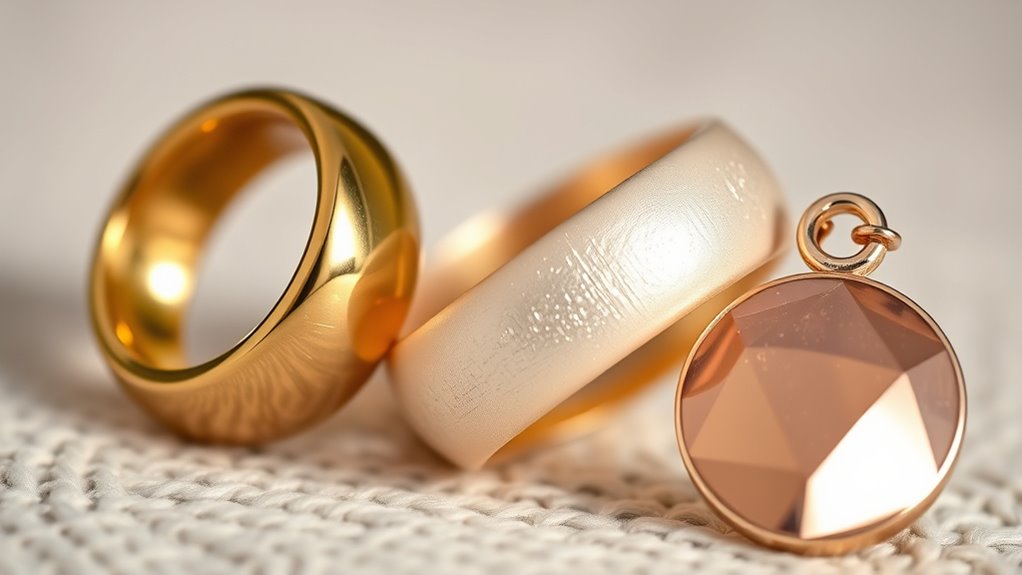
Have you ever wondered why gold has such a timeless appeal? It’s not just because of its rarity, but also because of its distinctive qualities that make it stand out among metals. Gold’s metal properties are unique; it’s incredibly malleable, ductile, and resistant to corrosion. These qualities allow it to be shaped into delicate jewelry or intricate designs without breaking or tarnishing over time. When you look at gold, you’re seeing a metal that combines beauty with durability, making it a symbol of wealth, power, and purity across different cultures. But what truly sets gold apart is its rich color symbolism, which varies depending on its hue. Its metallic properties also enable artisans to craft detailed and intricate designs that enhance its aesthetic appeal. The classic yellow gold is the most recognized and traditional form. It exudes warmth, richness, and a sense of timeless elegance. The vibrant, sunny hue has long been associated with prosperity, success, and celebration. This color symbolism has deep roots in history, often representing the sun’s life-giving energy and divine power. When you wear yellow gold, you’re embracing a symbol of strength and permanence, one that has been cherished for centuries. Its bright tone also signifies happiness and optimism, making it a popular choice for engagement rings and heirlooms that carry emotional significance.
Gold’s unique qualities and rich color symbolism make it a timeless symbol of beauty, strength, and emotional significance.
White gold, on the other hand, offers a more modern, understated elegance. Its metal properties include a blend of gold with white metals like palladium, nickel, or silver, which give it a sleek, silvery appearance. This color symbolism leans toward purity, clarity, and sophistication. White gold’s subtle shimmer resembles platinum, but at a more accessible price point. When you choose white gold, you’re opting for a versatile and contemporary look that pairs well with a variety of styles and other jewelry. It’s often seen as a symbol of new beginnings, sleekness, and neutrality, making it ideal for those who prefer a minimalist or modern aesthetic.
Rose gold introduces a romantic, warm hue that’s gained popularity in recent years. Its metal properties involve alloying gold with copper, which gives it that distinctive pinkish tint. The color symbolism here is all about love, passion, and tenderness. Rose gold’s gentle glow evokes feelings of affection and intimacy, making it a favorite for romantic jewelry pieces. When you wear rose gold, you’re embracing a sense of emotional connection and warmth, symbolizing compassion and heartfelt sentiment. Its unique hue can beautifully complement a variety of skin tones, adding a touch of femininity and elegance.
In essence, each gold color embodies different qualities through its metal properties and color symbolism. Whether you’re drawn to the classic warmth of yellow gold, the sleek modernity of white gold, or the romantic charm of rose gold, understanding these subtle differences helps you choose jewelry that resonates with your personal style and meaning.
As an affiliate, we earn on qualifying purchases.
Frequently Asked Questions
How Does Gold Color Influence Jewelry Value?
Gold color considerably influences jewelry value because its hue reflects different symbolism and appeal. Yellow gold symbolizes tradition and warmth, while white gold offers modern elegance, and rose gold exudes romance. Your choice affects not only style but also jewelry durability; for instance, rose gold’s alloy enhances strength. Understanding these differences helps you select jewelry that matches your style and longevity expectations, ultimately impacting its worth and personal significance.
What Skin Tones Complement Each Gold Hue Best?
They say “beauty is in the eye of the beholder,” so trust your instincts. For skin tone matching, yellow gold complements warm undertones, adding glow, while white gold suits cool undertones for a sleek look. Rose gold beautifully enhances medium to dark skin tones with warm hues. Use these tips for fashion pairing, and you’ll find the perfect gold hue to highlight your natural beauty effortlessly.
Can Gold Colors Affect Cultural or Symbolic Meanings?
Gold colors can influence cultural symbolism and fashion trends markedly. You might notice that certain gold shades symbolize wealth, prosperity, or spirituality in different cultures, affecting how people perceive and wear them. As you follow fashion trends, you’ll see gold used to convey status or tradition. Recognizing these meanings helps you choose gold hues thoughtfully, respecting their cultural significance while staying stylish and current.
Are There Environmental Impacts of Gold Coloring Processes?
You should know that gold coloring processes can have environmental impacts, especially during gold refining, which often involves toxic chemicals like cyanide and mercury. However, opting for eco-friendly plating methods reduces these effects, as they use safer, sustainable materials. By choosing businesses that prioritize eco-friendly plating, you help minimize pollution and conserve resources, making the gold coloring process more environmentally responsible.
How Do Gold Shades Vary in Different Lighting Conditions?
In different lighting effects, you’ll notice gold shades shift subtly, revealing surprising depth. Under warm light, yellow gold glows with rich warmth, while in cooler tones, white gold appears sleeker and more refined. Rose gold’s hue is particularly sensitive, often intensifying or softening based on color temperature. These variations add complexity to your jewelry, making each piece uniquely responsive to its environment, almost as if it changes with the light’s mood.
As an affiliate, we earn on qualifying purchases.
Conclusion
Now that you know the differences between yellow, white, and rose gold, you can choose the perfect hue for your style. Did you know that white gold is actually about 75% gold with added alloys for its color? This makes it a popular, durable choice for everyday jewelry. So, whether you prefer the classic warmth of yellow, the sleek elegance of white, or the romantic charm of rose gold, you’re now better equipped to pick the perfect piece that suits your personality.
As an affiliate, we earn on qualifying purchases.
As an affiliate, we earn on qualifying purchases.
Halloween Picks
halloween
As an affiliate, we earn on qualifying purchases.